This post contains affiliate links. As an Amazon Associate we earn from qualifying purchases, at no extra cost to you. Read our disclosure.
Safety first: Always supervise little ones, and skip small parts for kids who still put things in their mouths. Please read our play safety notes before you start.
Key takeaways
- 12 Christmas STEM activities that use things already in a kitchen or craft drawer.
- Every activity lists ages, prep, mess, supplies and a safety note.
- Candy canes and marshmallows are for the experiment, not for snacking, and are choking hazards for children under 4.
- Ask one question first (will it sink, will it hold, which melts fastest?) and let kids guess before they test.
- Most activities take 10 to 20 minutes, so you can fit one in before dinner.
In this post18 sections
- Christmas STEM Activities for Kids: How to Run Them
- Fizzy and Melting Christmas Science Experiments
- 1. Fizzy candy cane tray
- 2. Candy cane dissolve test
- 3. Marshmallow and pretzel snowflake
- 4. Ice ornament salt melt
- 5. Sink or float ornaments
- Christmas STEM Challenges: Build, Launch and Bridge
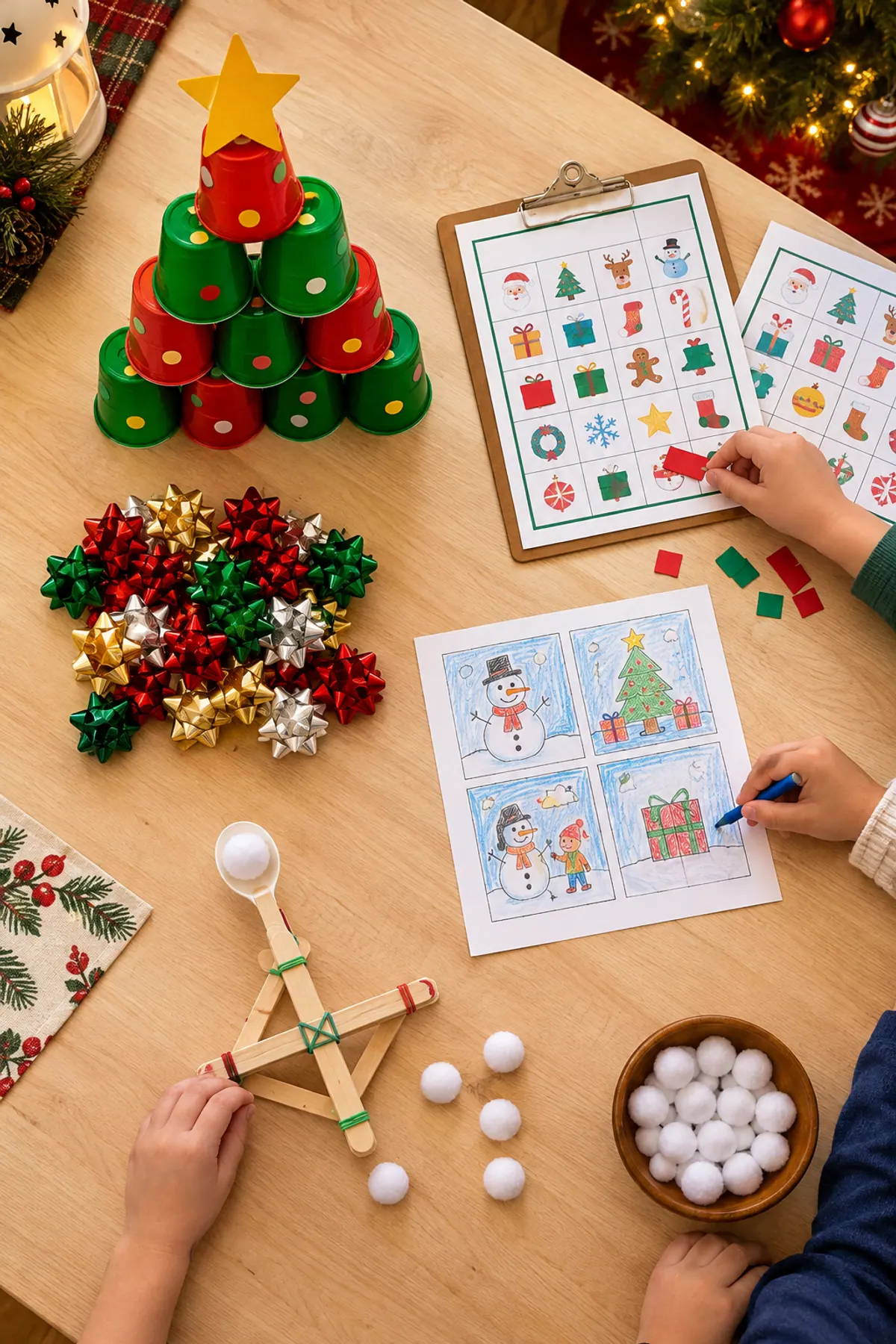
- 6. Paper cup Christmas tree tower
- 7. Foil sleigh float test
- 8. Paper spiral tree spinner
- 9. Cotton snowball catapult
- 10. Paper bridge for Santa
- Light, Sound and Shadow Activities
- 11. Jingle bell sound jars
- 12. Flashlight reindeer shadows
- Stay Safe Doing Christmas Science at Home
- FAQ
Christmas STEM Activities for Kids: How to Run Them
Each activity here follows the same pattern: ask a question, make a guess, test it, then change one thing and test again. That is the whole method. You do not need to explain the science, and a short "what do you think will happen?" is enough for ages 3 to 5.
Some links on this page are Amazon links, and we may earn a small commission if you buy. Prep times and prices are rough examples, and all activities need an adult nearby. Small items such as marshmallows, candy canes and pom poms are choking hazards for children under 4, so treat those as experiment supplies and keep them away from mouths.
| Activity | Ages | Prep | Mess |
|---|---|---|---|
| Fizzy candy cane tray | 3 and up | 5 minutes | Medium |
| Candy cane dissolve test | 4 and up | 10 minutes | Low |
| Marshmallow snowflake | 4 and up | 5 minutes | Low |
| Paper cup tree tower | 3 and up | 2 minutes | None |
| Foil sleigh float test | 4 and up | 10 minutes | Medium |
| Ice ornament salt melt | 3 and up | 10 minutes plus freezing | Medium |
| Paper spiral tree spinner | 4 and up | 10 minutes | Low |
| Jingle bell sound jars | 3 and up | 10 minutes | None |
| Cotton snowball catapult | 5 and up | 10 minutes | None |
| Paper bridge for Santa | 5 and up | 5 minutes | None |
| Flashlight reindeer shadows | 3 and up | 15 minutes | None |
| Sink or float ornaments | 3 and up | 5 minutes | Medium |
Fizzy and Melting Christmas Science Experiments
1Fizzy candy cane tray
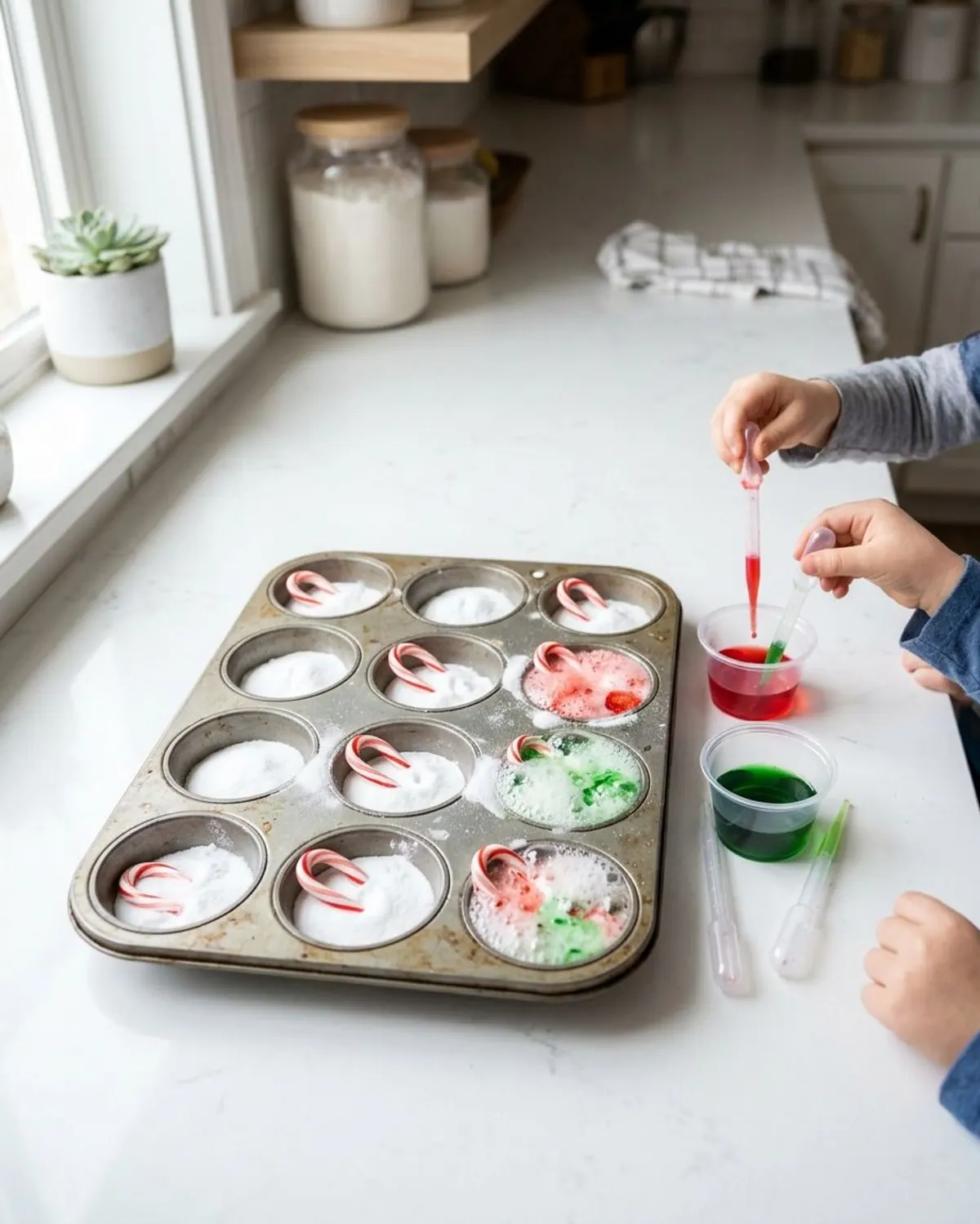
Set candy canes on a thin layer of baking soda in a muffin tin. Fill small cups with vinegar, add a drop of red or green food coloring, and let kids squirt it over the canes with an eye dropper. The fizz is baking soda and vinegar making a gas, and the stripes slowly bleed color.
Ages: 3 and up (an adult pours the vinegar)
Prep: 5 minutes
Mess: Medium
Supplies: candy canes, baking soda, white vinegar, food coloring, muffin tin, eye droppers
Safety: candy canes are a choking hazard under 4, so keep them off tongues and away from the youngest. Keep vinegar away from eyes and do not let anyone taste the fizz.
- Use a spoon of baking soda for each cup so the fizz lasts longer.
Squirting is great for little fingers.
2Candy cane dissolve test
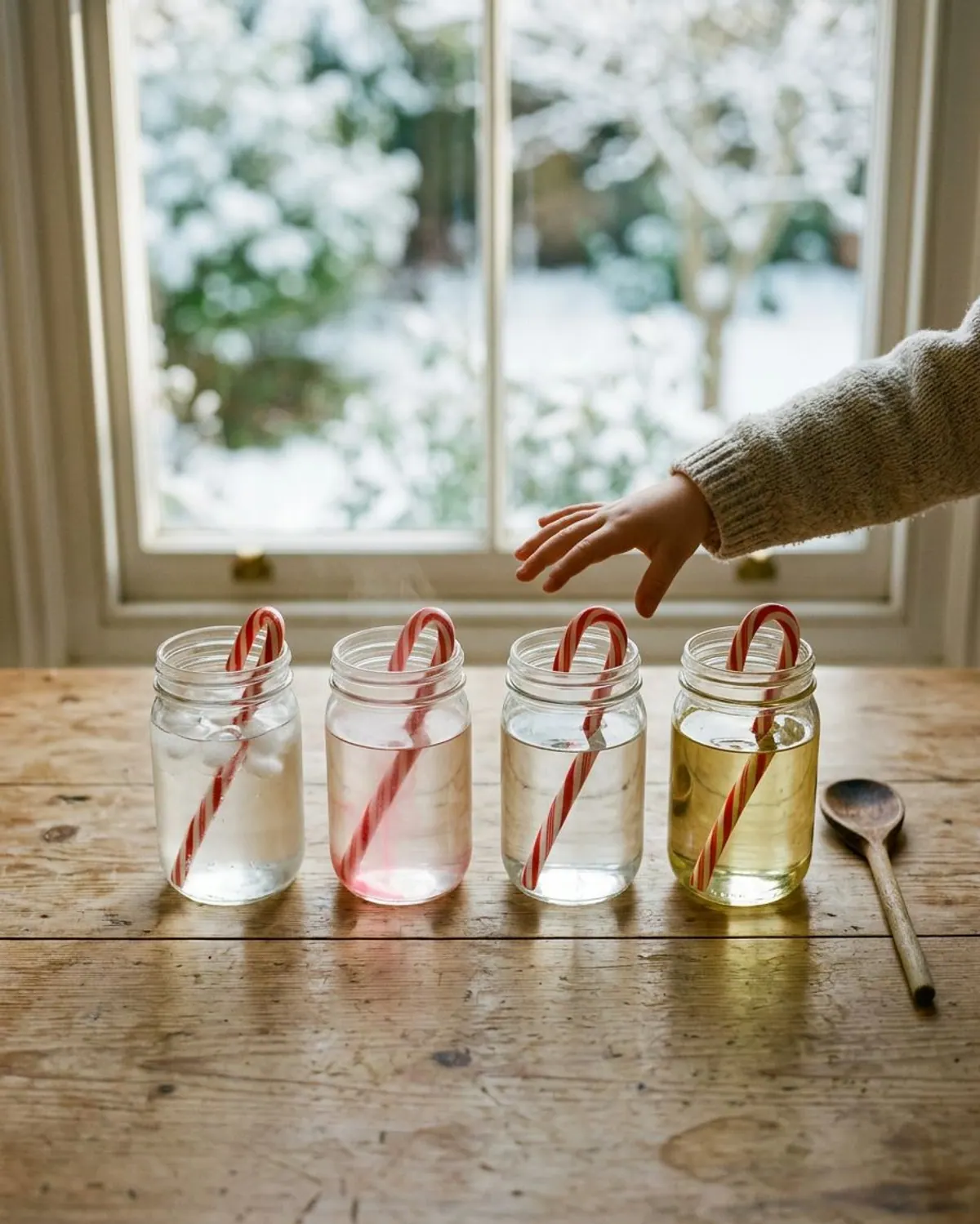
Drop one candy cane into each of four jars: cold water, warm water, ice water and oil. Guess which one will dissolve first, then check every few minutes. Warm water wins, oil barely changes it, and kids can see why with their own eyes.
Ages: 4 and up (an adult handles the warm water)
Prep: 10 minutes
Mess: Low
Supplies: 4 candy canes, 4 clear jars, cold, ice and warm water, cooking oil, a spoon
Safety: warm water should be warm, not hot, and handled by an adult. The candy canes are for testing, not eating afterward.
- For older kids, time each jar and write the results on a chart.
Clear sides let kids watch.
3Marshmallow and pretzel snowflake
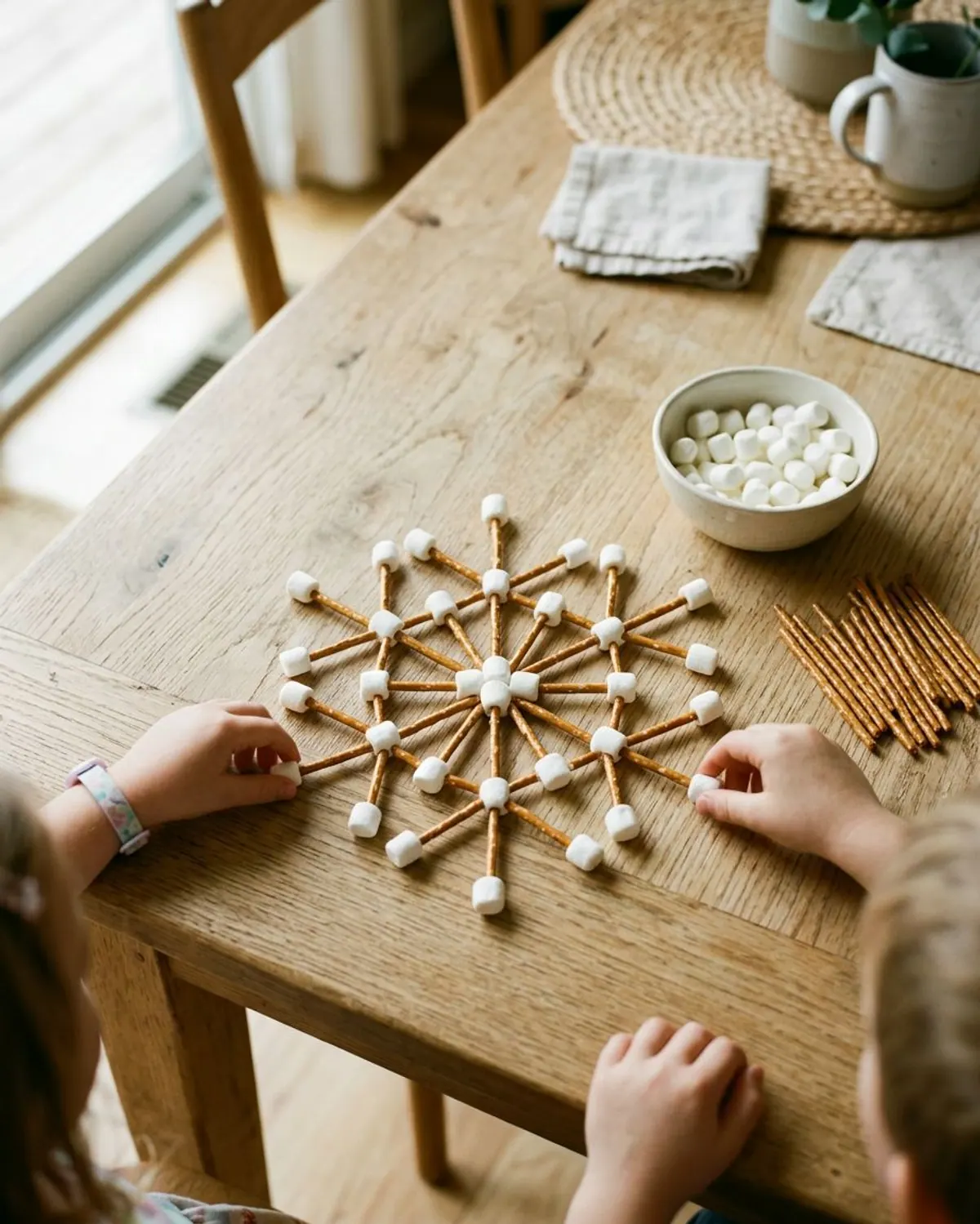
Build a flat six-sided snowflake by joining marshmallows with pretzel sticks. Make a hexagon first, then add arms. Ask: which shape stays up, and which falls over? It is the same engineering as a bridge, just soft.
Ages: 4 and up
Prep: 5 minutes
Mess: Low
Supplies: mini marshmallows, pretzel sticks, a plate
Safety: marshmallows and pretzel pieces are choking hazards for children under 4. Check for food allergies, and keep this one at the table.
- Try three-sided triangles first. They are the strongest shape.
4Ice ornament salt melt
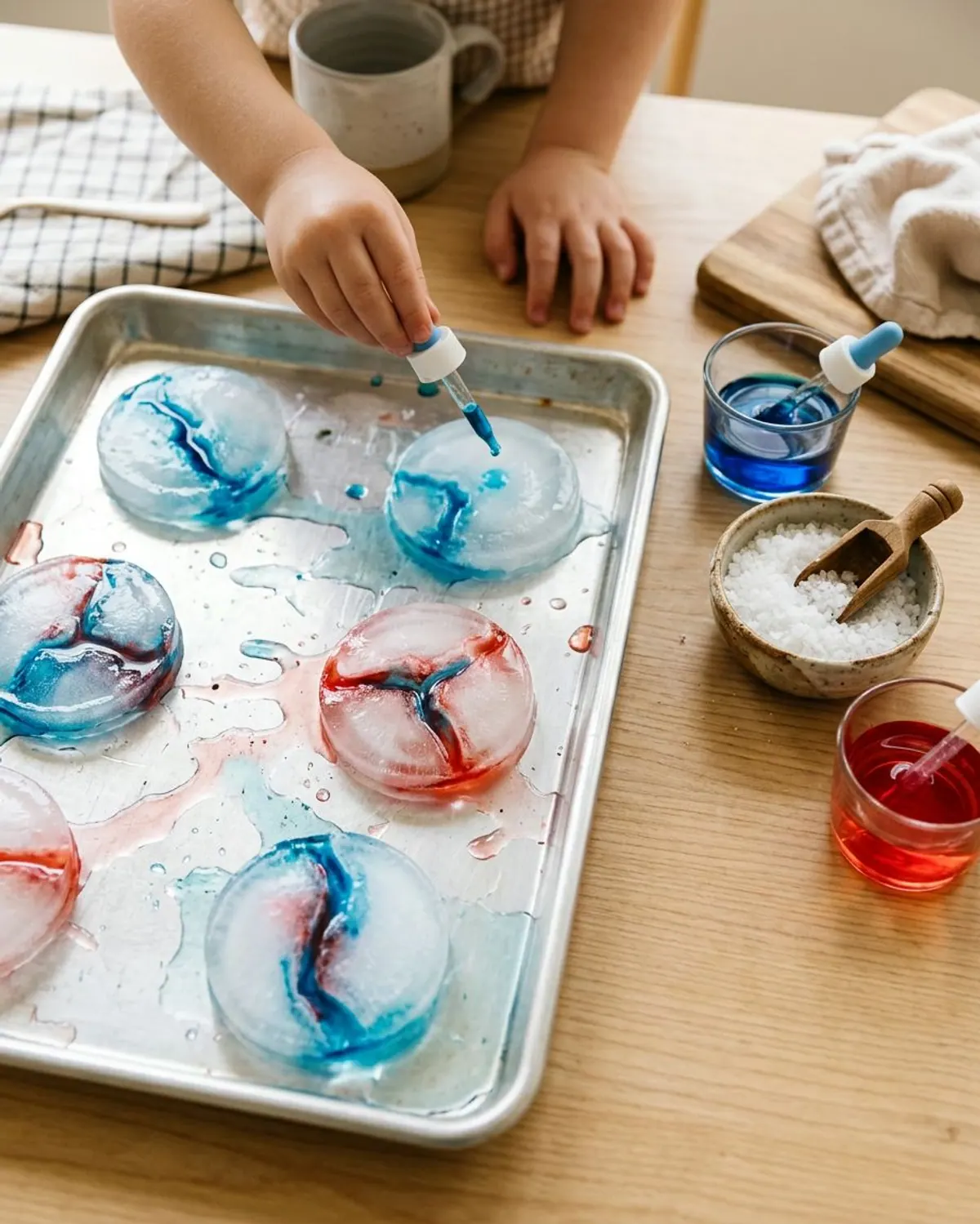
Freeze water in a pie dish or cupcake tin the night before. Pop the ice disc onto a tray and sprinkle salt on top, then drip colored water from droppers into the grooves. The salt melts channels in the ice, and the color follows them like a stained glass window.
Ages: 3 and up
Prep: 10 minutes plus freezing overnight
Mess: Medium
Supplies: ice discs, coarse salt, food coloring, cups, droppers, a baking tray
Safety: salt is not for eating. Keep the activity on a tray, wipe up spills to avoid slips and do not leave small hands holding cold ice for long.
- Add a loop of string in the water before freezing to hang it outside.
5Sink or float ornaments
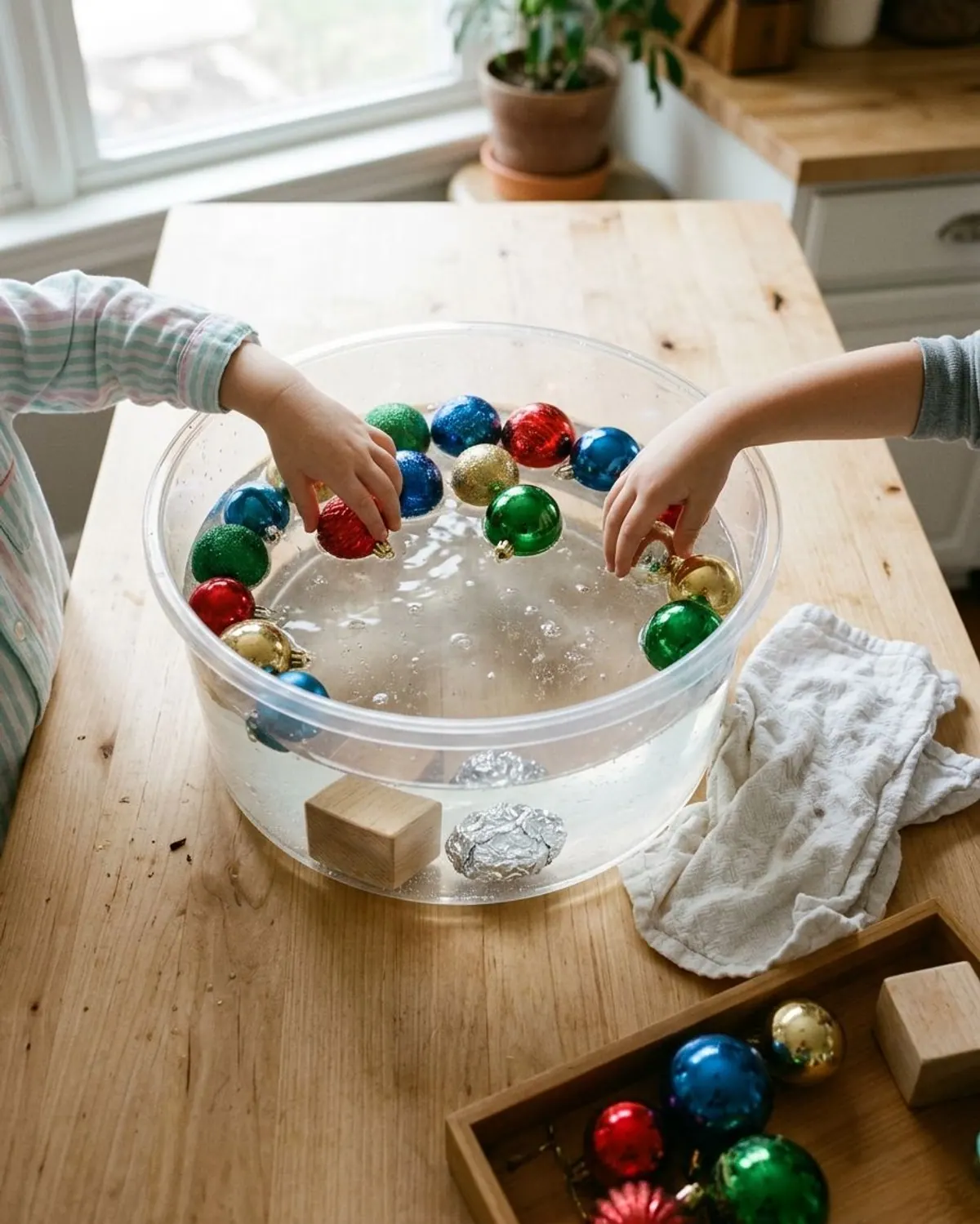
Fill a large tub with water and add shatterproof plastic ornaments, a wooden block, a foil ball and a flat sheet of foil. Ask kids to guess first. Then drop each one and sort them into sink and float. Squish the foil into a boat and test again.
Ages: 3 and up
Prep: 5 minutes
Mess: Medium
Supplies: a big tub, plastic ornaments, wooden blocks, foil, a towel
Safety: use only unbreakable ornaments, never glass. Stay beside water at all times and empty the tub afterward.
- Keep a towel under the tub for easy cleanup.
Safe to splash and drop.
Christmas STEM Challenges: Build, Launch and Bridge
6Paper cup Christmas tree tower
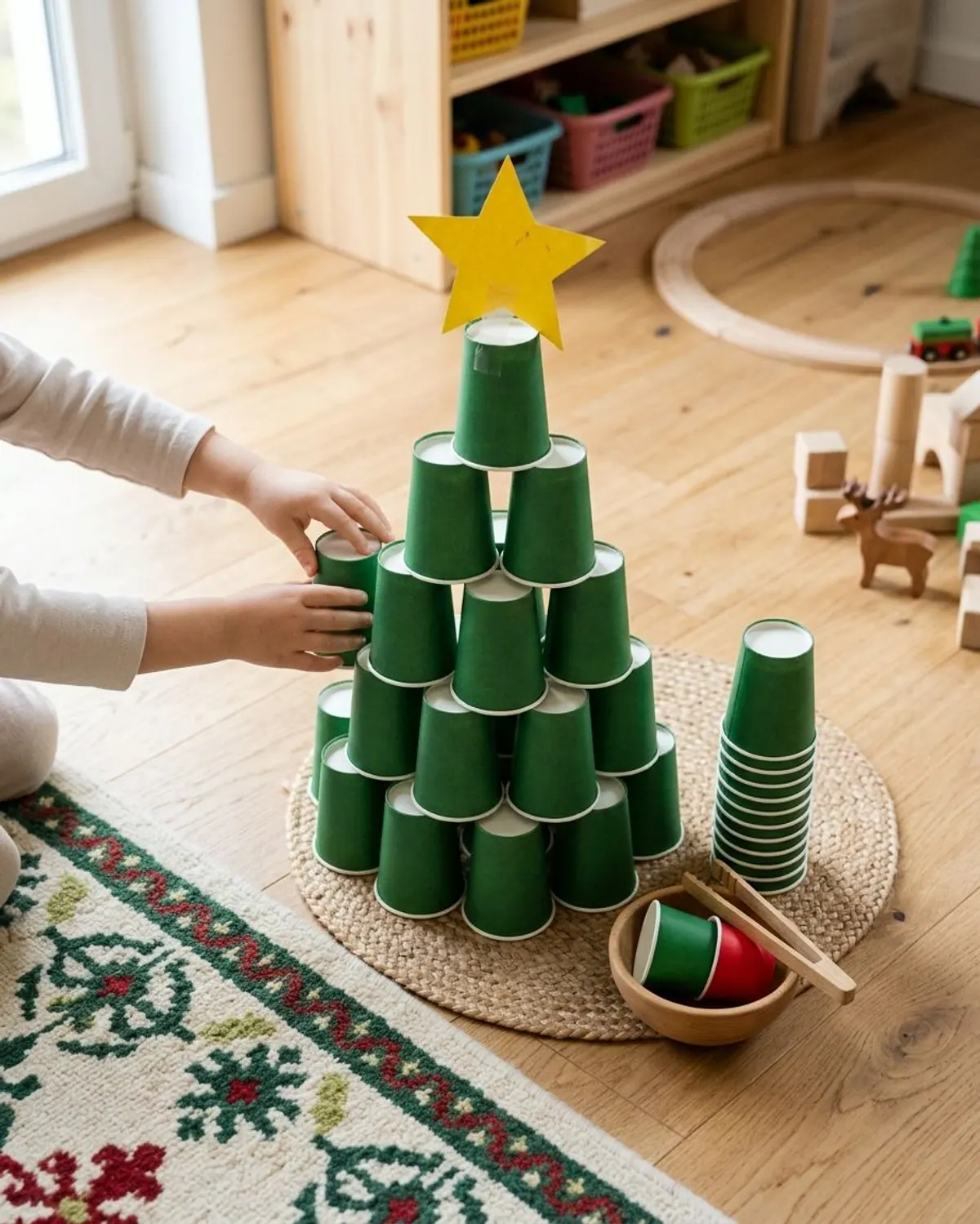
Give each child 15 to 20 green paper cups and one question: how tall can you build a tree? Stack them in a pyramid, then count the cups in each row. Add a paper star on top. Rebuild with fewer cups and see how short the tree gets.
Ages: 3 and up
Prep: 2 minutes
Mess: None
Supplies: green paper cups, a paper star
Safety: paper cups are safe, but stay close if a tower is on a tabletop. Toddlers under 3 can stack and knock down only.
- Count the cups in each row to practice early addition.
Bold color and sturdy stacking.
7Foil sleigh float test
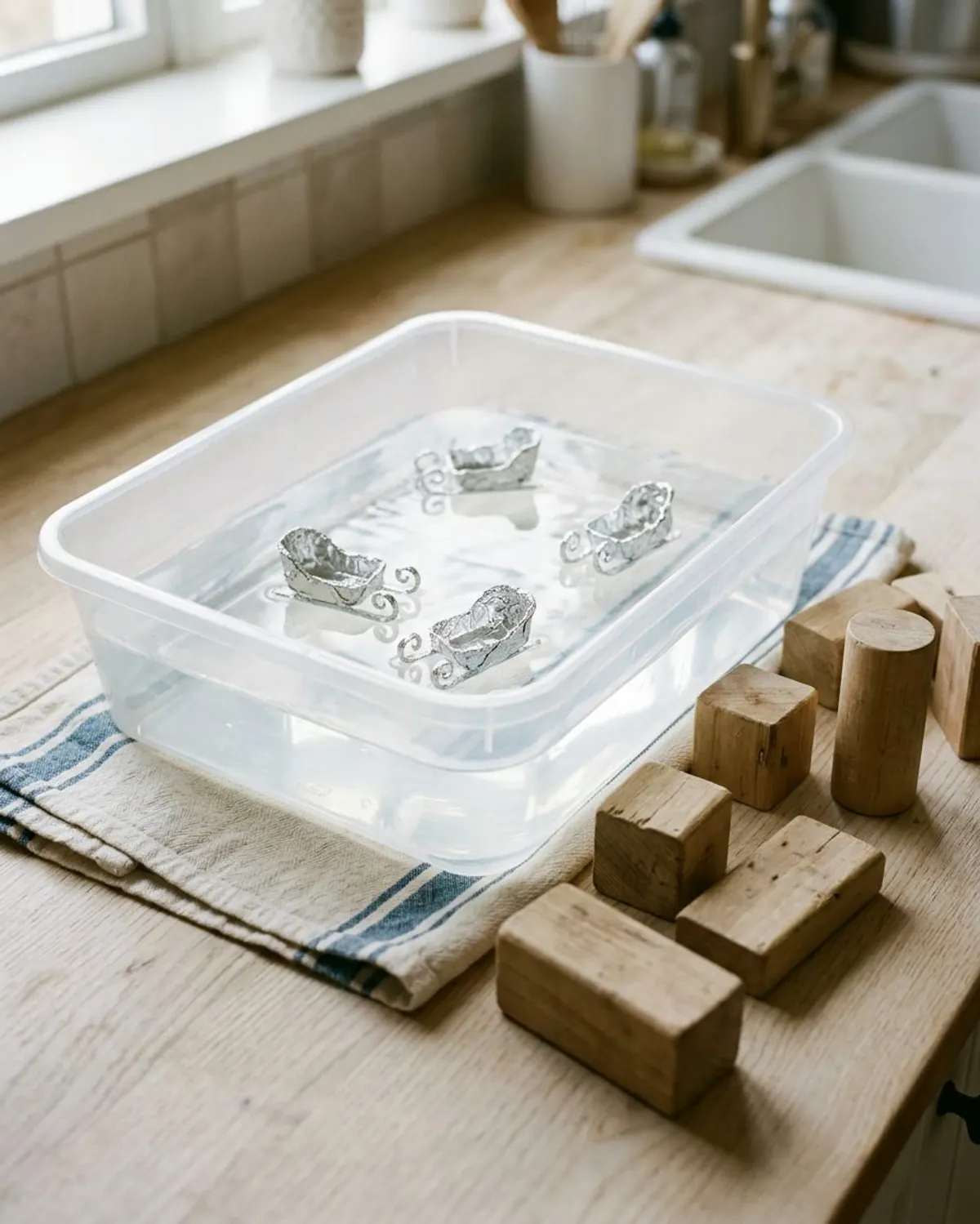
Fold squares of foil into sleigh shapes and float them in a tub. Load each with large wooden blocks one at a time and count how many it holds before sinking. Then redesign: wider, higher sides or a flatter bottom, and test again.
Ages: 4 and up
Prep: 10 minutes
Mess: Medium
Supplies: foil sheets, a tub of water, large wooden blocks, a towel
Safety: use big blocks only, never coins or beads, which are small enough to choke on. Stay beside the water.
- Record the count for each design on paper.
8Paper spiral tree spinner
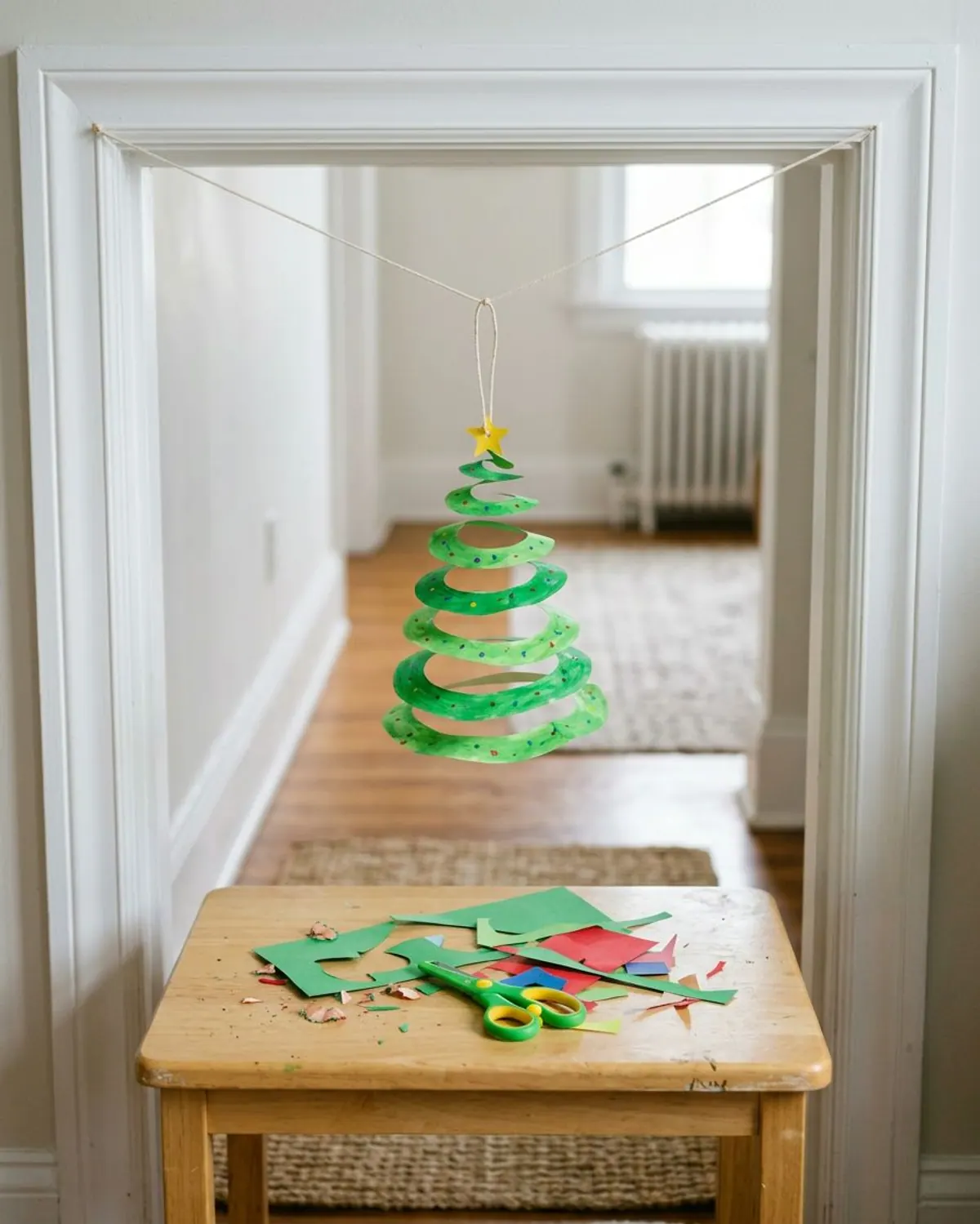
Cut a spiral from a green paper circle and hang it from a string in a doorway. A gentle breath, a hand fan or a draft makes it spin. Ask where the air is moving. Decorate it with stickers or a drawn star at the top.
Ages: 4 and up (an adult cuts the spiral)
Prep: 10 minutes
Mess: Low
Supplies: green paper, blunt scissors, string, stickers
Safety: keep the string short and never leave it around necks. Use it only in a doorway or on a low hook.
- Keep it away from any heater or candle.
9Cotton snowball catapult
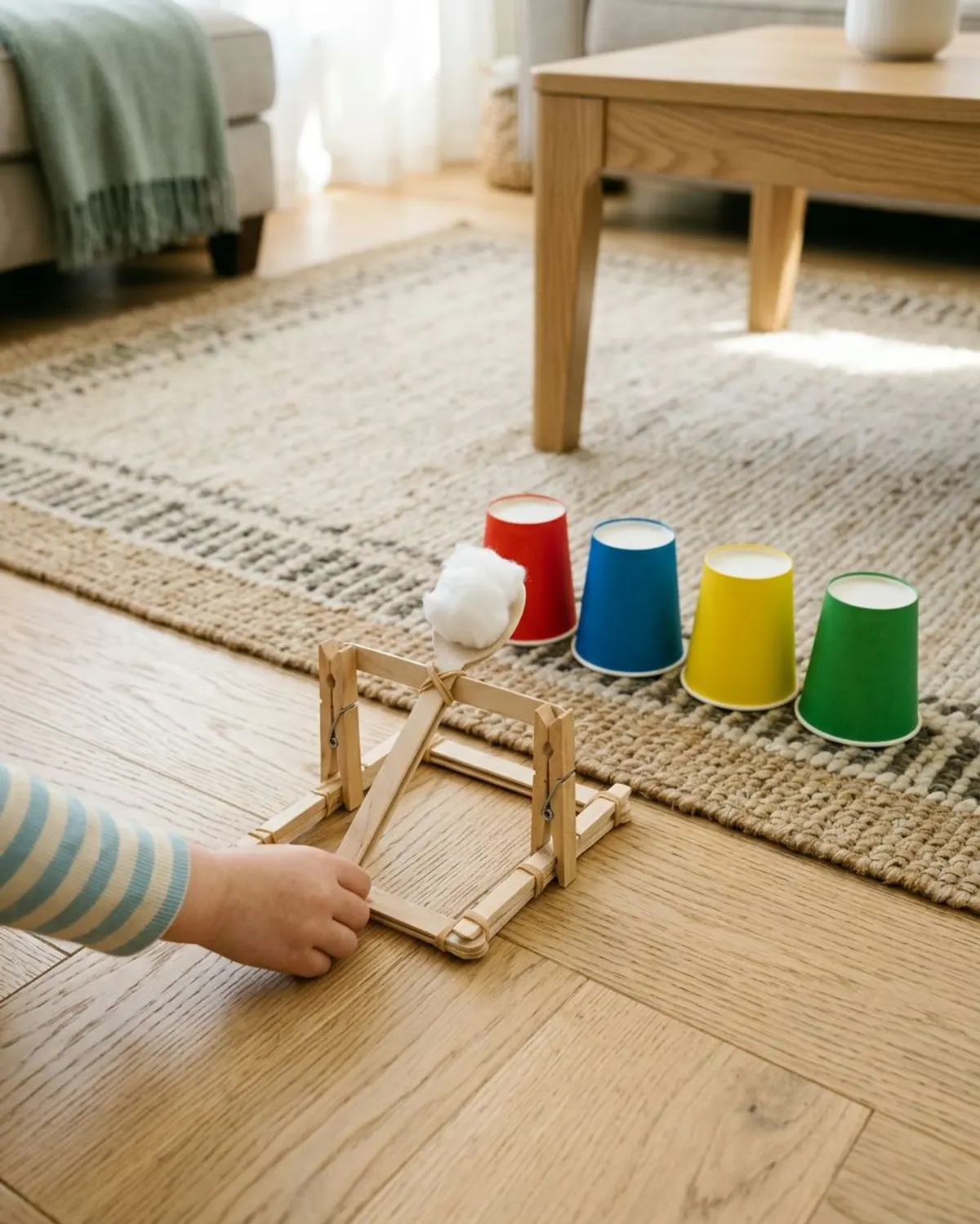
Make a catapult from two craft sticks, a clothespin and a rubber band, then fire cotton ball snowballs at a row of paper cups. Move the target farther away and ask what you change to launch farther: press harder or lean the stick.
Ages: 5 and up (an adult adds the rubber band)
Prep: 10 minutes
Mess: None
Supplies: craft sticks, a clothespin, rubber bands, big cotton balls, paper cups
Safety: rubber bands can snap, so an adult assembles and children aim away from faces. Use soft cotton balls only.
- Count how many cups you knock over in three tries.
The base for the catapult.
10Paper bridge for Santa
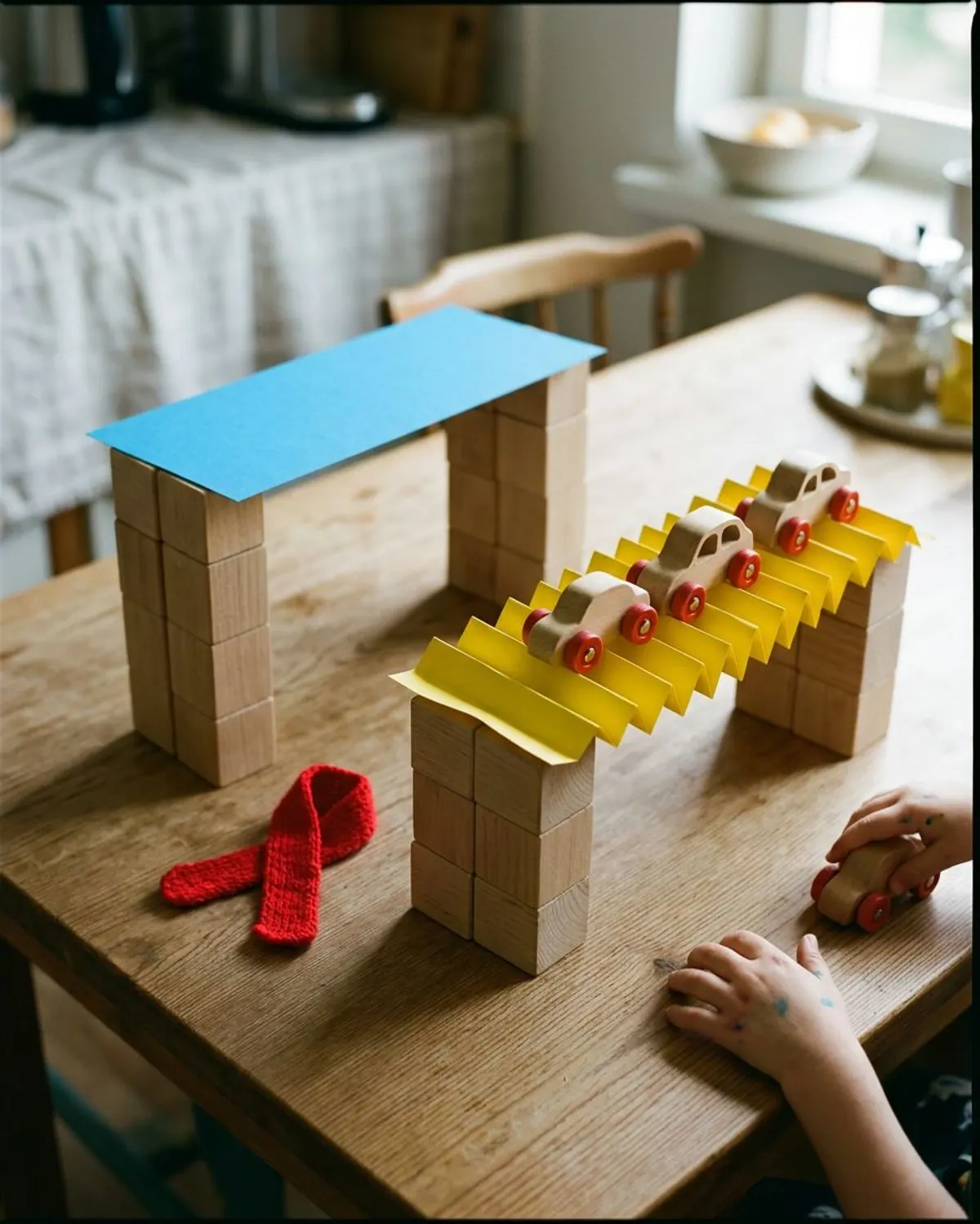
Bridge a gap between two stacks of blocks or books with one flat sheet of paper, and then test it with toy cars. It sags. Now fold the paper like an accordion and try again. Folded paper holds many more cars because the folds make it stiffer.
Ages: 5 and up
Prep: 5 minutes
Mess: None
Supplies: paper, two stacks of books, large toy cars
Safety: use large cars only. Keep the book stacks low so nothing falls on feet.
- Count the cars each bridge holds and compare.
Light, Sound and Shadow Activities
11Jingle bell sound jars
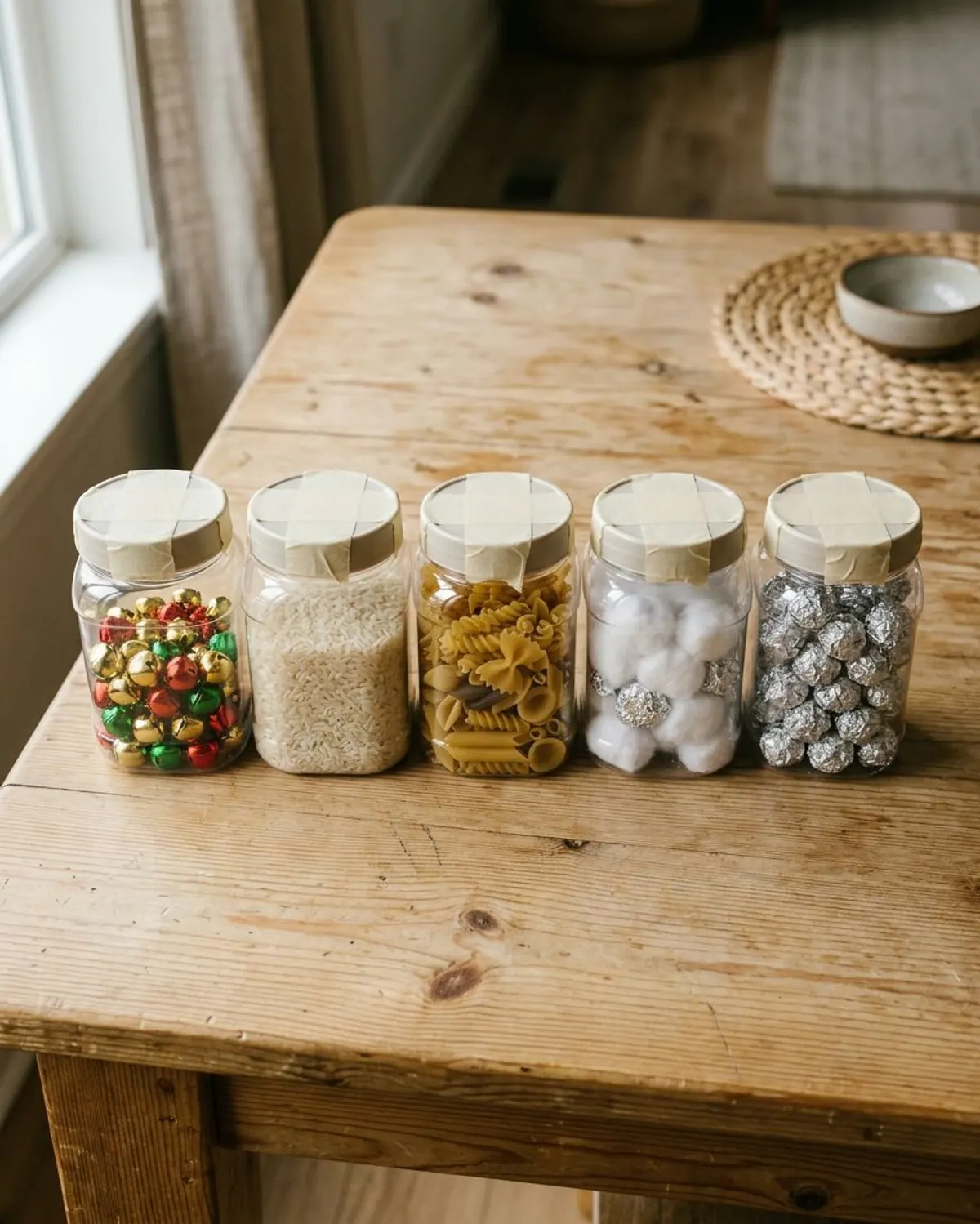
Fill sealed jars with large jingle bells, dry rice, dry pasta, cotton balls and crumpled foil. Tape the lids shut. Shake each jar and match the sounds, then sort them from loudest to quietest. Kids learn that different materials make different sounds.
Ages: 3 and up
Prep: 10 minutes
Mess: None
Supplies: plastic jars with lids, large jingle bells, rice, pasta, cotton balls, foil, tape
Safety: tape every lid shut, and keep the contents away from children under 3. Jingle bells must be large.
- Hide the jars behind your back so kids guess by sound alone.
12Flashlight reindeer shadows
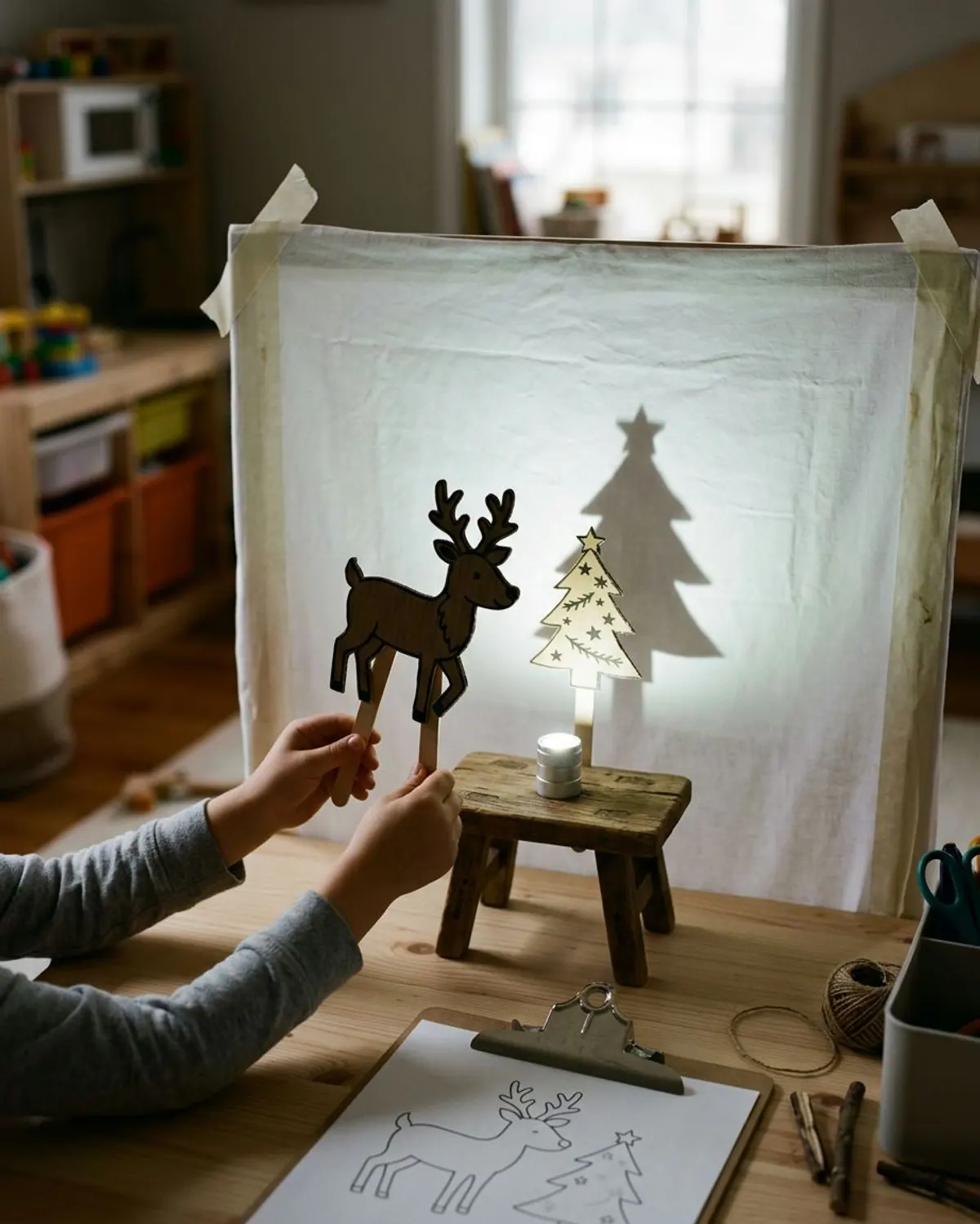
Tape a white sheet to a wall and cut reindeer and tree shapes from cardboard. Glue each to a craft stick. In a dim room, shine a flashlight on the shapes and watch the shadow grow when you move closer to the light. Ask kids how to make it small again.
Ages: 3 and up
Prep: 15 minutes
Mess: None
Supplies: cardboard, craft sticks, glue, a flashlight, a white sheet
Safety: use an LED flashlight, never a candle or a hot lamp, and have an adult cut the cardboard. Keep sticks out of mouths.
- Trade places so kids hold the flashlight and you hold the shapes.
Stay Safe Doing Christmas Science at Home
Candy canes, marshmallows and pom poms look like snacks and toys, but for children under 4 they can choke. The US Consumer Product Safety Commission has small parts rules for toys for children under 3, and the toilet paper tube is a handy home check. If it fits through, keep it away from the youngest. This page is not safety certification, so use your own judgment for your child.
Before you start
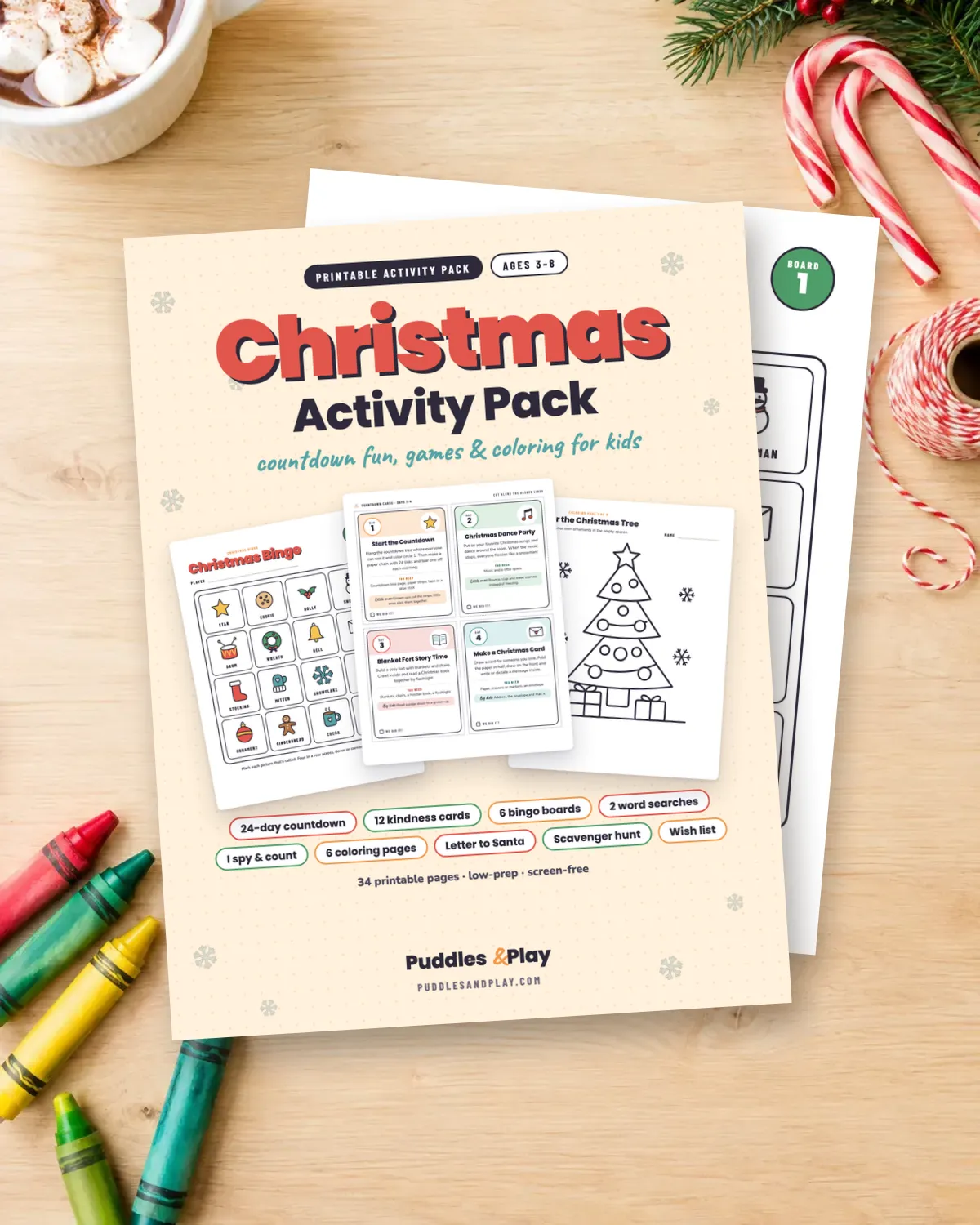
For more Christmas ideas that need no special supplies, see our low prep Christmas activities. If you want a month of them planned, the Christmas Activity Pack has 24 printable activity cards plus bingo and kindness cards. Looking for countdown ideas to match? Try the advent calendar fillers for kids, sorted by age.
Supplies for Christmas STEM activities
-
Eye droppers and pipettes
Typically $6 to $10
Good for squirting and for small fingers.
Check price on Amazon for Eye droppers and pipettes -
Baking soda and white vinegar
Typically $4 to $8
The base for the fizzy experiments.
Check price on Amazon for Baking soda and white vinegar -
Green paper cups
Typically $5 to $10
The tower tree and catapult targets.
Check price on Amazon for Green paper cups -
Shatterproof ornaments
Typically $10 to $18
Safe to splash and drop.
Check price on Amazon for Shatterproof ornaments -
Jumbo craft sticks
Typically $5 to $10
Catapults and shadow puppets.
Check price on Amazon for Jumbo craft sticks
Frequently asked questions
What are easy Christmas STEM activities for kids?
Fizzy candy canes, a candy cane dissolve test, a paper cup tree tower, foil sleigh boats and a flashlight shadow show all use supplies most homes already have and take under 20 minutes.
What are Christmas STEM activities for preschoolers?
Choose short, hands-on ones: fizzy candy canes, sink or float ornaments, sound jars and the paper cup tree tower. Ask one question, let them guess, and keep each activity to 10 to 15 minutes.
Is the baking soda and vinegar experiment safe for kids?
Baking soda and vinegar are common kitchen items, and the fizz is mild. Keep vinegar away from eyes, do not let children drink the mixture and sit with them while they work.
Can kids eat the candy canes after the experiment?
No. Once a candy cane has been in vinegar, water or on a tray with other materials, treat it as science supplies and throw it away. Keep a separate candy cane for snacking.
How do I make a STEM activity more challenging for older kids?
Add measuring and a second round. Time how long each candy cane takes to dissolve, count how many cars a bridge holds, or redesign the sleigh to carry more cargo.
How many STEM activities should we do in one session?
One or two is plenty for ages 3 to 5, and three is fine for ages 6 to 8. Stop while the kids still want more.
Save it for later
Pin this to your Learning Activities board so it's there when you need it.
Save to Pinterest