This post contains affiliate links. As an Amazon Associate we earn from qualifying purchases, at no extra cost to you. Read our disclosure.
Safety first: Always supervise little ones, and skip small parts for kids who still put things in their mouths. Please read our play safety notes before you start.
Key takeaways
- Start with 2 to 4 chores. Add one more only after a week where most boxes got checked.
- Kids 3 to 5 need picture icons, not words. Kids 6 to 8 can follow a short written list split into morning, after school and bedtime.
- Hang the chart where the chore happens, at your child's eye level, and check boxes at the same time every day.
- Do each new chore together for a few days before you expect your child to do it alone.
- Cleaning sprays, knives, the stove and the oven stay grown-up jobs at every age on this chart.
In this post12 sections
- What's in the free chore chart for kids (6 pages)
- Why most chore charts stop working by week two
- Step 1: Pick 2 to 4 chores by age
- Step 2: Choose the layout: daily, weekly or picture chart
- Step 3: Make it visual for kids who can't read yet
- Step 4: Put it where the chore happens
- Step 5: Run a 2-week start plan
- Stickers, stars or money: what rewards work at each age
- DIY and homemade chore chart ideas
- Printing tips and how to use it by age
- Chore chart ideas for ages 9 and up
- FAQ
What's in the free chore chart for kids (6 pages)
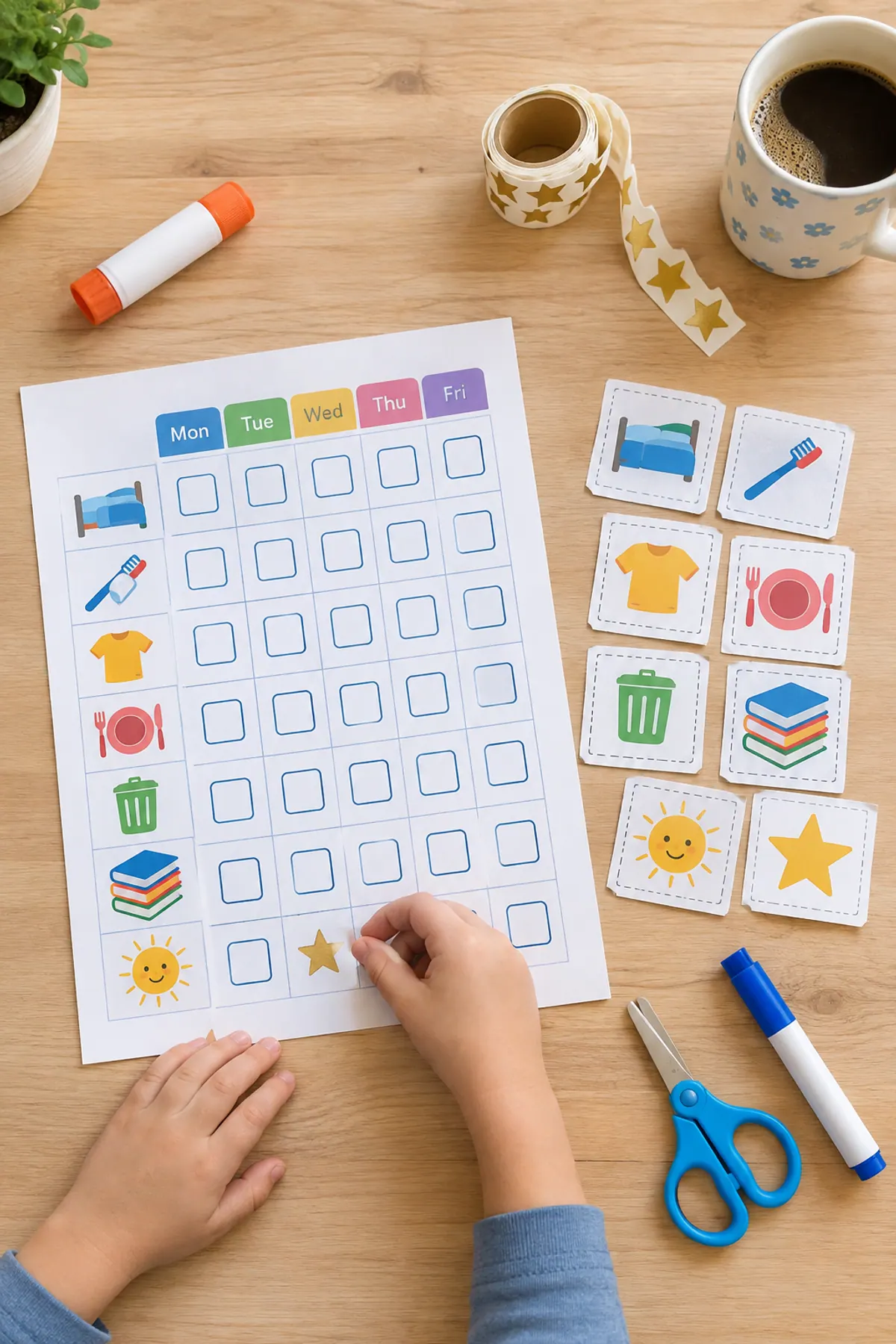
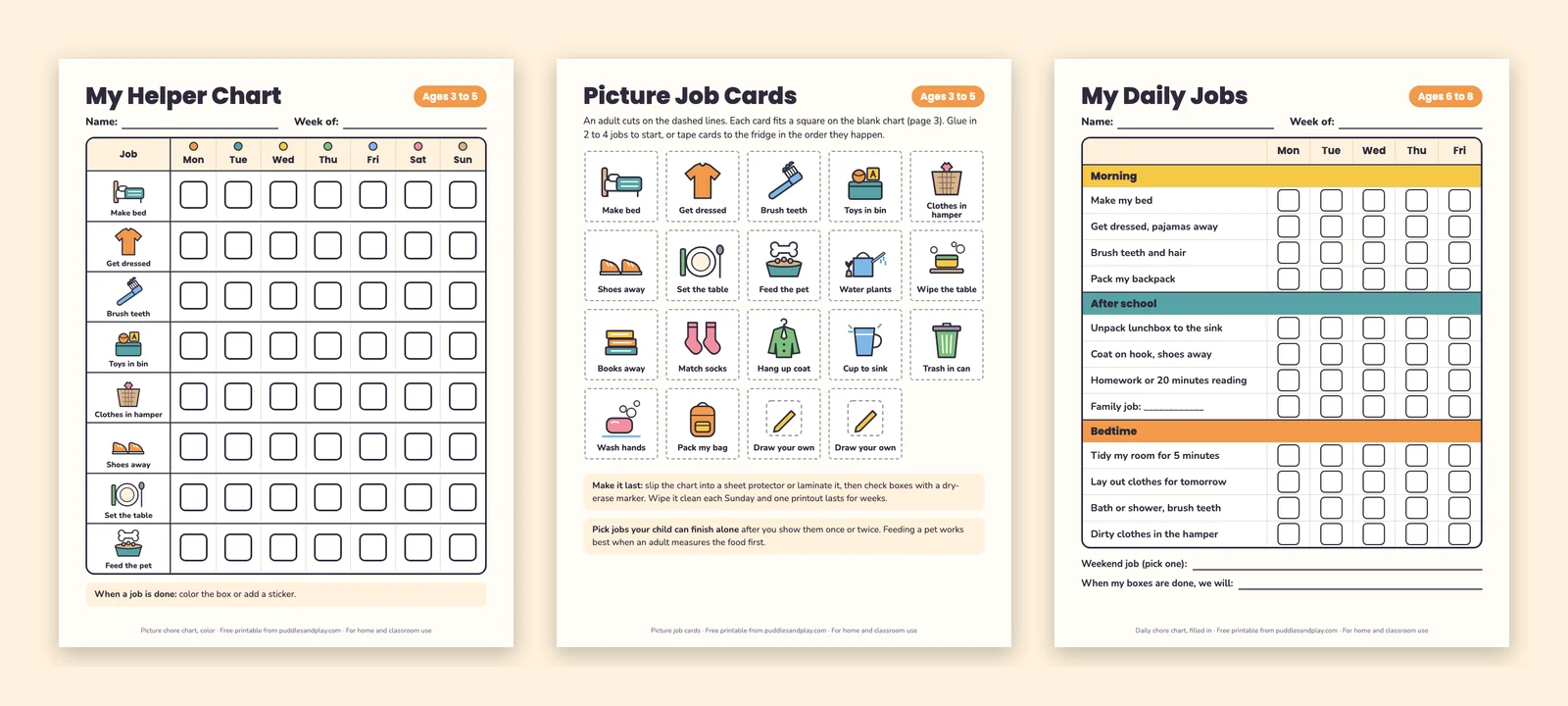
The PDF prints on US Letter paper and has a color version and a low-ink version, so you can pick what your printer can handle. Every icon is a simple drawing a 3 year old can recognize: a bed, a t-shirt, a toothbrush, a toy bin.
| Page | What it is | Best for |
|---|---|---|
| 1 | Picture helper chart in color: 8 jobs with icons, Monday to Sunday boxes | Ages 3 to 5, non-readers |
| 2 | 17 picture job cards plus 2 blank draw-your-own cards | Swapping jobs in and out |
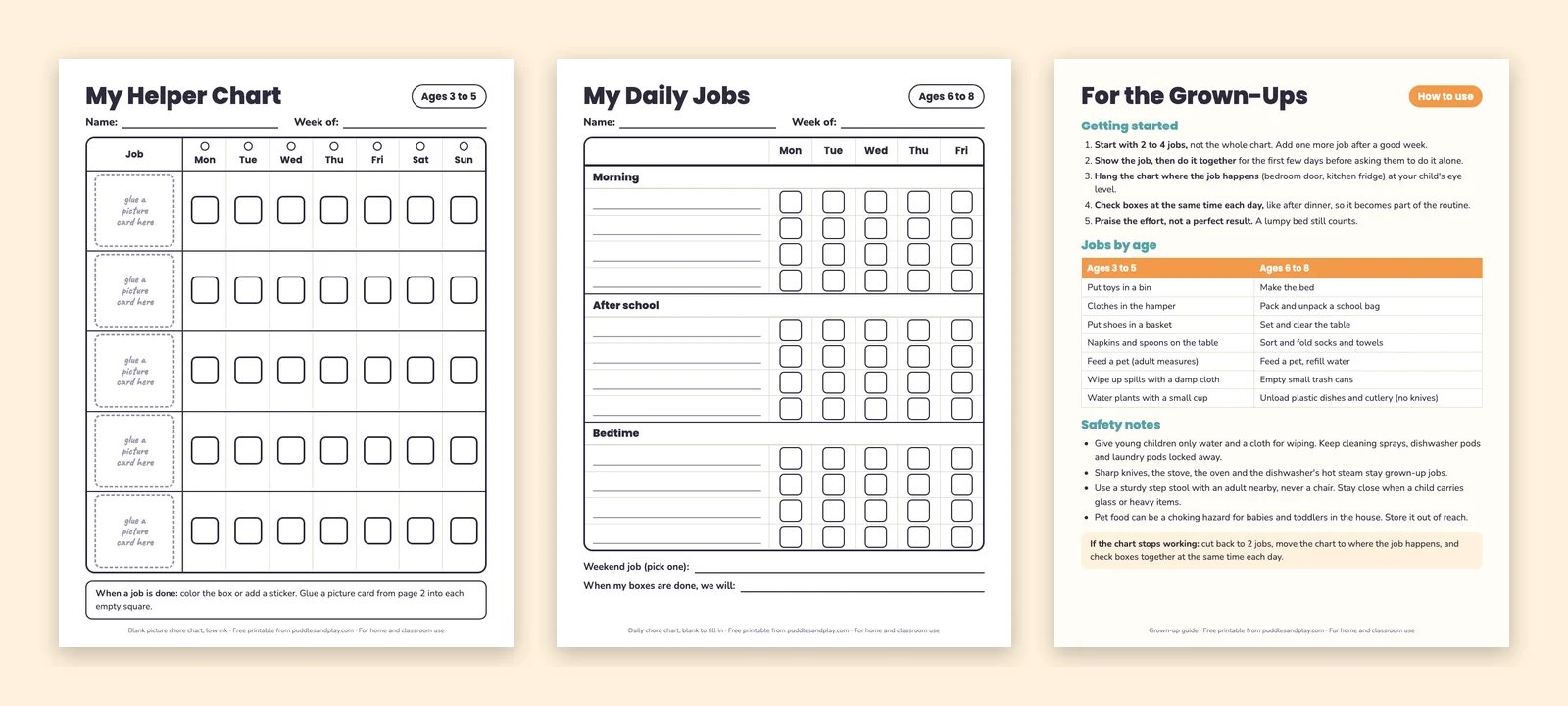
| 3 | Blank picture chart, low ink, with a square to glue each card | Picking your own 2 to 5 jobs |
| 4 | Daily jobs chart: morning, after school, bedtime, Monday to Friday | Ages 6 to 8, early readers |
| 5 | Blank daily chart with write-in lines | Older kids who want to pick their own jobs |
| 6 | Grown-up guide: start-up steps, jobs by age, safety notes | You, before you hang it up |
Download the free chore chart for kids (PDF, 6 pages). No sign-up needed, and teachers may print copies for their own class. For 50 more screen-free ideas for the hours between chores, the free activity pack below comes by email.
Why most chore charts stop working by week two
Most charts don't fail because a child is lazy. They fail because the chart asks for too much, sits in the wrong place, or depends on a grown-up remembering to check it. Here are the five reasons we see most often and the fix for each.
| Why it stops working | The fix |
|---|---|
| Too many jobs on day one | Start with 2 to 4. Add one more after a good week. |
| The child can't read the chart | Use picture icons for ages 3 to 5 (pages 1 to 3). |
| It hangs far from where the job happens | Put it on the bedroom door or the fridge, at child height. |
| Nobody checks boxes at a set time | Tie the check-in to something daily, like after dinner. |
| The job was never taught | Do it together for 3 or 4 days, then let them try alone. |
If your chart already stalled, you don't need a new one. Cut it back to two jobs and move it to where those jobs happen. That reset is often enough.
Step 1: Pick 2 to 4 chores by age
Pick jobs your child can finish from start to end with no help after you've shown them a few times. A 3 year old can drop toys in a bin. A 3 year old can't really clean a bedroom, because that's ten jobs wearing one name.

| Chore | Ages 3 to 5 | Ages 6 to 8 |
|---|---|---|
| Put toys away | Toys into one open bin, with you nearby | Whole play area, toys sorted into bins |
| Laundry | Dirty clothes into the hamper | Match socks, fold towels, put own clothes away |
| Getting ready | Shoes in a basket, coat on a low hook | Pack and unpack a school bag |
| Table | Napkins and spoons on the table | Set and clear the table (no sharp knives) |
| Pets | Pour food an adult measured | Feed and refill water bowls |
| Cleaning | Wipe a spill with a damp cloth, water only | Empty small trash cans, wipe the table |
| Plants | Water plants from a small cup | Water plants with a watering can |
Step 2: Choose the layout: daily, weekly or picture chart
A weekly picture chart suits ages 3 to 5. One row per job and seven boxes keeps it simple, and a small child can see a whole week of colored-in boxes at a glance.
A daily chart split by time of day suits ages 6 to 8. It reads like a routine: what to do in the morning, after school and before bed. That's the layout on page 4, with Monday to Friday columns because weekends usually run differently. There's a line at the bottom for one weekend job.

Have two kids of different ages? Print one of each. A preschooler with pictures and a second grader with words can both hang their charts side by side on the fridge.
Step 3: Make it visual for kids who can't read yet
This is the step most free charts skip. A list of words means nothing to a 4 year old, so they need you every time, and the chart stops being theirs.
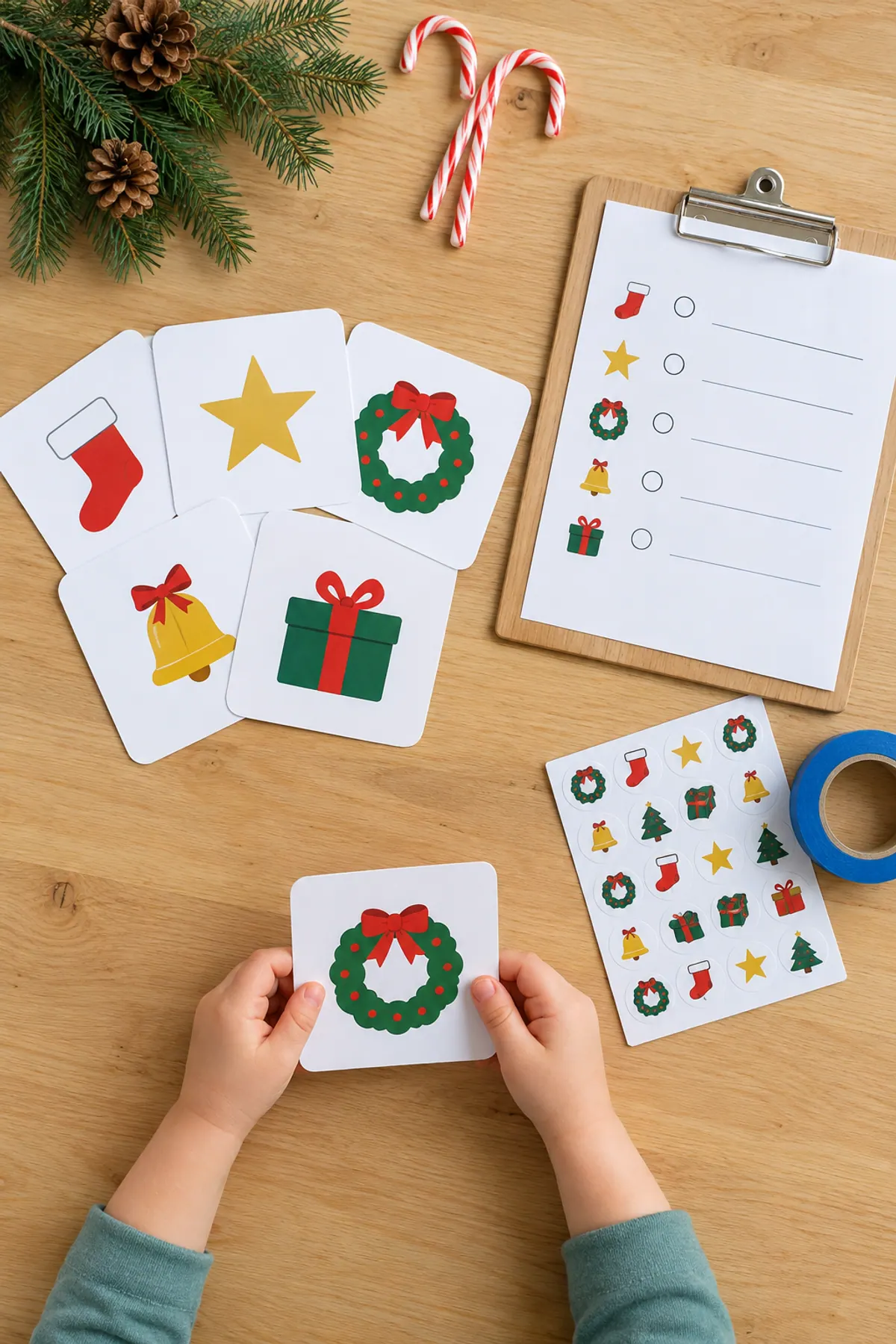
Page 2 of the free chore chart PDF has 17 picture job cards: make bed, get dressed, brush teeth, toys in bin, clothes in hamper, shoes away, set the table, feed the pet, water plants, wipe the table, books away, match socks, hang up coat, cup to sink, trash in can, wash hands and pack my bag, plus two blank cards to draw your own. Each card fits a square on the blank chart on page 3.
Let your child help choose the cards and glue them in. A child who picked "water plants" tends to remember it better than one who was handed a list.
Step 4: Put it where the chore happens
A chart on the office wall gets forgotten. Morning jobs belong on the bedroom door. Table and pet jobs belong on the fridge. Hang it at your child's eye level, not yours.
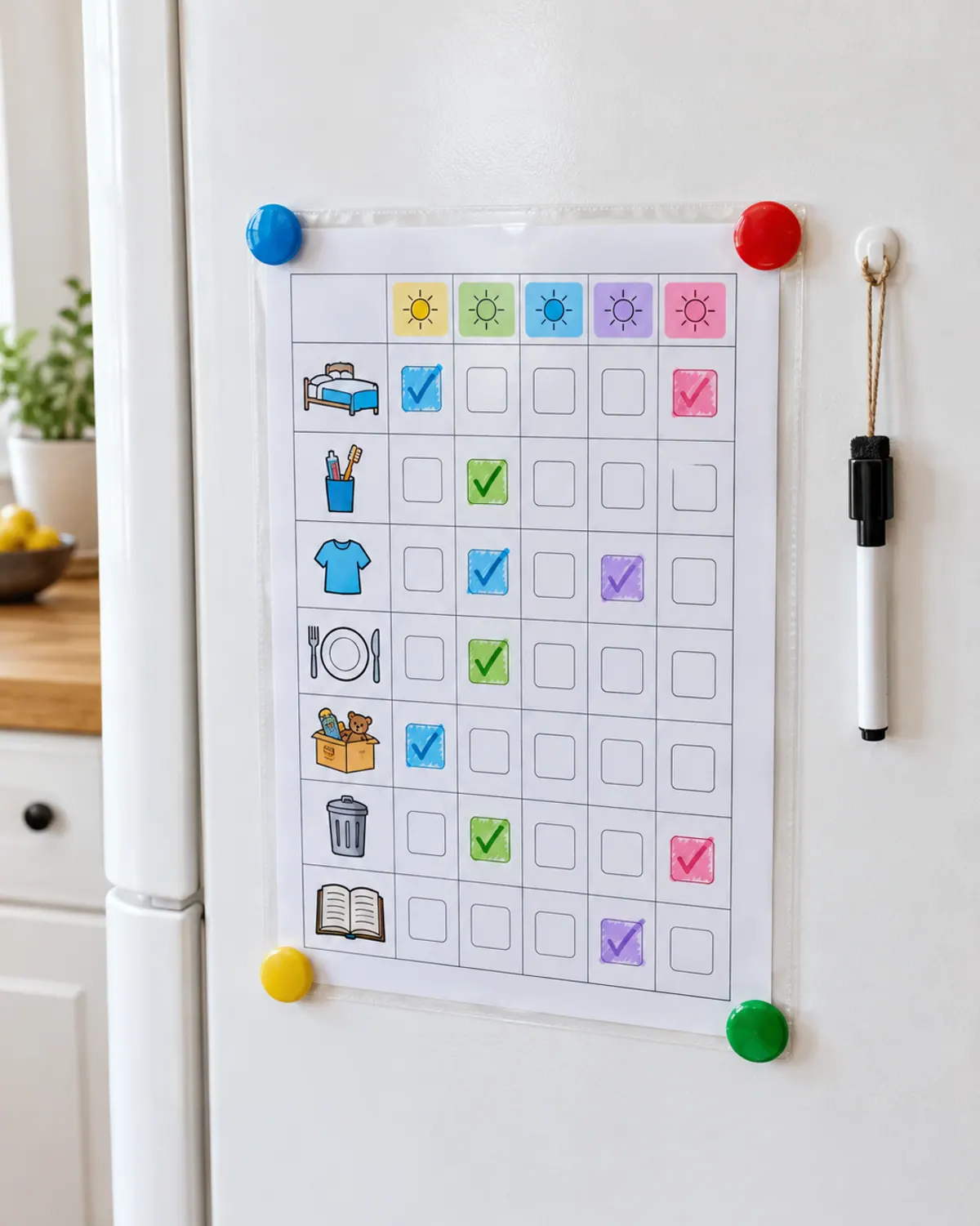
Slip the chart into a clear sheet protector and use a dry-erase marker. Wipe it clean on Sunday night, and one printout lasts for weeks.
Step 5: Run a 2-week start plan
The first two weeks set the habit. Here's a simple plan that works for both charts.
The 2-week chore chart start plan
Expect a lumpy bed and a crooked napkin. Praise the effort, not the result. Redoing a child's job in front of them is the fastest way to end the chart.
Stickers, stars or money: what rewards work at each age
This part is opinion, and families land in different places. For ages 3 to 5, coloring in the box or adding a sticker is usually reward enough. Little kids like seeing the row fill up.
For ages 6 to 8, a small shared goal often works better than a prize per box: a full week means a family movie night or a trip to the park. Page 4 has a line for this: "When my boxes are done, we will." Some families pay an allowance for extra jobs on top of the daily ones and keep the daily jobs as part of being in the family. Pick the approach you can keep up for months.
What we like
- Stickers and colored boxes: free, instant and loved by preschoolers
- A shared weekly goal: keeps the focus on the family, not the prize
- Allowance for extra jobs: teaches early money counting for ages 6 to 8
Keep in mind
- Prizes for every box can turn every job into a bargain
- Paying for daily jobs can lead to "I don't need the money today"
- Big rewards are hard to keep up after the first month
DIY and homemade chore chart ideas
If you'd rather build something that lasts, the picture cards from page 2 work with all three of these ideas.
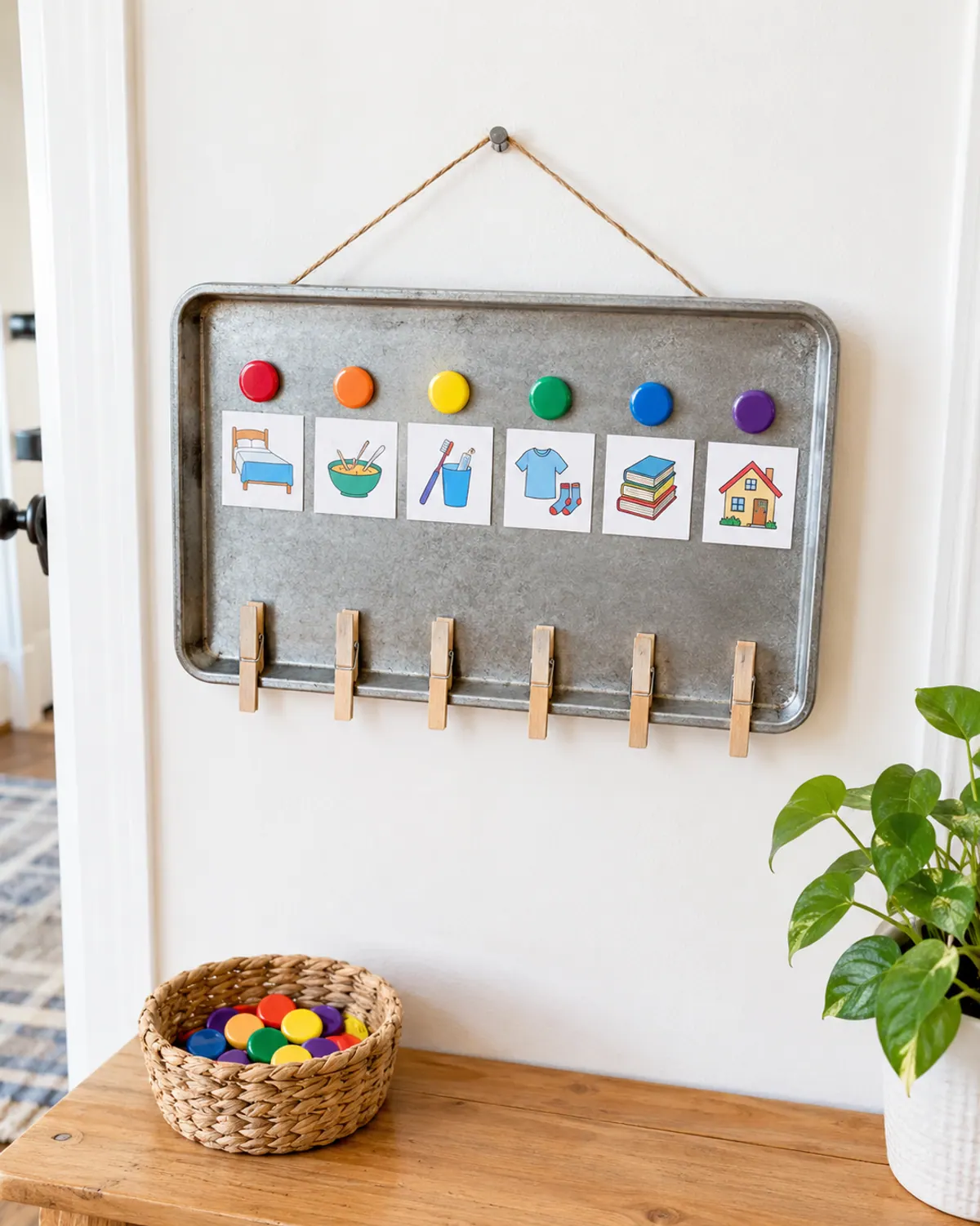
Three homemade chore chart ideas
Chore chart supplies worth having
- Most used
Magnetic chore chart board for kids
Typically $10 to $25
A ready-made board if you'd rather not print. Check the magnet size if you have a toddler.
Check price on Amazon for Magnetic chore chart board for kids -
Dry erase sheet protectors or laminating pouches
Typically $8 to $15
One printout lasts for weeks. Wipe and restart each Sunday.
Check price on Amazon for Dry erase sheet protectors or laminating pouches -
Fine tip dry erase markers
Typically $6 to $12
Fine tips fit the small boxes on the daily chart.
Check price on Amazon for Fine tip dry erase markers -
Star sticker rolls
Typically $5 to $10
The favorite way for 3 to 5 year olds to mark a job done.
Check price on Amazon for Star sticker rolls
Printing tips and how to use it by age
Print at "actual size" or 100 percent on US Letter paper. Cardstock makes the job cards easier to handle, but plain paper works fine inside a sheet protector. The low-ink pages (3 and 5) print well in black and white.
For ages 3 to 5, use pages 1 to 3 and an adult does the cutting. For ages 6 to 8, use pages 4 and 5 and let your child write their own jobs on the blank chart once they know the routine. Kids around 6 who are just starting to read often like the picture chart for one more month, and that's fine.
Looking for more printables? Try our free preschool printables for at-home learning, the car game printables for road trips, or our toddler activities sorted by age for the hours after the jobs are done.
Chore chart ideas for ages 9 and up
By 9, most kids are ready for a weekly list instead of a daily one, with bigger jobs like vacuuming a room or folding a full load of laundry. The blank daily chart on page 5 still works if you write in weekly jobs.
Frequently asked questions
What chores can a 3 year old do?
A 3 year old can put toys into an open bin, drop dirty clothes in the hamper, put shoes in a basket, set napkins and spoons on the table and wipe a spill with a damp cloth. Stay nearby, show each job a few times first, and keep cleaning sprays out of reach.
How do I make a chore chart for a child who can't read yet?
Use pictures instead of words. Our free chore chart PDF has a picture chart and 17 job cards with simple icons, so a 3 to 5 year old can see that a bed means make the bed. Glue the cards onto the blank chart and hang it where the job happens.
How many chores should a 5 year old have?
Start with 2 to 4 small daily jobs, such as making the bed, putting toys away and setting napkins on the table. Add one more only after a week where most boxes got checked.
Should kids get paid for chores?
Families differ. Many keep daily jobs unpaid as part of being in the family and pay a small amount for extra jobs. For 3 to 5 year olds, stickers or coloring in a box is usually enough. Pick a system you can keep up for months.
Why do chore charts stop working after a week?
Usually the chart has too many jobs, hangs far from where the jobs happen, or nobody checks boxes at a set time. Cut back to 2 jobs, move the chart to the fridge or bedroom door, and check it together after dinner each day.
Is there a free printable chore chart for toddlers with pictures?
Yes. Our chore chart PDF is free with no sign-up. It has a color picture chart, a low-ink blank chart and 17 picture job cards for ages 3 to 5, plus a daily written chart for ages 6 to 8.

Save it for later
Pin this to your Printables board so it's there when you need it.
Save to Pinterest