This post contains affiliate links. As an Amazon Associate we earn from qualifying purchases, at no extra cost to you. Read our disclosure.
Safety first: Always supervise little ones, and skip small parts for kids who still put things in their mouths. Please read our play safety notes before you start.
Key takeaways
- Quiet time is a daily rest block in one safe place, with or without sleep.
- Start with 10 to 15 minutes and grow it slowly with a visual timer.
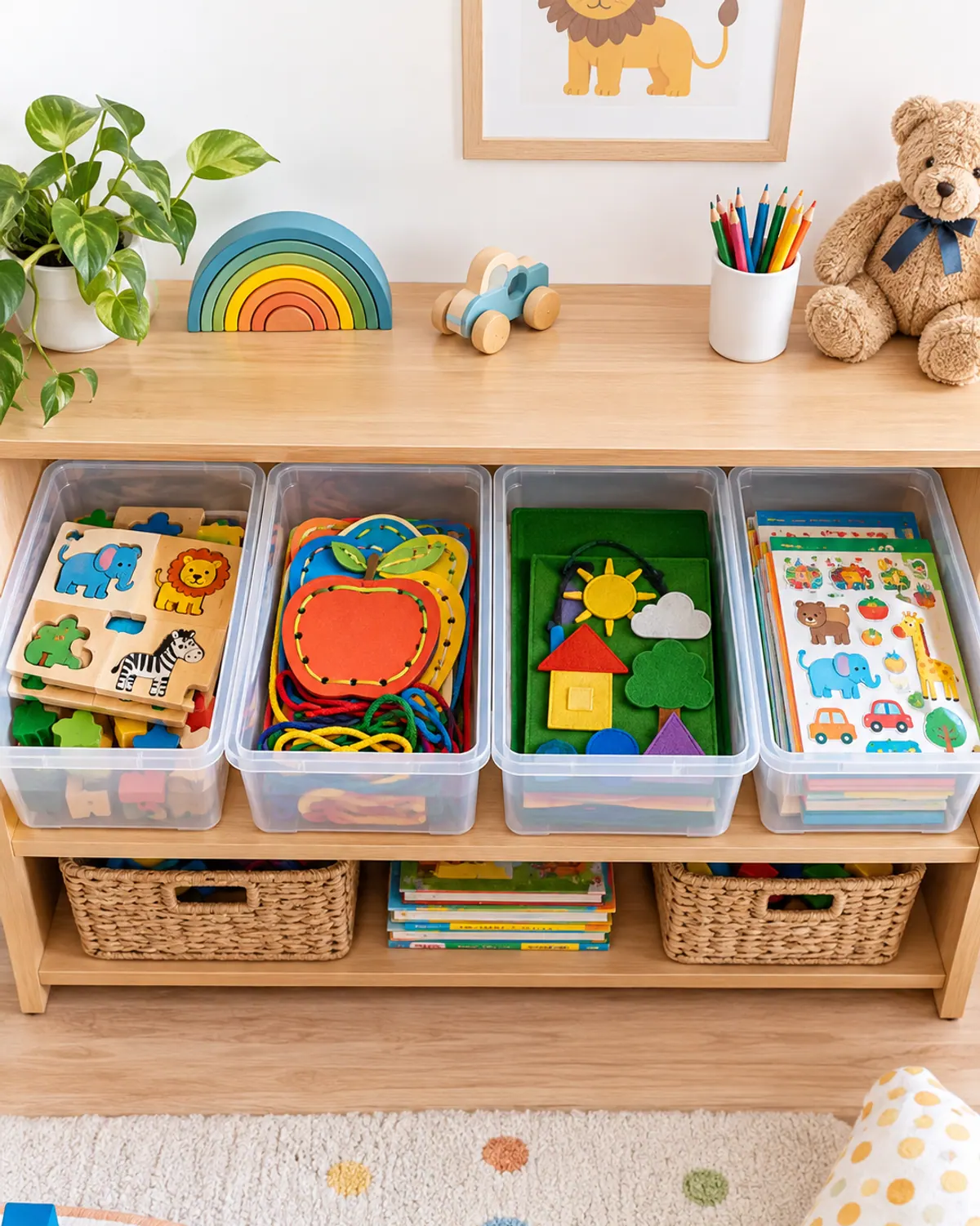
- Keep 3 or 4 quiet time bins that only come out at quiet time, and rotate them.
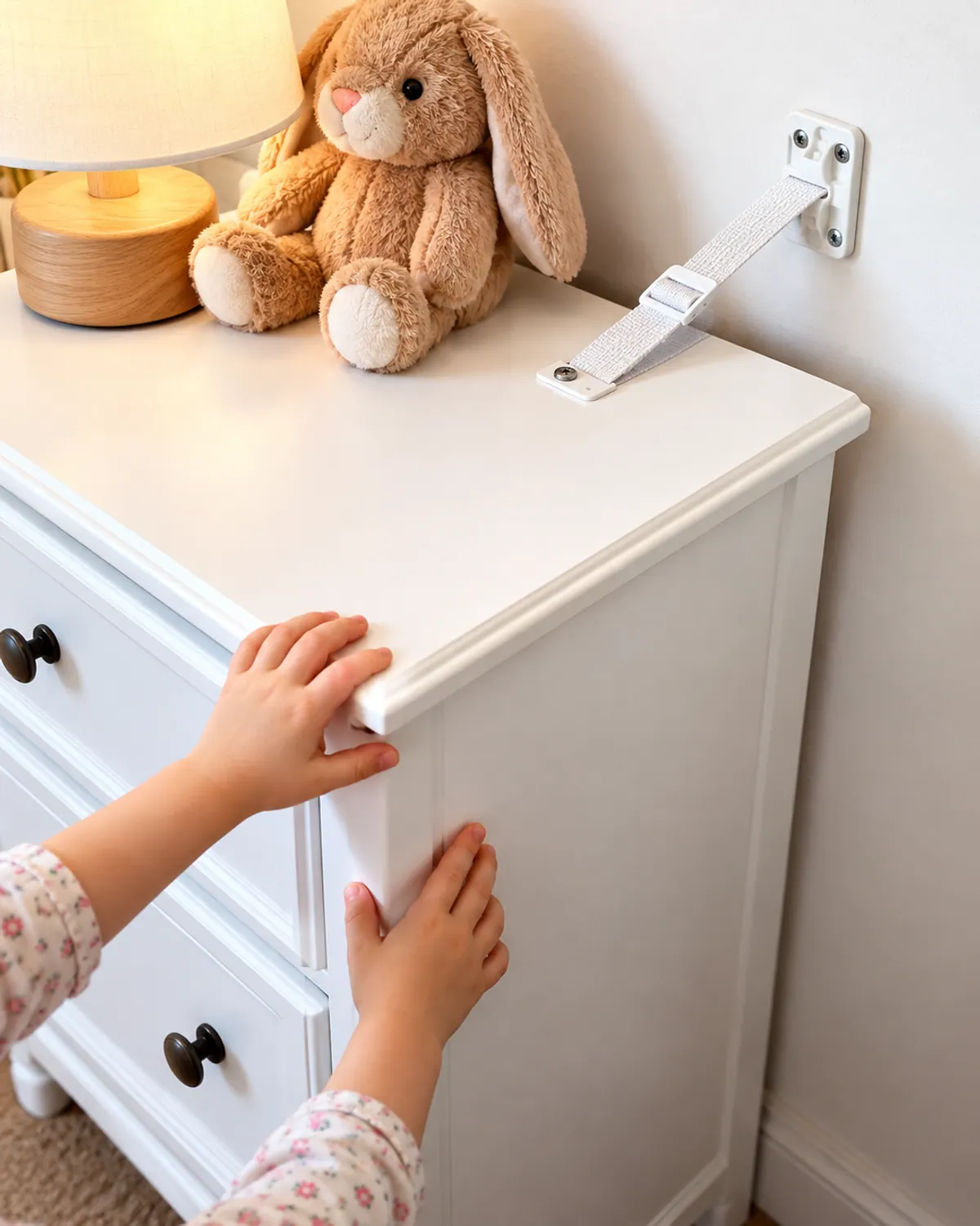
- Make the room safe first: anchor dressers and shelves, and keep small parts away from under 3s.
- When they come out, walk them back calmly with as few words as possible.
In this post26 sections
- What quiet time is, and when to start it
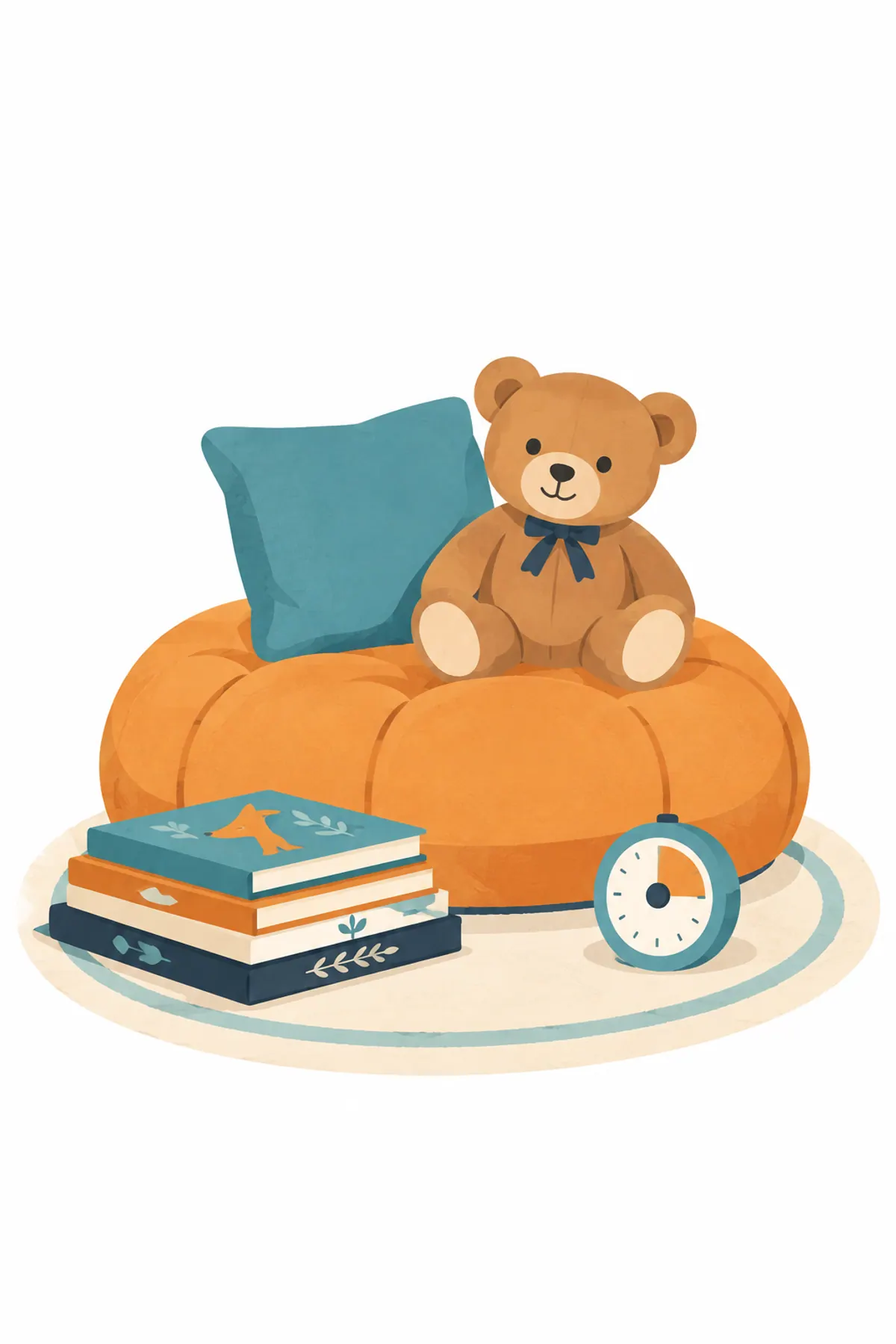
- Supplies for quiet time
- How to start quiet time for toddlers in 6 steps
- 15 quiet time activities for toddlers by age
- Quiet time activities for 2 year olds
- 1. Board book basket
- 2. Sticker scenes
- 3. Chunky puzzle bin
- 4. Stuffed animal picnic
- 5. Felt board stories
- 6. Audiobook and song time
- Quiet time activities for 3 year olds
- 7. Playdough tray
- 8. Lacing cards
- 9. Magnetic drawing board
- 10. Water reveal pages
- 11. Big block build bin
- 12. Seek-and-find books
- Quiet time activities for preschoolers (3 and up)
- 13. Memory match cards
- 14. Crayon game pages
- 15. Pom-pom tong sort
- Quiet time mistakes that lead to meltdowns
- Quiet time at daycare or with siblings
- A sample quiet time plan for the first month
- FAQ
What quiet time is, and when to start it
Quiet time is a set block each day when your child plays calmly on their own in one spot. They can sleep if they are tired, rest, look at books or play with a quiet bin. It gives their body a break and gives you one too.
Most families start it when naps get short or stop. Cleveland Clinic says kids usually drop the nap between ages 3 and 6, and cites Sleep Foundation figures that about 60% of 4 year olds and 30% of 5 year olds still nap (Cleveland Clinic, 2025).
Total sleep still matters. The American Academy of Sleep Medicine recommends 11 to 14 hours a day for ages 1 to 2 and 10 to 13 hours for ages 3 to 5, naps included (AASM, 2016). If your child still naps most days, keep the nap and use quiet time on the days they don't sleep.
| What you see | What it can mean |
|---|---|
| Takes 30 minutes or more to fall asleep at nap time | The nap may be getting too long for their day |
| Naps, then is wide awake at bedtime but in a good mood | Night sleep is getting squeezed |
| Skips the nap and stays happy until dinner | Ready to try quiet time |
| Skips the nap and melts down by 4 pm | Still needs the nap most days |
Supplies for quiet time
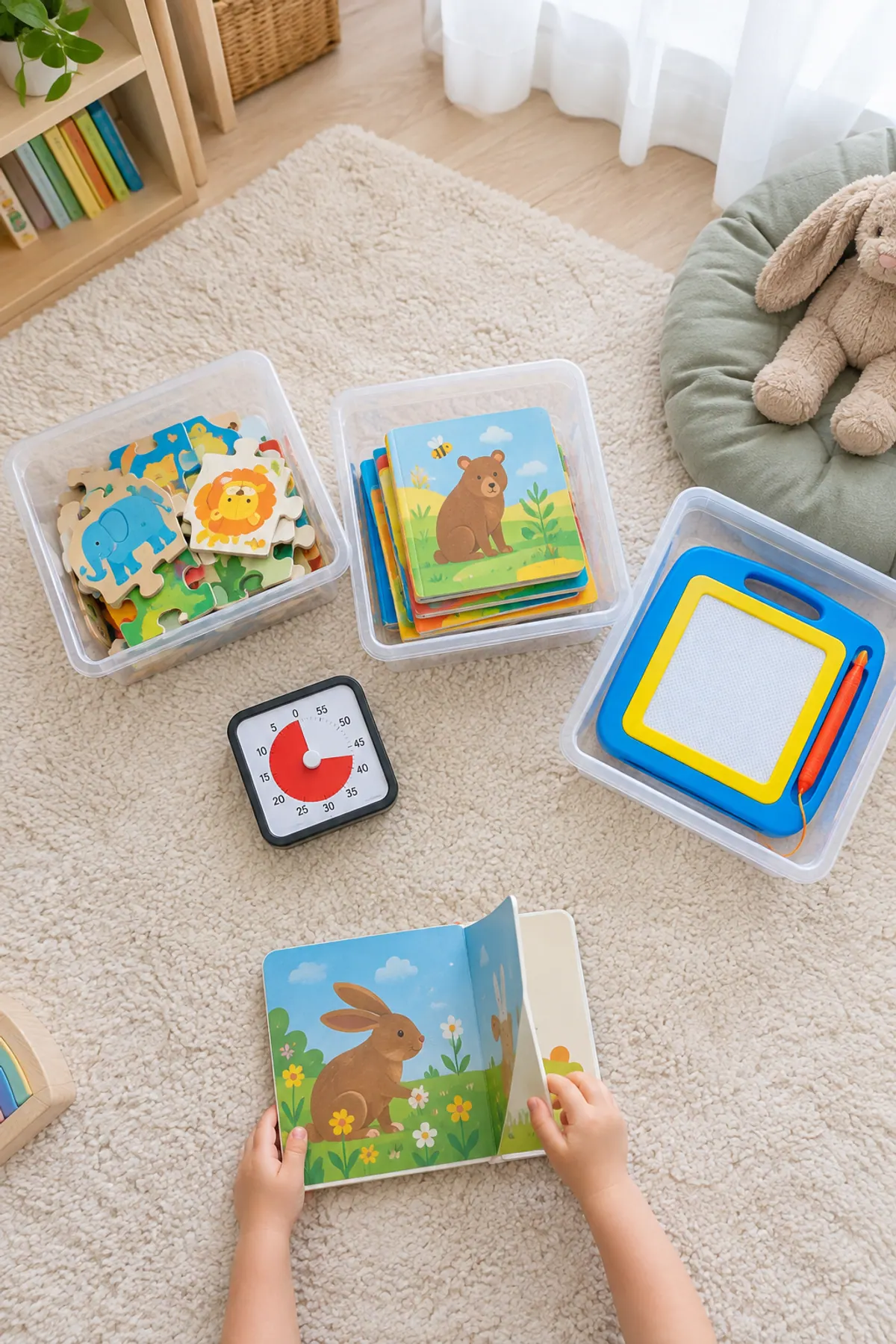
You do not need much. Most of it is a place, a timer and a few bins of toys you already own.
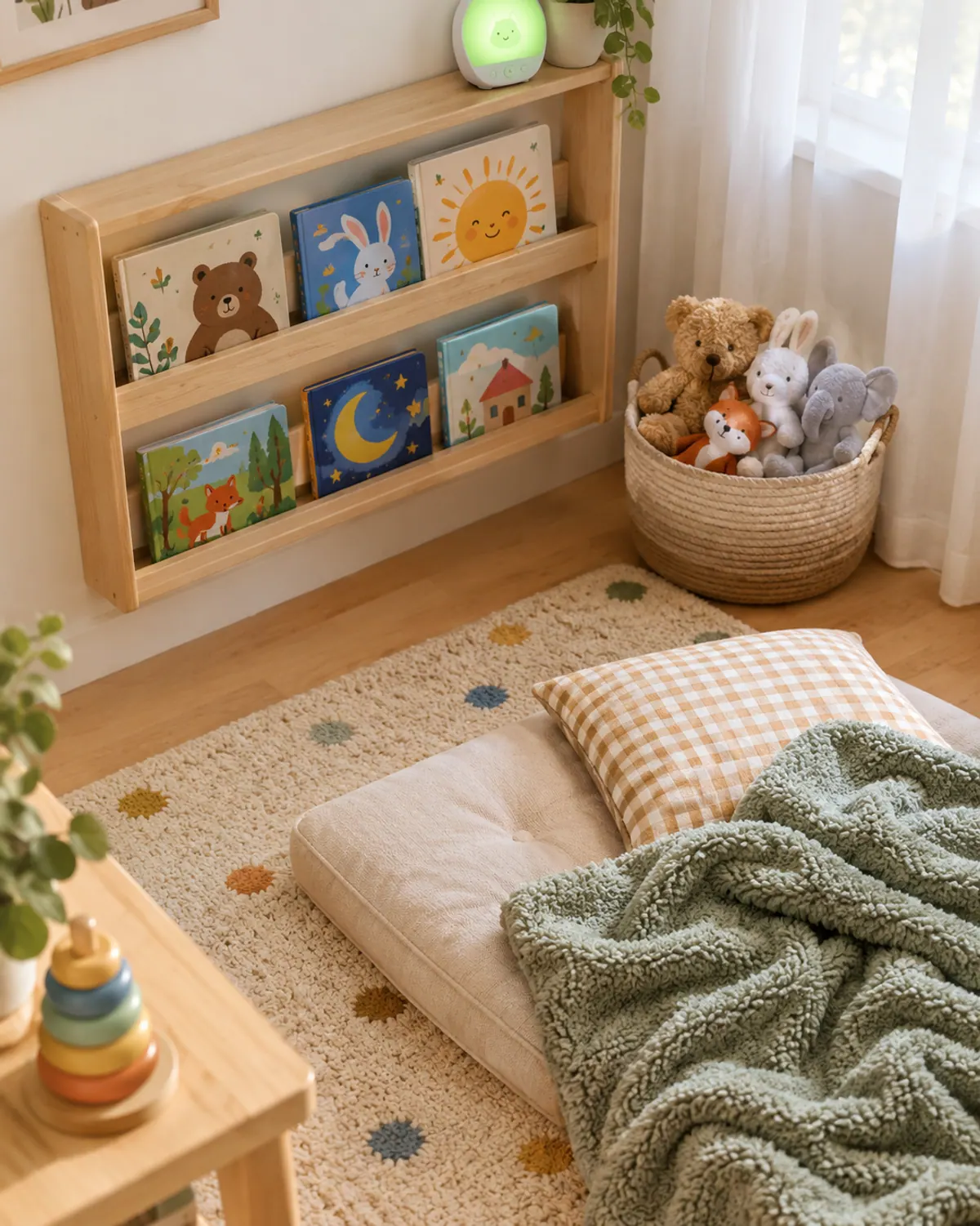
Quiet time supply list
How to start quiet time for toddlers in 6 steps
-
Step 1: Pick the same time and place every day
Use the time when the nap used to happen, usually right after lunch. Keep the same spot every day, such as their bedroom or a quiet corner. The routine does a lot of the work, so keep it the same.
-
Step 3: Set up 3 or 4 quiet time bins
Fill small lidded bins with quiet things: a puzzle, a sticker book, a felt board, lacing cards. Each bin only comes out at quiet time, so it stays exciting. Rotate one bin a day.
-
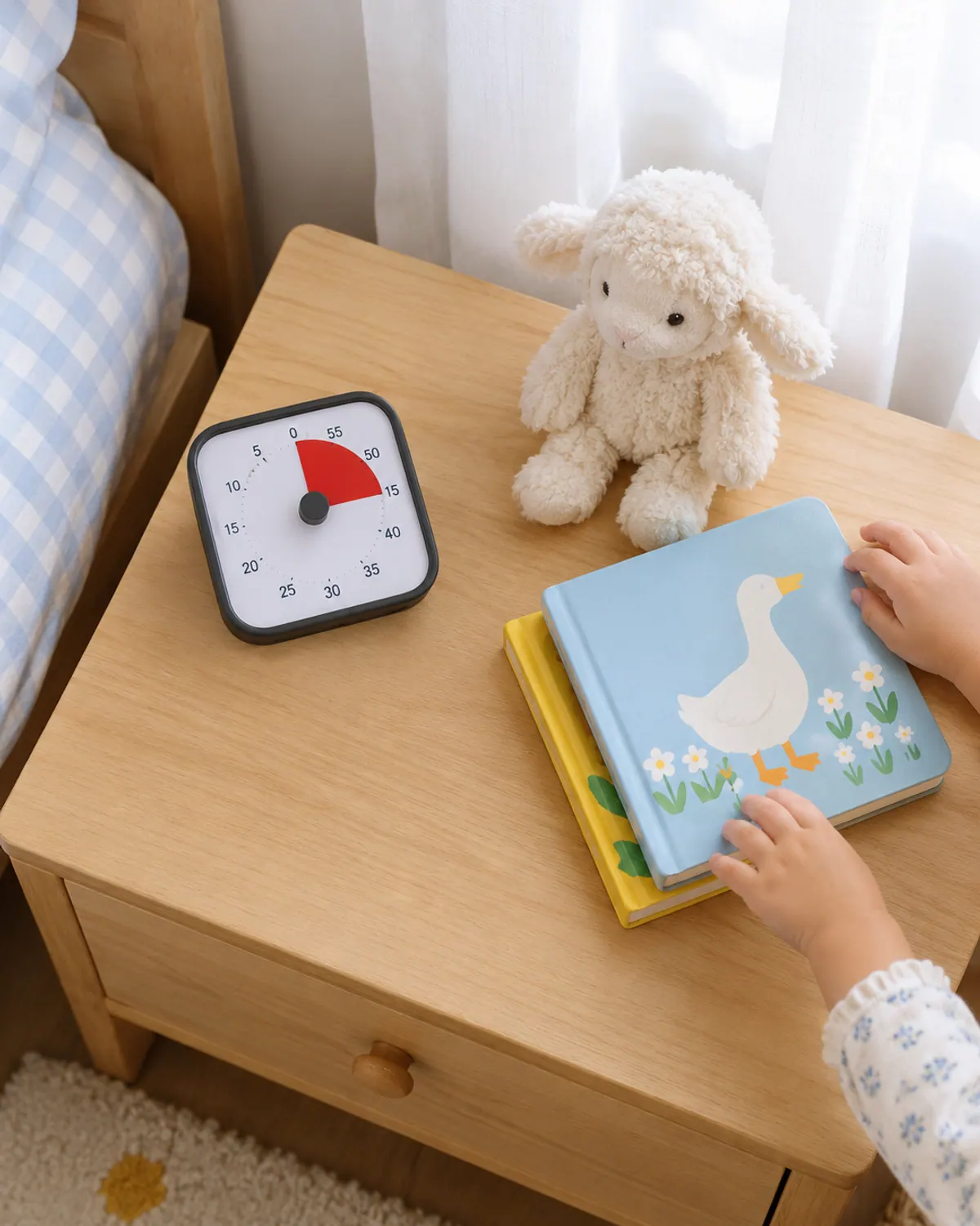
Step 4: Start short with a visual timer
Start with 10 to 15 minutes, a length your child can win at. Add 5 minutes every few days. A visual timer or a clock that changes color shows toddlers when it ends, since they cannot tell time yet.
-
Step 5: Explain the rules in 3 short lines
Keep it simple: stay in your room, play quietly, come out when the clock turns green. Practice once while you are in the room. Then say a cheerful goodbye and leave.
-
Step 6: End on time, with something warm
Open the door when the timer ends, not before. Greet them with a hug, a snack or a book together. That makes quiet time feel like something good, not a punishment.
15 quiet time activities for toddlers by age
Pick 3 or 4 for each bin. The ages are a guide, so watch your own child. Anything for 3 and up has small pieces and should stay away from younger siblings.
Quiet time activities for 2 year olds
1Board book basket
Put 6 to 8 board books in a basket by the cushion. Swap them out each week so there is always something new to look at.
Ages: 1 to 3.
Prep: 2 minutes.
Mess: none.
Supplies: board books, a basket.
Safety: board books are a safe pick for mouthers. Skip books with small pop-out pieces.
2Sticker scenes
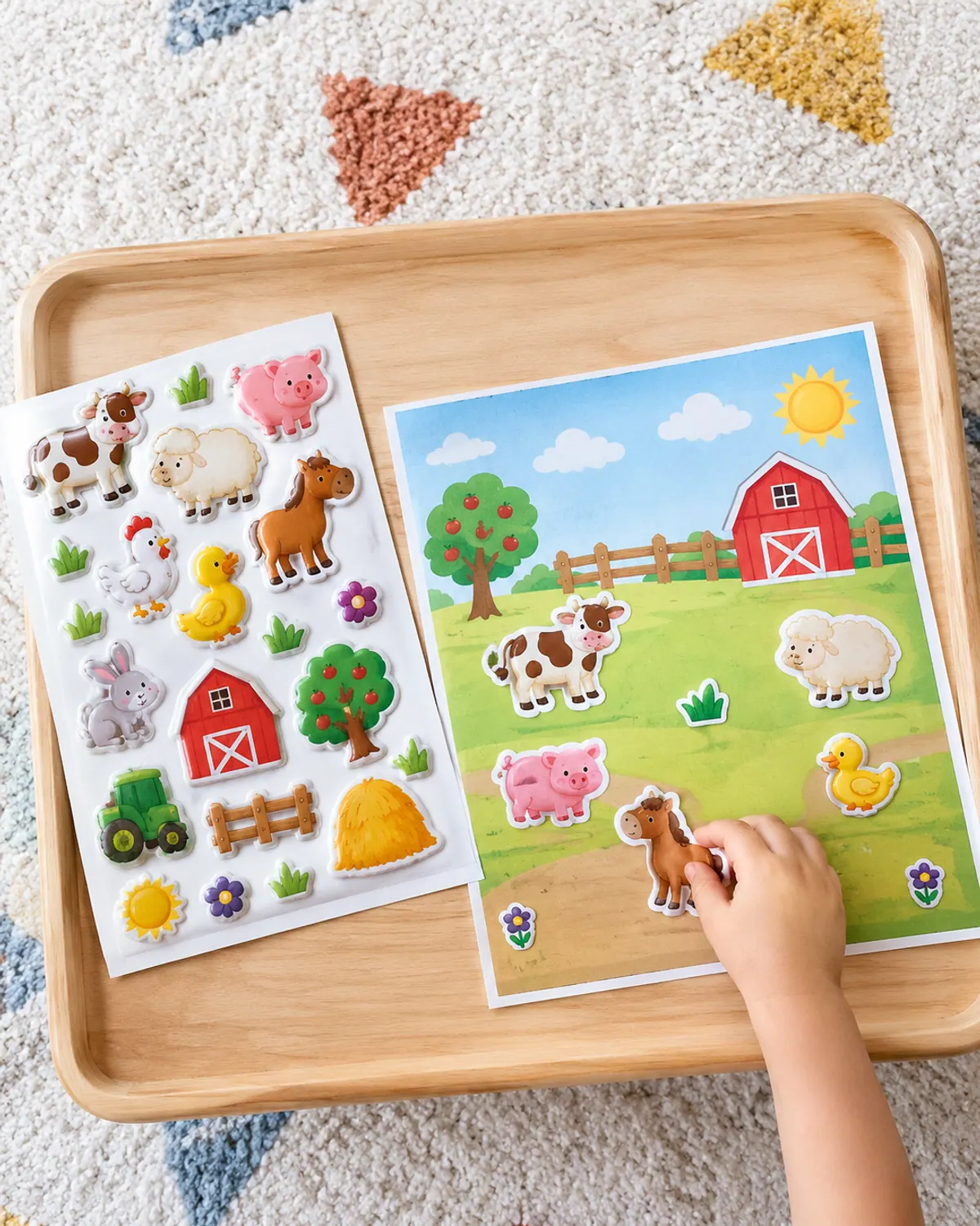
Hand over a sheet of big stickers and a blank scene page, like a farm or a road. Peeling stickers takes focus and builds finger strength.
Ages: 2 to 3.
Prep: 1 minute.
Mess: low.
Supplies: large stickers, paper or a sticker book.
Safety: stickers can be a choking risk. Use big ones and skip them for kids who still mouth.
3Chunky puzzle bin
Put 2 or 3 chunky wooden puzzles with knobs in a bin. Start with 3 to 5 piece puzzles and move up when they are easy.
Ages: 18 months to 3.
Prep: 1 minute.
Mess: none.
Supplies: chunky wooden puzzles.
Safety: check that knobs are glued on tight. Remove any puzzle with loose knobs.
4Stuffed animal picnic
Pack a small blanket, a few stuffed animals and play dishes. Your toddler sets up a picnic and feeds everyone. Pretend play like this can fill a long stretch.
Ages: 2 to 3.
Prep: 2 minutes.
Mess: none.
Supplies: stuffed animals, play dishes, a small blanket.
Safety: use toddler-size play food, not small pieces.
5Felt board stories
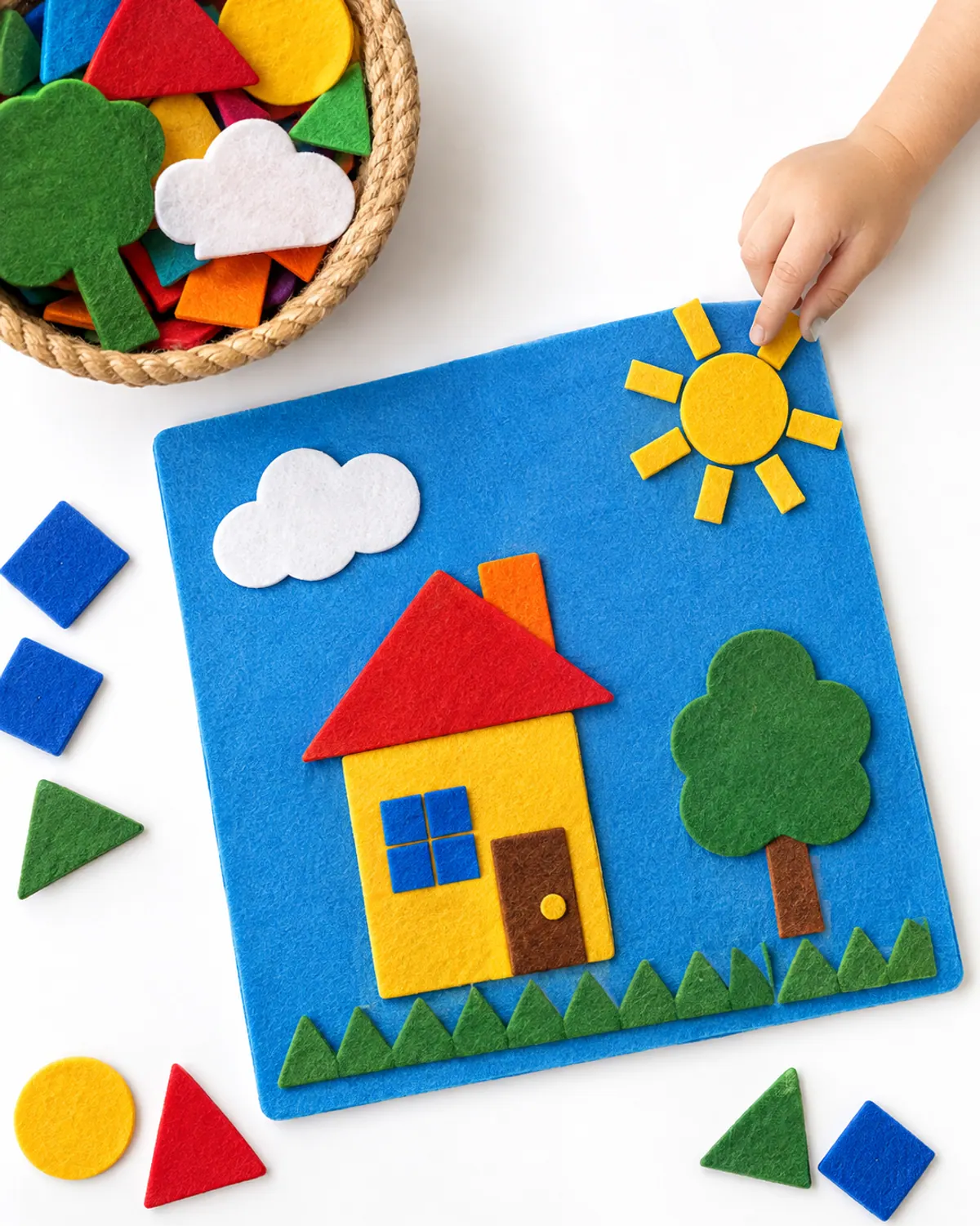
A felt board and big felt shapes let your toddler build a house, a sun and a tree, then pull it apart and start again. No glue, no mess.
Ages: 2 to 3.
Prep: 1 minute.
Mess: none.
Supplies: a felt board, large felt shapes.
Safety: keep felt pieces bigger than a toilet paper tube opening for under 3s.
Big felt pieces that stick without glue or small parts.
6Audiobook and song time
Set up an audio player your child can start alone. Stories and songs keep the room calm and are a good option for kids who are tired but won't sleep.
Ages: 2 to 3.
Prep: 2 minutes.
Mess: none.
Supplies: a screen-free audio player or a speaker.
Safety: keep cords tucked away and the volume low.
Plays stories and songs a toddler can start alone, with no screen.
Quiet time activities for 3 year olds
7Playdough tray
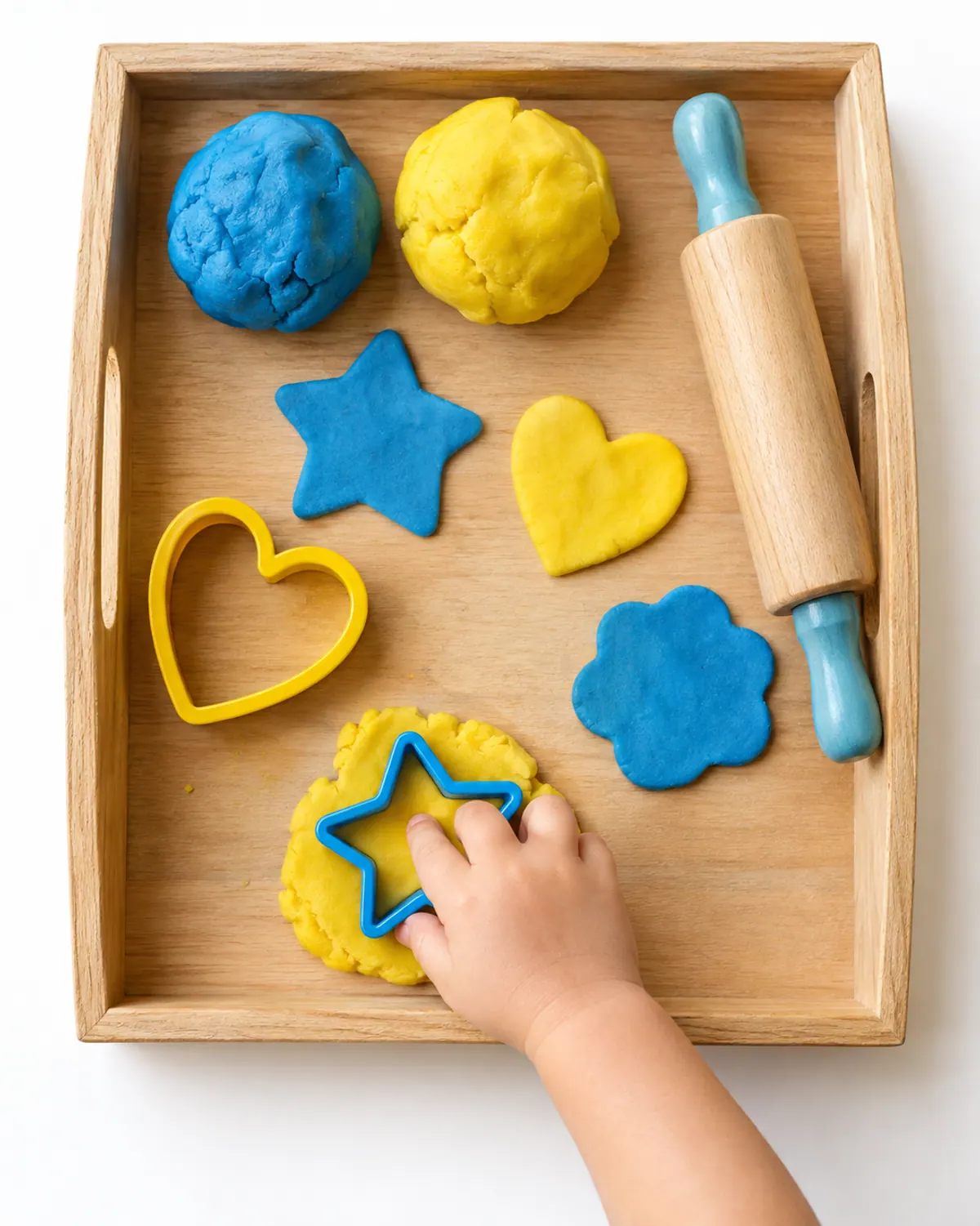
A tray keeps the playdough in one place. Add a rolling pin and 2 cookie cutters. Roll, cut and squish.
Ages: 3 and up.
Prep: 2 minutes.
Mess: low: crumbs on the tray.
Supplies: playdough, a tray, a rolling pin, cookie cutters.
Safety: playdough is not food. Store-bought dough is a better pick than homemade salt dough, which is high in salt.
8Lacing cards
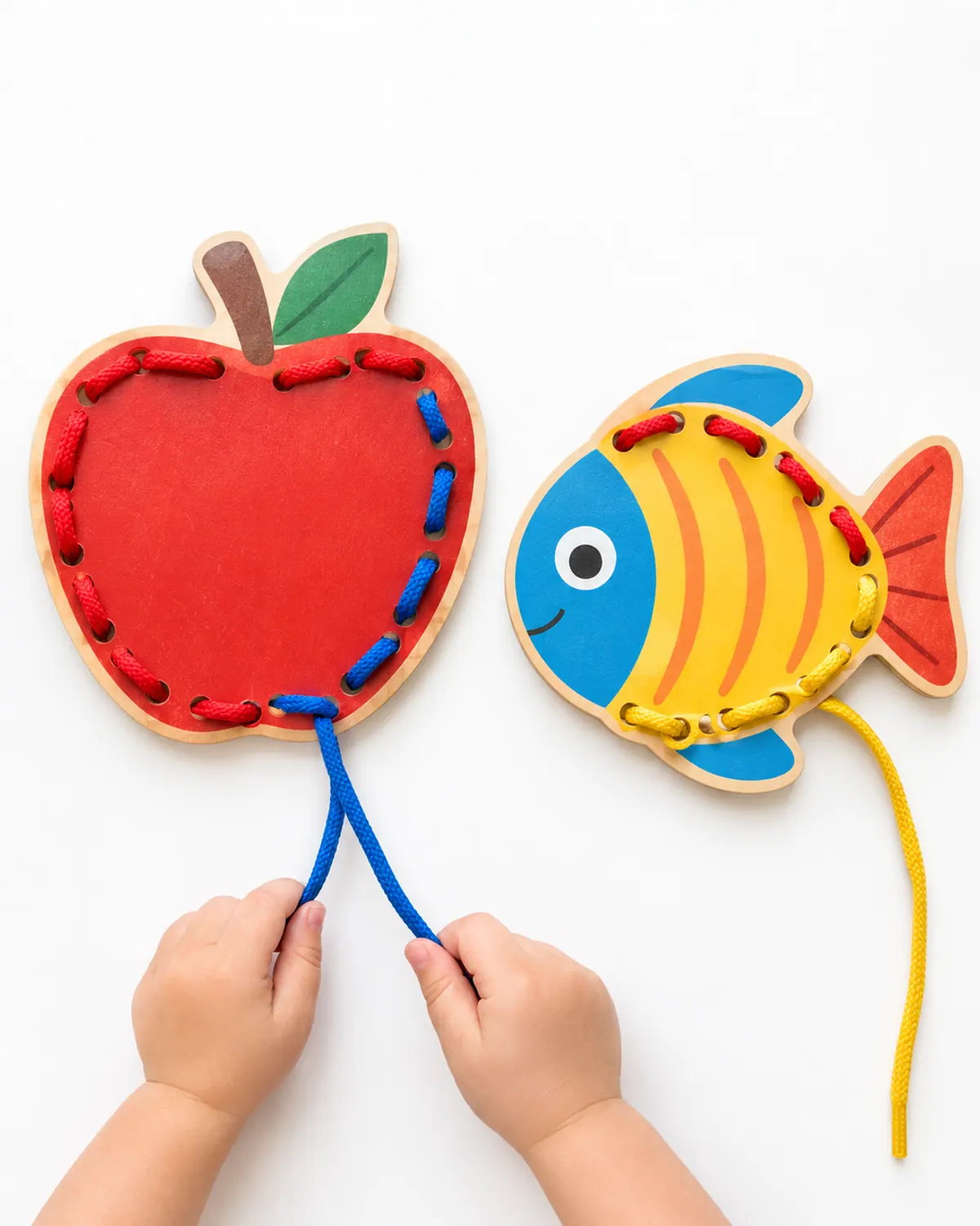
Big wooden lacing cards with thick laces practice hand control. Show one stitch, then let them go in and out however they like.
Ages: 3 and up.
Prep: 1 minute.
Mess: none.
Supplies: lacing cards, laces.
Safety: cords are a strangling risk. Use short laces, and never in a crib.
Big holes and thick laces for 3 year old fingers.
9Magnetic drawing board
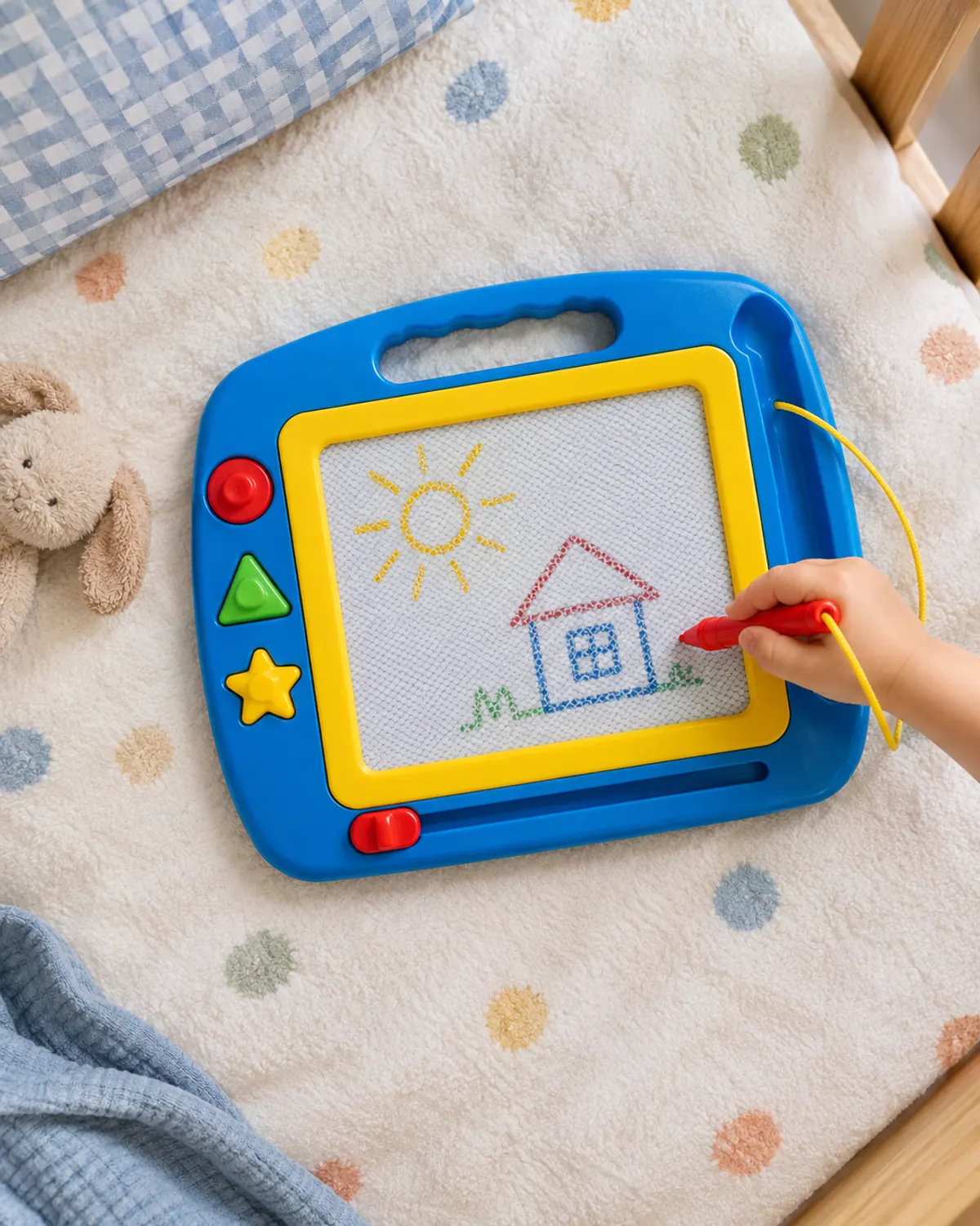
Draw, slide to erase and draw again. There are no markers on the wall and nothing to clean up.
Ages: 2.5 and up.
Prep: none.
Mess: none.
Supplies: a magnetic drawing board.
Safety: check the screen for cracks. If it breaks, the tiny magnetic beads inside can be swallowed, so throw it away.
Mess-free drawing that erases with a slide, with the pen on a cord.
10Water reveal pages
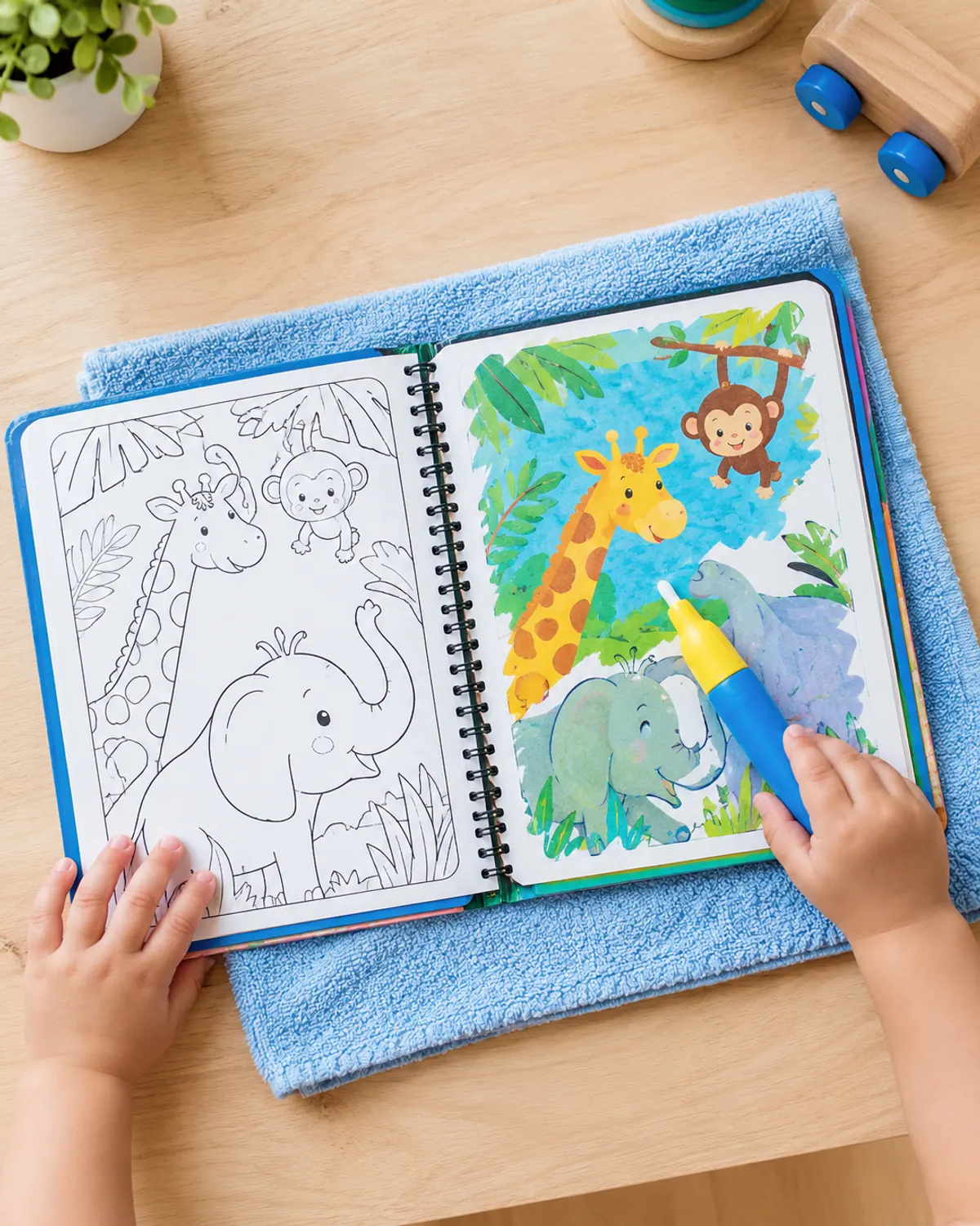
Fill the water pen and brush over the page to make colors appear. They fade as they dry, so the book can be used again tomorrow.
Ages: 2.5 and up.
Prep: 1 minute.
Mess: low: a little water.
Supplies: a water reveal book, the water pen, a towel.
Safety: no small parts. Put a towel under it on beds.
Colors appear with a water pen and fade so pages can be used again.
11Big block build bin
A bin of big building bricks is quiet if it sits on a rug. Add a small figure or two and they build houses, towers and zoos.
Ages: 18 months and up.
Prep: 1 minute.
Mess: low.
Supplies: large building bricks, a play mat.
Safety: use the big toddler-size bricks for under 3s, not the small kind.
12Seek-and-find books
Look-and-find books with big busy pictures keep 3 year olds hunting for a long time, and they do not need to read yet.
Ages: 3 and up.
Prep: none.
Mess: none.
Supplies: seek-and-find picture books.
Safety: no small parts.
Quiet time activities for preschoolers (3 and up)
13Memory match cards
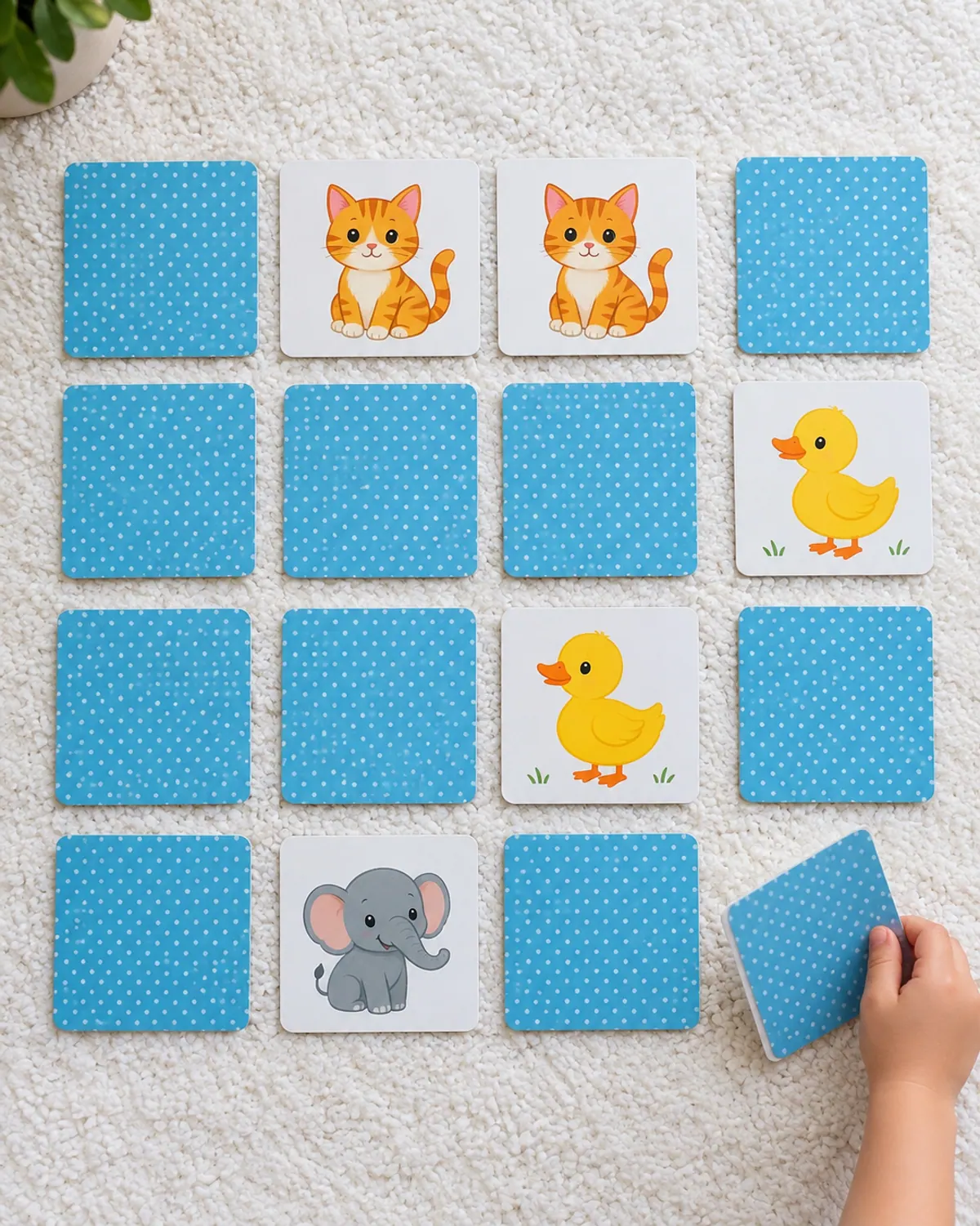
Start with 4 pairs face down and turn two at a time. Add more pairs as they get good at it. It also works as plain matching for younger kids.
Ages: 3 and up.
Prep: 1 minute.
Mess: none.
Supplies: large picture matching cards.
Safety: no small parts. Thick cards hold up best.
14Crayon game pages
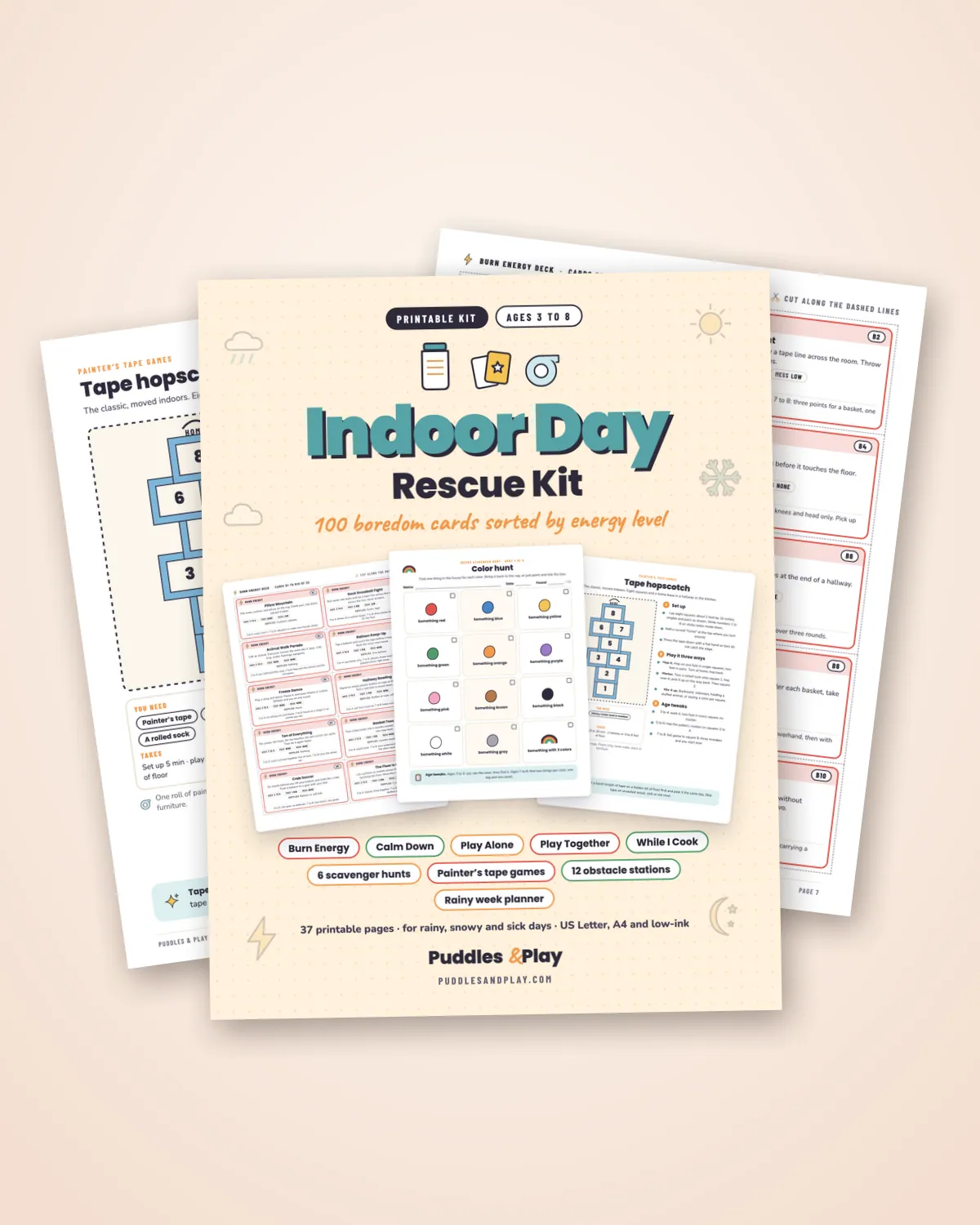
Mazes, I spy pages and simple dot games keep preschoolers busy with just crayons. Our road trip pack has 37 printable pages that need nothing else, and they work just as well on a bedroom floor.
Ages: 3 to 8.
Prep: 2 minutes to print.
Mess: low.
Supplies: printed pages, chunky crayons, a clipboard.
Safety: crayons only, no markers on beds. Chunky crayons for younger kids.
15Pom-pom tong sort
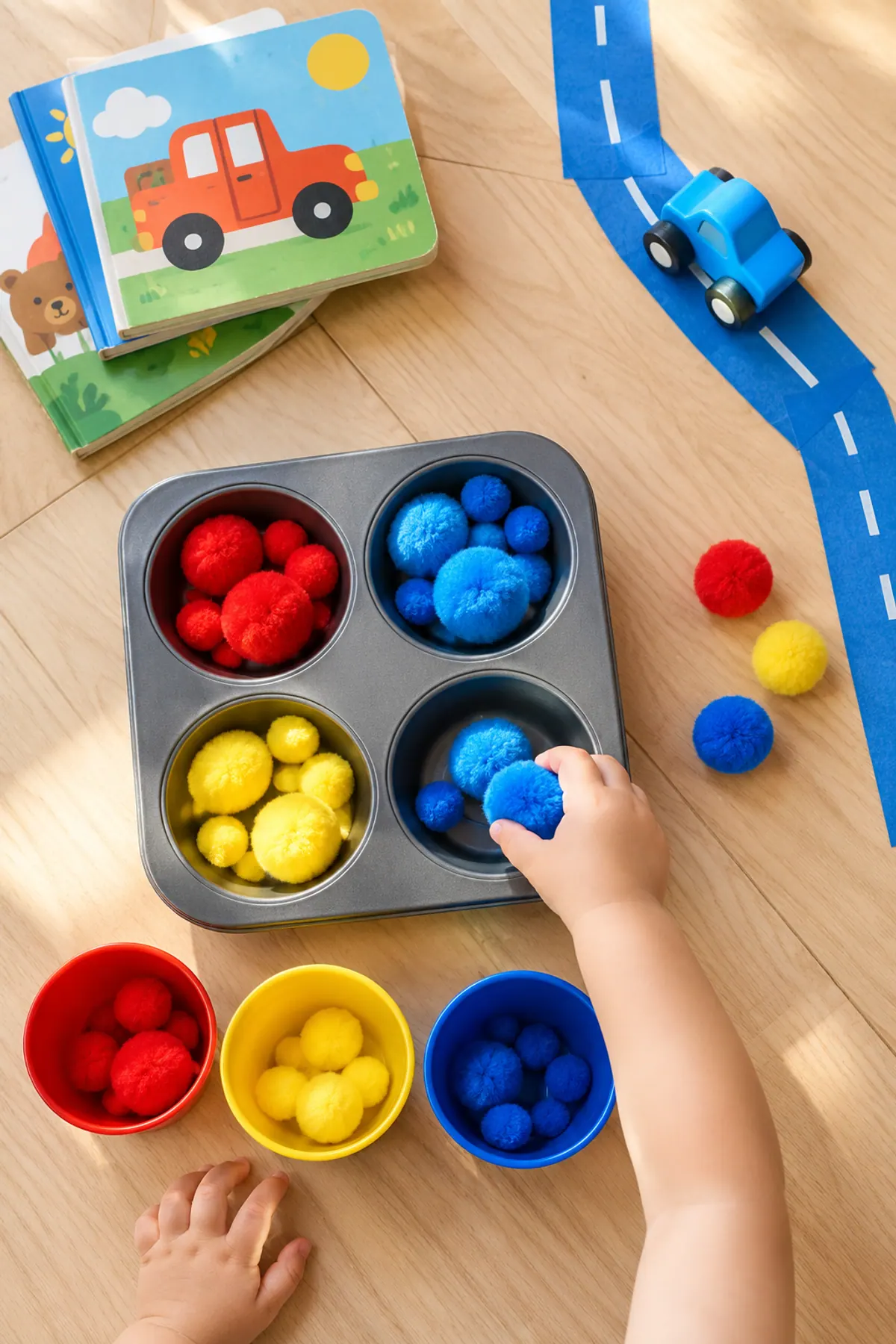
Set out a muffin tin, big pom-poms and kid tongs. Sort pom-poms by color into the cups. Tongs build the same hand strength they will use for scissors.
Ages: 3 and up.
Prep: 2 minutes.
Mess: low.
Supplies: big pom-poms, kid tongs, a muffin tin.
Safety: pom-poms are a choking risk. Keep this bin away from younger siblings.
Want more quiet pages? The Road Trip & Restaurant Pack is 37 printable pages of quiet, piece-free games for ages 3 to 8: bingo, mazes, I spy and drawing prompts that only need crayons. It was made for the car and the restaurant table, and it slots right into a quiet time bin.
Quiet time mistakes that lead to meltdowns
What we like
- Starting with 10 to 15 minutes they can win at
- Same time and place every day
- Bins that only appear at quiet time
- A visual timer that shows the end
- Ending on time with a hug or a snack
Keep in mind
- Starting with a full hour on day one
- Using quiet time as a punishment
- Leaving every toy out, so nothing feels new
- Making them guess when it will end
- Ending late, or ending early after crying
The biggest one is starting too long. A toddler who fails on day one learns that quiet time is hard. Start short so they win, then stretch it.
Quiet time at daycare or with siblings
At daycare, quiet time usually means rest on cots or mats. Kids who don't sleep can look at books on their mat. If your child naps at daycare but not at home, ask the teachers what their rest looks like and copy the routine at home.
With siblings, give each child their own space if you can, even if it is two ends of one room with a baby gate. Keep small-part bins for the older child behind a closed door.
Building quiet time into the rest of the day is easier with a picture routine. Our visual schedule for toddlers shows how, and busy bags can double as quiet time bins. For the active hours around it, see these indoor activities for toddlers.
A sample quiet time plan for the first month
| Week | Length | Focus |
|---|---|---|
| Week 1 | 10 to 15 minutes | Learn the rules and the timer |
| Week 2 | 20 to 30 minutes | Add a second bin to choose from |
| Week 3 | 30 to 45 minutes | Fewer check-ins |
| Week 4 | 45 to 60 minutes | Rotate bins daily |
Quiet time supplies worth having
- Start here
Visual countdown timer for kids
Typically $15 to $30
Shows time running out as a shrinking colored disk, so toddlers can see when quiet time ends.
Check price on Amazon for Visual countdown timer for kids -
Toddler ok-to-wake clock
Typically $20 to $40
Changes color at the end time you set, which works for quiet time and early mornings.
Check price on Amazon for Toddler ok-to-wake clock -
Clear lidded storage bins, shoebox size
Typically $15 to $30
One bin per day keeps quiet time toys special and easy to rotate.
Check price on Amazon for Clear lidded storage bins, shoebox size -
Magnetic drawing board for toddlers
Typically $10 to $20
Mess-free drawing that erases with a slide, with the pen on a cord.
Check price on Amazon for Magnetic drawing board for toddlers -
Water reveal activity books
Typically $8 to $15
Colors appear with a water pen and fade so pages can be used again.
Check price on Amazon for Water reveal activity books -
Wooden lacing cards
Typically $10 to $18
Big holes and thick laces for 3 year old fingers.
Check price on Amazon for Wooden lacing cards -
Felt story board set
Typically $15 to $30
Big felt pieces that stick without glue or small parts.
Check price on Amazon for Felt story board set -
Screen-free kids audio player
Typically $50 to $100
Plays stories and songs a toddler can start alone, with no screen.
Check price on Amazon for Screen-free kids audio player
For 50 more low-prep ideas on grab-and-go cards, many of them quiet, get the free pack below.
Frequently asked questions
How long should quiet time be for a toddler?
Start with 10 to 15 minutes and add about 5 minutes every few days. Many families work up to 45 minutes to an hour, but the right length is one your child can finish without falling apart.
What age should a toddler start quiet time?
Most families start when naps get short or stop, which Cleveland Clinic says usually happens between ages 3 and 6. Some 2 year olds do a short quiet time on days they skip the nap.
What do toddlers do during quiet time?
They rest, sleep if tired, look at books or play with a quiet bin: puzzles, stickers, a felt board, lacing cards or a magnetic drawing board. The 15 activities above are sorted by age.
What if my toddler won’t stay in their room for quiet time?
Walk them back calmly with as few words as possible, shorten the timer so they can succeed, and add a planned check-in halfway through. A baby gate at the door works for some families.
Can quiet time include screens?
We keep it screen-free so it stays restful. The AAP recommends limiting screen use for ages 2 to 5 to 1 hour a day of high-quality programs (AAP, 2016), and audio stories are a good screen-free swap.
Save it for later
Pin this to your Toddler Activities board so it's there when you need it.
Save to Pinterest