This post contains affiliate links. As an Amazon Associate we earn from qualifying purchases, at no extra cost to you. Read our disclosure.
Safety first: Always supervise little ones, and skip small parts for kids who still put things in their mouths. Please read our play safety notes before you start.
Key takeaways
- Fix four anchors: wake up, meals, nap and bedtime.
- Fill the gaps with 45 to 90 minute play blocks, one active and one quiet.
- A visual chart with 6 to 8 picture cards helps toddlers know what comes next.
- Toddlers 1 to 2 need 11 to 14 hours of sleep a day, naps included (AASM, endorsed by the AAP).
- Give a new schedule one to two weeks before you judge it.
In this post13 sections
- Clock schedule or routine schedule?
- Step 1: Anchor wake up, meals, nap and bed
- Step 2: Fill the blocks with play
- Step 3: Make a visual schedule chart
- Sample toddler schedule: 1 nap (about 18 months to 3)
- Sample toddler schedule: 2 naps (12 to 18 months)
- Sample schedule with a newborn and a toddler
- Daycare days and stay at home days
- Outside time: the block that helps the rest of the day
- Common toddler schedule mistakes
- When the nap starts to fade
- Supplies that make a toddler schedule easier
- FAQ
Clock schedule or routine schedule?
A clock schedule says lunch is at 11:30. A routine schedule says lunch comes after outside time. For a toddler at home, the routine version usually works better, because toddlers cannot read a clock but they can learn an order.
You still want a few fixed times. Wake up, nap and bedtime work best within about 30 minutes of the same time each day. Everything between them can flex.
| Age | Total sleep in 24 hours | Naps | Usual bedtime window |
|---|---|---|---|
| 12 to 18 months | 11 to 14 hours | Usually 2, moving to 1 | 6:30 to 8:00 pm |
| 18 months to 2 | 11 to 14 hours | Usually 1, after lunch | 6:30 to 8:00 pm |
| 2 to 3 years | 11 to 14 hours (age 2), 10 to 13 hours (age 3) | 1, or quiet time as it fades | 7:00 to 8:00 pm |
The sleep totals come from the American Academy of Sleep Medicine ranges that the AAP endorses, and they include naps. Your child may sit at the low or high end and still be fine.
Step 1: Anchor wake up, meals, nap and bed
Start with the four things that should not move much: wake up, three meals and two snacks, nap, and bedtime. Write them on a sticky note in the order they happen. That list is the skeleton of your toddler schedule.
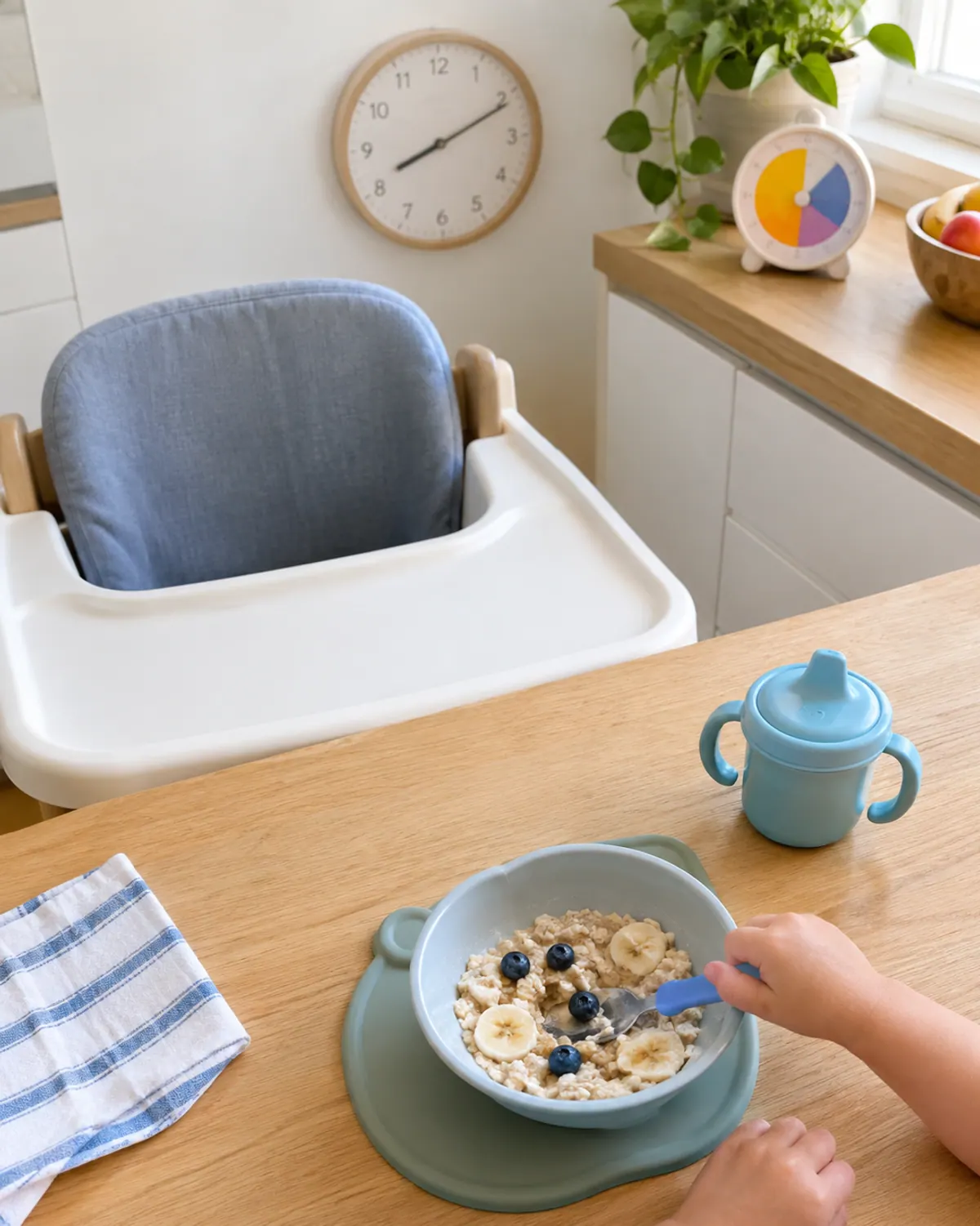
Most toddlers eat about every 2 to 3 hours. If the gap between lunch and dinner is long, a snack after nap keeps the late afternoon calmer.
Step 2: Fill the blocks with play
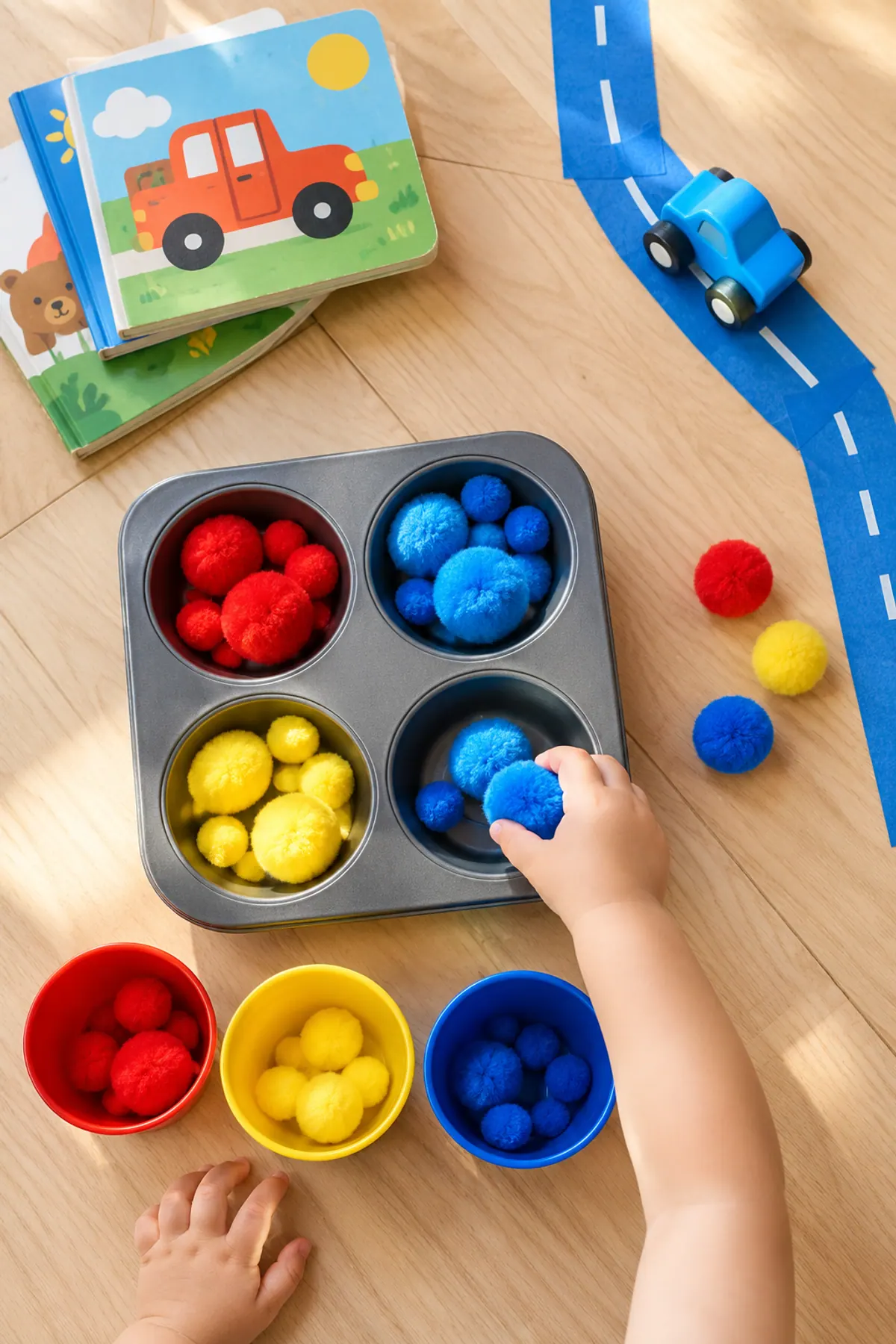
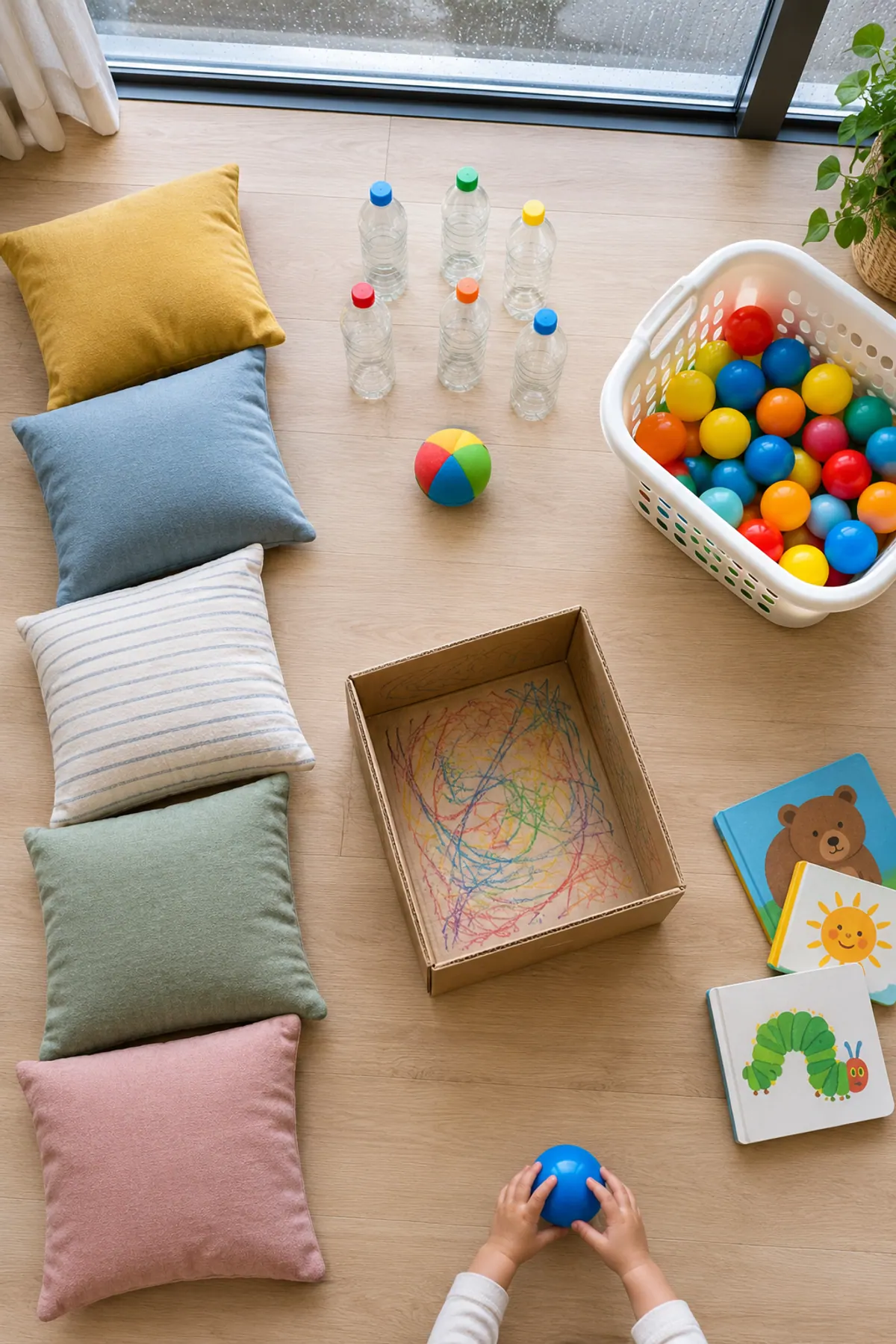
Between the anchors you have play blocks of about 45 to 90 minutes. Mix one active block (outside, dancing, a walk) with one quiet block (puzzles, books, a sensory tray). A toddler who gets outside time in the morning often naps better.
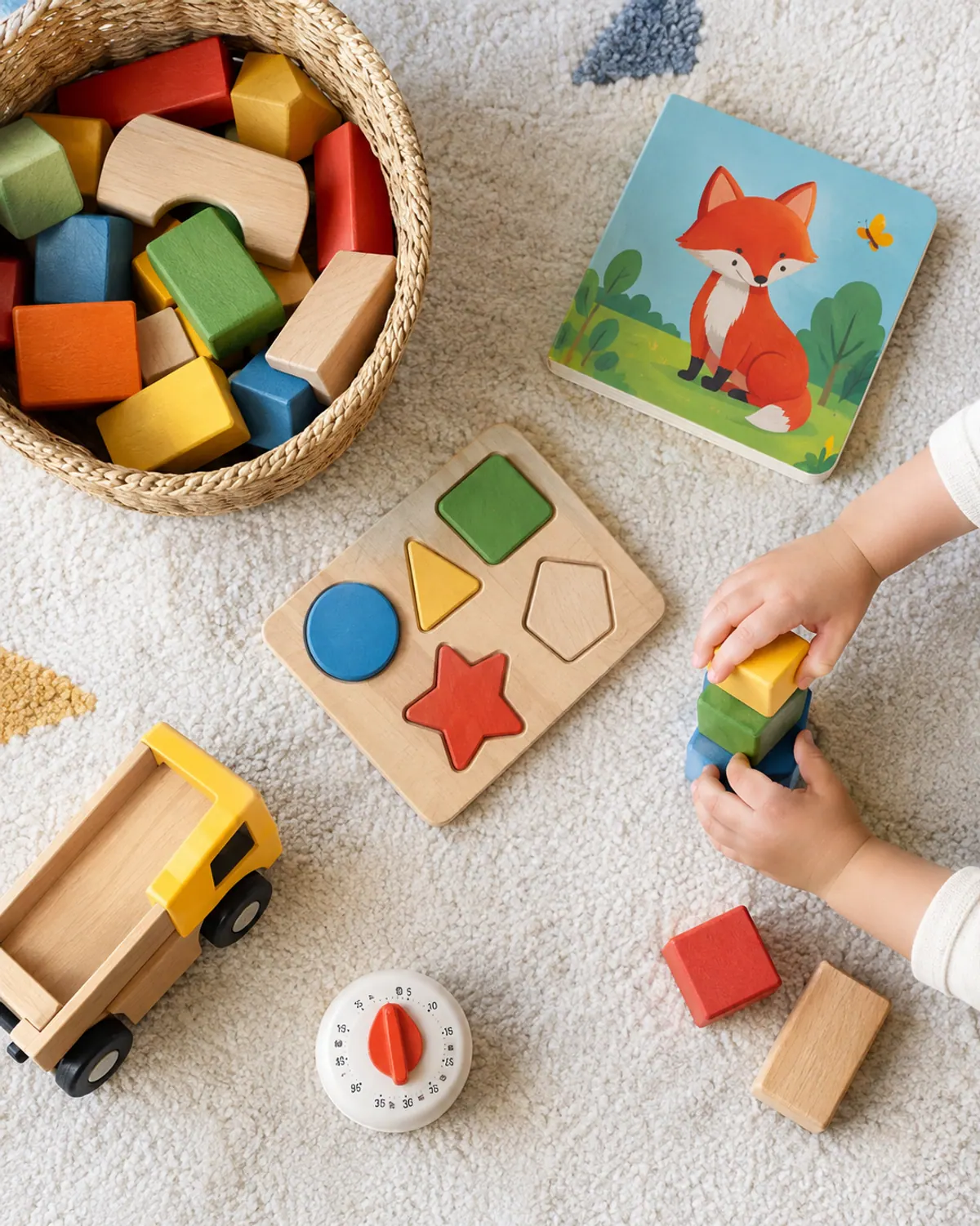
Easy play blocks for a toddler schedule
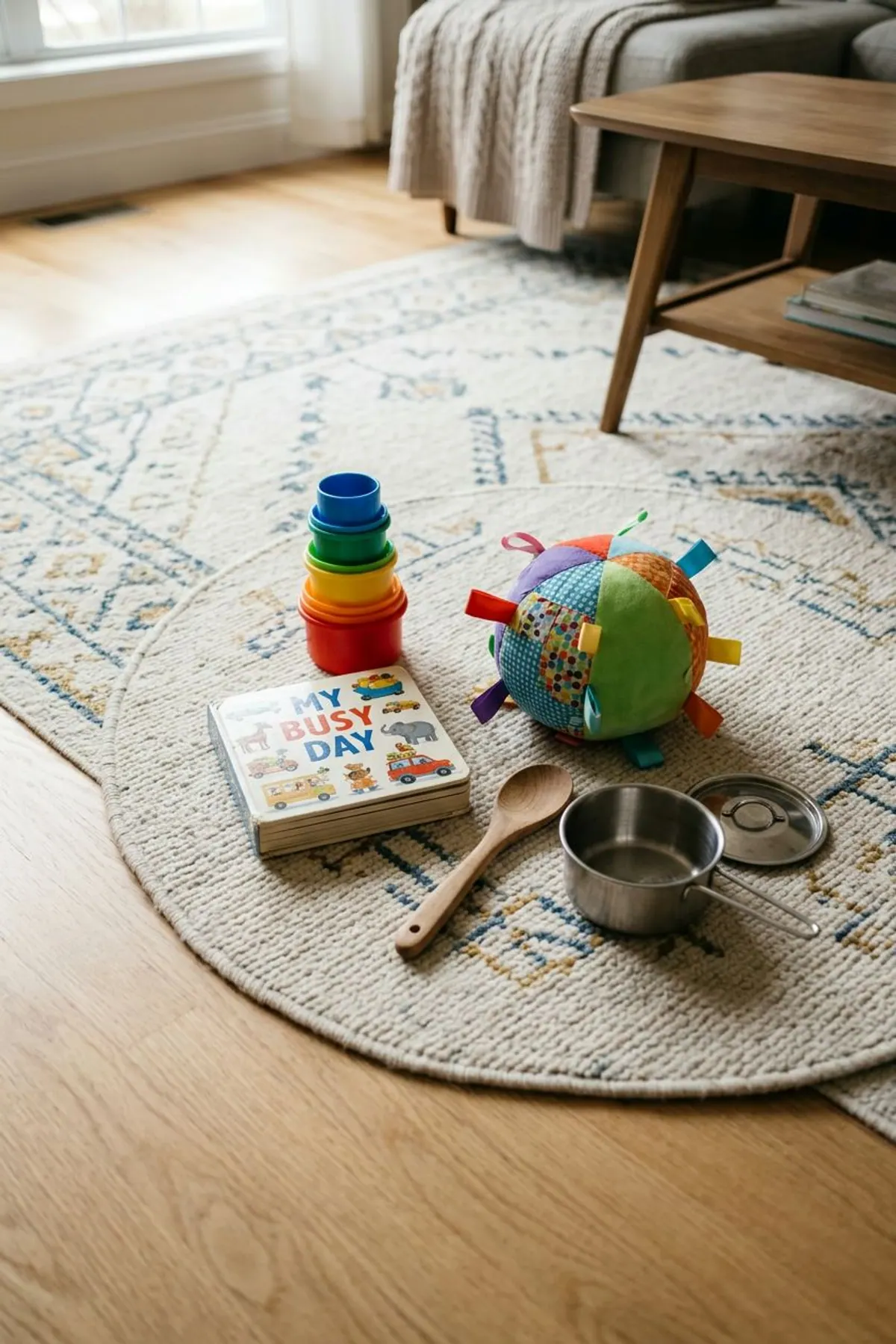
You do not need a new activity every block. Two or three good baskets on rotation are enough, and our play-based learning activities slot into quiet blocks. Our toddler activities by age has low prep ideas sorted for 1, 2 and 3 year olds.
Step 3: Make a visual schedule chart
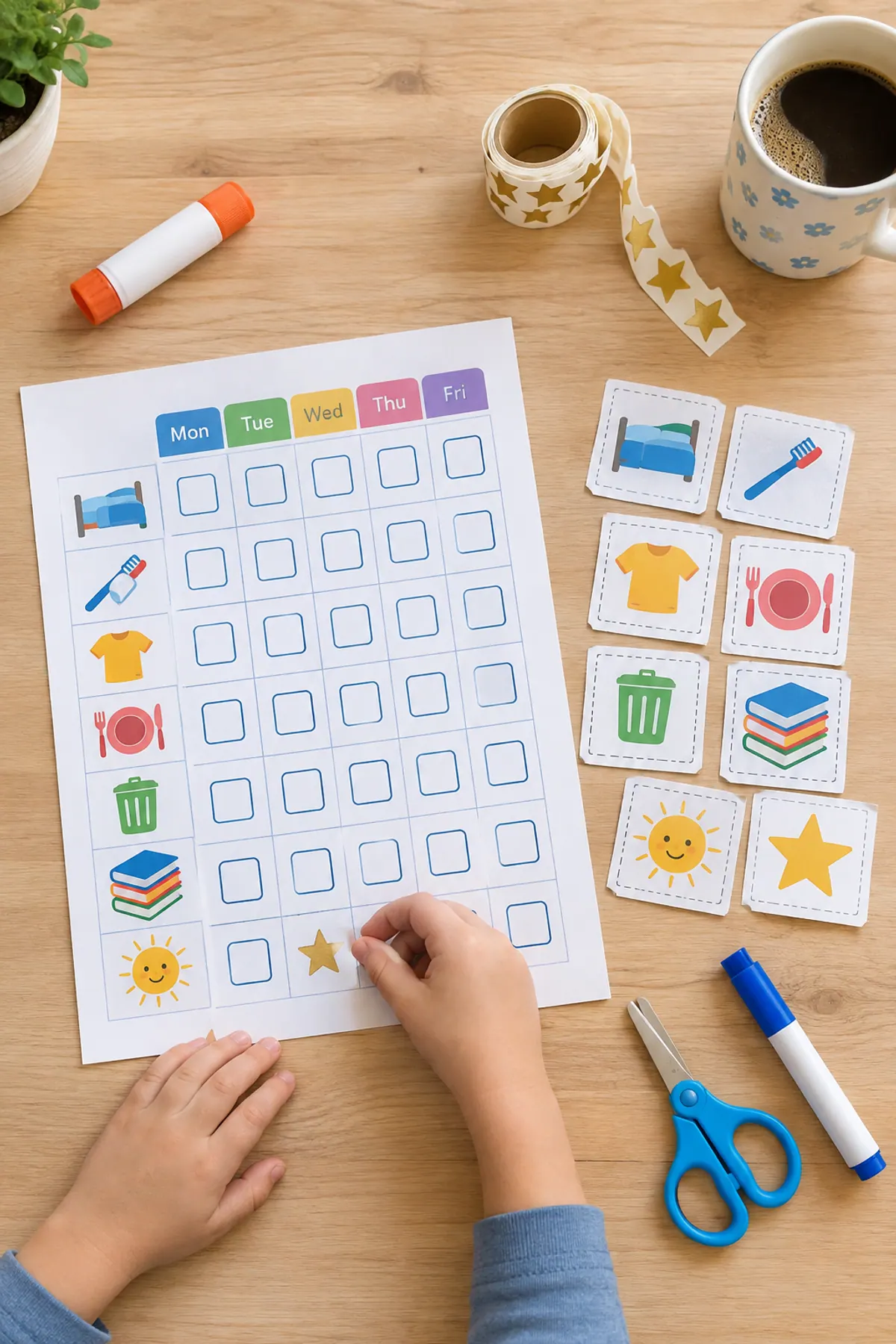
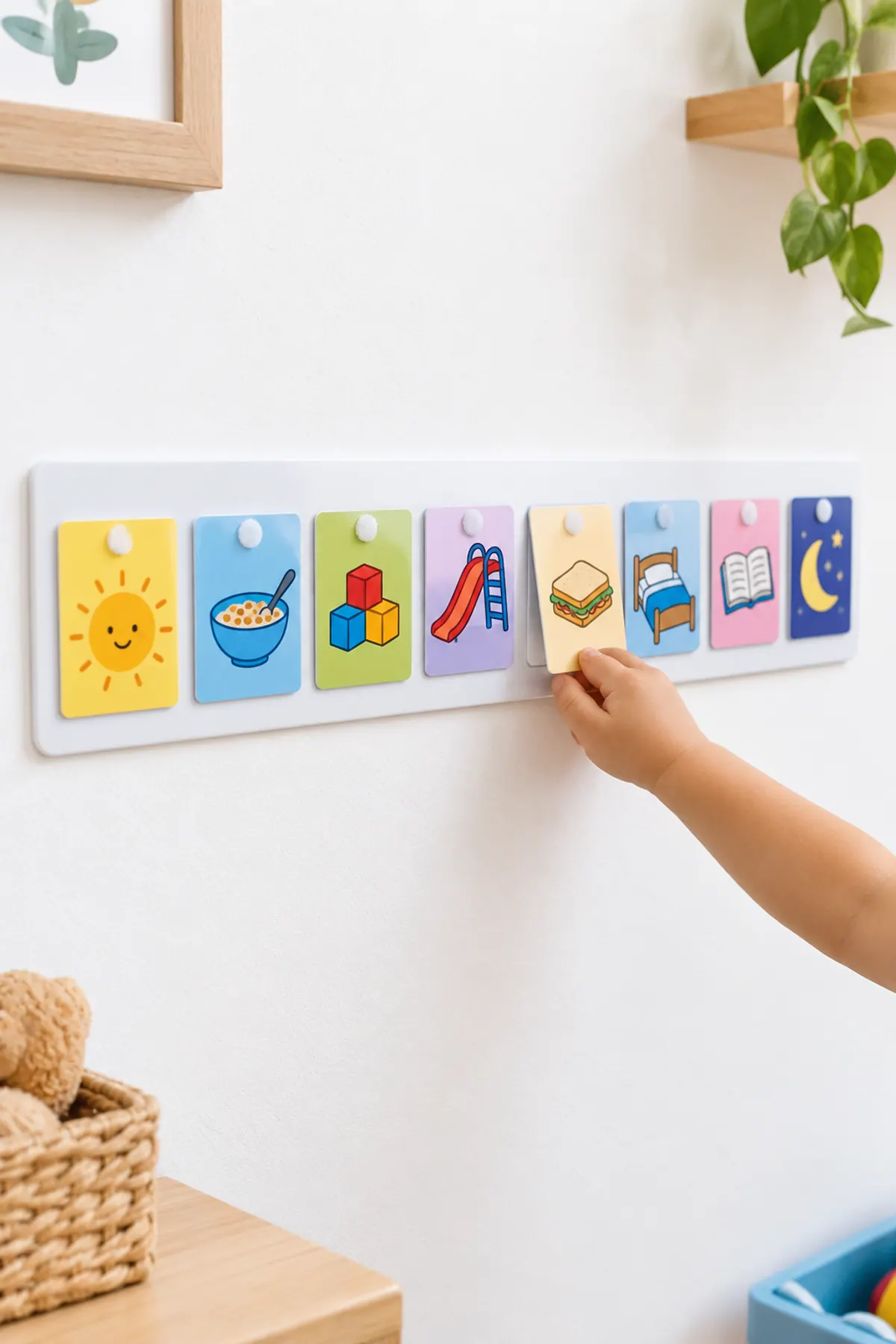
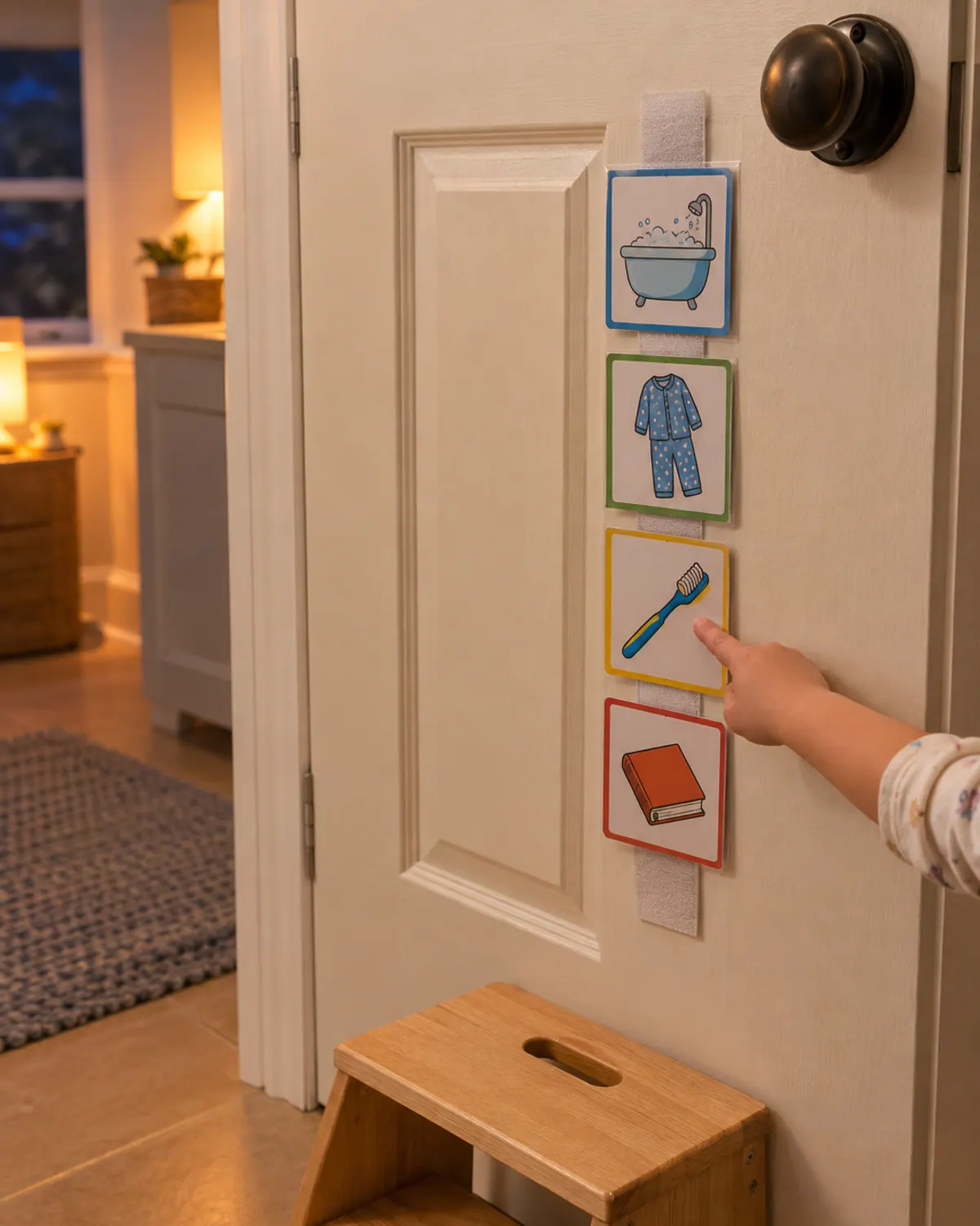
A visual schedule is a row of picture cards in the order of your day. Toddlers cannot read, but they can point at the bed card and know nap is next. That makes transitions less of a fight.

-
Step 1: Pick 6 to 8 pictures
Wake up, breakfast, play, outside, lunch, nap, bath, bed. More than 8 cards is too many for a 2 year old.
-
Step 2: Make them sturdy
Laminate the cards or slide them into a sheet protector. Self-seal pouches work without a machine.
-
Step 3: Add velcro
Put velcro dots on a long strip of cardboard and the backs of the cards. Your toddler can move each card to a done pocket as you go.
-
Step 4: Hang it low
Put it at toddler eye level in the kitchen, where most of the day passes. A bedtime strip on the bathroom door is a good second chart.
-
Step 5: Use it every day
Point to the next card before each change: first lunch, then nap. After a week or two, many toddlers start pointing first.
Hand-drawn cards and a ready-made card set both work, so pick whichever you will actually finish this week. If you already use our picture chore chart, the same picture style works for jobs in your 3 year old's day.
Visual schedule supplies
-
Visual schedule picture cards for toddlers
Typically $10 to $20
Ready-made picture cards if you would rather not draw and laminate your own.
Check price on Amazon for Visual schedule picture cards for toddlers -
Velcro dots
Typically $6 to $12
Lets your toddler move each card to the done side.
Check price on Amazon for Velcro dots -
Laminating pouches (self-seal)
Typically $8 to $15
Makes homemade cards survive sticky hands, no machine needed.
Check price on Amazon for Laminating pouches (self-seal)
Sample toddler schedule: 1 nap (about 18 months to 3)
Most toddlers move to one nap somewhere between 15 and 18 months. Here is a sample toddler schedule at home for a one-nap day. Shift every time by the same amount if your child wakes earlier or later.
| Time | Block |
|---|---|
| 7:00 | Wake up, diaper, get dressed |
| 7:30 | Breakfast |
| 8:00 | Quiet play (puzzles, books) |
| 9:30 | Snack |
| 10:00 | Outside time |
| 11:30 | Lunch |
| 12:15 | Nap routine, then nap (about 2 hours) |
| 2:30 | Wake up, snack |
| 3:00 | Active play or errands |
| 5:00 | Helper time, free play |
| 5:30 | Dinner |
| 6:30 | Bath, pajamas, teeth, books |
| 7:00 to 7:30 | Bedtime |
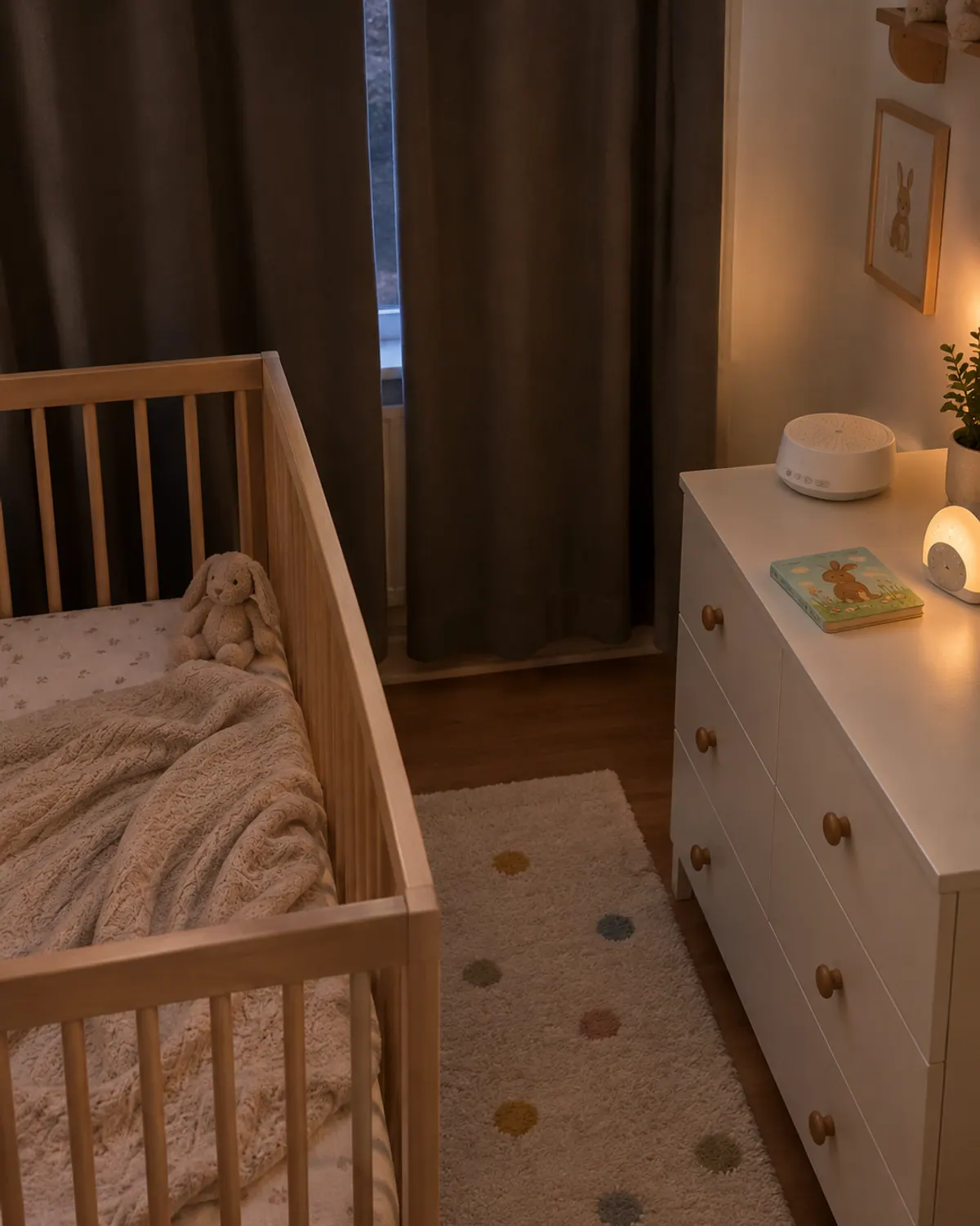
Sample toddler schedule: 2 naps (12 to 18 months)
| Time | Block |
|---|---|
| 7:00 | Wake up, breakfast |
| 8:00 | Play |
| 9:30 | Morning nap (about 1 hour) |
| 10:30 | Snack, outside |
| 12:00 | Lunch, play |
| 2:00 | Afternoon nap (about 1 to 1.5 hours) |
| 3:30 | Snack, play |
| 5:30 | Dinner |
| 6:30 | Bath, books |
| 7:00 | Bedtime |
Sample schedule with a newborn and a toddler
With a new baby, the clock version falls apart fast, since newborns eat on their own timing. Keep only the toddler's anchors fixed: wake up, meals, nap and bedtime. Fill the rest with play your toddler can do near you while you feed the baby.
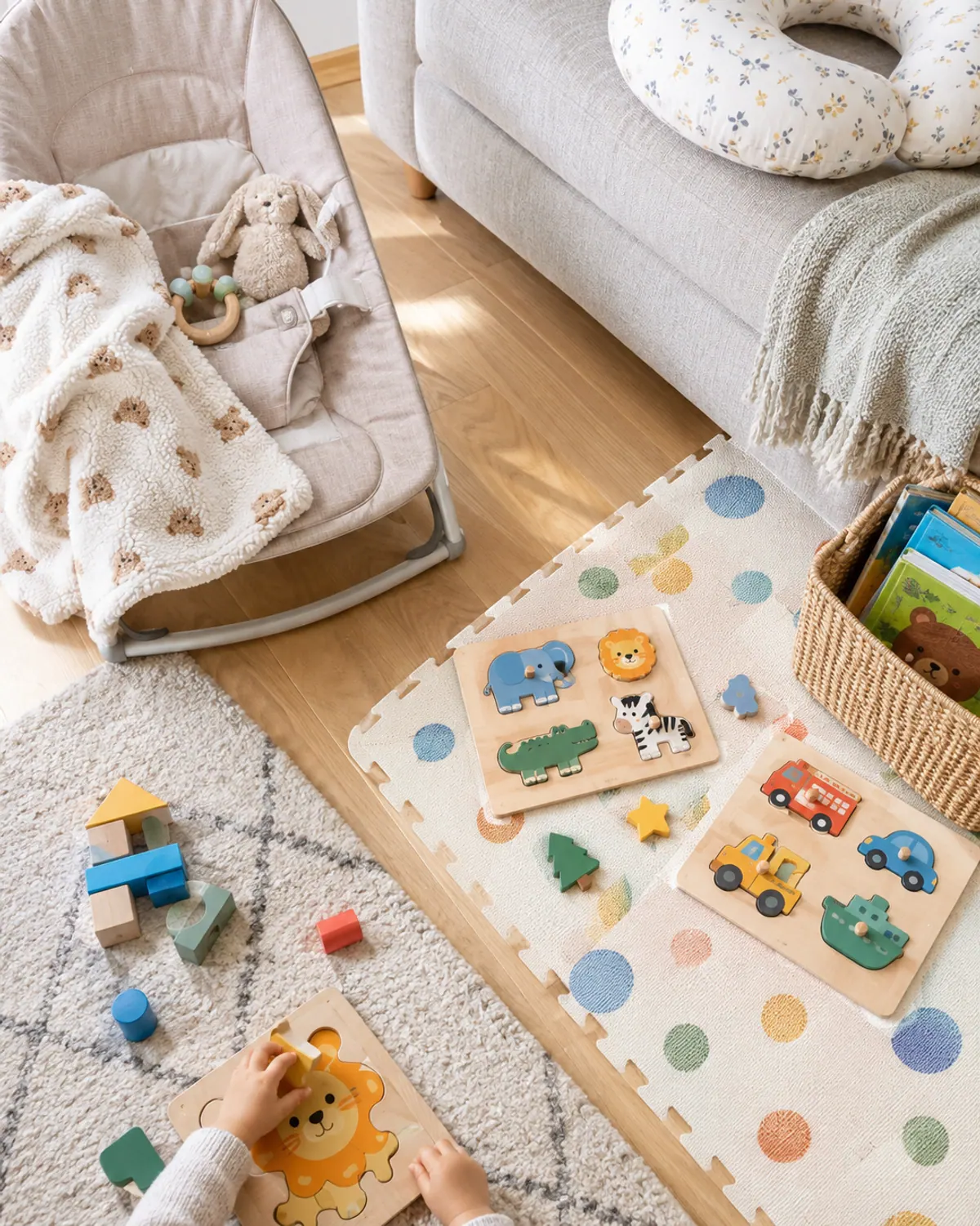
A good trick is a feeding basket: a few toys that only come out when the baby eats. Line up the toddler's nap with one of the baby's naps if you can, and treat that overlap as your rest time too.
Daycare days and stay at home days
If your toddler goes to daycare part of the week, ask for their daily schedule and copy the nap and meal times on home days. Toddlers do better when the anchors match, even if the activities do not. Stay at home parents can use the same sample day and swap in errands for a play block.
Outside time: the block that helps the rest of the day
Get outside once a day if you can, even for 20 minutes. Fresh air and big movement in the morning often make lunch and nap go smoother. Rain boots and a puddle count.

On cold days, our winter activities for toddlers has indoor ideas that still burn energy.
Common toddler schedule mistakes
A few things trip up almost every family when they start.
- Too many blocks. A schedule with 20 activities is a to-do list for you, not a rhythm for your toddler.
- Moving bedtime later to fix early waking. Often it does the opposite. Check the room is dark first.
- No warning before changes. Use the chart or a visual timer: two more minutes, then lunch.
- Screens to fill gaps. The AAP suggests very little screen time for kids under 2, and about an hour of quality content a day for ages 2 to 5.
- Giving up after 3 days. Most toddlers need a week or two of the same order before it feels normal.
When the nap starts to fade
Many toddlers drop the last nap somewhere between ages 3 and 4, and some sooner. Signs include taking an hour to fall asleep at nap time or fighting bedtime after a nap. Keep the block as quiet time with books in their room, and move bedtime a little earlier on no-nap days.
If your toddler snores loudly, wakes very often or seems tired all day even with enough sleep, talk to your pediatrician.
Supplies that make a toddler schedule easier
Toddler schedule tools
- Start here
Visual schedule picture cards for toddlers
Typically $10 to $20
Ready-made picture cards if you would rather not draw and laminate your own.
Check price on Amazon for Visual schedule picture cards for toddlers -
Velcro dots
Typically $6 to $12
Lets your toddler move each card to the done side.
Check price on Amazon for Velcro dots -
Laminating pouches (self-seal)
Typically $8 to $15
Makes homemade cards survive sticky hands, no machine needed.
Check price on Amazon for Laminating pouches (self-seal) -
Toddler ok-to-wake clock
Typically $20 to $40
A light that changes color tells a non-reader when it is time to get up.
Check price on Amazon for Toddler ok-to-wake clock -
Visual timer for kids
Typically $15 to $30
Shows time running out as a shrinking color, which helps with transitions.
Check price on Amazon for Visual timer for kids
Frequently asked questions
What is a good daily schedule for a 2 year old?
Wake around 7, three meals and two snacks, one nap of about 2 hours after lunch, an outside block, and bedtime around 7 to 7:30. Keep wake up, nap and bedtime within about 30 minutes each day.
How many naps does a toddler need?
Most toddlers move from two naps to one between 15 and 18 months, and keep one nap until somewhere around age 3 to 4.
How much sleep does a toddler need?
Kids ages 1 to 2 need 11 to 14 hours in 24 hours, and ages 3 to 5 need 10 to 13 hours, naps included, per AASM ranges the AAP endorses.
How do I make a visual schedule for a toddler?
Pick 6 to 8 pictures for the main parts of the day, laminate them, add velcro, and hang the strip at toddler eye level. Point to the next card before each change.
Should a toddler schedule go by the clock?
Only the anchors. Wake up, nap and bedtime work best at about the same time, while play blocks can follow the order of the day instead of exact times.
Save it for later
Pin this to your Toddler Activities board so it's there when you need it.
Save to Pinterest