This post contains affiliate links. As an Amazon Associate we earn from qualifying purchases, at no extra cost to you. Read our disclosure.
Safety first: Always supervise little ones, and skip small parts for kids who still put things in their mouths. Please read our play safety notes before you start.
Key takeaways
- 10 winter STEM builds for ages 3 to 5, each with supplies counted out.
- Every build lists ages, prep, mess, one question to predict and a safety note.
- Only one build needs snow, and it has a crushed-ice swap.
- Ice, salt, cotton balls and small toys need arm's-reach supervision under 4.
- A free record sheet and a 10-day January plan are included.
In this post19 sections
- How to Run Winter STEM Activities for Preschoolers
- Ice Builds
- 1. Ice cube melt race
- 2. Ice excavation with a toy penguin
- 3. Iceberg float
- Mitten and Snow Builds
- 4. Mitten insulation test
- 5. Snow in a cup
- 6. Snow boot waterproof test
- Igloo Builds
- 7. Cotton ball igloo
- 8. Paper cup igloo
- Snowstorm and Snowflake Builds
- 9. Snowstorm in a jar
- 10. Floating coffee filter snowflakes
- A 10-Day January STEM Plan
- Record What Happened
- Keeping Cold Hands Safe
- FAQ
How to Run Winter STEM Activities for Preschoolers
Every build below follows the same four steps and takes about 15 minutes. Hand out the counted supplies, say the one question out loud, let your child guess, then build and test it together. At the end your child draws or tells you what happened in the record box, and a grown-up writes the words for ages 3 and 4. Children 5 and up can try a second round where they change one thing.
Some links on this page are Amazon links, and we may earn a small commission if you buy. Prices are rough examples. Ice, cold water and small parts all need a grown-up within arm's reach for this age. Whole ice cubes, cotton balls, salt and small toys can be choking or tummy-upset hazards for children under 4, so use the swaps we list or pick a different build for them.
Looking for Christmas builds instead? Our Christmas STEM challenges for preschoolers are gingerbread, candy cane and snowman builds, and the Christmas STEM activities with kitchen supplies cover fizzing and dissolving. This page is the January half: ice, snow, mittens and igloos that work from December through February.
| Build | Ages | Prep | Mess | One question |
|---|---|---|---|---|
| Ice cube melt race | 3 to 5 | 5 minutes | Low | What melts ice fastest? |
| Ice excavation with a toy penguin | 3 to 5 | 10 minutes, plus freezing overnight | Medium | How do we free the penguin? |
| Iceberg float | 3 to 5 | 5 minutes, plus freezing overnight | Medium | Will the ice float or sink? |
| Mitten insulation test | 3 to 5 | 5 minutes | Low | Which one keeps ice frozen longest? |
| Snow in a cup | 3 to 5 | 5 minutes | Low | How much water is in a cup of snow? |
| Snow boot waterproof test | 4 to 5 | 10 minutes | Medium | Which material stays dry? |
| Cotton ball igloo | 3 to 5 | 5 minutes | Low | How many cotton balls will it take? |
| Paper cup igloo | 3 to 5 | 5 minutes | None | Can we build a dome from cups? |
| Snowstorm in a jar | 4 to 5 | 10 minutes | Medium | Will the paint float or sink? |
| Floating coffee filter snowflakes | 3 to 5 | 10 minutes | Medium | Where will the color go? |
Ice Builds
1Ice cube melt race
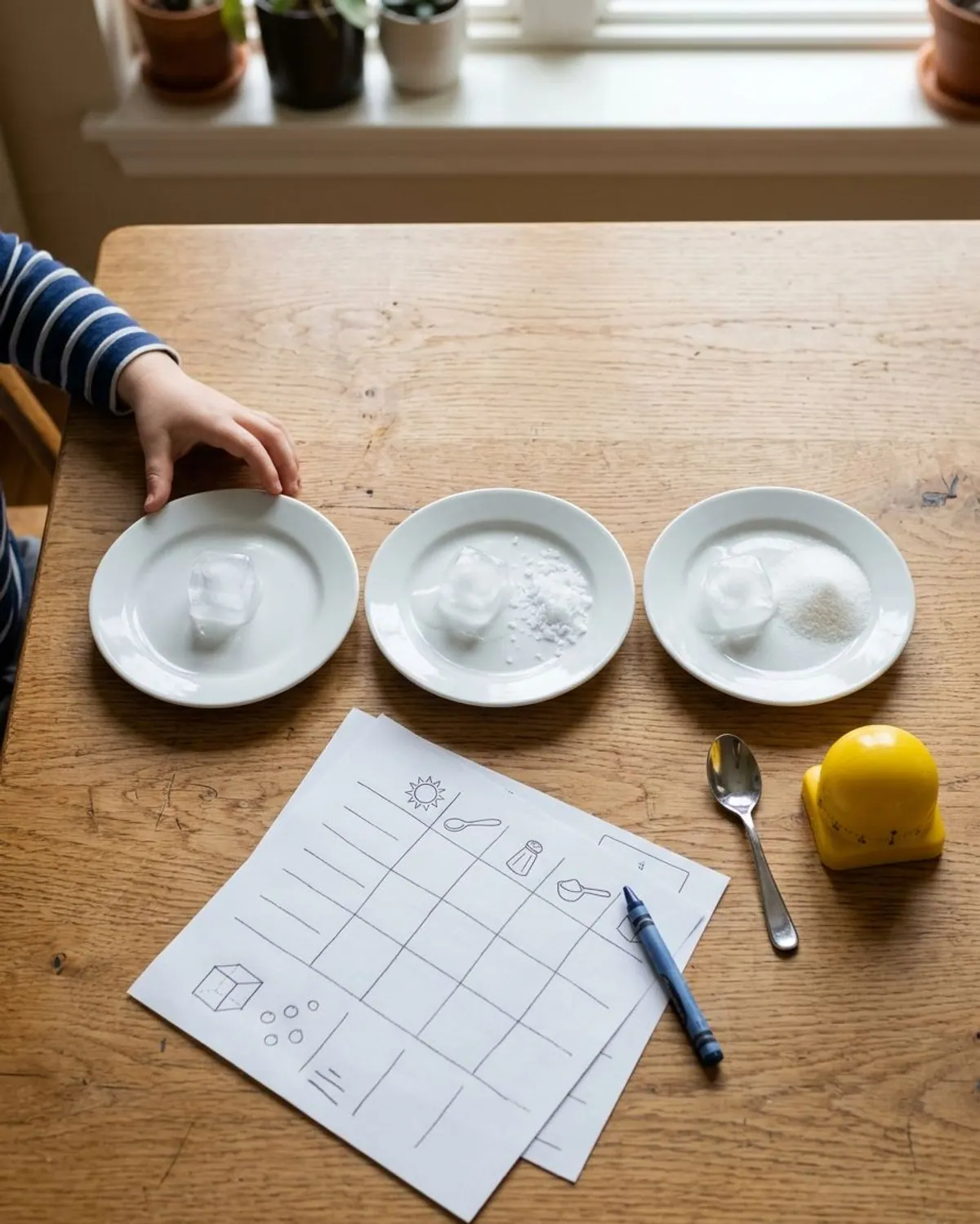
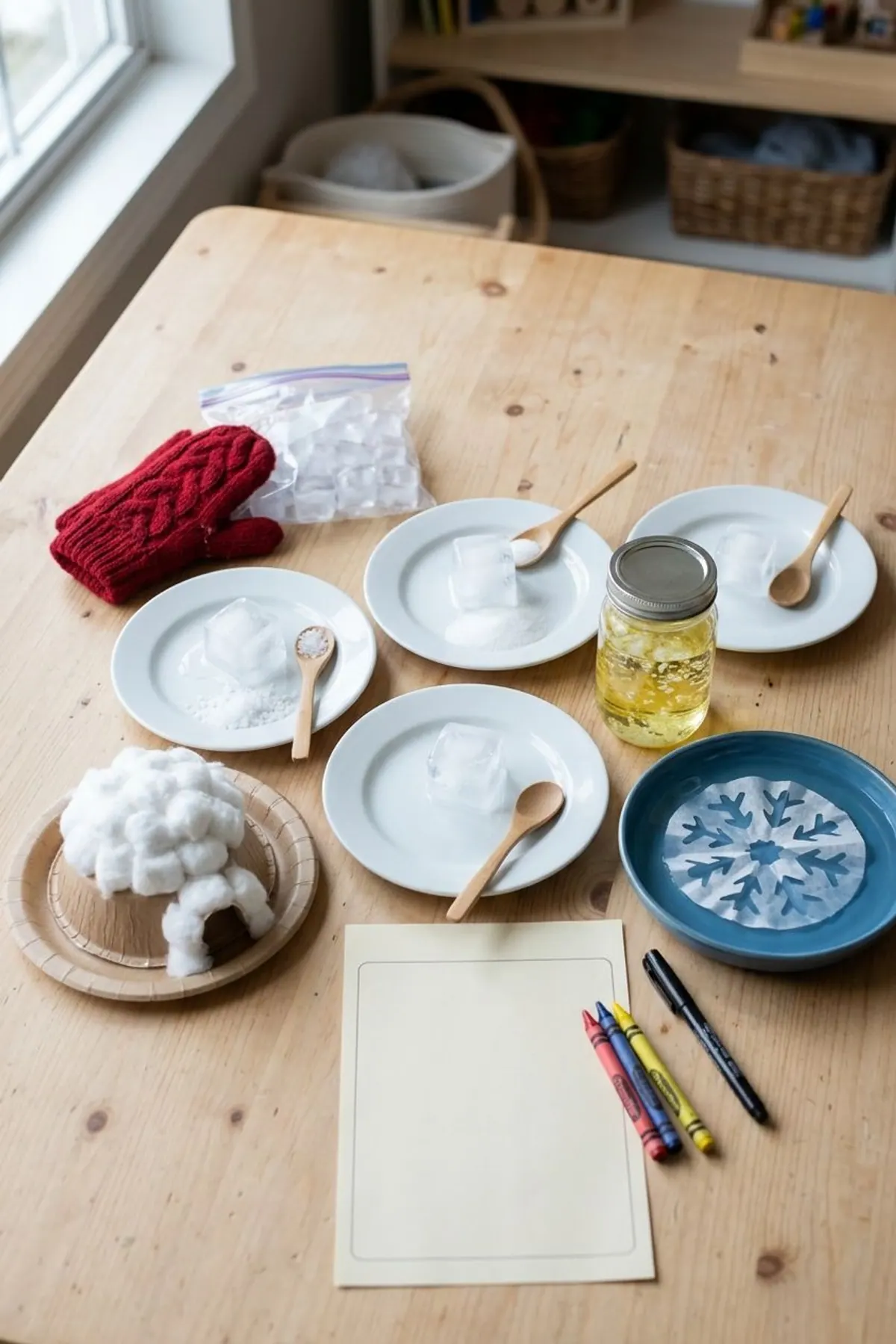
Set three plates in a row with one big ice cube on each. Sprinkle a teaspoon of salt on the first, a teaspoon of sugar on the second and nothing on the third. Start a timer and check every five minutes. Salt usually wins, but let your child watch and decide.
Ages: 3 to 5
Prep: 5 minutes
Mess: Low
Supplies: 3 plates, 3 large ice cubes, 1 teaspoon of salt, 1 teaspoon of sugar, 1 spoon, 1 timer
Predict: Which cube will melt first, and which will last longest?
Record box: Draw three plates and color the ice cube at 5, 10 and 15 minutes.
Safety: keep salt and sugar off tongues and away from eyes. Large cubes only, because small ice pieces are a choking hazard under 4. If a child swallows a spoonful of salt, call Poison Control at 1-800-222-1222.
- Make the cubes the day before in a big silicone mold so they are the same size. A fair test starts with equal ice.
Big, equal cubes make the race fair and are less of a choking risk.
2Ice excavation with a toy penguin
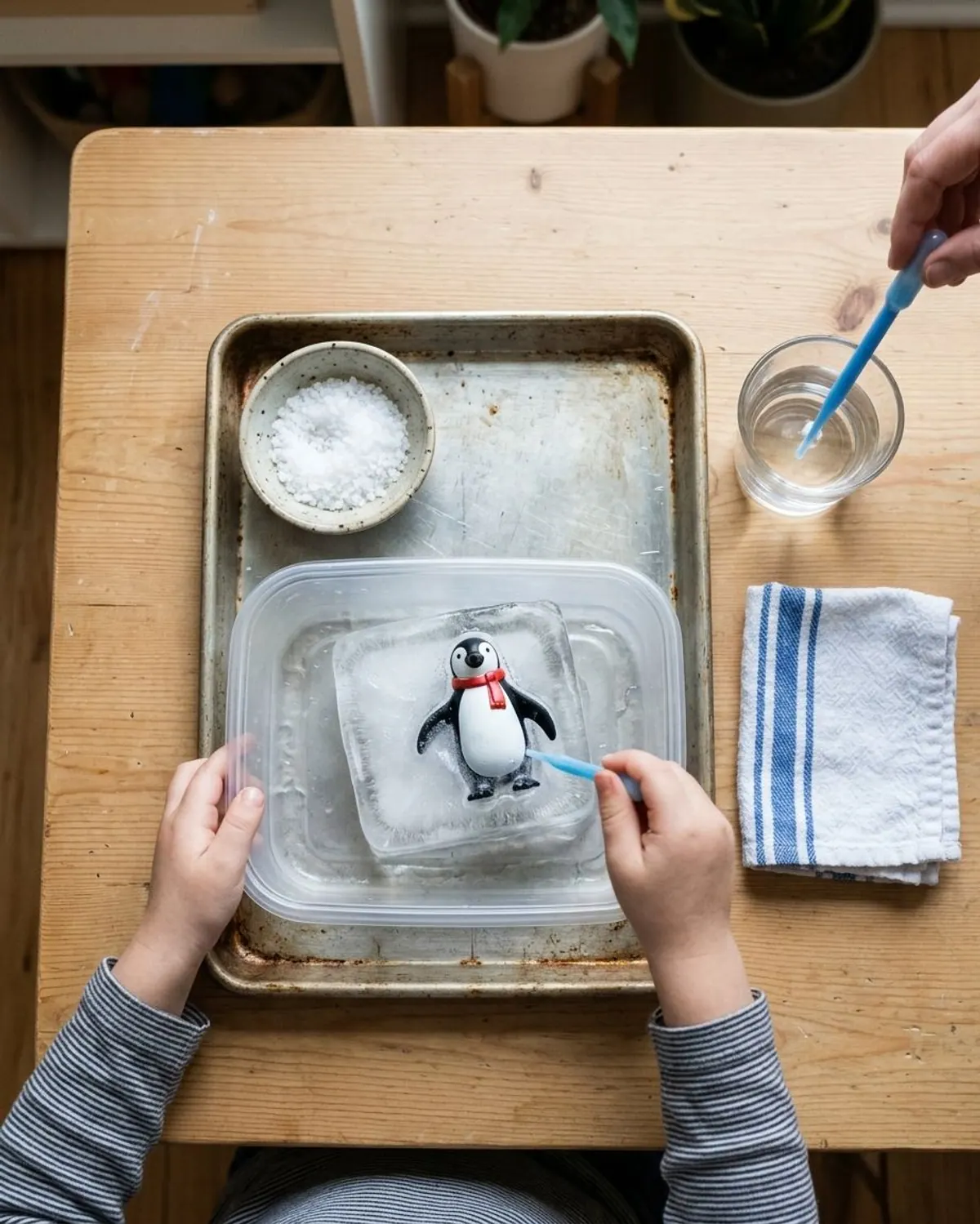
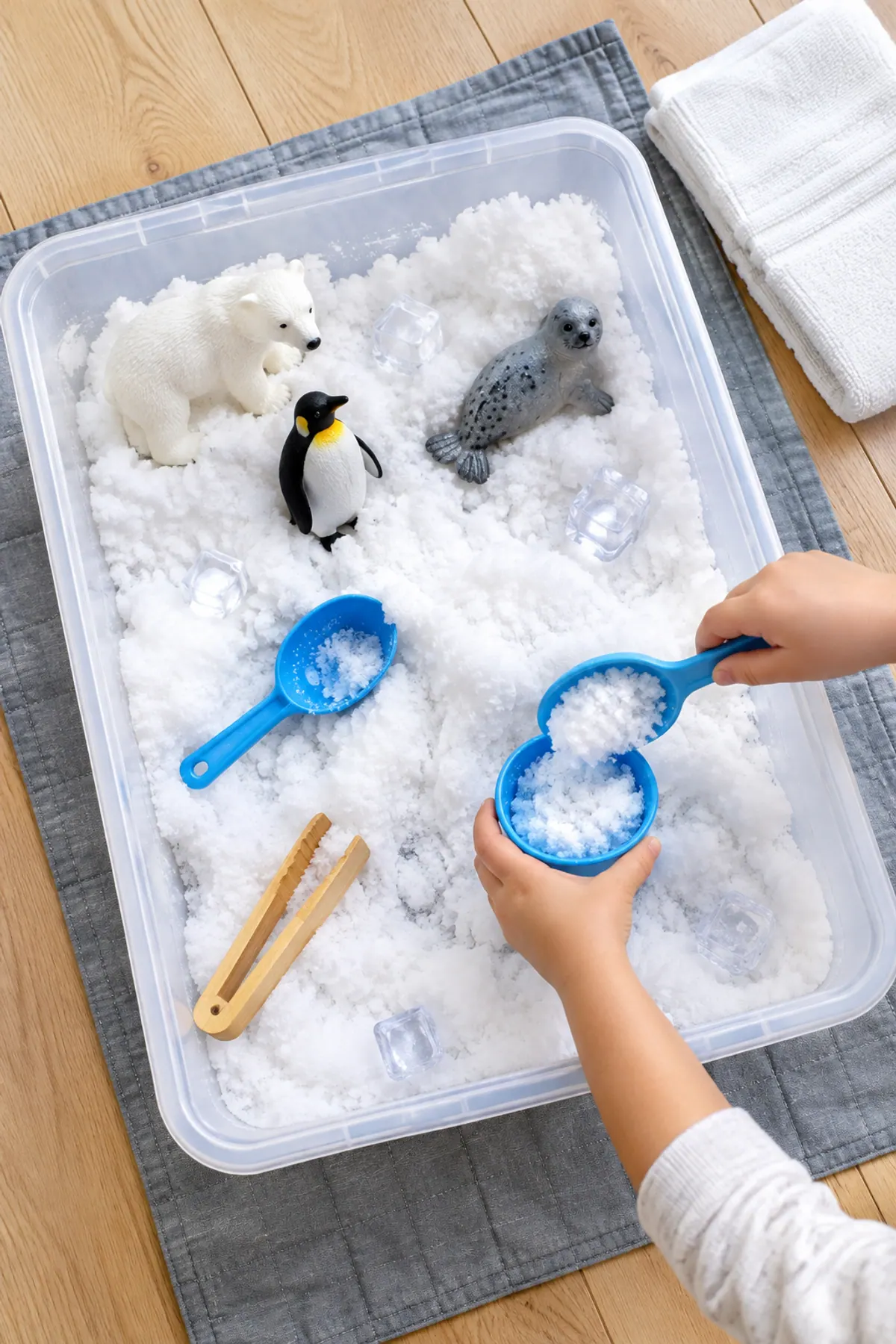
Freeze a plastic penguin inside a tub of water overnight. Next day, turn the block out onto a tray and let your child free the penguin using a dropper of lukewarm water, a small bowl of salt and a spoon. Ask your child what is working and what is slow.
Ages: 3 to 5
Prep: 10 minutes, plus freezing overnight
Mess: Medium
Supplies: 1 large plastic penguin, 1 plastic tub of water to freeze, 1 baking tray, 1 dropper, 1 small bowl with 2 tablespoons of salt, 1 cup of lukewarm water, 1 towel
Predict: Will the penguin come out faster with water or with salt?
Record box: Draw the ice block at the start and again when the penguin is free, and tick which tool worked best.
Safety: use a toy bigger than a toilet-paper tube so it cannot be swallowed. Lukewarm water only, never hot. Salt stays out of mouths and cold fingers get a warm-up break.
- Freeze the penguin in two layers of water so it sits in the middle of the block, not stuck to the bottom.
Big enough not to be a choking risk, and they stand up in ice.
3Iceberg float
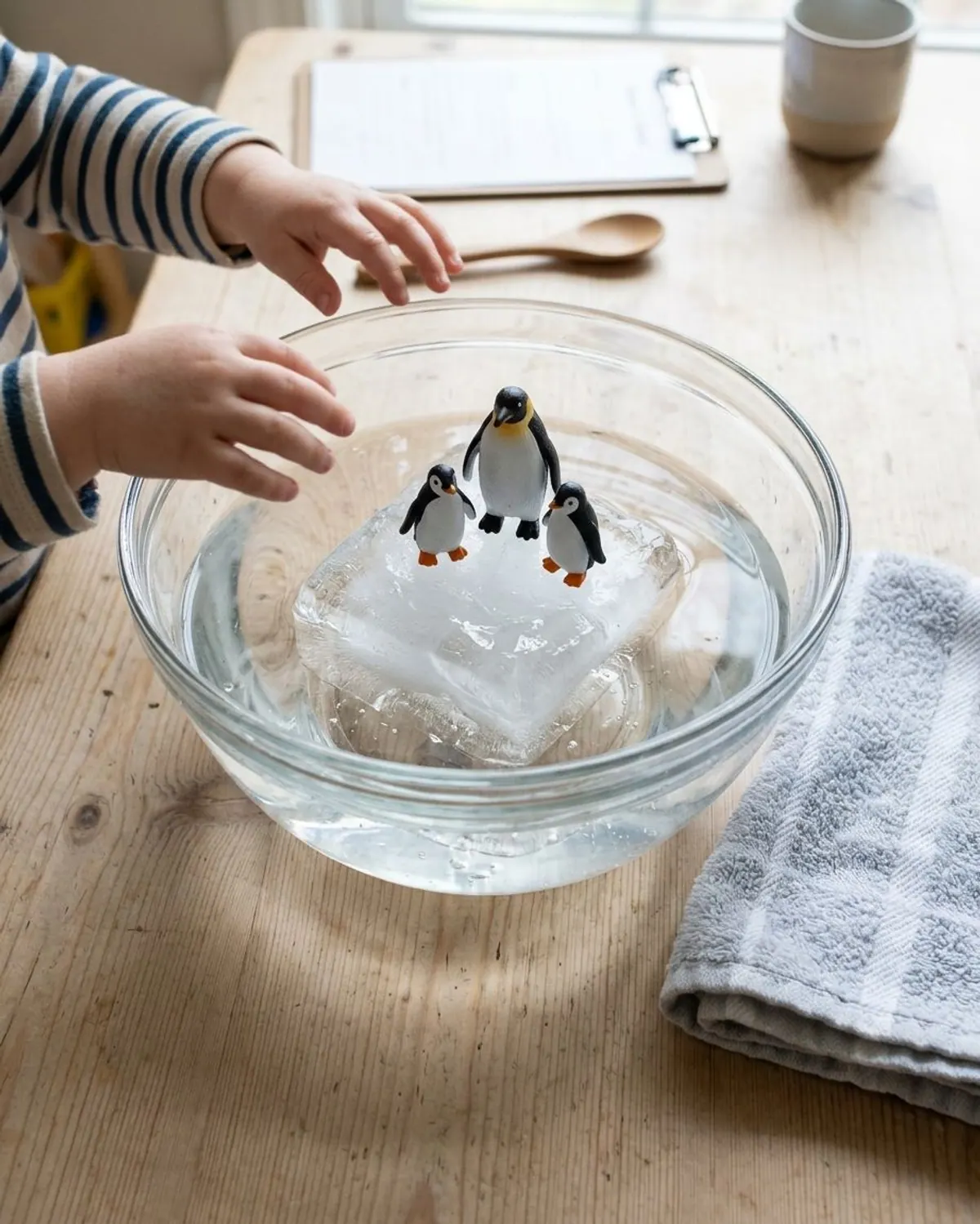
Freeze a tub of water overnight, then slide the block into a big clear bowl of water and set three toy penguins on top. Watch what the ice does. Most of an iceberg sits under the water, and the ice may tilt as you add penguins, so ask your child to notice that too.
Ages: 3 to 5
Prep: 5 minutes, plus freezing overnight
Mess: Medium
Supplies: 1 large clear bowl, 1 block of ice, 3 toy penguins, 1 towel, 1 pitcher of cool water
Predict: Will the ice float or sink, and how many penguins can stand on it?
Record box: Draw the bowl and mark how many penguins stayed on before the ice tipped.
Safety: bowls of water need a grown-up at arm's reach, and a towel on the floor stops slips. Penguins larger than a toilet-paper tube only for children under 4.
- Add the penguins one at a time and say the number out loud together.
Free the penguin, then keep the notes going. Print one free STEM record sheet for each build and a pile of them becomes a January science notebook.
Mitten and Snow Builds
4Mitten insulation test
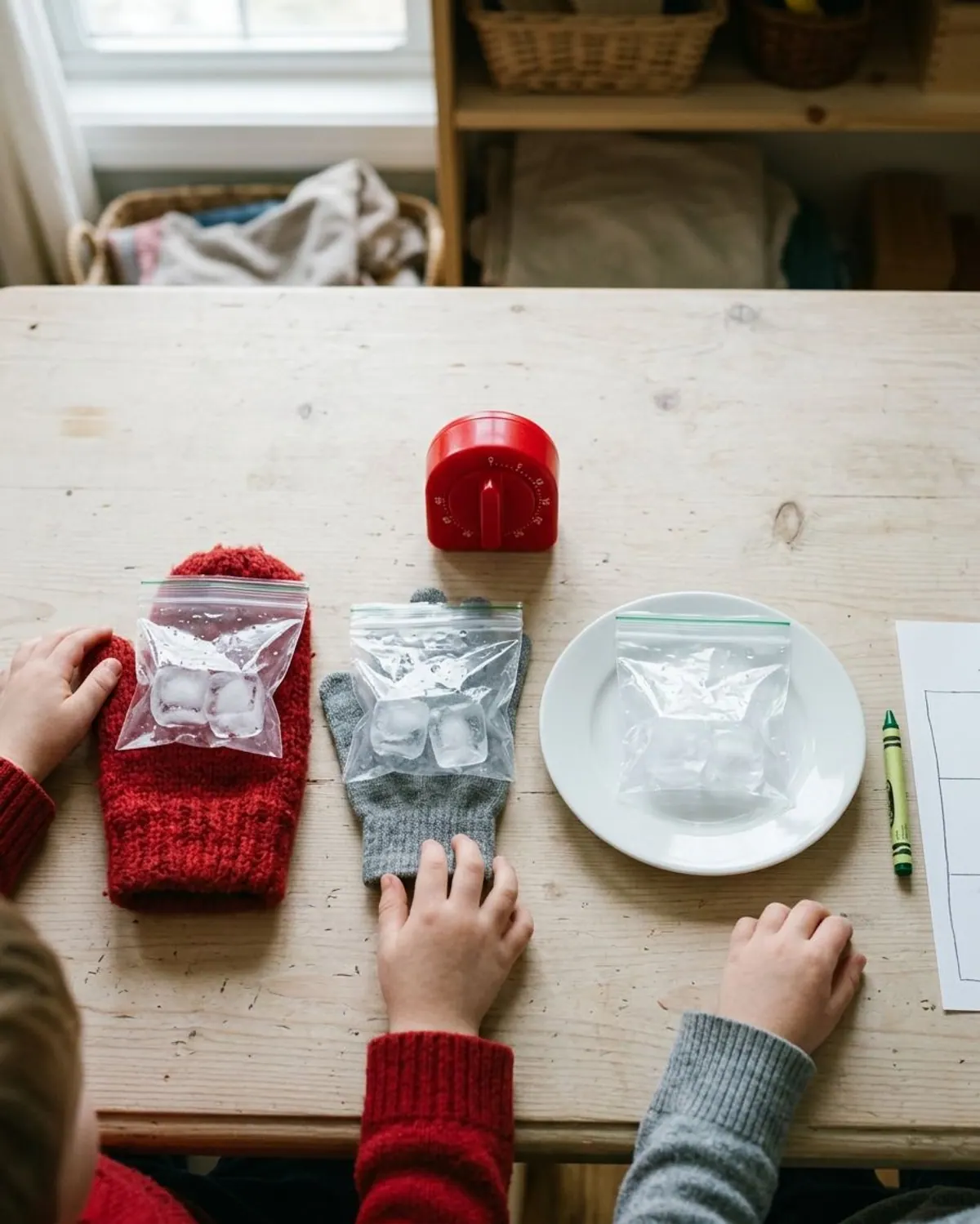
Put two ice cubes in each of three zip bags. Slip one bag into a mitten, one into a glove and leave one bare on a plate. Check all three every ten minutes and ask your child to say which ice looks smallest. The covered ice usually lasts longer, and it is a good moment to talk about why we wear mittens.
Ages: 3 to 5
Prep: 5 minutes
Mess: Low
Supplies: 3 zip bags, 6 ice cubes, 1 mitten, 1 glove, 1 plate, 1 timer
Predict: Which ice will melt first: mitten, glove or bare?
Record box: Color how much ice is left in each bag at 10 and 20 minutes.
Safety: keep the bags sealed so loose ice never ends up in mouths. Ice is a choking hazard under 4, so stay at arm's reach.
- Use the same size of ice in every bag. If one bag has bigger cubes the test is not fair.
5Snow in a cup
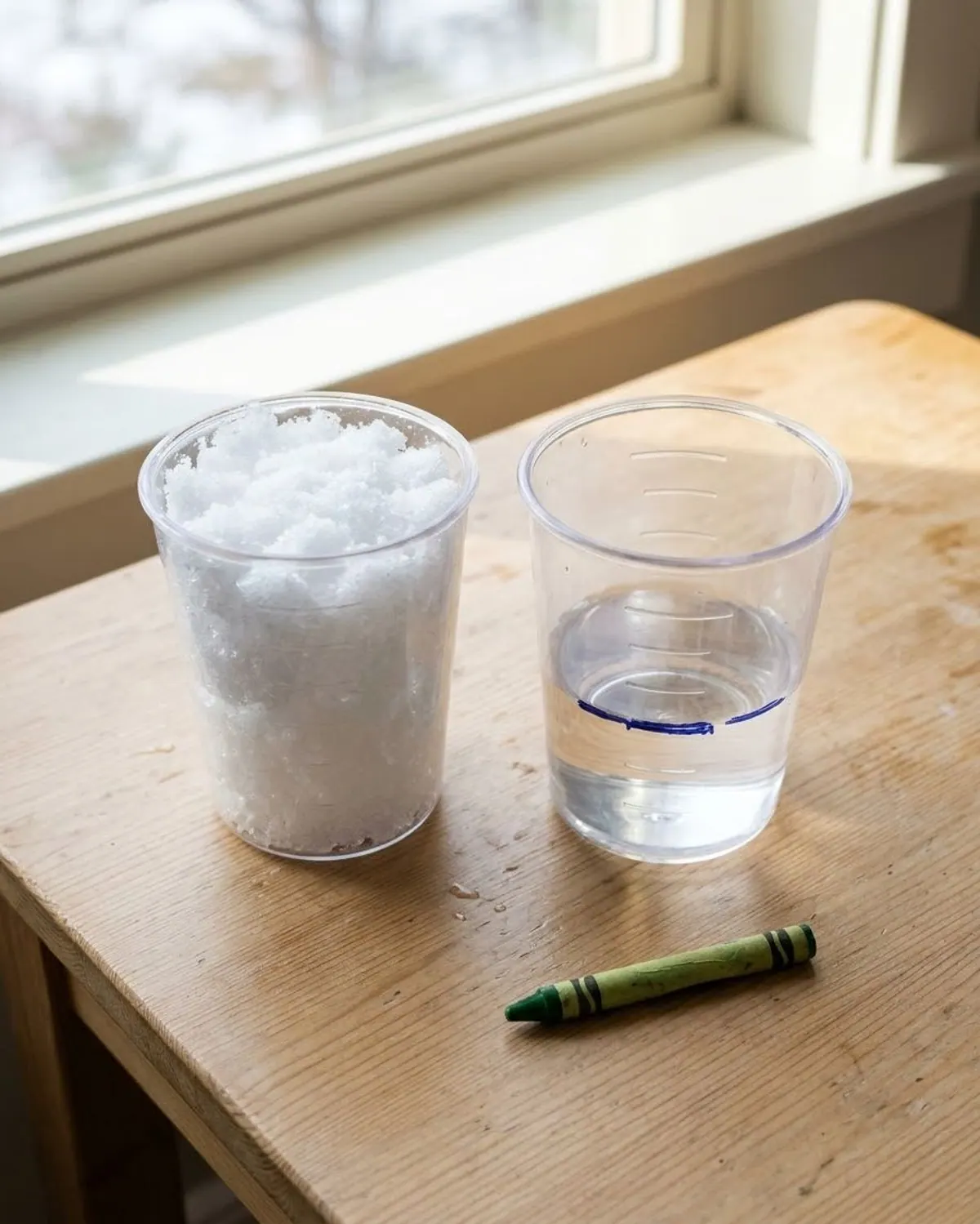
Pack one clear cup full of clean snow, set it on the windowsill and wait. When it has melted, pour the water into a second cup and draw a marker line at the top of the water. A cup of snow usually melts into only a small amount of water, and children are often surprised. No snow where you live? Use crushed ice instead.
Ages: 3 to 5
Prep: 5 minutes
Mess: Low
Supplies: 2 clear cups, enough clean snow or crushed ice to fill one cup, 1 washable marker, 1 timer
Predict: How full will the cup be when the snow has melted?
Record box: Draw the full cup, then draw the cup after melting and color the water line.
Safety: collect snow from a clean spot away from roads and never eat it. Keep cups on the table, not on a ledge, and warm cold hands inside after a few minutes.
- Mark the water line before you say anything. Children remember what they predicted far better once they see the line.
6Snow boot waterproof test
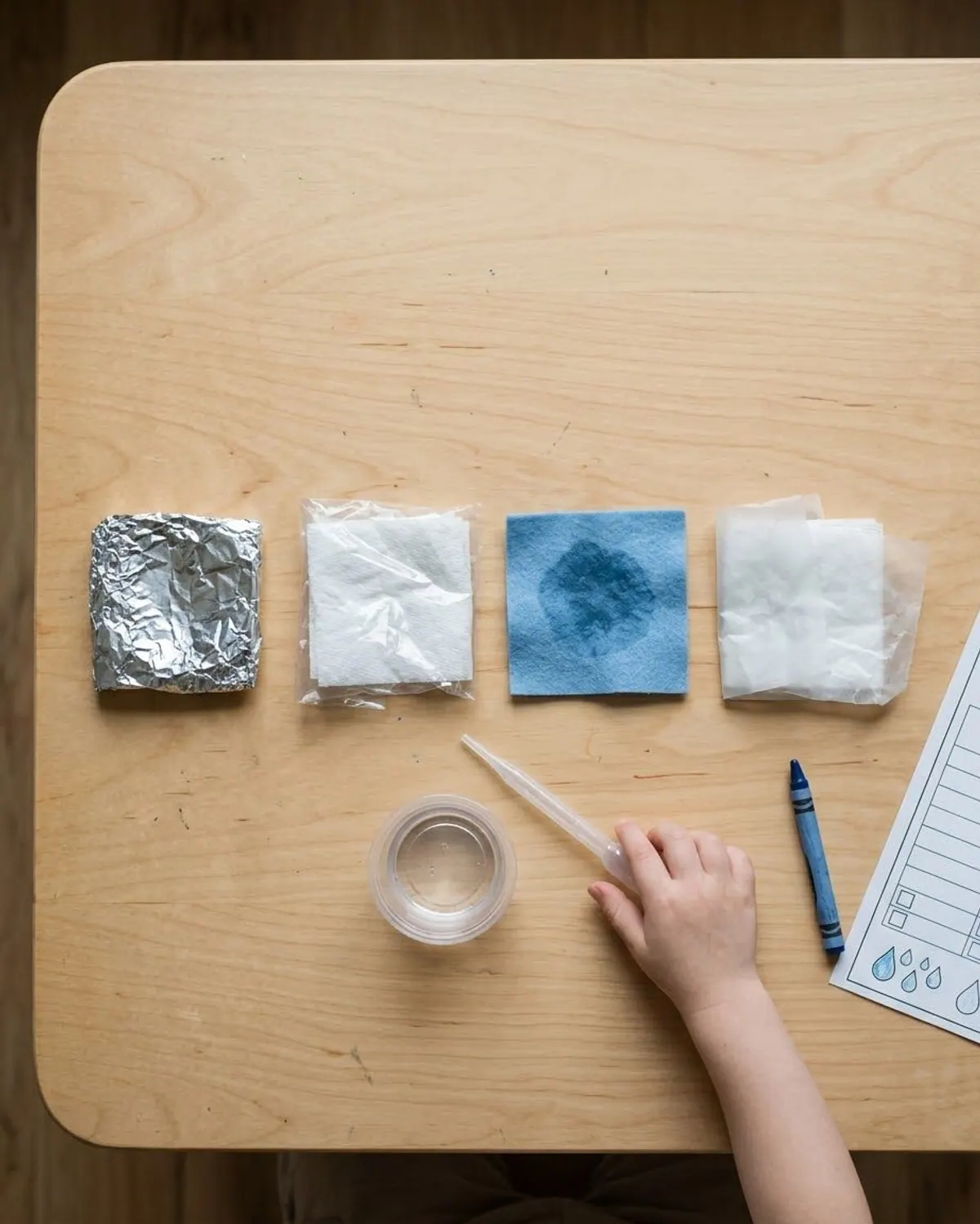
Cut four small squares: foil, felt, a piece of plastic bag and a cotton cloth. Set a folded paper towel under each one. Use a dropper to put ten drops of water on each square, wait two minutes and lift each one to see which paper towel stayed dry. Which material would make a good snow boot?
Ages: 4 to 5
Prep: 10 minutes
Mess: Medium
Supplies: 4 squares (foil, felt, plastic bag, cotton cloth), 4 folded paper towels, 1 dropper, 1 cup of water, 1 timer
Predict: Which material will keep the paper towel driest?
Record box: Tick the squares that stayed dry and cross the ones that got wet.
Safety: a grown-up cuts the foil and folds the edges flat because cut foil can be sharp. Plastic bag pieces stay away from faces. Small squares can be a choking hazard under 4, so cut them larger than a coaster.
- Let your child choose the material they think will win and put a sticker by it before the first drop.
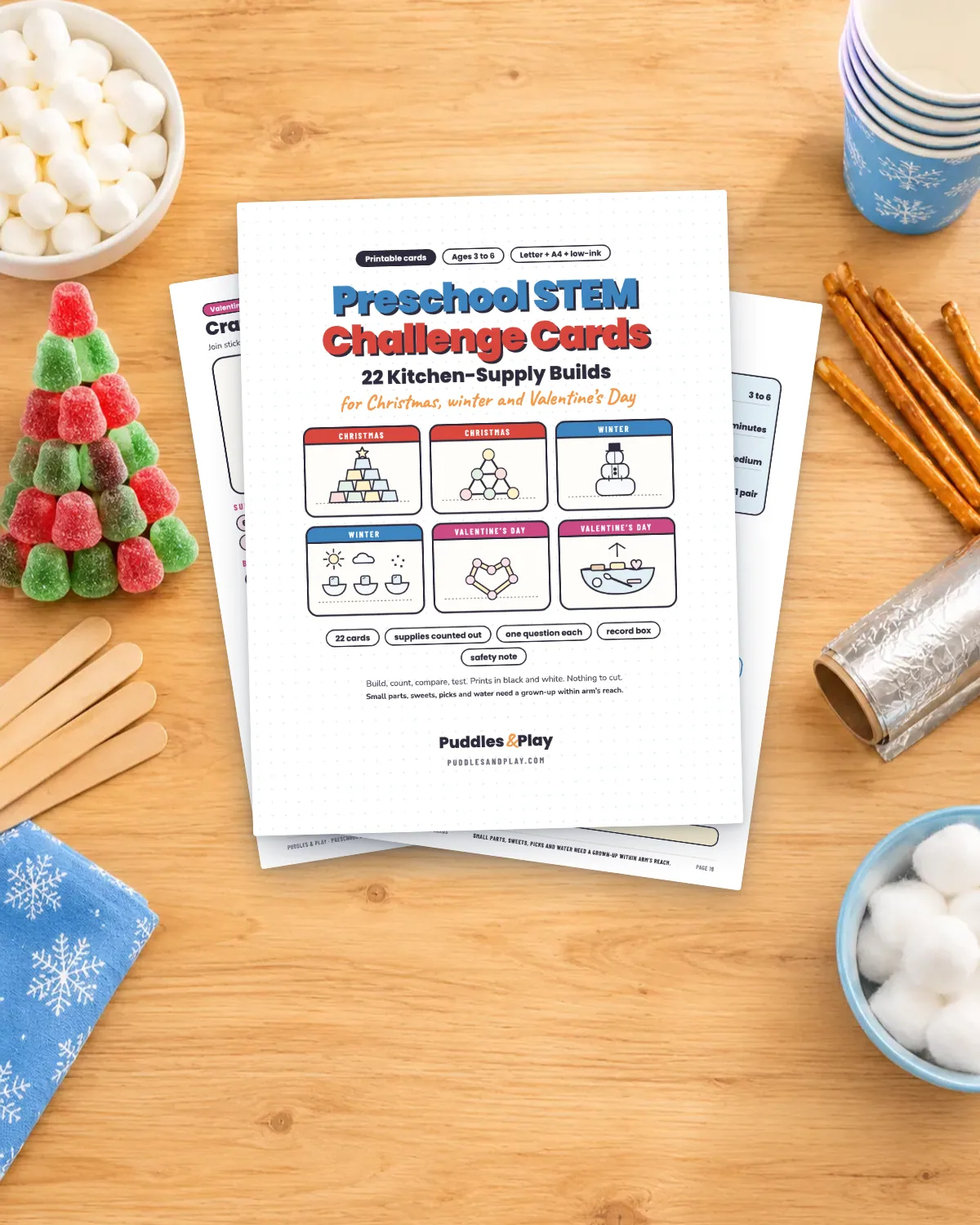
If your child loves these, the Preschool STEM Challenge Cards are $6 for 22 cards (8 Christmas, 8 winter and 6 Valentine's Day), each with the supplies counted out, one question to ask, a record box and a safety note.
Igloo Builds
7Cotton ball igloo
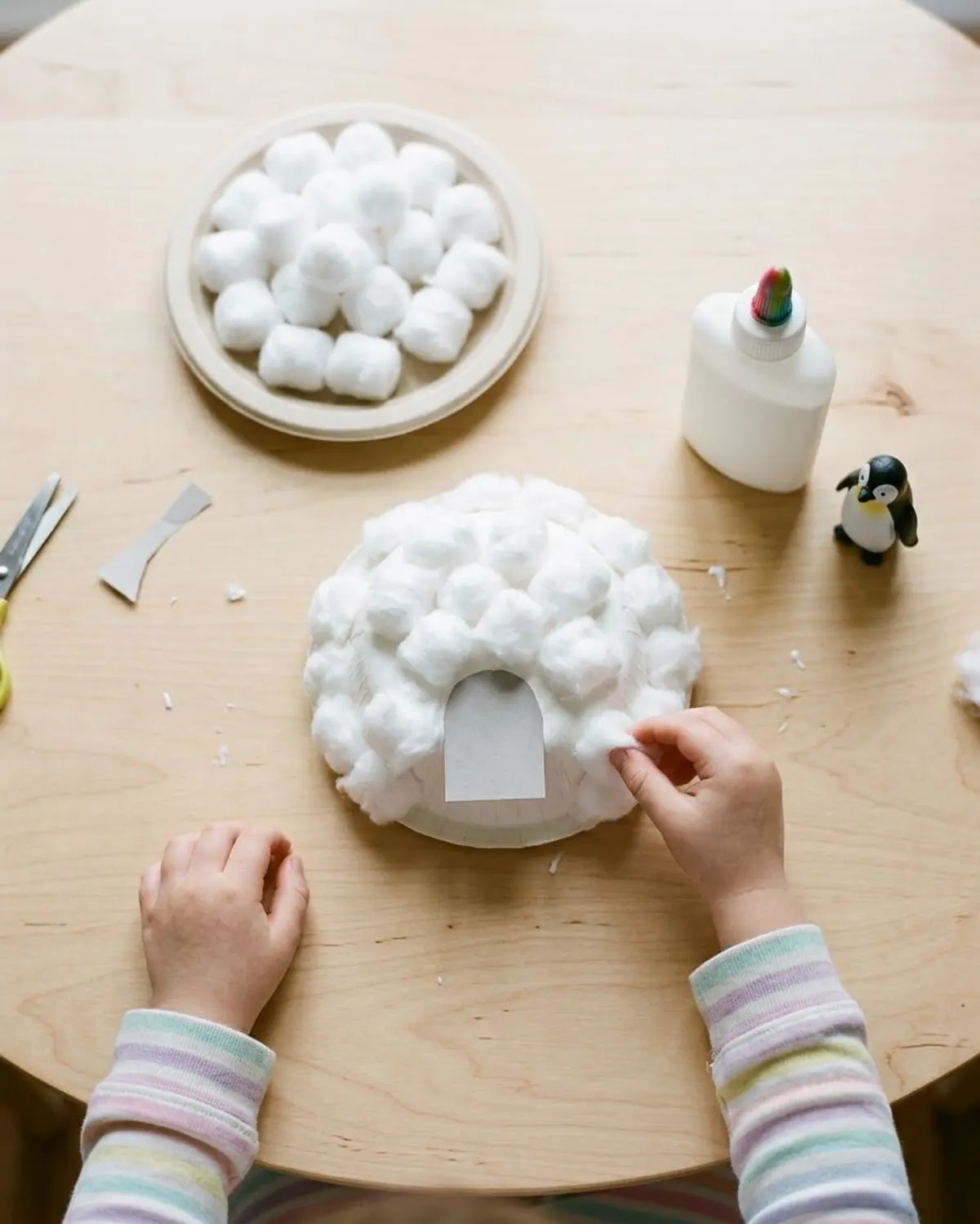
Turn a paper bowl upside down and glue cotton balls over it, working from the bottom row up. Cut a small paper doorway and glue it on, then stand a toy penguin outside. Ask your child to count the cotton balls as they go, so the count goes on the record sheet.
Ages: 3 to 5
Prep: 5 minutes
Mess: Low
Supplies: 1 paper bowl, 20 cotton balls, 1 bottle of washable school glue, 1 paper arch for the door, 1 toy penguin
Predict: How many cotton balls will it take to cover the whole igloo?
Record box: Tally the cotton balls used and draw the finished igloo.
Safety: cotton balls can be a choking hazard under 3, so pick another build for toddlers. Glue is not for eating, and a grown-up stays within arm's reach.
- Squeeze the glue out first onto a plate and use a craft stick to spread it. Children find it easier to control than the bottle.
Bigger balls cover the bowl faster and are easier for small fingers.
8Paper cup igloo
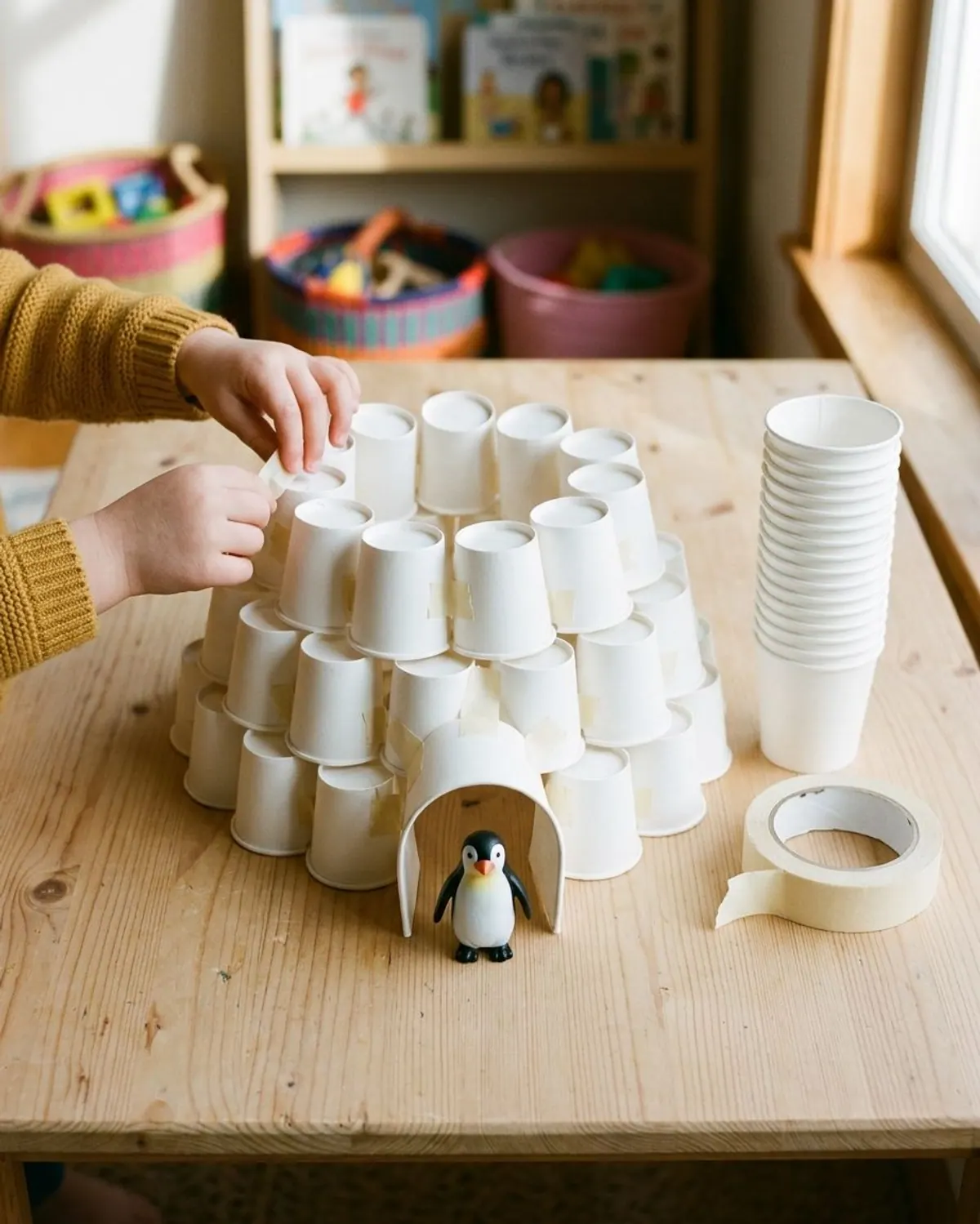
Tape one ring of paper cups upside down in a circle on the floor. Then build the next ring slightly inward, and the next, so the walls curve into a dome. Leave a gap for a doorway and place a penguin in it. A dome that curves in on every ring holds together better than a straight tower.
Ages: 3 to 5
Prep: 5 minutes
Mess: None
Supplies: 30 small white paper cups, 1 roll of masking tape, 1 toy penguin
Predict: Will the cups stay up if we build each ring a little closer in?
Record box: Draw the igloo and write how many rings you built.
Safety: cups can tumble, so build on a clear floor, not near stairs. Keep tape pieces off mouths, and a grown-up supervises any child who tends to knock things down.
- Build one ring with your child, then let them take the next ring alone.
Snowstorm and Snowflake Builds
9Snowstorm in a jar
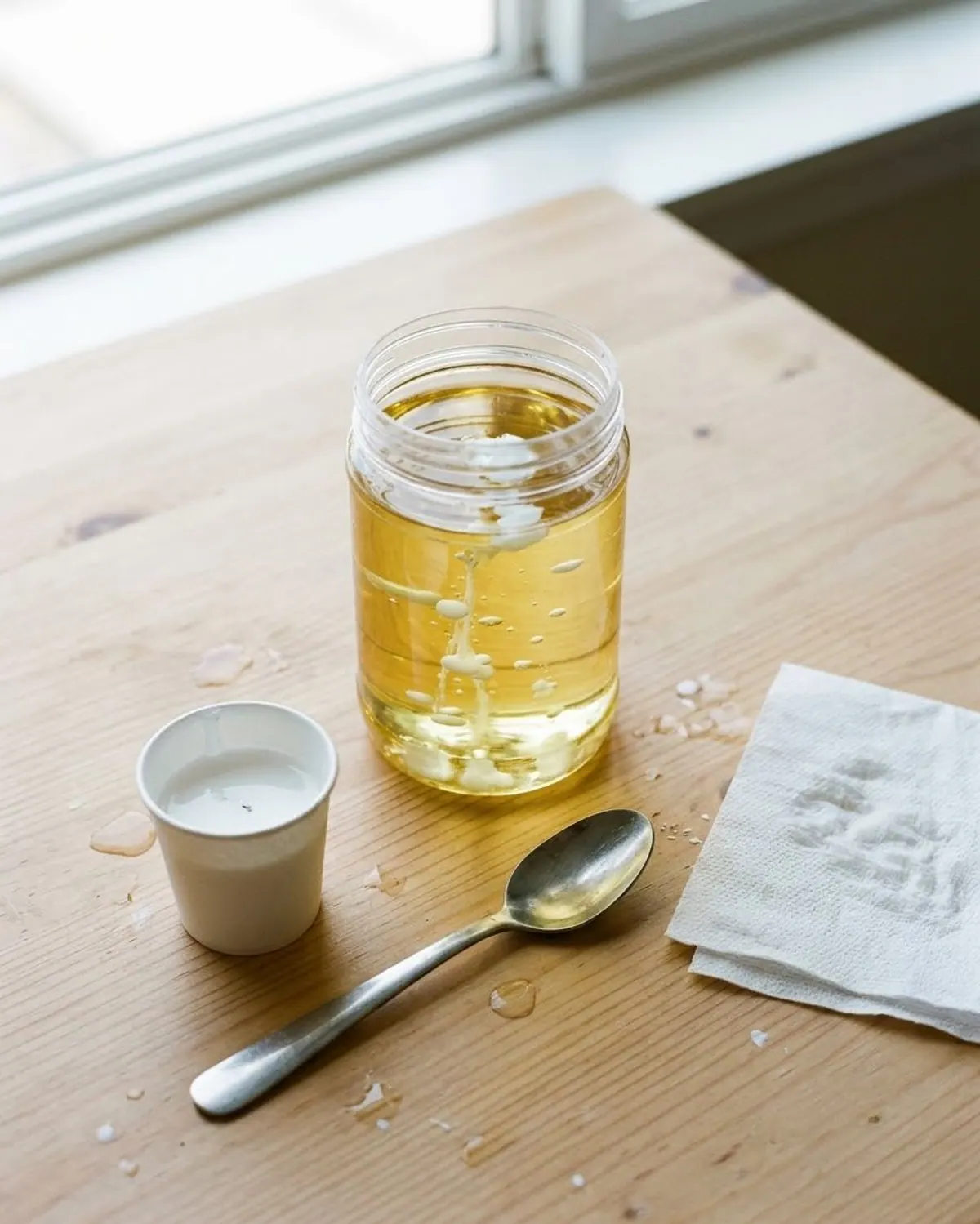
Fill a clear shatterproof jar about three quarters full of vegetable oil. Stir two tablespoons of white washable paint into a quarter cup of water and pour it in slowly. The paint and water form blobs that drift down like snow, because oil and water do not mix. Then watch the storm settle.
Ages: 4 to 5
Prep: 10 minutes
Mess: Medium
Supplies: 1 clear shatterproof plastic jar with a lid, 1 cup of vegetable oil, 1/4 cup of water, 2 tablespoons of white washable paint, 1 spoon, 1 paper towel
Predict: Will the paint sink or float, and will it mix in?
Record box: Draw the jar before and after the paint, and color where the blobs ended up.
Safety: oil and paint are not for drinking. A grown-up checks the lid before anyone shakes the jar, and wipes spills straight away because oil is slippery. Skip fizzing tablets for this one because some contain aspirin.
- Pour the paint water in a thin stream down the inside of the jar. It lands as blobs instead of mixing right away.
Plastic does not crack when it is dropped, which matters with oil and small hands.
10Floating coffee filter snowflakes
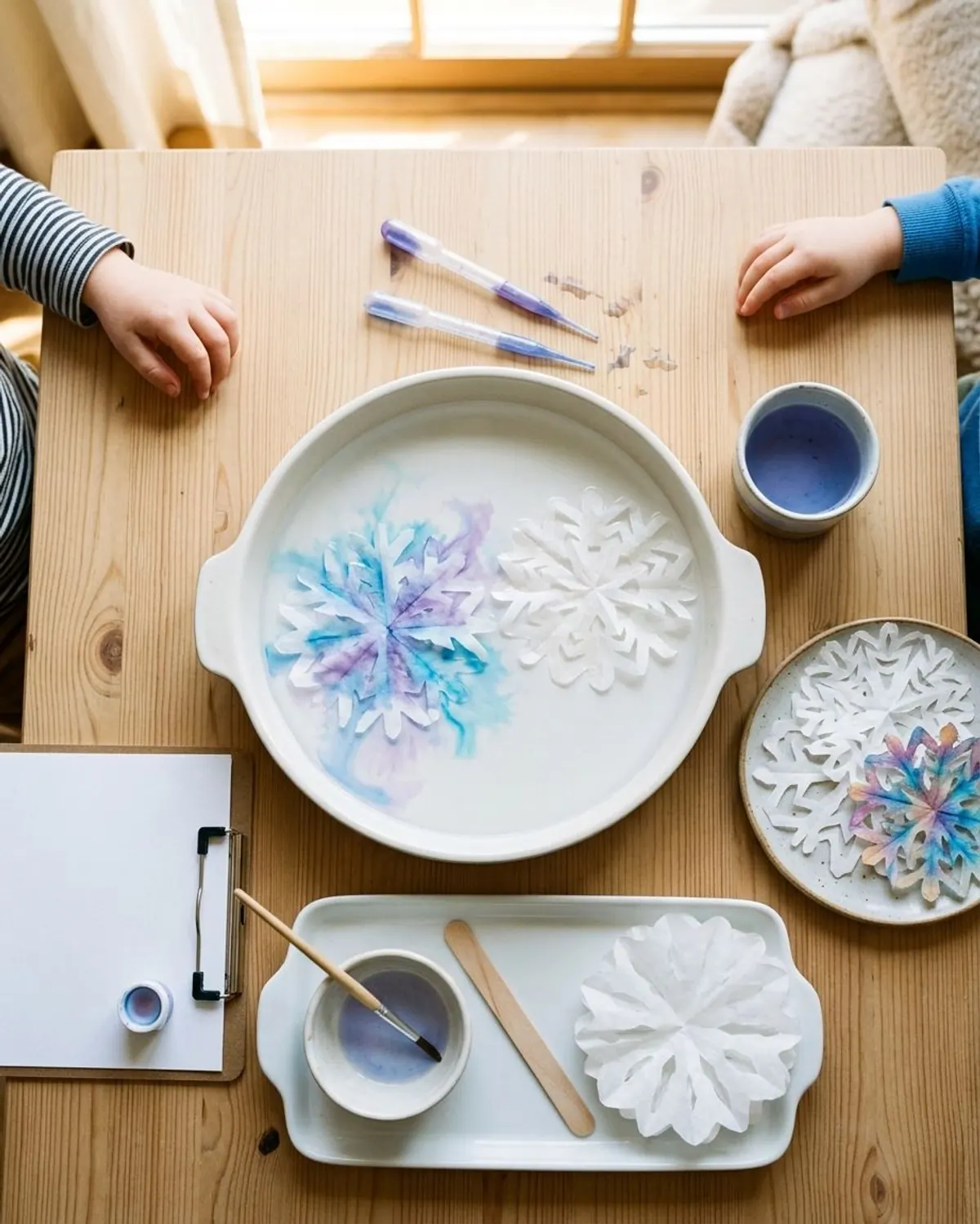
A grown-up folds three coffee filters into quarters or eighths and a child snips shapes out with safety scissors. Open each one into a snowflake and float it on a shallow tray of water. Add a few drops of liquid watercolor with a dropper and watch the color creep through the paper.
Ages: 3 to 5
Prep: 10 minutes
Mess: Medium
Supplies: 3 coffee filters, 1 pair of safety scissors, 1 shallow tray of water, 2 colors of liquid watercolor, 2 droppers, 1 towel
Predict: Where will the color go, and will the snowflake sink?
Record box: Draw your snowflake and color where the paint spread.
Safety: check the watercolor label for non-toxic and keep it away from mouths. Water on the floor is slippery, so a towel goes under the tray. Scissors only with a grown-up nearby.
- Let the snowflake dry on a towel afterward and hang it in the window. The colors look quite different once they dry.
Spreads fast through coffee filter paper and washes out of most clothes.
A 10-Day January STEM Plan
One build a day is plenty for this age. This plan puts the overnight-freeze builds on days when you can prep the night before and saves the snow cup for a day when there is snow. Swap days freely.
| Day | Build | Needs snow? | Night before |
|---|---|---|---|
| 1 | Ice cube melt race | No | Make large ice cubes |
| 2 | Mitten insulation test | No | Nothing |
| 3 | Ice excavation with a toy penguin | No | Freeze the penguin in a tub of water |
| 4 | Cotton ball igloo | No | Nothing |
| 5 | Snowstorm in a jar | No | Nothing |
| 6 | Iceberg float | No | Freeze a tub of water |
| 7 | Snow in a cup | Yes, or use crushed ice | Check the forecast |
| 8 | Paper cup igloo | No | Nothing |
| 9 | Snow boot waterproof test | No | Cut the squares |
| 10 | Floating coffee filter snowflakes | No | Fold the filters |
Record What Happened
After each build, print one free STEM record sheet and let your child draw what they built, circle what they guessed and tell you what happened. A grown-up writes the words for ages 3 and 4. The sheet is the same for every build, so ten of them make a winter science notebook.
Keeping Cold Hands Safe
More cold-day ideas live in our winter activities for kids, the snow activities for kids and our winter sensory bin ideas. If you want to plan the whole break, the winter break activities two-week plan has a morning activity for every day.
Before you start
Supplies for winter STEM activities
-
Droppers or pipettes
Typically $5 to $9
Water on ice, color on filters. Small hands build control.
Check price on Amazon for Droppers or pipettes -
Large plastic penguin figures
Typically $6 to $12
Excavation, icebergs and igloos all use them.
Check price on Amazon for Large plastic penguin figures -
Liquid watercolor
Typically $8 to $15
Colors the coffee filter snowflakes.
Check price on Amazon for Liquid watercolor -
Basket coffee filters
Typically $3 to $6
The thin paper that spreads color.
Check price on Amazon for Basket coffee filters -
Large silicone ice molds
Typically $8 to $14
Big, equal ice for the melt race.
Check price on Amazon for Large silicone ice molds -
Shatterproof plastic jars
Typically $8 to $14
For the snowstorm in a jar.
Check price on Amazon for Shatterproof plastic jars
For a whole two weeks of easy play with no shopping, the Winter Break Activity Pack has 34 printable pages for ages 3 to 8.
Frequently asked questions
What are easy winter STEM activities for preschoolers?
Try an ice cube melt race, a mitten insulation test, a cotton ball igloo or a snowstorm in a jar. Each uses a few counted supplies, takes about 15 minutes and starts with one question your child can guess.
Do winter STEM activities need real snow?
No. Only the snow in a cup build uses snow, and crushed ice works instead. The other nine run with ice cubes, paper cups, cotton balls, jars and coffee filters, so they work in any month.
Is salt safe for preschoolers to use on ice?
A small amount on ice is fine with supervision, but salt is not for eating. Keep it in a small bowl and off tongues and eyes. If a child swallows more than a taste, call Poison Control at 1-800-222-1222.
Can toddlers do winter STEM activities?
Some of them, with changes. Ice excavation and the iceberg float work for toddlers when you use large toys and stay at arm's reach, but skip cotton balls and small ice pieces under 3.
What is the record sheet for?
It turns play into science. Your child draws what they built, circles their guess and tells you what happened. Print one per build, and the free STEM record sheet works for every activity here.
Save it for later
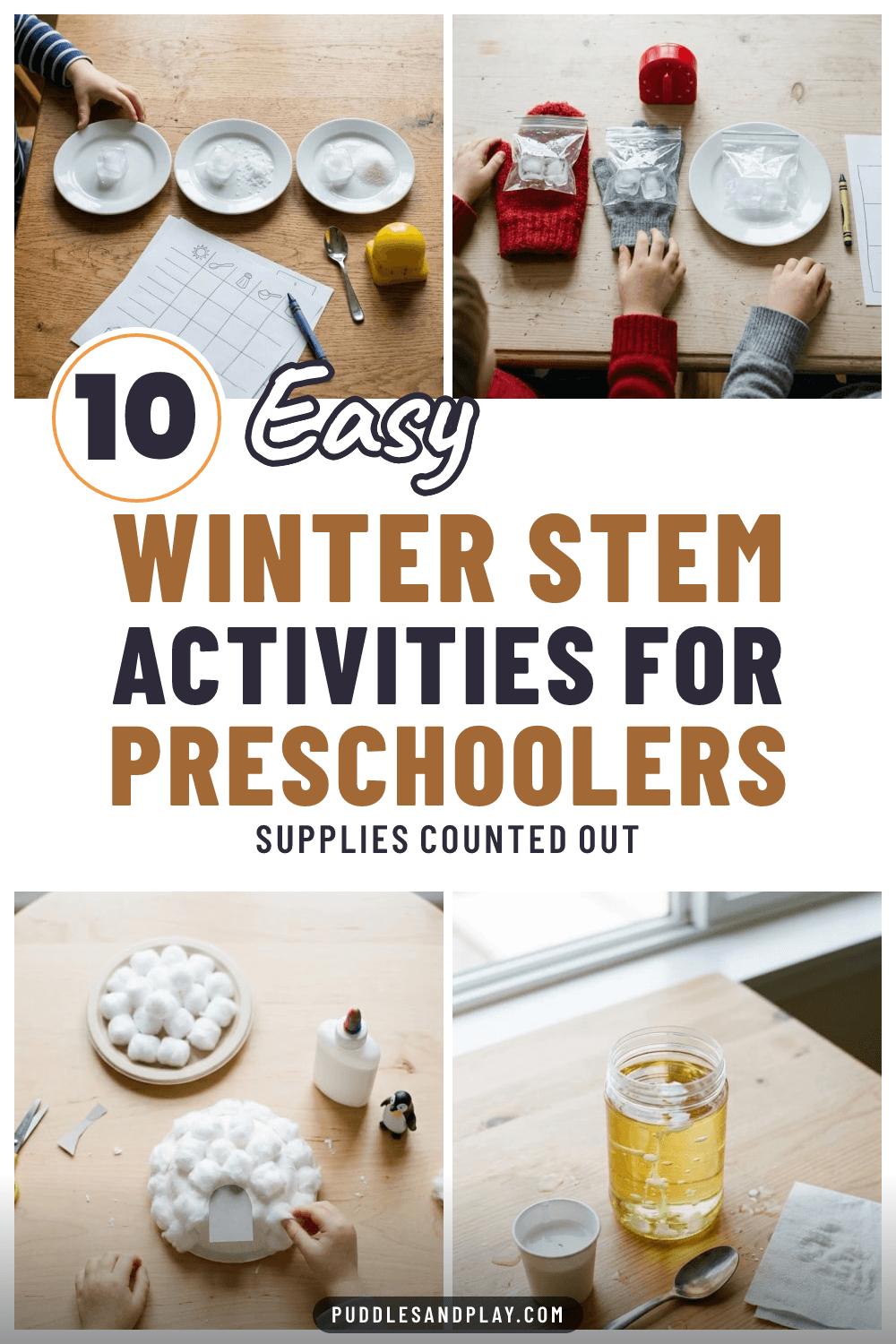
Pin this to your Preschool Activities board so it's there when you need it.
Save to Pinterest