This post contains affiliate links. As an Amazon Associate we earn from qualifying purchases, at no extra cost to you. Read our disclosure.
Safety first: Always supervise little ones, and skip small parts for kids who still put things in their mouths. Please read our play safety notes before you start.
Key takeaways
- Eight stations use only cushions, tape, a sheet, socks, paper plates and a basket, so nothing needs to be bought.
- Put loud, jumping stations first and calm, crawling ones last.
- Scale by age: 2 or 3 stations for ages 1 to 2, all 8 for ages 7 and up.
- Stay in the room. The AAP's active toddler page says to stay close in case a child gets into something they should not.
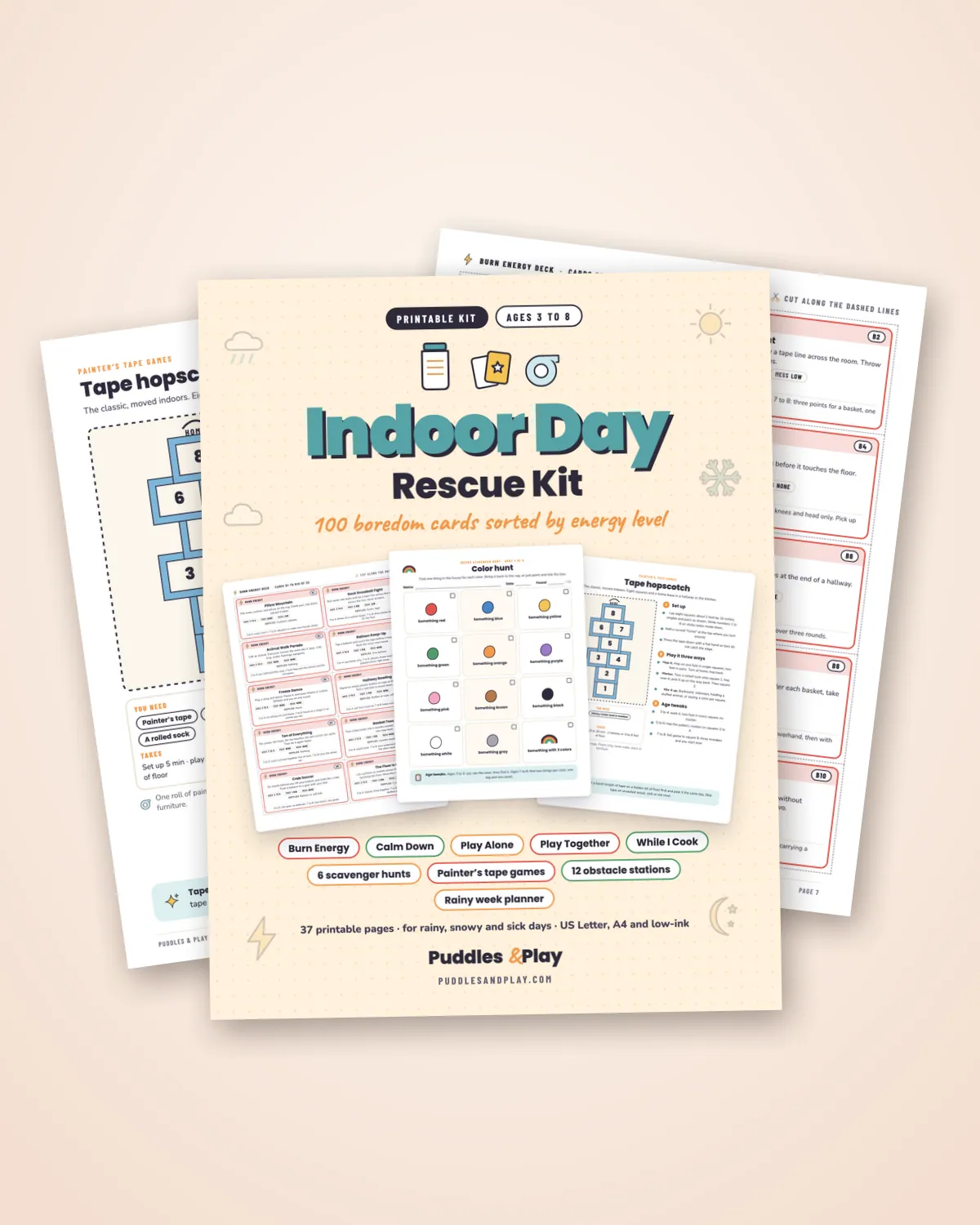
- The Indoor Day Rescue Kit ($7) has 12 station cards and a timing table if you want it on paper.
In this post17 sections
- Indoor Obstacle Course for Kids: What You Need (Nothing to Buy)
- How to Build an Indoor Obstacle Course in 10 Minutes
- 8 Easy Indoor Obstacle Course Stations With No Equipment
- 1. Pillow stepping stones
- 2. Tape balance line
- 3. Blanket tunnel
- 4. Sock ball toss
- 5. Paper plate hop spots
- 6. Jump the tape river
- 7. Bear walk
- 8. Finish line and timer
- Indoor Obstacle Course for Toddlers and Older Kids: Swap by Age
- A Score Card and Timer Game for Your Obstacle Course
- Safety and Noise Rules for an Indoor Obstacle Course
- What to Buy If You Want a Longer-Lasting Course (Short Amazon List)
- Keep the Course for the Next Stuck-Inside Day
- FAQ
Indoor Obstacle Course for Kids: What You Need (Nothing to Buy)
An indoor obstacle course for kids is just a path of simple moves in a row: step, balance, crawl, toss, jump, finish. Everything below uses things already in a living room, so the whole course costs nothing and comes down in two minutes.
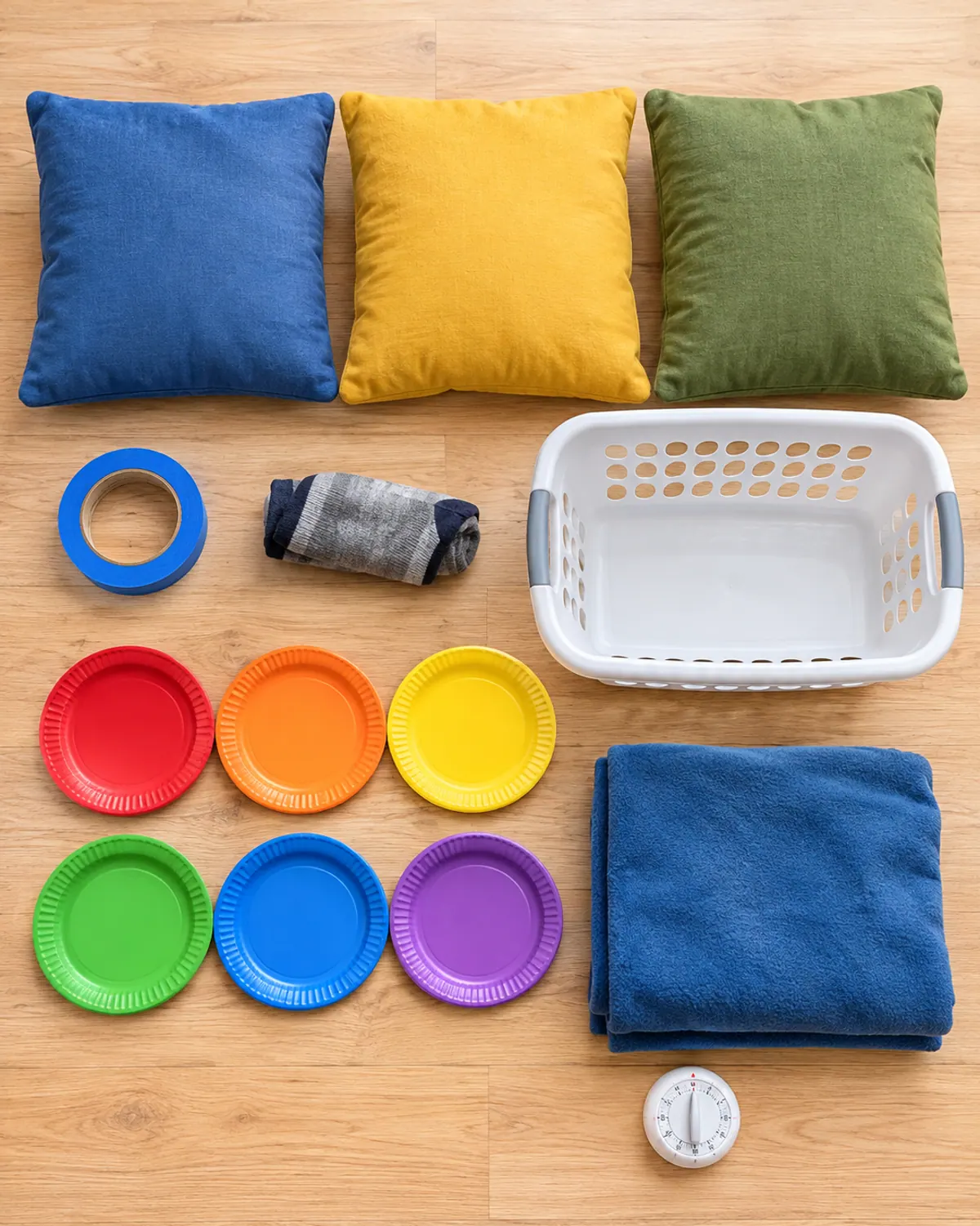
If you would rather not think up a course each rainy day, the Indoor Day Rescue Kit has 12 obstacle course station cards, a course planner with a timing table and 4 painter's tape floor games, all printable for $7. The free steps below work without it.
How to Build an Indoor Obstacle Course in 10 Minutes
-
Step 1: Clear a path and move the sharp things
Push the coffee table and any furniture with hard corners to the wall. You want a clear loop of floor about as long as the room, and a rug under the jumping parts if you have one.
-
Step 2: Pick 5 to 8 stations
Choose stations from the list below. Put the big-movement ones first (stepping, jumping) and the slow ones (crawling, tossing) last, so the course ends on a calm note.
-
Step 3: Lay the floor stations
Set the cushions, tape lines and paper plates first. Press tape down firmly on floors only, never on stairs, and keep each station at least one big step from the next.
-
Step 4: Add the tunnel and the finish
Drape the sheet over the chairs and set the laundry basket at the end. Put a stuffed animal at the finish line to give the run a goal.
-
Step 5: Walk it once, slowly
Take one slow lap yourself before your child goes. Check that nothing slides, the chairs are steady and the path is clear, then show the order out loud: step, balance, crawl, toss, jump.
8 Easy Indoor Obstacle Course Stations With No Equipment
Each station takes 2 minutes or less to set up. Mix and match, and call each one by a silly name so a 3 year old remembers the order.
1Pillow stepping stones
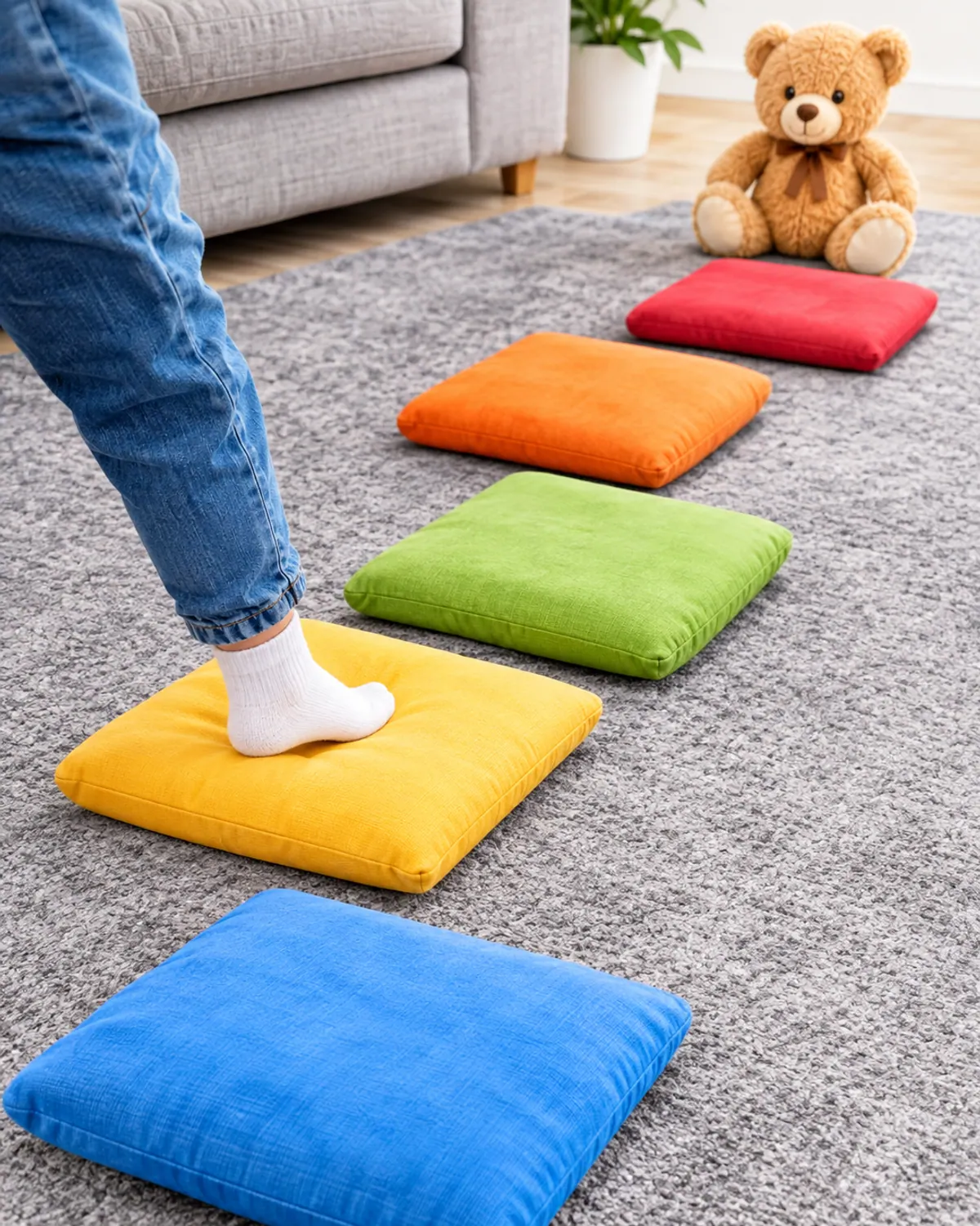
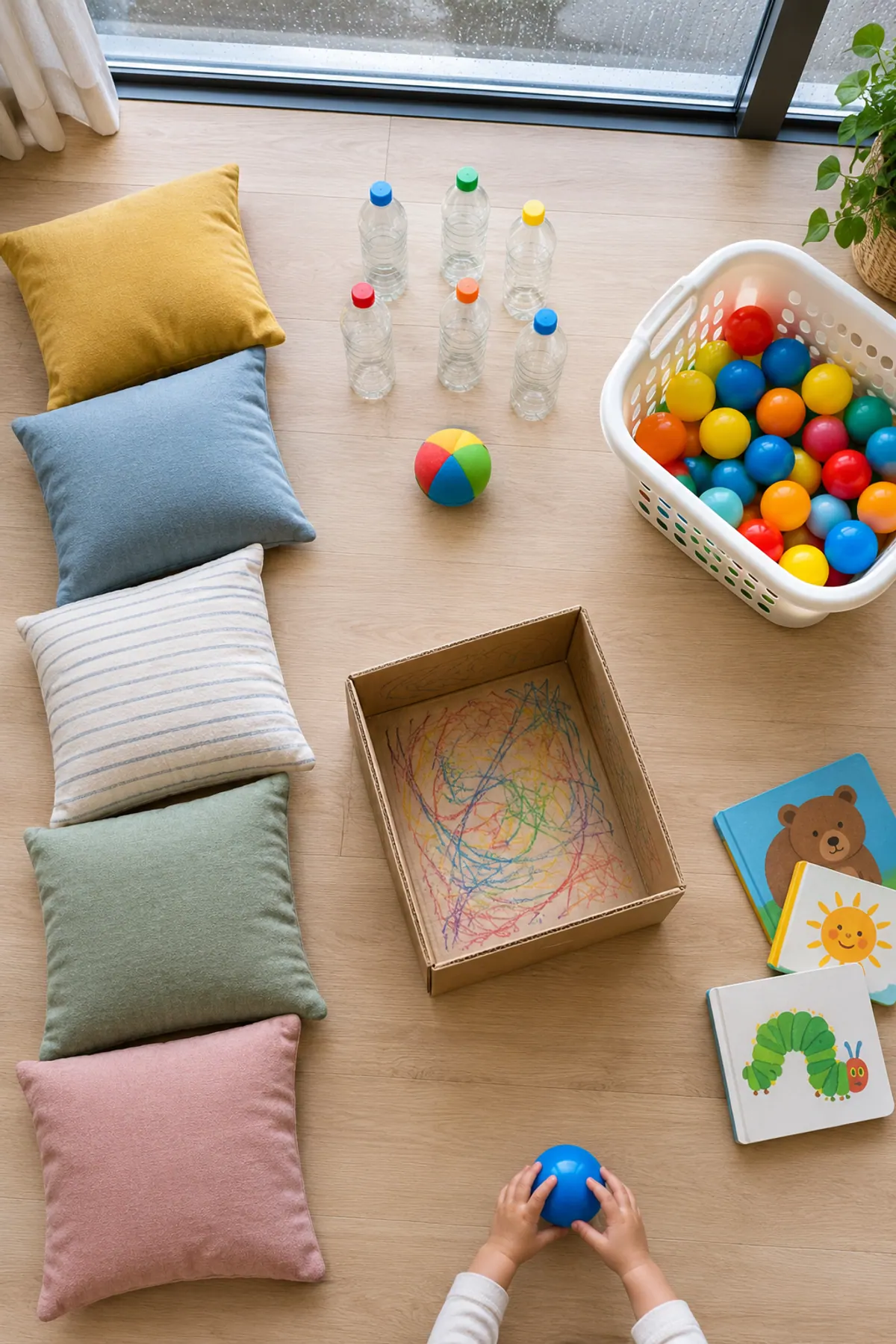
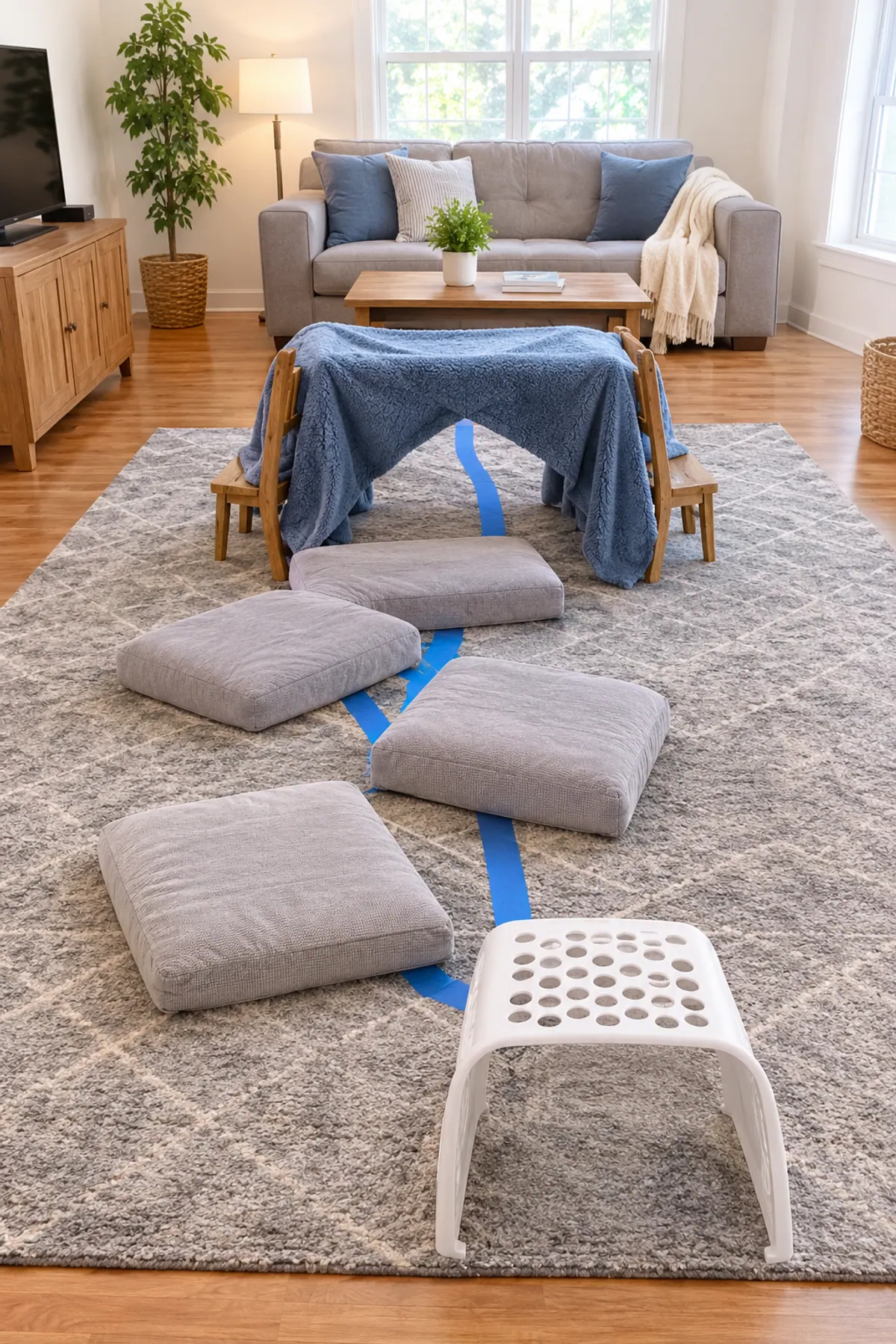
Lay 5 couch cushions a small step apart in a winding line, with a stuffed bear waiting at the end. Your child steps from cushion to cushion without touching the rug. The AAP's own toddler fitness page mentions a floor-is-lava game and says to use things that are safe to walk on, like stable couch cushions or books, so check that every cushion sits flat and does not slide.
Ages: 2 to 7
Prep: 2 minutes
Mess: None
Noise: Soft thuds
Supplies: 5 couch cushions, one stuffed animal
Safety: Put the cushions on a rug, not bare wood, and keep them away from the coffee table and stairs.
- Start the gaps small for toddlers and widen them as they get steady.
2Tape balance line
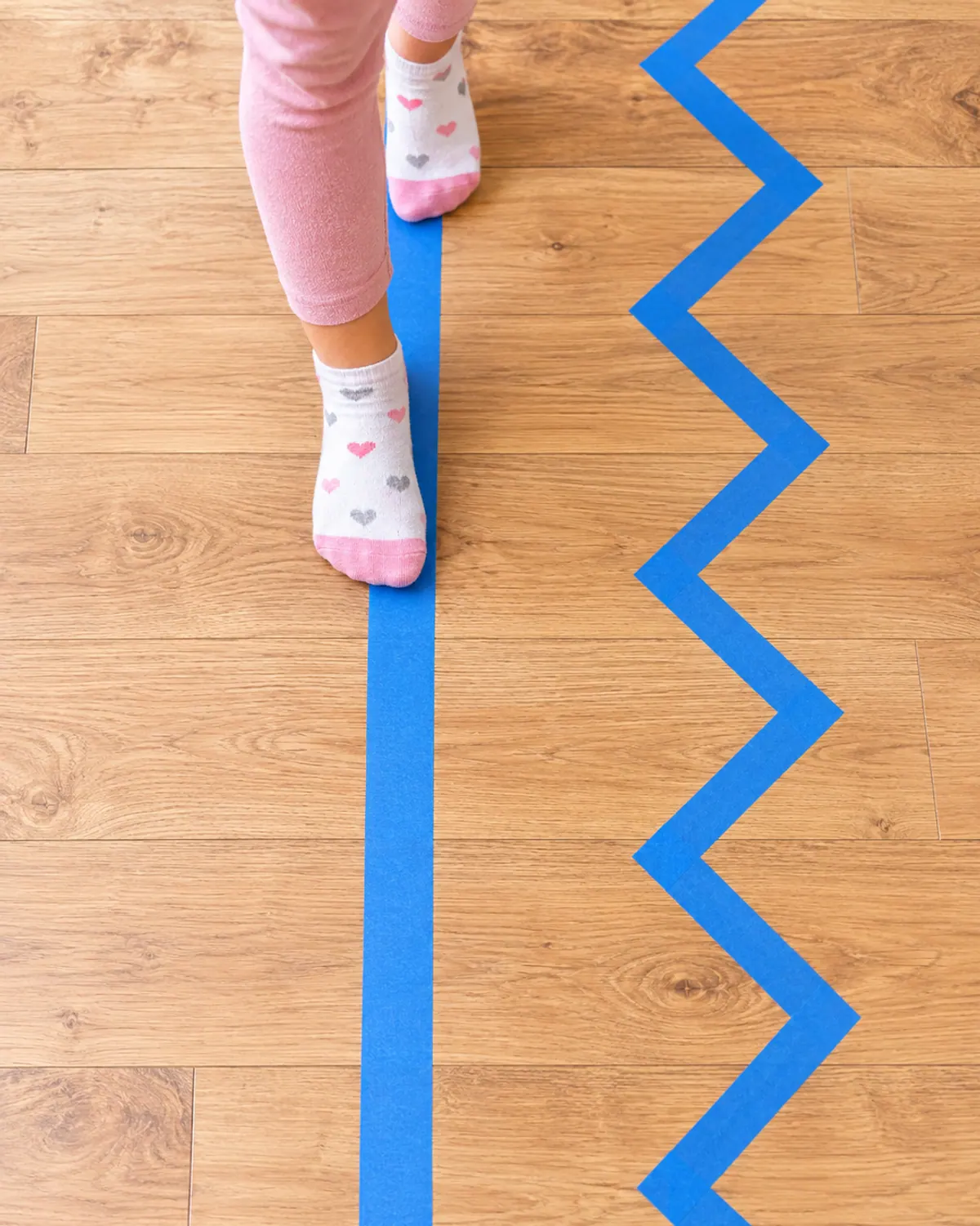
Press a long strip of painter's tape on the floor and walk it heel to toe like a balance beam. Add a zigzag line next to it for a harder version. It is the cheapest station and the one most kids repeat.
Ages: 2 to 8
Prep: 1 minute
Mess: None
Noise: Silent
Supplies: Painter's tape
Safety: Tape goes on floors only, never on stairs, and test a corner first so it does not lift paint or finish.
- For older kids, add a bean bag on the head or walk it backward.
Used in 4 of the 8 stations, and it peels off most floors.
3Blanket tunnel
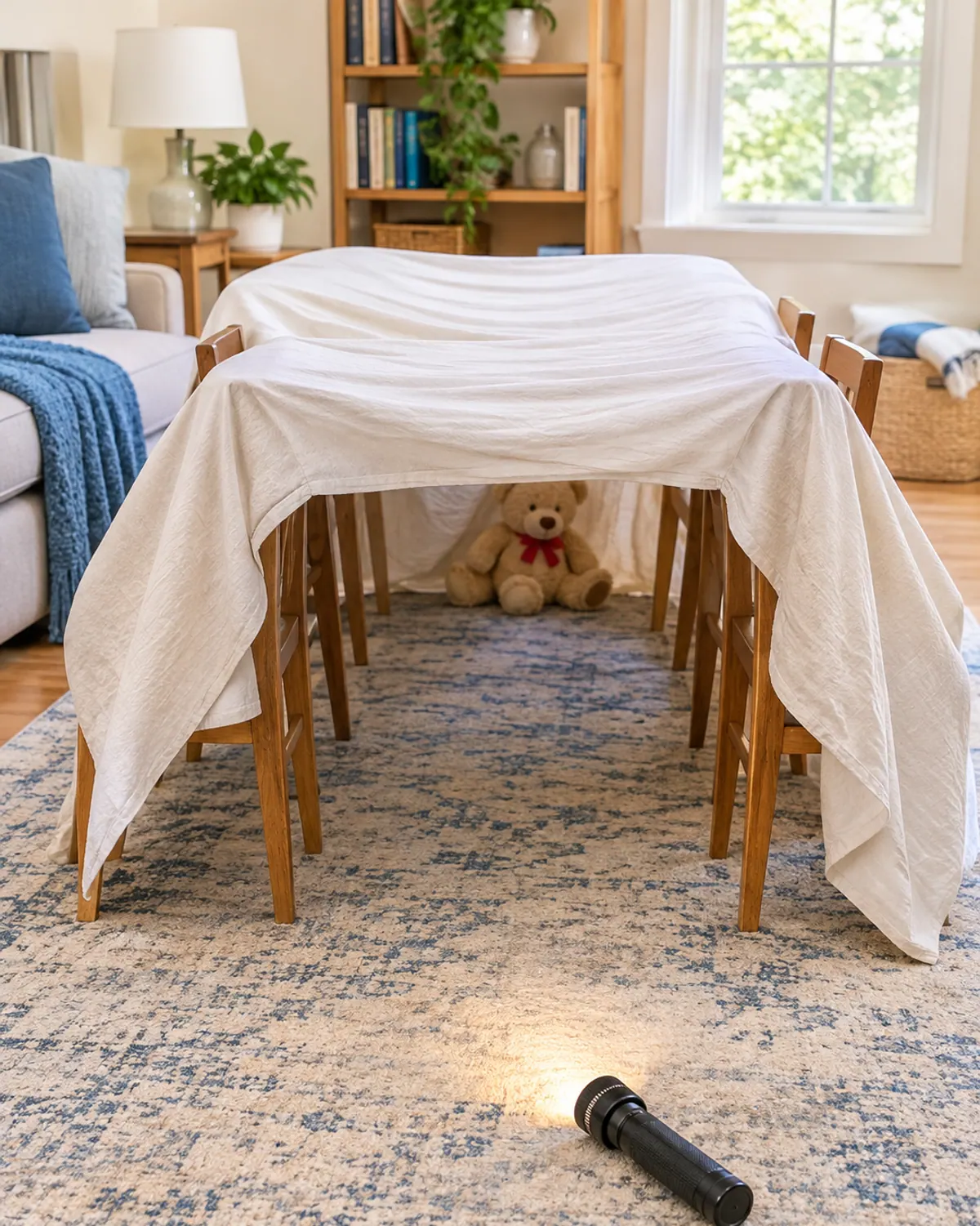
Drape a bedsheet over 3 or 4 kitchen chairs in a row to make a low tunnel. Your child crawls through to find a stuffed animal at the other end. Drop a flashlight inside to make it a cave.
Ages: 1 to 6
Prep: 3 minutes
Mess: None
Noise: Quiet
Supplies: A sheet, 3 or 4 kitchen chairs, a stuffed animal
Safety: Push the chairs against each other so they cannot tip, and take the tunnel down if a child pulls on the sheet.
- Tape the sheet to the chair backs so it cannot slide down on a crawling child.
Folds flat and replaces the chairs and sheet for crawlers.
4Sock ball toss
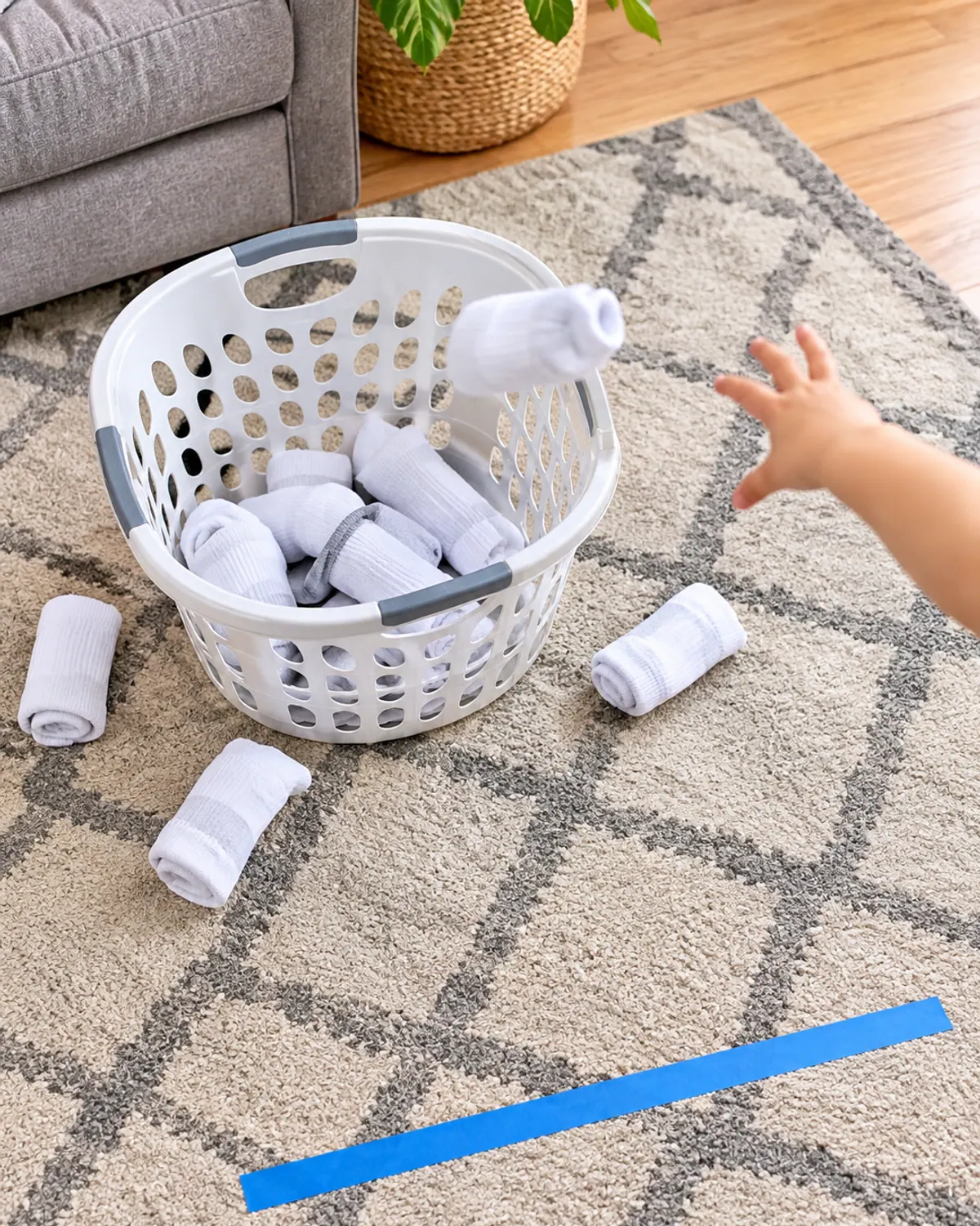
Roll 6 pairs of socks into balls, mark a throwing line with tape and toss them into a laundry basket a few feet away. Count how many land in. Soft socks make this safe to play in a living room.
Ages: 3 to 8
Prep: 2 minutes
Mess: Low, a few stray socks
Noise: Quiet
Supplies: 6 pairs of rolled socks, a laundry basket, tape
Safety: Stay clear of lamps, windows and the TV, and keep the toss area free of toys to trip on.
- Move the line back one foot each round to make it a game.
5Paper plate hop spots
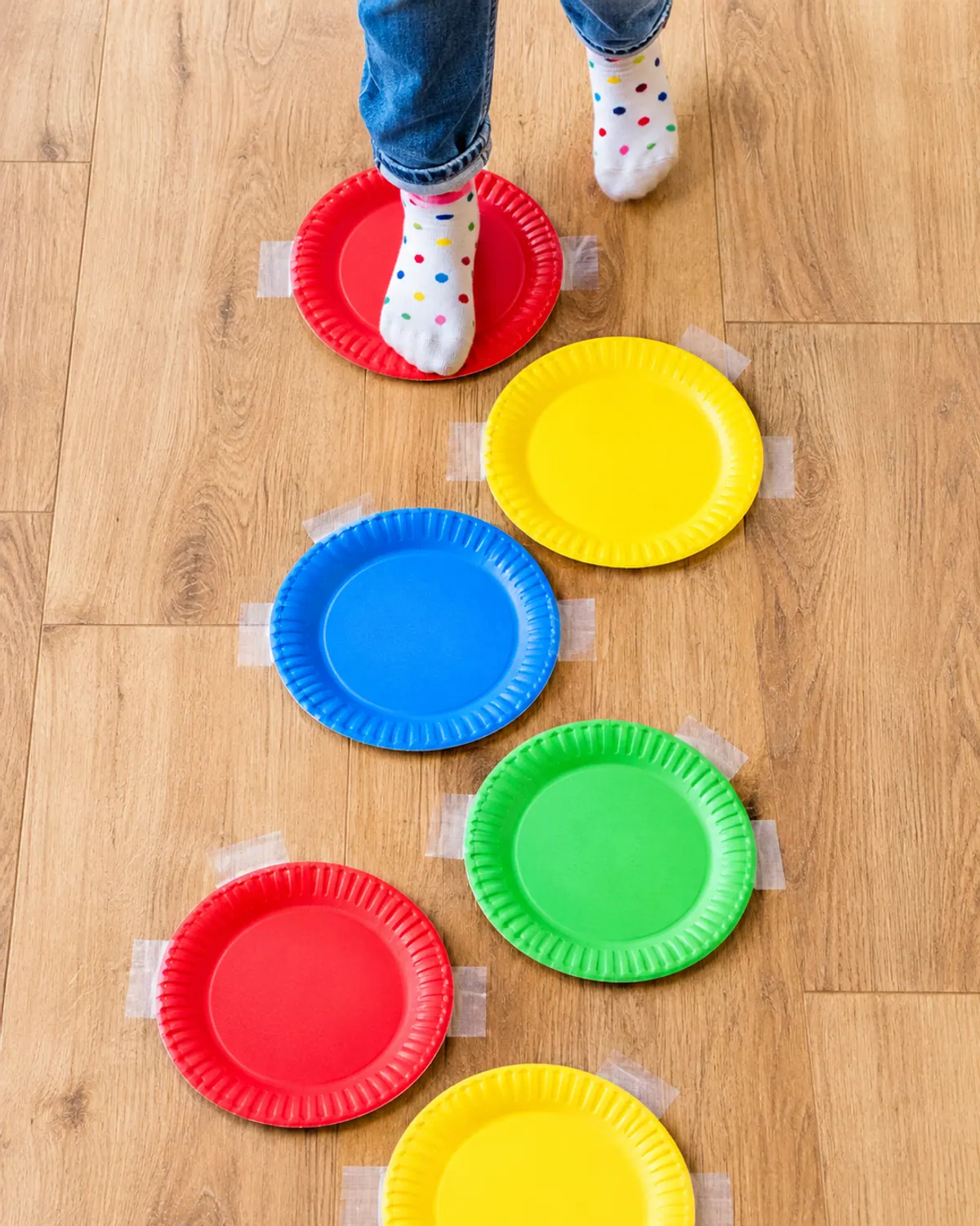
Tape 6 paper plates to the floor in a zigzag. Call out a color and your child hops to that plate, or hops all six in order. Plates are light, so use a strip of tape on each one.
Ages: 3 to 7
Prep: 3 minutes
Mess: None
Noise: Light thuds
Supplies: 6 paper plates, painter's tape
Safety: Use grip socks or bare feet on wood, never plain socks on a slick floor.
- Make it a memory game: call 3 colors in a row and see if your child can repeat them.
Non-slip rubber dots that replace the taped paper plates and last for years.
6Jump the tape river
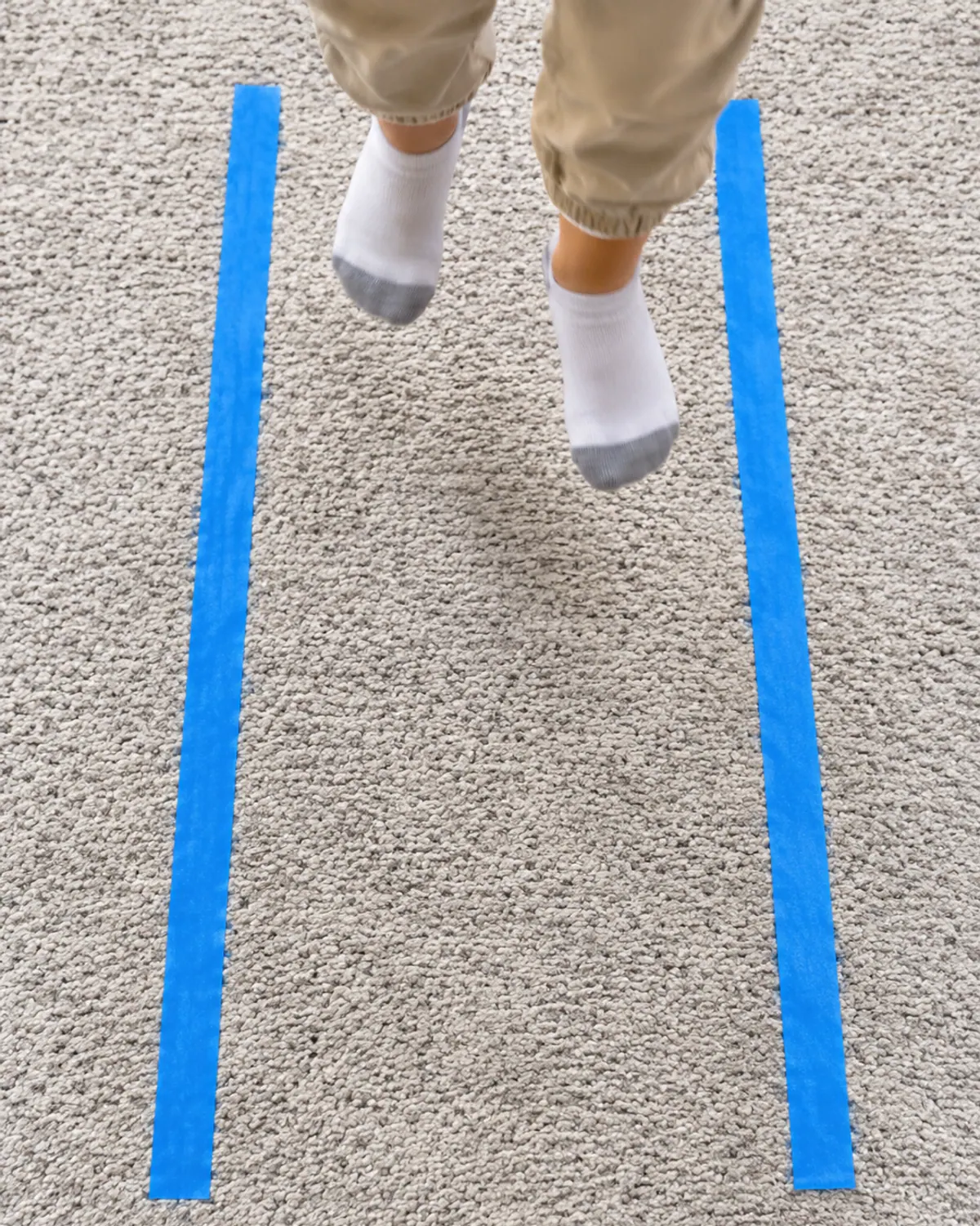
Lay two strips of painter's tape about a foot apart and call it a river. Your child jumps over the gap, then you widen it by a hand width each round. Toddlers can step across a narrower river.
Ages: 2 to 8
Prep: 1 minute
Mess: None
Noise: Soft thuds
Supplies: Painter's tape
Safety: Do this one on a rug or carpet, not a slick floor, and keep the gap small for under 3s.
- Draw a crocodile or fish and tuck it in the river with a sticky note for the story.
7Bear walk
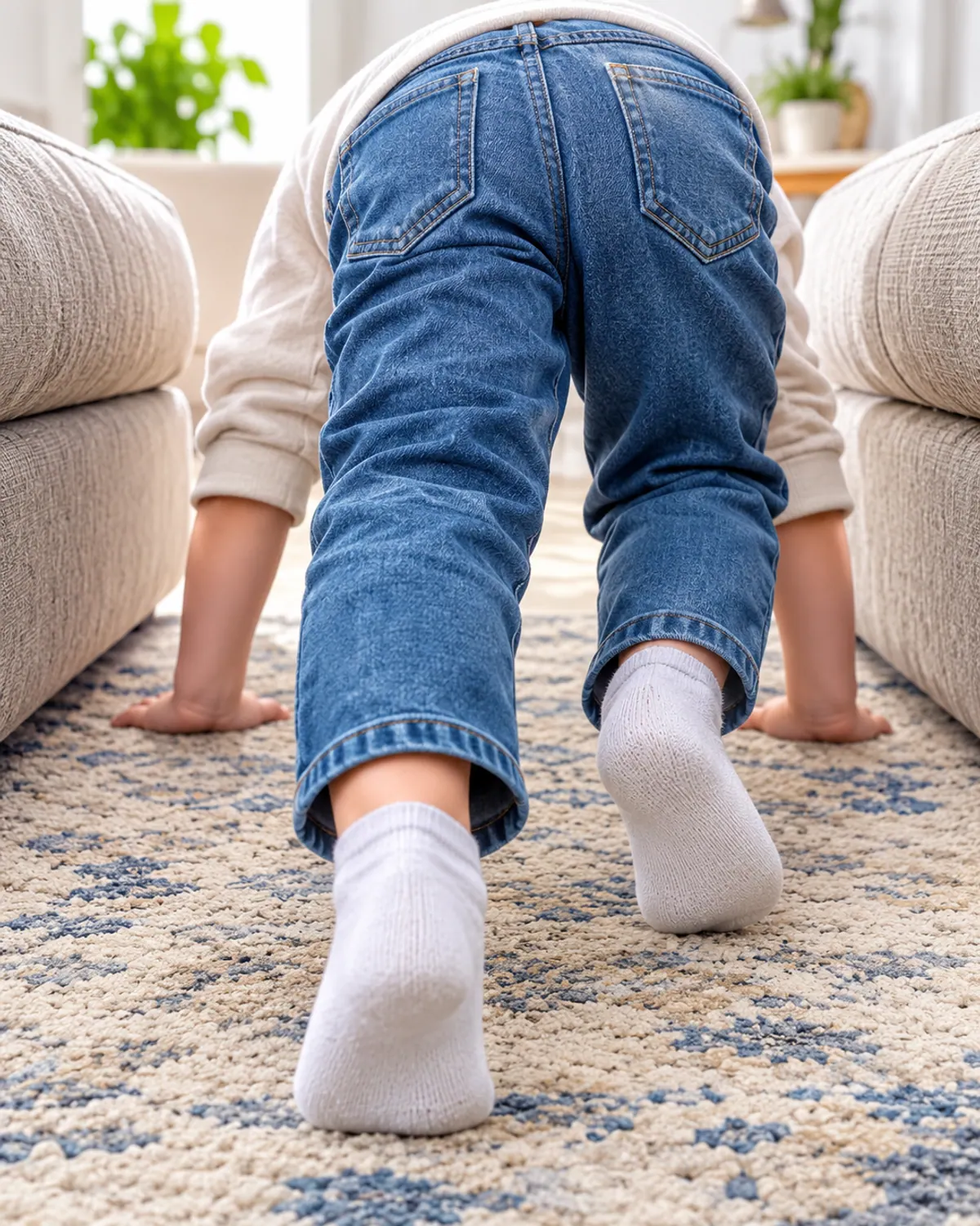
Place two cushions a few feet apart and have your child bear-walk on hands and feet from one to the other, then crab-walk back. It is a good slow, strong move to put near the end of a course.
Ages: 3 to 8
Prep: None
Mess: None
Noise: Quiet
Supplies: Two cushions or just a clear stretch of rug
Safety: Stay beside them on bare floors and keep this one on a rug or mat.
- Add an animal sound for each walk and kids will do twice as many laps.
8Finish line and timer
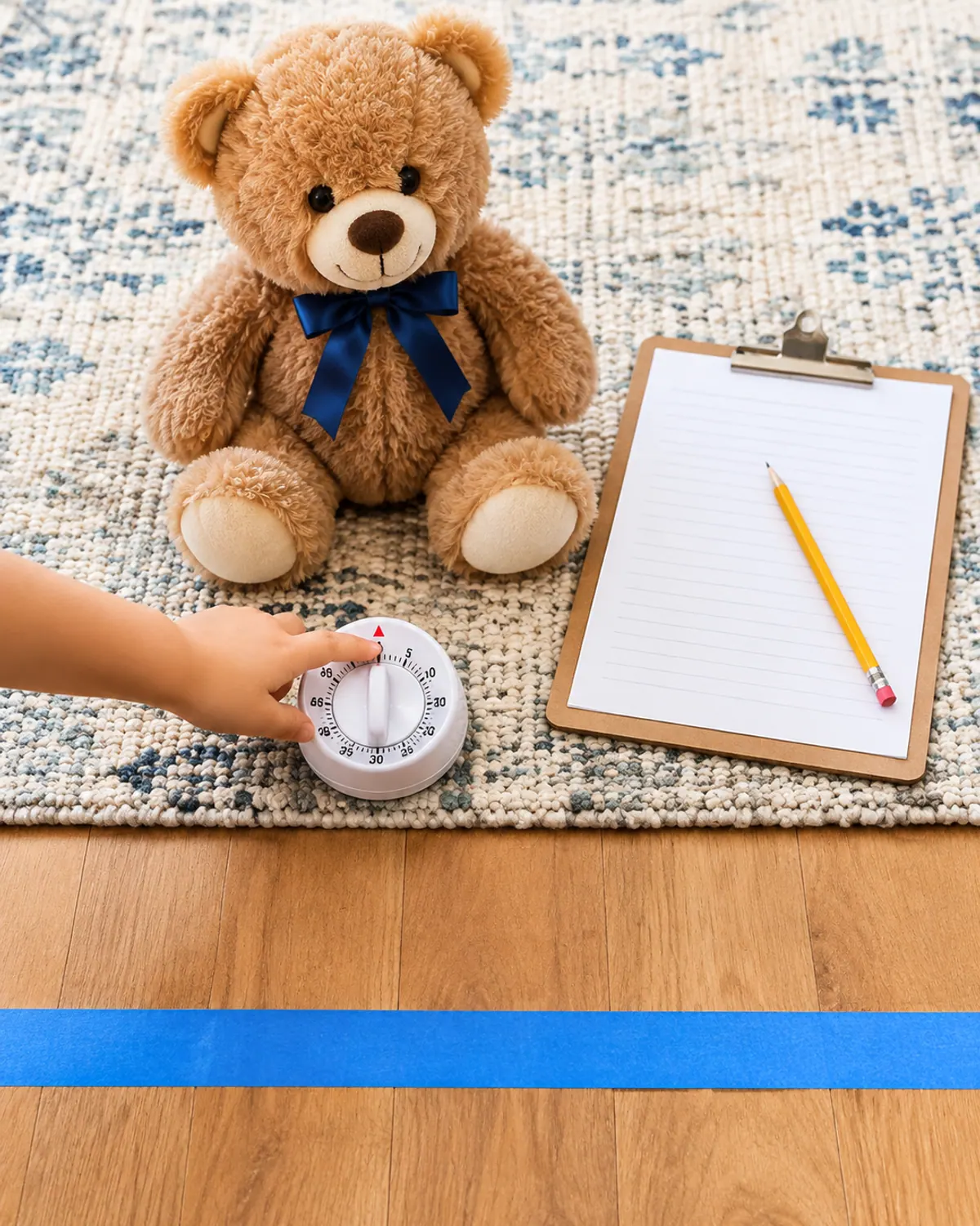
Make a finish line with tape and set a plush bear behind it. Time each run with a kitchen timer and write the time on a clipboard. The goal is to beat your own time, not a sibling's.
Ages: 4 to 8
Prep: 2 minutes
Mess: None
Noise: Quiet
Supplies: Tape, a kitchen timer, a clipboard and a pencil
Safety: Slow down and walk the course if timing makes anyone rush, because rushing is when kids slip.
- Let the child be the timekeeper for you: a job at the finish line keeps them in the game.
A big dial is easy for a child to start and stop.
Indoor Obstacle Course for Toddlers and Older Kids: Swap by Age
The same stations work from age 2 to age 8 if you change two things: the size of each move and the number of stations. These are plain starting points, not rules, so adjust to your own child.
| Age | Stations | Changes to make |
|---|---|---|
| 1 to 2 | 2 or 3 | Cushion path, blanket tunnel and a basket to drop things in. Stay on all fours or hold your hand. |
| 3 to 4 | 4 or 5 | Add the balance line, plate hops and sock toss. Keep gaps small. |
| 5 to 6 | 6 or 7 | Add the tape river and bear walk. Call the order out loud, then take it away. |
| 7 to 8 | 8 | Run all 8 against a timer and let them design a station themselves. |
A Score Card and Timer Game for Your Obstacle Course
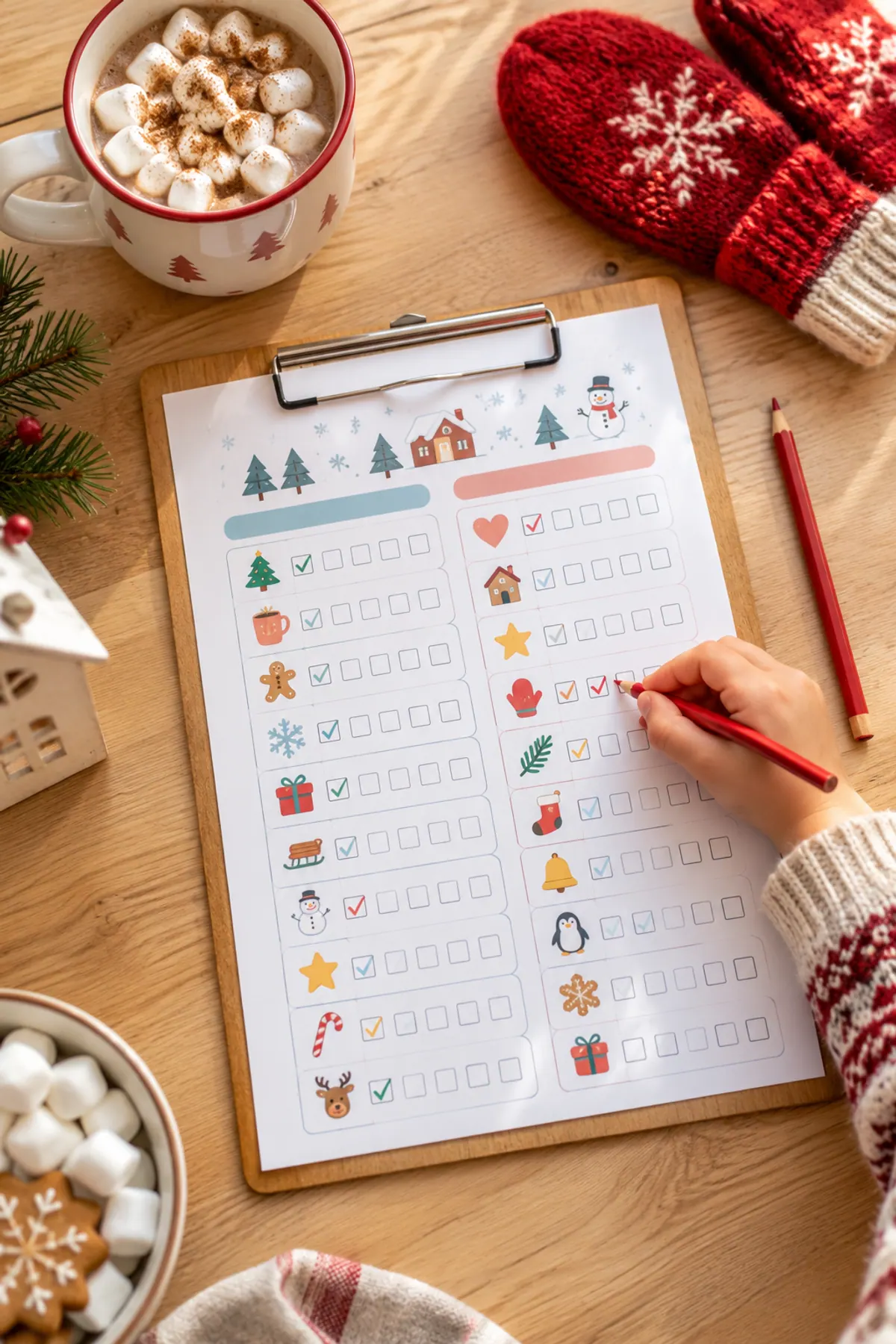
A score card turns a run into a game that lasts longer than one lap. Give each station up to 2 points: 1 point for finishing it and 1 more for finishing it quietly or in the right order. With 8 stations, the top score is 16, and the goal is to beat your own total, not a sibling's.
| Station | Finished (1) | Done quietly or in order (1) |
|---|---|---|
| 1. Pillow stepping stones | ||
| 2. Tape balance line | ||
| 3. Blanket tunnel | ||
| 4. Sock ball toss | ||
| 5. Paper plate hops | ||
| 6. Tape river jump | ||
| 7. Bear walk | ||
| 8. Finish line |
For a timer round, set the kitchen timer, run the course once and write down the time. Then change one thing, such as a wider river or a farther toss line, and try to beat it. The printable course planner in the Indoor Day Rescue Kit has a timing table built for this.
Safety and Noise Rules for an Indoor Obstacle Course
The American Academy of Pediatrics' active toddler page tells parents to stay close in case a child gets into something they should not. That is the main rule here. The rest of this list is plain household common sense, not medical or safety-authority guidance.
Before the first run
For more ideas on the same stuck-inside days, see our rainy day activities for kids, the indoor activities for toddlers and the toddler activities at home by age. Traveling? The hotel room activities for kids list keeps things quiet.
What to Buy If You Want a Longer-Lasting Course (Short Amazon List)
As an Amazon Associate we may earn from qualifying purchases, at no cost to you. None of this is needed for the 8 stations above.
Obstacle course extras (a short Amazon list)
- Most used
Painter's tape, 2-pack
Typically $5 to $10
Used in 4 of the 8 stations, and it peels off most floors.
Check price on Amazon for Painter's tape, 2-pack -
Pop-up play tunnel
Typically $15 to $30
Folds flat and replaces the chair and sheet tunnel.
Check price on Amazon for Pop-up play tunnel -
Non-slip floor spot markers
Typically $12 to $25
Stay put better than paper plates for the hopping station.
Check price on Amazon for Non-slip floor spot markers -
Sewn bean bags for kids
Typically $10 to $20
Stitched shut, so they will not leak like homemade ones.
Check price on Amazon for Sewn bean bags for kids -
Kitchen timer
Typically $6 to $12
A big dial is easy for a child to start and stop.
Check price on Amazon for Kitchen timer
Keep the Course for the Next Stuck-Inside Day
The 12 station cards and the timing table in the Indoor Day Rescue Kit mean you never have to design a new course again. For the winter break, the Winter Break Activity Pack plans all 14 days from December 26 for $6, and the free two-week winter break plan covers the days around it.
Frequently asked questions
How do you make an obstacle course indoors?
Clear a loop of floor, then lay out 5 to 8 stations: a cushion path, a tape balance line, a sheet tunnel, a sock toss, paper plate hops, a tape river and a bear walk. Walk it once yourself first.
What can I use for an indoor obstacle course?
Couch cushions, painter's tape, a bedsheet and kitchen chairs, rolled socks, a laundry basket, paper plates and a kitchen timer. All of it is already in most living rooms.
Can toddlers do an indoor obstacle course?
Yes, with 2 or 3 easy stations such as a cushion path, a blanket tunnel and a basket to drop things in, with an adult within reach the whole time.
How long should an indoor obstacle course take to build?
About 10 minutes for 5 to 8 stations, and about 2 minutes to take down. Each station takes 2 minutes or less.
How do you make an obstacle course harder for older kids?
Widen the tape river, move the toss line back, add a timer and let them design a station themselves.
Save it for later
Pin this to your Outdoor & Rainy Day board so it's there when you need it.
Save to Pinterest