This post contains affiliate links. As an Amazon Associate we earn from qualifying purchases, at no extra cost to you. Read our disclosure.
Safety first: Always supervise little ones, and skip small parts for kids who still put things in their mouths. Please read our play safety notes before you start.
Key takeaways
- The plan is 11 one-hour blocks from 8 am to 6 pm: 3 wild, 3 mid and 5 calm, so loud play and quiet play take turns.
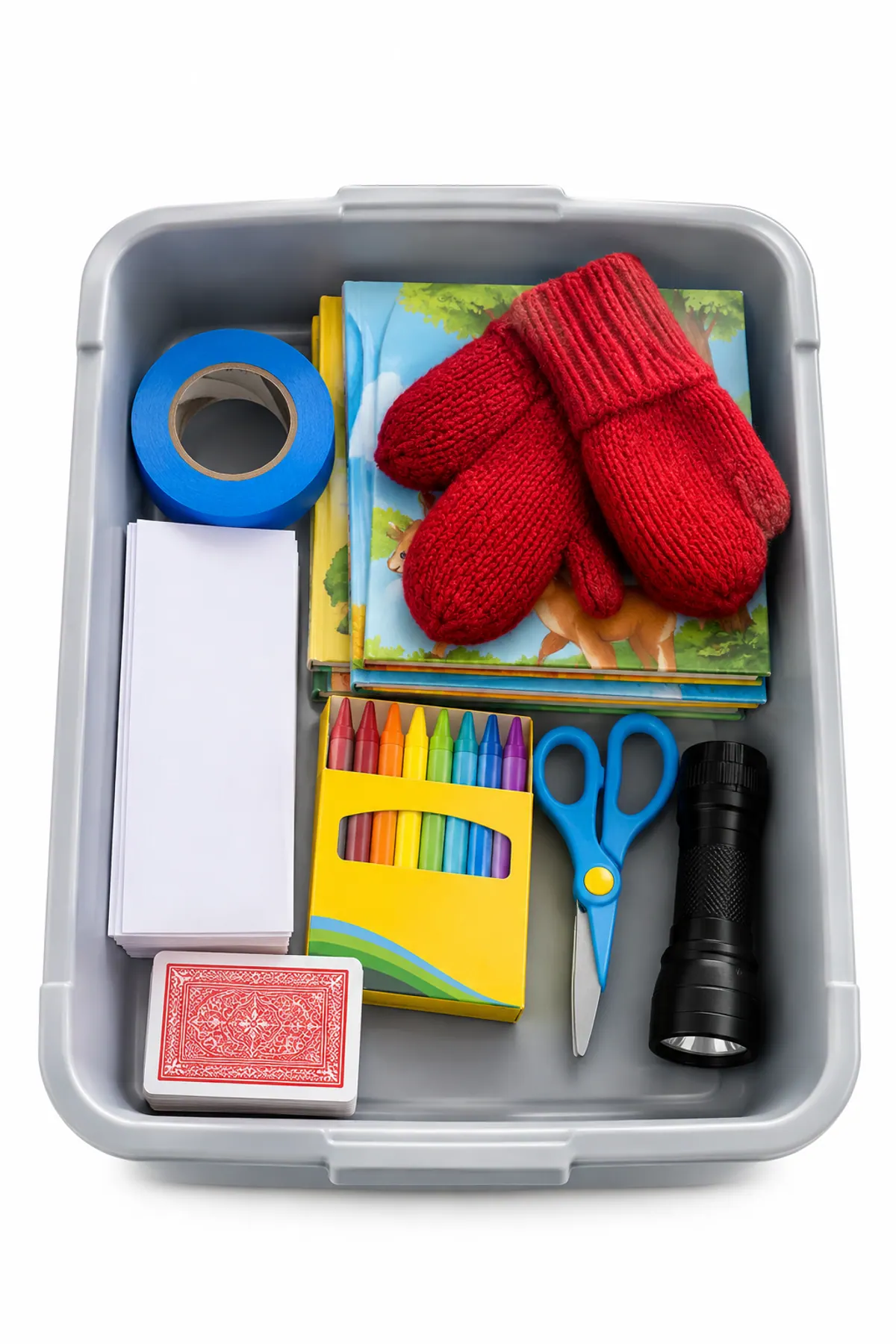
- Pack a 10-item snow day box the night before. Every item is used in at least one hour of the plan, and the free 3-page checklist lists them.
- It uses what most homes have: painter's tape, paper, markers, a laundry basket, a flashlight and a deck of cards. No screens, no cooking.
- Cold safety: layers and dry mittens, a towel by the door and a warm-up break. Keep scissors, batteries and small pieces with a grown-up for children under 3.
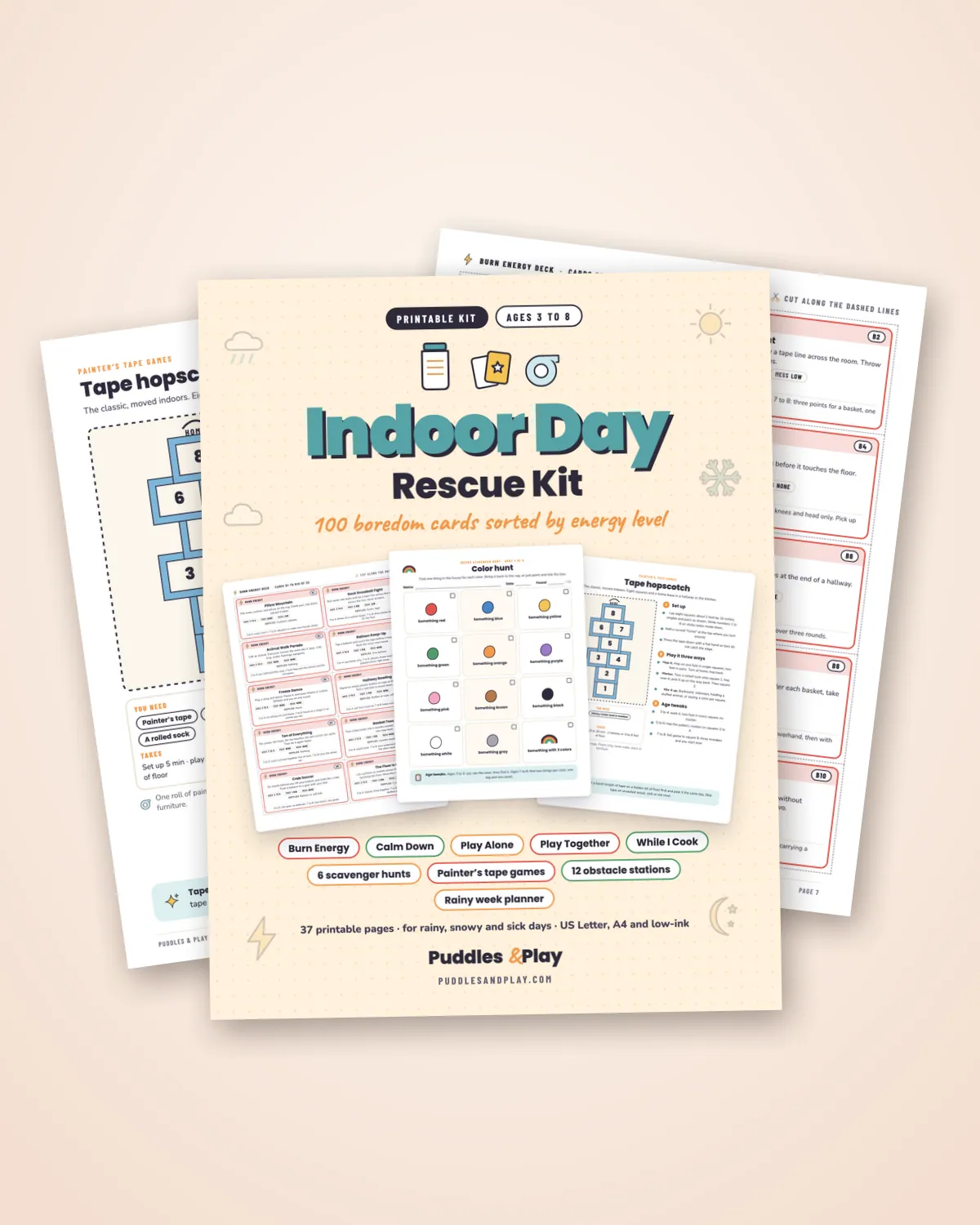
- If the box is empty by 11 am or the snow day becomes a week, the Indoor Day Rescue Kit ($7) has 100 cards sorted by energy level.
In this post23 sections
- The snow day plan at a glance
- Pack the snow day box tonight: 10 things in one bin
- Morning snow day activities (8 to 11 am): start slow, then burn it off
- 1. Breakfast picnic on a blanket (8 am, calm)
- 2. Tape course and pillow jumps (9 am, wild)
- 3. Snow outside for a short stretch (10 am, wild)
- 4. Dry mittens, a warm drink and the paper snowball target (11 am, mid)
- Midday snow day activities (12 to 1 pm): lunch and a quiet hour
- 5. Lunch, then a read-aloud (12 pm, calm)
- 6. Quiet hour in their own spots (1 pm, calm)
- Afternoon snow day activities (2 to 4 pm): make something, then run, then fort
- 7. Paper snowflakes and a window gallery (2 pm, mid)
- 8. Paper snowball toss league (3 pm, wild)
- 9. Blanket fort with a flashlight and winter bingo (4 pm, mid)
- Evening snow day activities (5 to 6 pm): cooking hour and cozy lights
- 10. While dinner cooks: cards and drawing (5 pm, calm)
- 11. Cozy lights, one story and a flashlight shadow game (6 pm, calm)
- Swap when the plan breaks
- Snow day activities by energy level
- When one snow day turns into three
- Snow day safety notes
- Next step: the Indoor Day Rescue Kit
- FAQ
If the box is empty by 11 am, or one snow day turns into a second and a third, the Indoor Day Rescue Kit is the next step for that problem: $7 for 100 activity cards sorted by energy level, plus a snow day rescue plan, so you pull a card instead of searching for an idea at 10:45.
The snow day plan at a glance
Eleven one-hour blocks from 8 am to 6 pm. Each one is tagged by energy: wild (burn it off), mid (reset or make something) or calm (settle). Loud play and quiet play take turns, so nobody runs on one gear all day. This is a method built from how kids' energy tends to rise and fall, not a study, so move blocks around to fit your house.
| Time | Energy | What | From the box |
|---|---|---|---|
| 8 am | Calm | Breakfast picnic on a blanket, then look out the window | Blanket, tray, cups |
| 9 am | Wild | Tape course and pillow jumps in the living room | Painter's tape, couch cushions |
| 10 am | Wild | Snow outside for a short stretch, if the weather is safe | Dry mittens, towel |
| 11 am | Mid | Dry mittens, a warm drink, then the paper snowball target | Laundry basket, paper |
| 12 pm | Calm | Lunch, then a read-aloud | Picture books |
| 1 pm | Calm | Quiet hour, everyone in their own spot | Books, paper, crayons |
| 2 pm | Mid | Paper snowflakes and a window gallery | Paper, scissors, clear tape |
| 3 pm | Wild | Paper snowball toss league | Laundry basket, painter's tape |
| 4 pm | Mid | Blanket fort with a flashlight and winter bingo | Flashlight, winter bingo |
| 5 pm | Calm | While dinner cooks: cards and drawing | Playing cards, crayons |
| 6 pm | Calm | Cozy lights, one story, a flashlight shadow game | Flashlight, paper |
Count it up and the day is 3 wild blocks, 3 mid blocks and 5 calm blocks. The extra calm blocks are there on purpose: meals, the read-aloud and the quiet hour all sit in the calm column, and a day with too many wild blocks is the one that ends in tears at 4 pm.
Pack the snow day box tonight: 10 things in one bin
The box is one plastic bin or a big basket. Every item in it is used in at least one hour of the plan, so there is nothing in there "just in case." Put it where kids can see it but not open it, and tell them the bin opens after breakfast. That one sentence gives the morning something to look forward to.
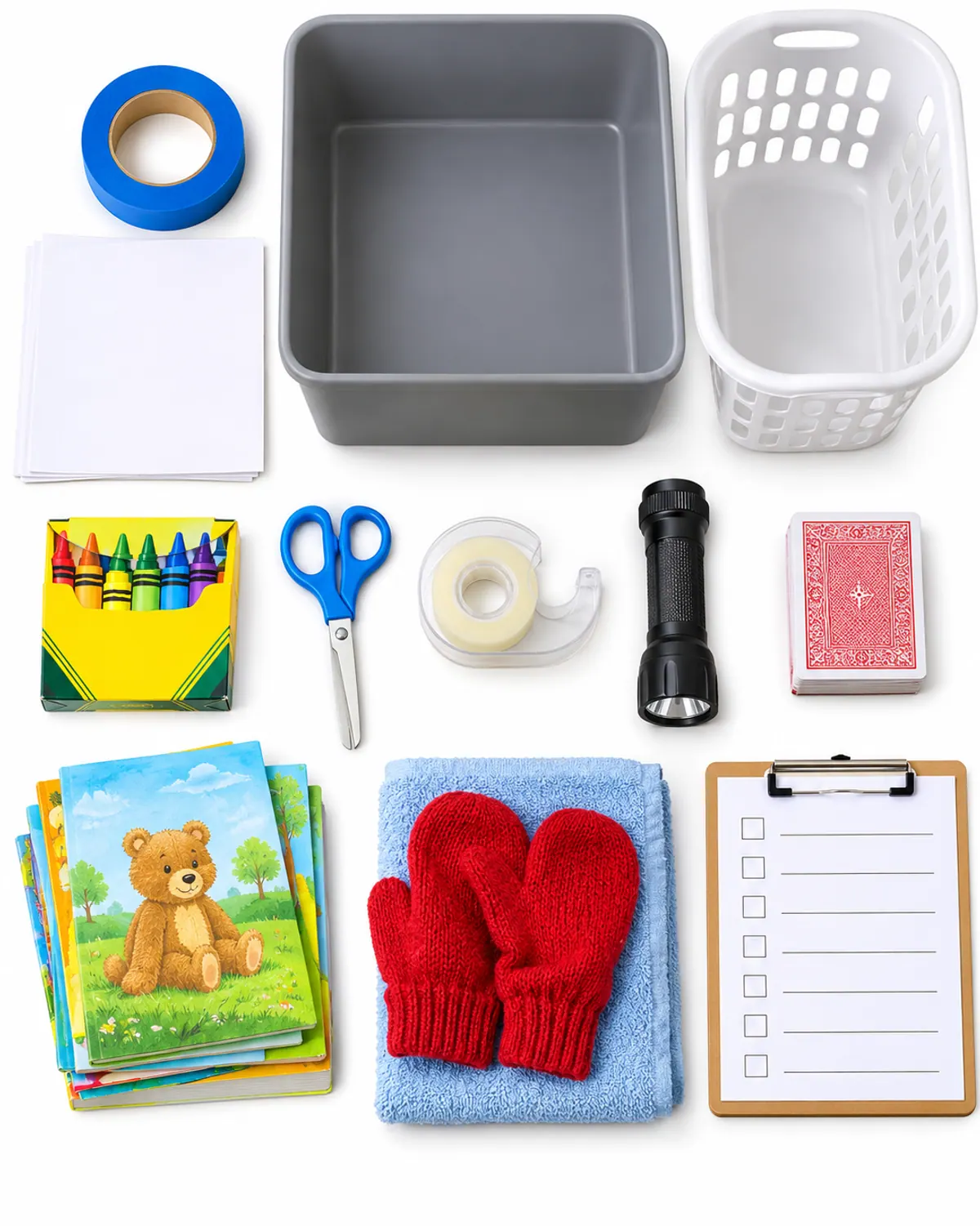
| Item | How much | Used at |
|---|---|---|
| Painter's tape | One roll | 9 am tape course, 3 pm throwing line |
| White printer paper | About 20 sheets | 11 am snowballs, 2 pm snowflakes |
| Washable markers and crayons | One box | 1 pm quiet hour, 5 pm drawing |
| Child-safe scissors and clear tape | One pair, one roll | 2 pm snowflakes (grown-up nearby) |
| A laundry basket | The snowball target | 11 am and 3 pm |
| A flashlight | Working batteries | 4 pm fort, 6 pm shadow game |
| A deck of playing cards | One deck | 5 pm |
| A stack of picture books | About 6, from your shelf or the library | 12 pm read-aloud, 1 pm quiet hour |
| The free winter bingo | Printed | 4 pm in the fort |
| Dry mittens and a towel | One spare pair per child, by the door | 10 am snow time, 11 am reset |
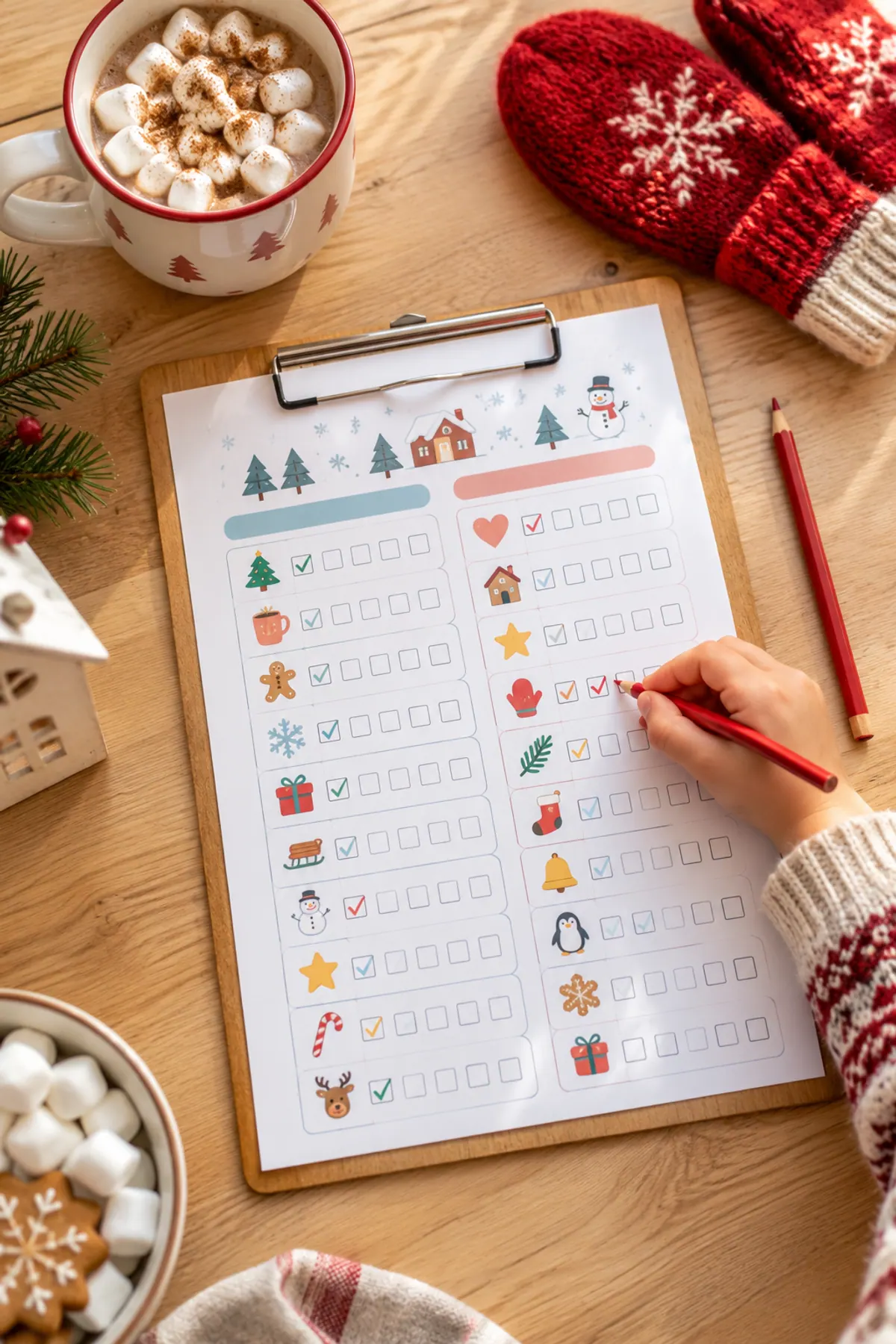
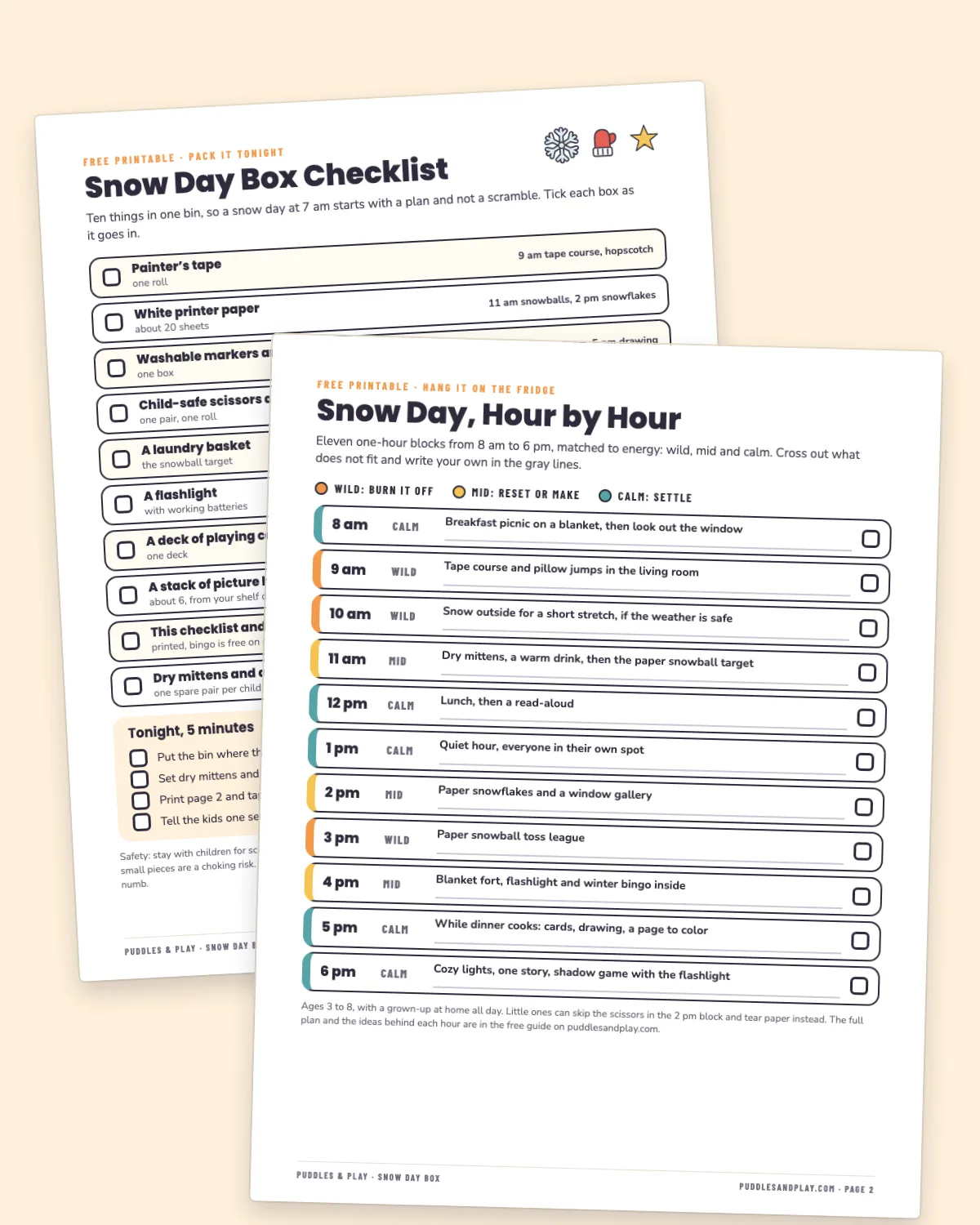
Download the free Snow Day Box Checklist and hour-by-hour planner (PDF, 3 pages). Page 1 is the box checklist with a five-minute night-before list, page 2 is the plan with a gray line in every block for your own idea, and page 3 shows what is in the paid Indoor Day Rescue Kit. It prints on US Letter in color or black and white.
-
Step 1:
-
Step 2:
-
Step 3:
-
Step 4:
Morning snow day activities (8 to 11 am): start slow, then burn it off
Mornings go better when the first hour is calm and the second is loud. Kids who wake up wild and get a quiet breakfast first tend to be easier to settle into the tape course than kids who are told to run the second they open their eyes.
1Breakfast picnic on a blanket (8 am, calm)
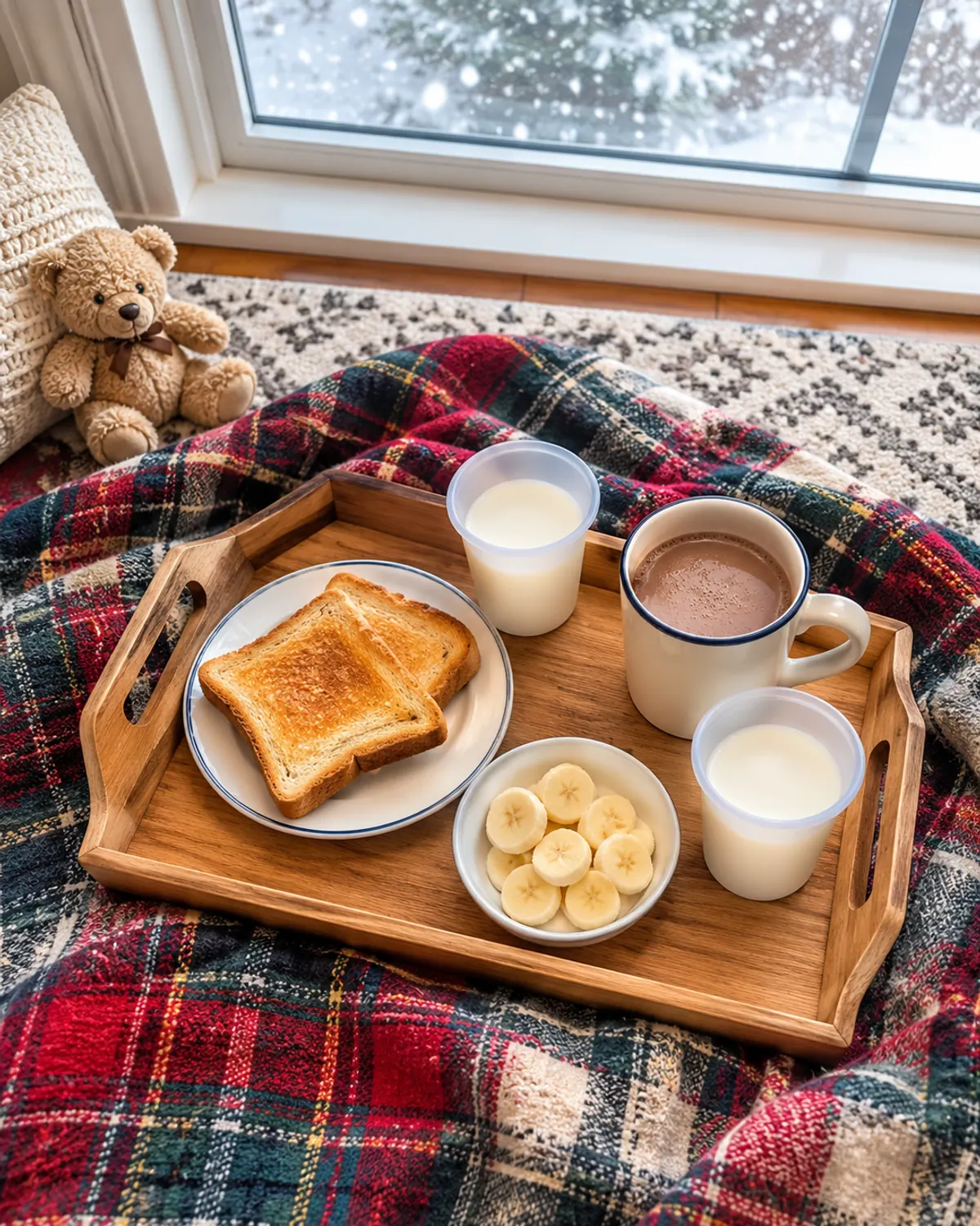
Change where breakfast happens. Spread a blanket on the living room floor, put the food on a tray and look out the window together at what the snow is doing. Ask each child to name something they can see. That is the whole activity, and it gives you a slow start before the loud hour.
Ages: 3 to 8.
Prep: 3 minutes.
Mess: medium, crumbs on the blanket (shake it out afterward).
Supplies: a blanket, a tray, plastic cups.
Safety: keep hot drinks out of reach of small children and serve them warm, not hot.
2Tape course and pillow jumps (9 am, wild)
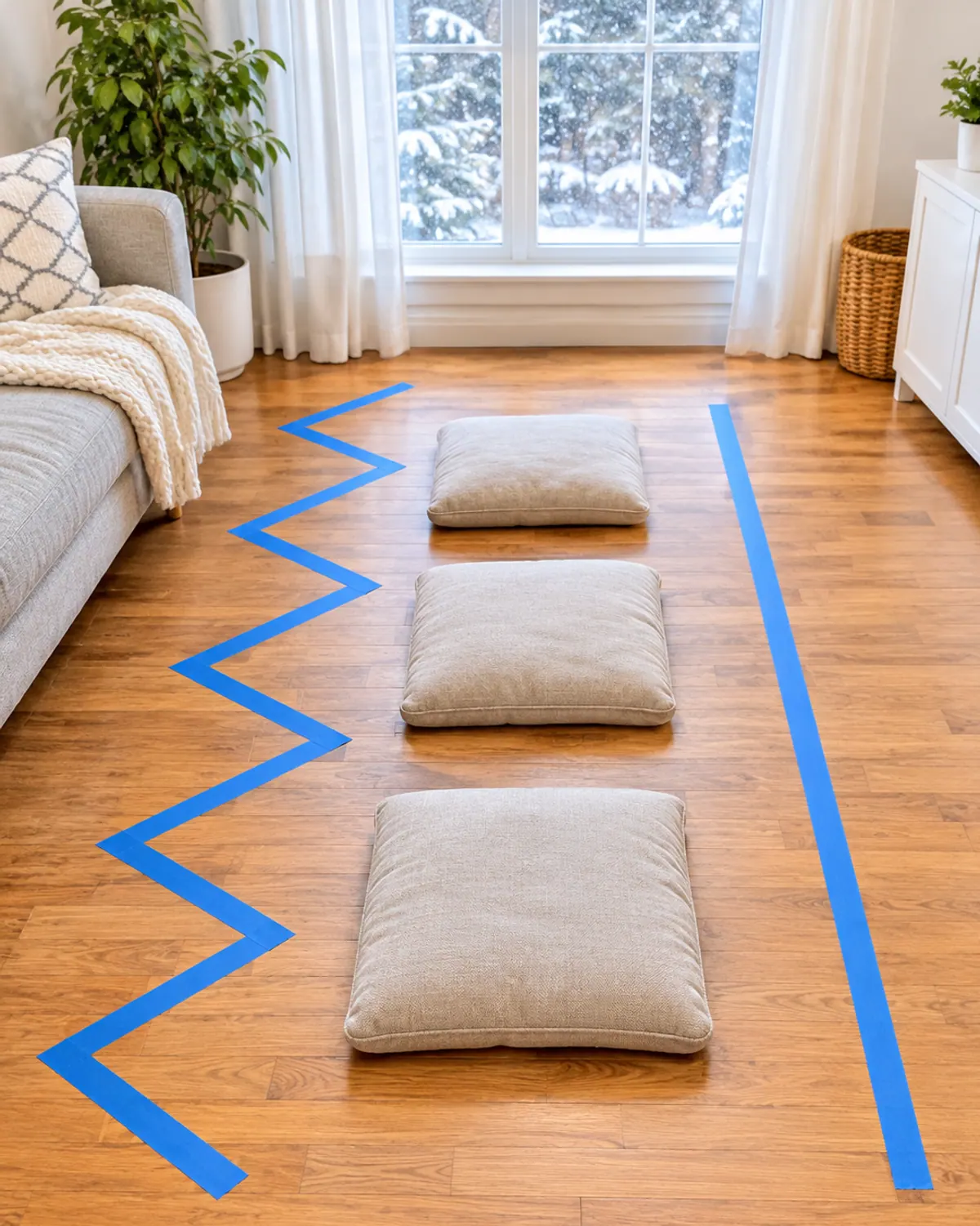
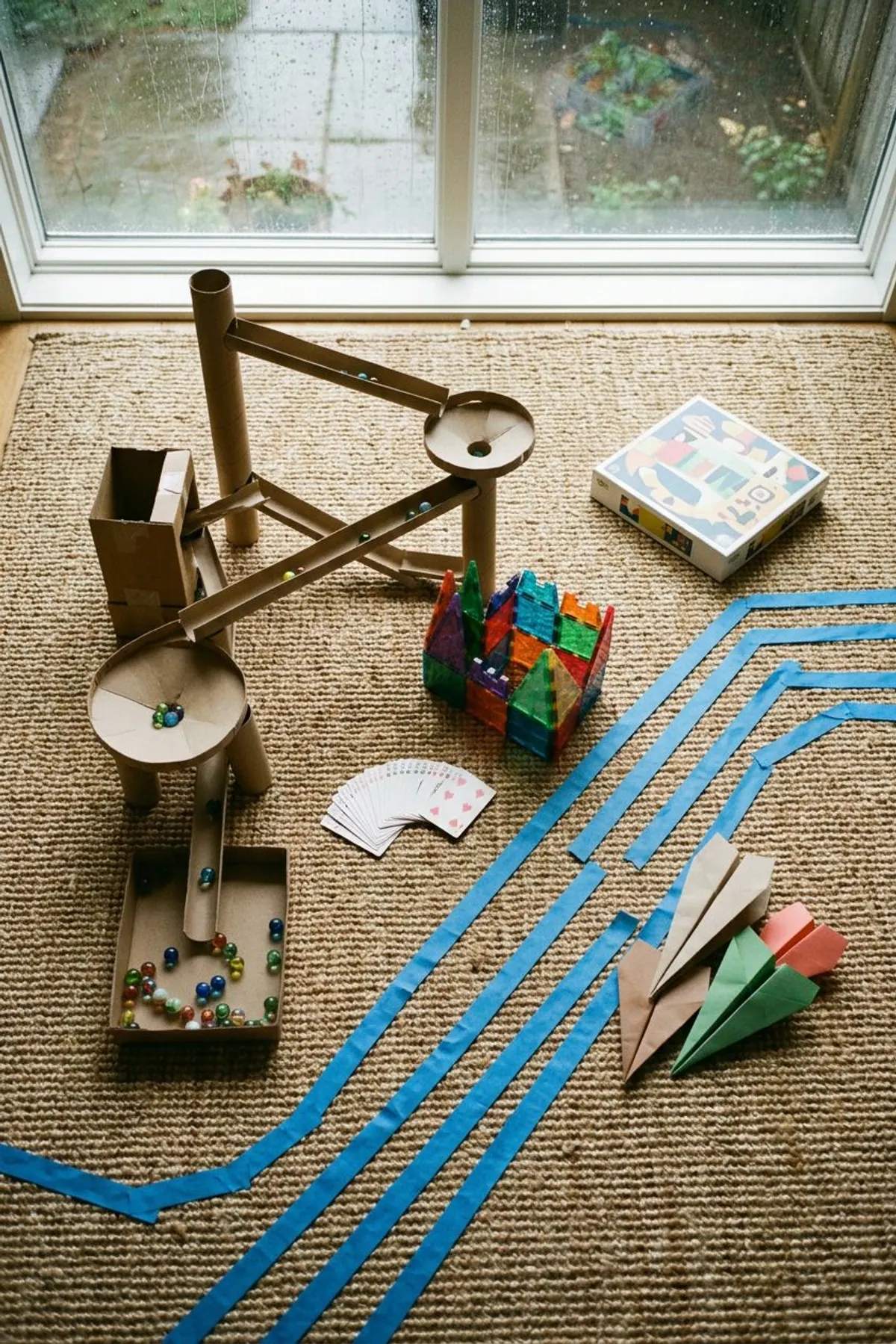
Press a zigzag and a straight balance line of painter's tape on a bare floor, lay three couch cushions in a row as stepping pads, and let the kids run it: walk the line, jump the pads, tiptoe the zigzag. Time each run and let them beat their own number. For a bigger version, the living room obstacle course has more stations.
Ages: 3 to 8.
Prep: 5 minutes.
Mess: none.
Supplies: painter's tape, three couch cushions.
Safety: tape goes on bare floors only, never on stairs. Move table corners out of the way and have kids go barefoot or in grip socks, because plain socks slip on wood floors.
Comes off floors cleanly and is the base of the course.
3Snow outside for a short stretch (10 am, wild)
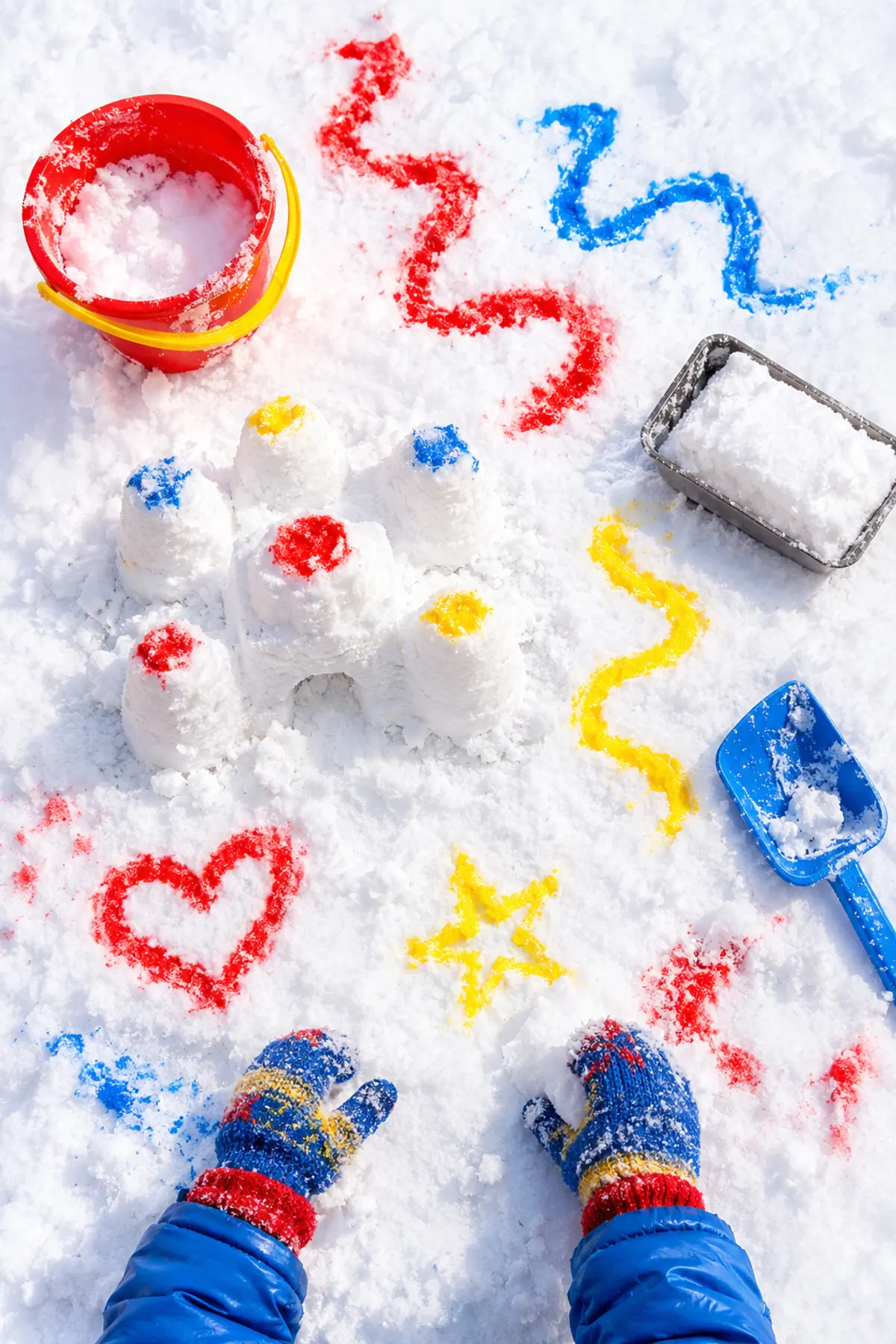
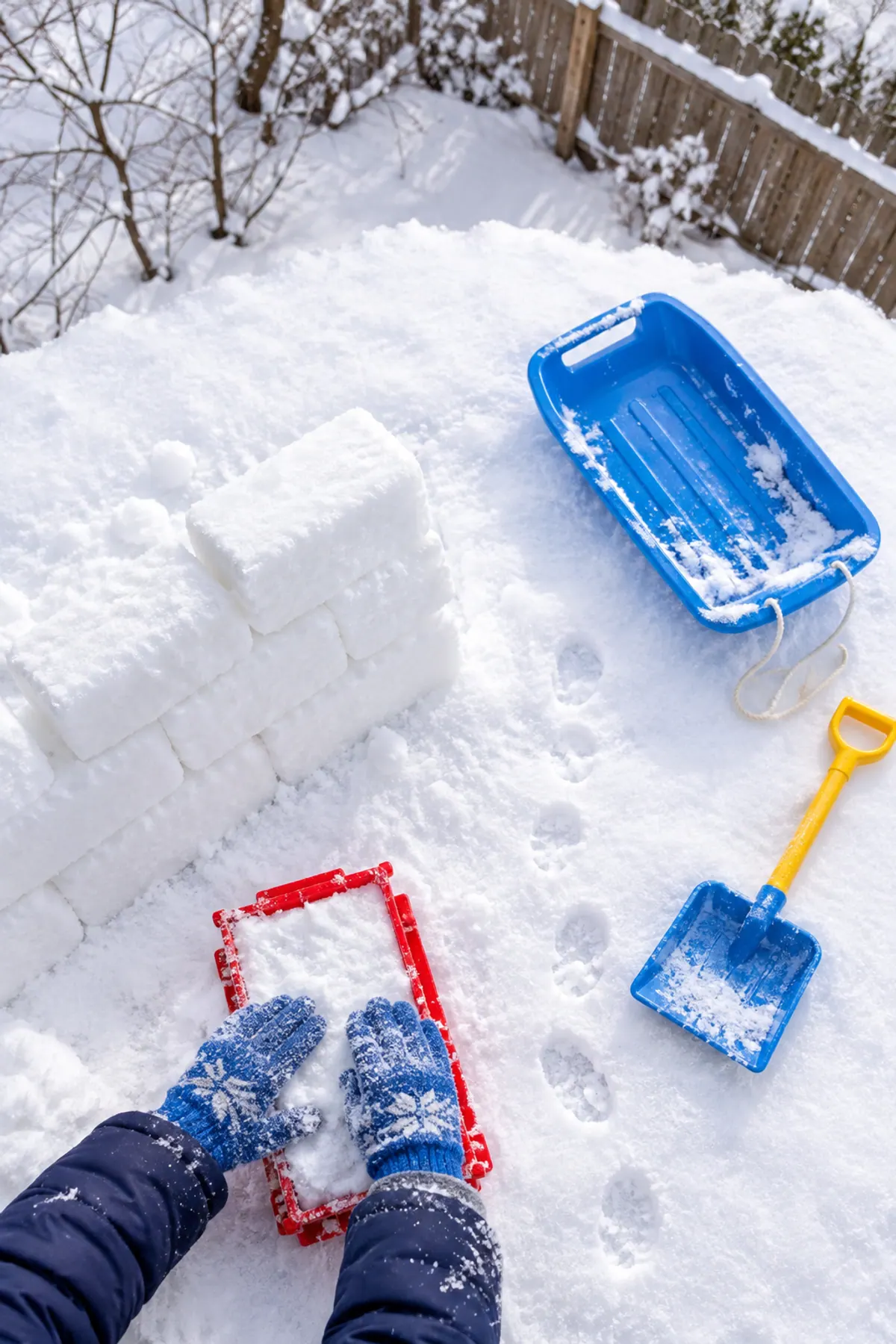
If the weather is safe, go out before the snow gets trampled. Keep it to a short stretch and plan the warm-up break before you leave: dry mittens go on first and a towel waits by the door. The outdoor snow guide has 21 ideas by age and the cold safety notes. If it is too cold or windy, run the paper snowball toss in this slot instead and keep going.
Ages: 3 to 8.
Prep: 10 minutes to dress.
Mess: high, wet gear by the door.
Supplies: snow gear, a towel, dry spare mittens.
Safety: the American Academy of Pediatrics advises dressing kids in layers and keeping mittens dry, and lists wet clothing among the cold-weather risks (HealthyChildren.org, Cold Weather Safety, read November 17, 2026). Bring a child in if their hands or face feel numb. A grown-up stays outside with them.
4Dry mittens, a warm drink and the paper snowball target (11 am, mid)
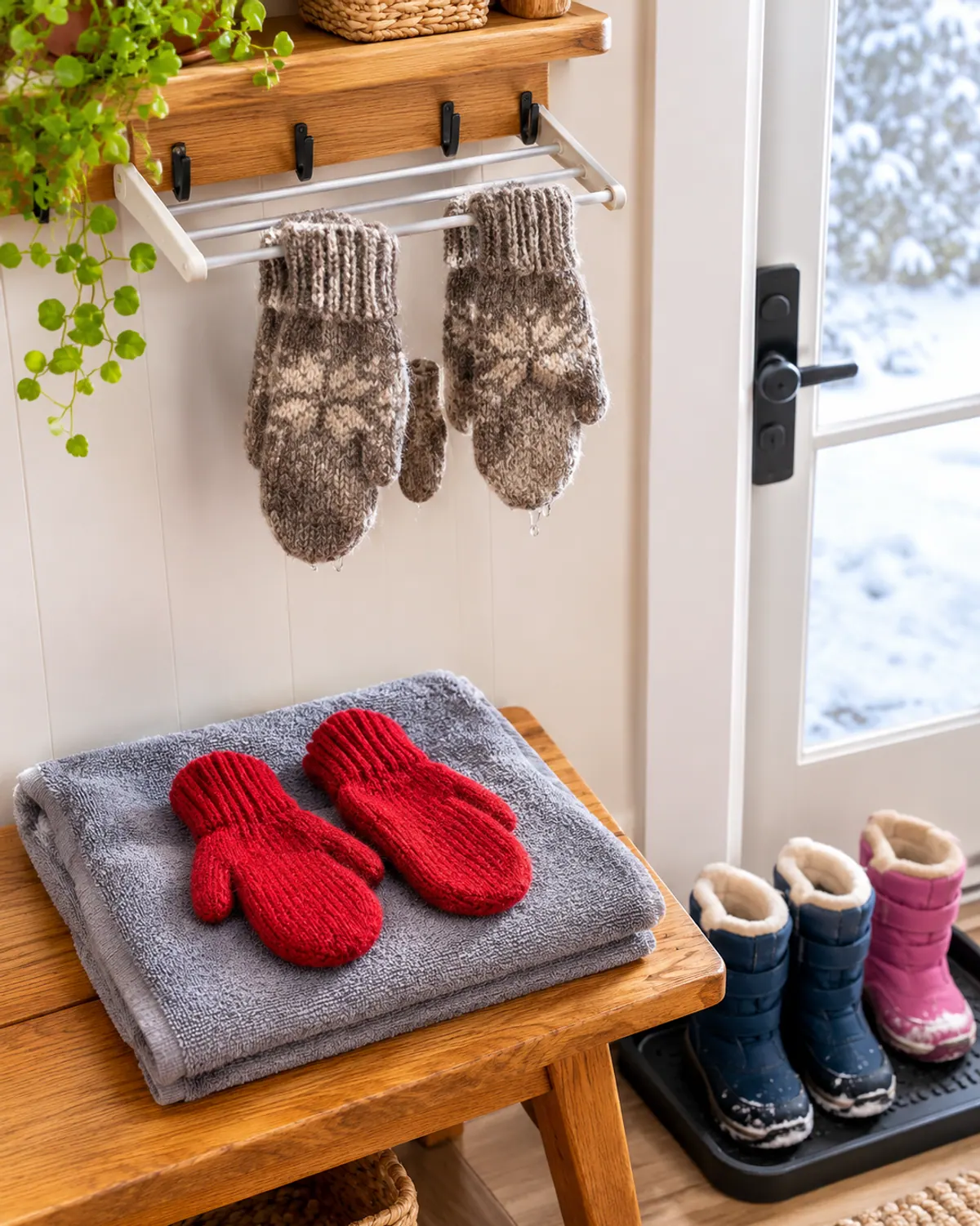
Come in, swap wet mittens for the spare dry pair and hang the wet ones on a drying rack. Pour a warm drink. Then set up the target: crumple about 20 sheets of white paper into balls and put a laundry basket a few big steps away. Kids toss the balls in, then count how many landed. It is a calm-enough game for the minutes after snow time, when cold hands and wet socks make kids cranky.
Ages: 3 to 8.
Prep: 5 minutes.
Mess: low, paper balls (pick them up afterward).
Supplies: spare mittens, a towel, a laundry basket, paper.
Safety: warm drinks only, served with a grown-up beside the child. Soft paper balls only: nothing hard is thrown, and nobody throws at people or windows.
Wet mittens, hats and scarves dry in a row, and the next outing starts dry.
Midday snow day activities (12 to 1 pm): lunch and a quiet hour
Put the calm block right after lunch, before anyone is tired enough to fall apart. Two calm blocks in a row is the point of the day: it is when you get your own hour.
5Lunch, then a read-aloud (12 pm, calm)

Eat at the table, then move to the sofa with a blanket and read. Pick about six picture books from your shelf or the library before the day starts so you are not choosing at the last minute. Let each child pick the first book and let the youngest pick the last one. Stop after the first book if energy is high and come back to the stack after the quiet hour.
Ages: 3 to 8.
Prep: 2 minutes.
Mess: none.
Supplies: picture books, a blanket.
Safety: a grown-up stays in the room; board books only for babies and toddlers who chew.
A fresh stack for the read-aloud.
6Quiet hour in their own spots (1 pm, calm)
Everyone gets a spot to be alone: a blanket in a corner, a basket with a few books and a piece of paper with crayons. This is quiet time for the body, not a punishment, and younger kids may nap or may not. Start with 20 minutes and add a few minutes on later snow days. Our guide to starting quiet time has more ideas for toddlers.
Ages: 3 to 8.
Prep: 3 minutes.
Mess: low, crayon on paper only.
Supplies: a blanket per child, books, paper, crayons.
Safety: keep crayons and markers with a grown-up for children under 3, because small pieces and caps are a choking risk (see the CPSC small parts rule).
- A visible timer helps kids who ask how long it is.
Afternoon snow day activities (2 to 4 pm): make something, then run, then fort
The 3 pm slot is the one most plans miss: kids come out of quiet time with a second wind. Give it a loud, contained job and the pre-dinner hour gets easier.
7Paper snowflakes and a window gallery (2 pm, mid)
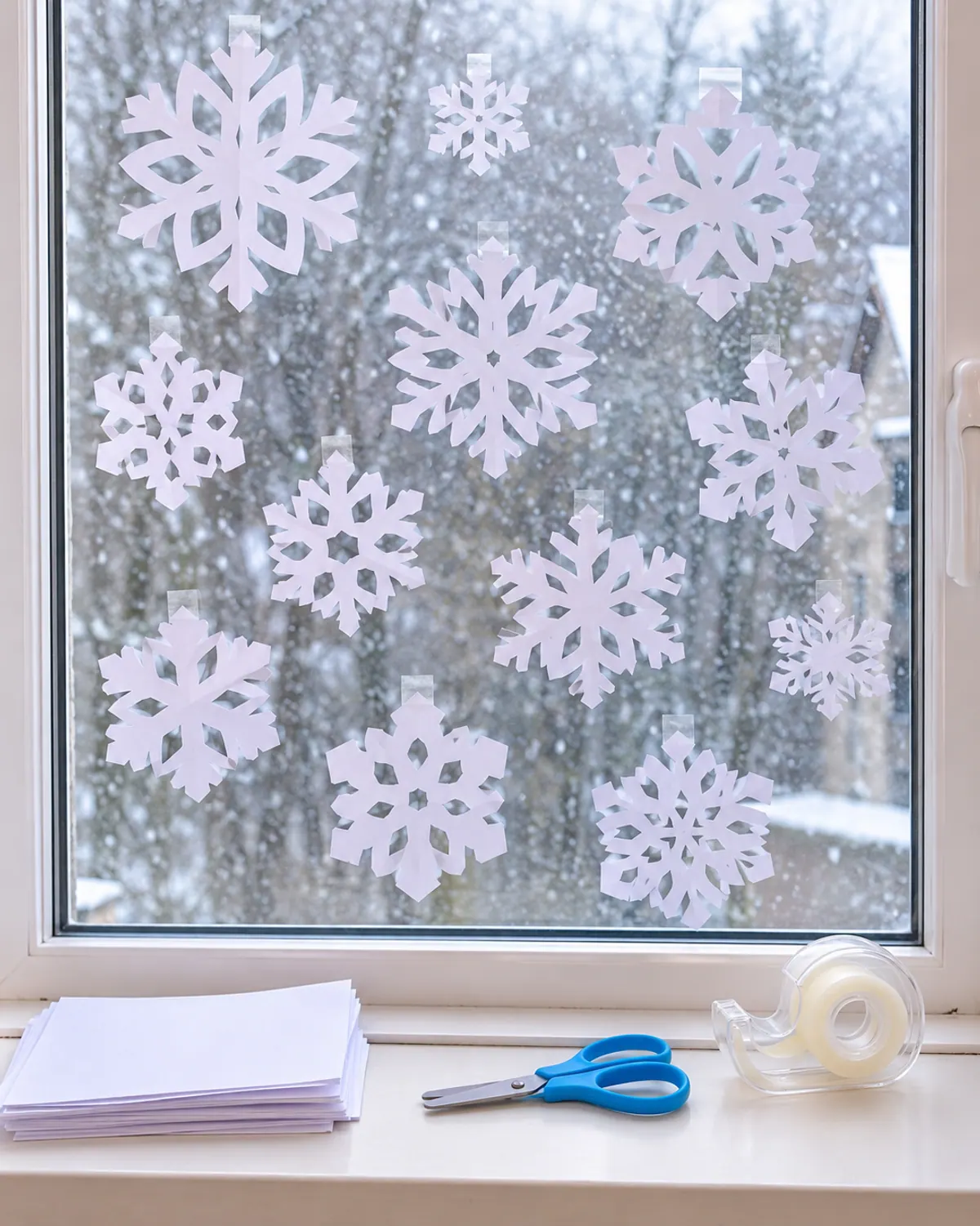
Fold a white square of paper into a triangle, fold it twice more into a smaller triangle, cut notches along every edge, then unfold. Tape the finished snowflakes to a window with clear tape and turn the window into a gallery. Each snowflake comes out different, which is the whole charm for kids who like making things. Younger kids can tear paper instead of cutting.
Ages: 5 to 8 for cutting; 3 to 4 can tear paper.
Prep: 5 minutes.
Mess: medium, paper scraps (a hand-held vacuum or a broom clears them).
Supplies: white paper squares, blunt-tip kids scissors, clear tape.
Safety: a grown-up stays within reach for scissors, and small paper scraps stay away from children under 3.
Safe for small hands and easy to grip.
8Paper snowball toss league (3 pm, wild)
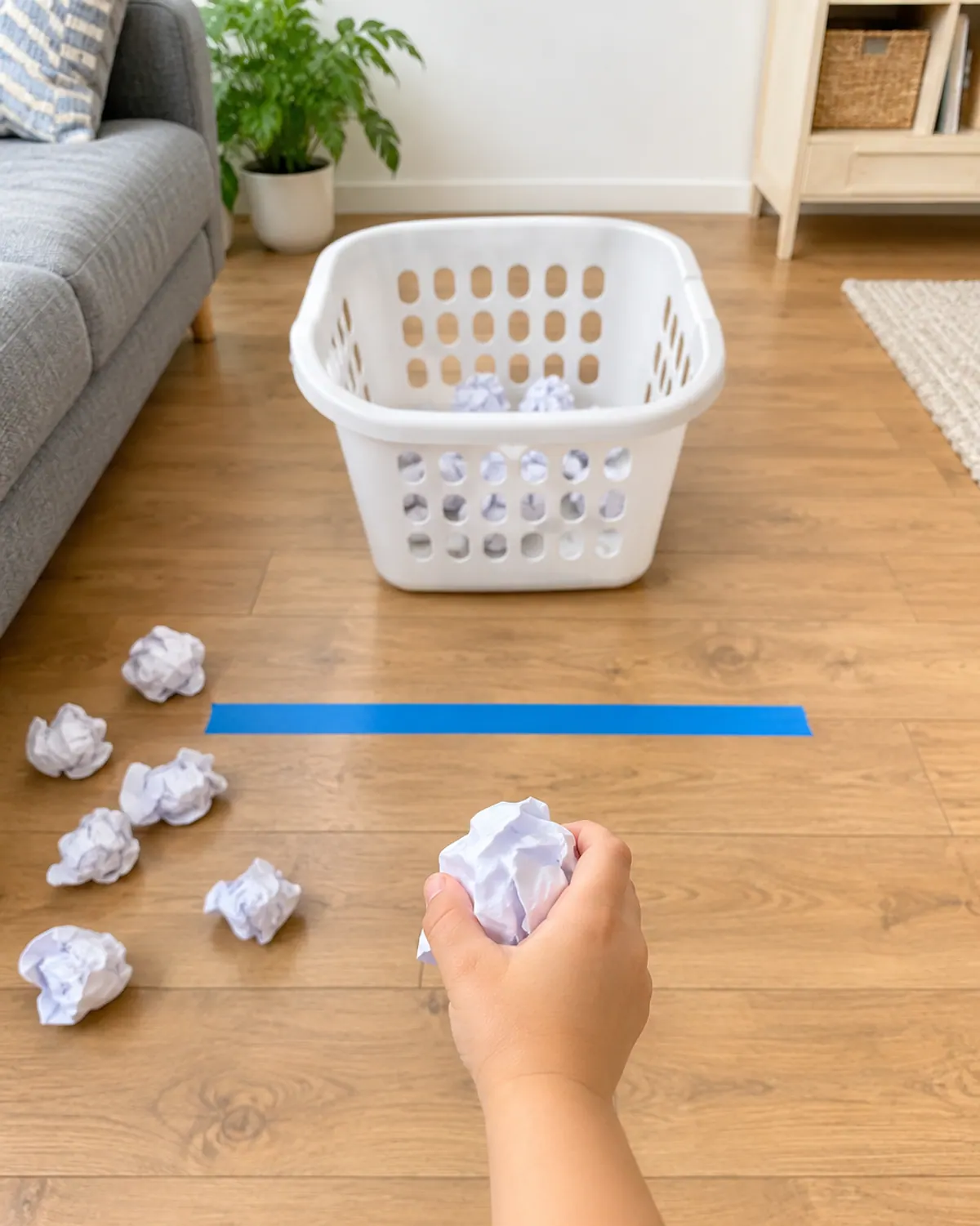
Make a throwing line with painter's tape a few big steps from the laundry basket and turn the 11 am target into a league. Each child gets five throws per round, you keep score with tally marks on a sheet of paper, and the best total after three rounds wins. Younger kids stand closer to the basket. The league gives loud energy a job and a rule, which is what the 3 pm hour needs.
Ages: 3 to 8.
Prep: 5 minutes.
Mess: low, paper balls on the floor.
Supplies: painter's tape, a laundry basket, crumpled paper, paper and a marker for scoring.
Safety: soft paper only. Nothing hard is thrown, nobody throws at people, and the throwing line is far from windows and shelves.
9Blanket fort with a flashlight and winter bingo (4 pm, mid)
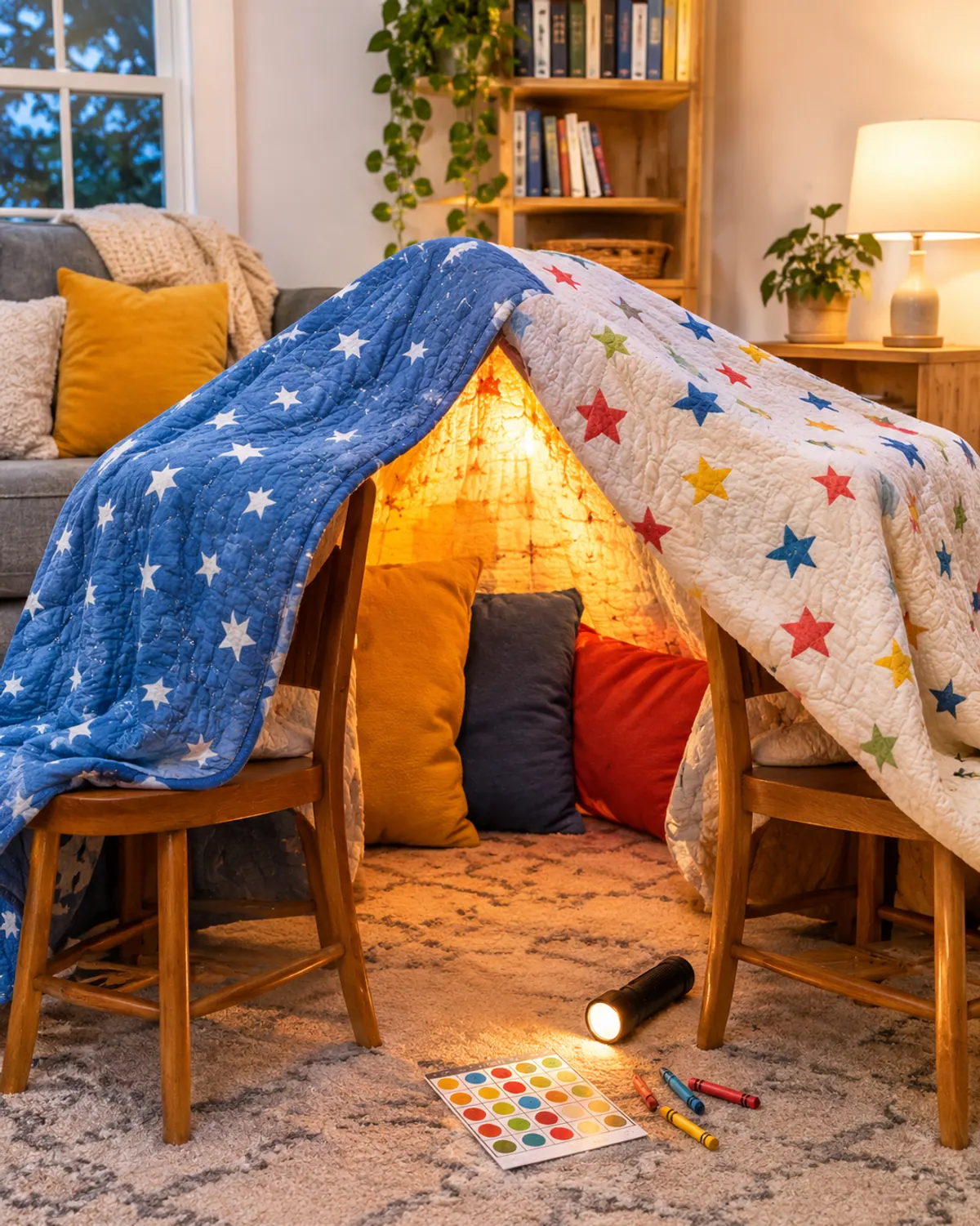
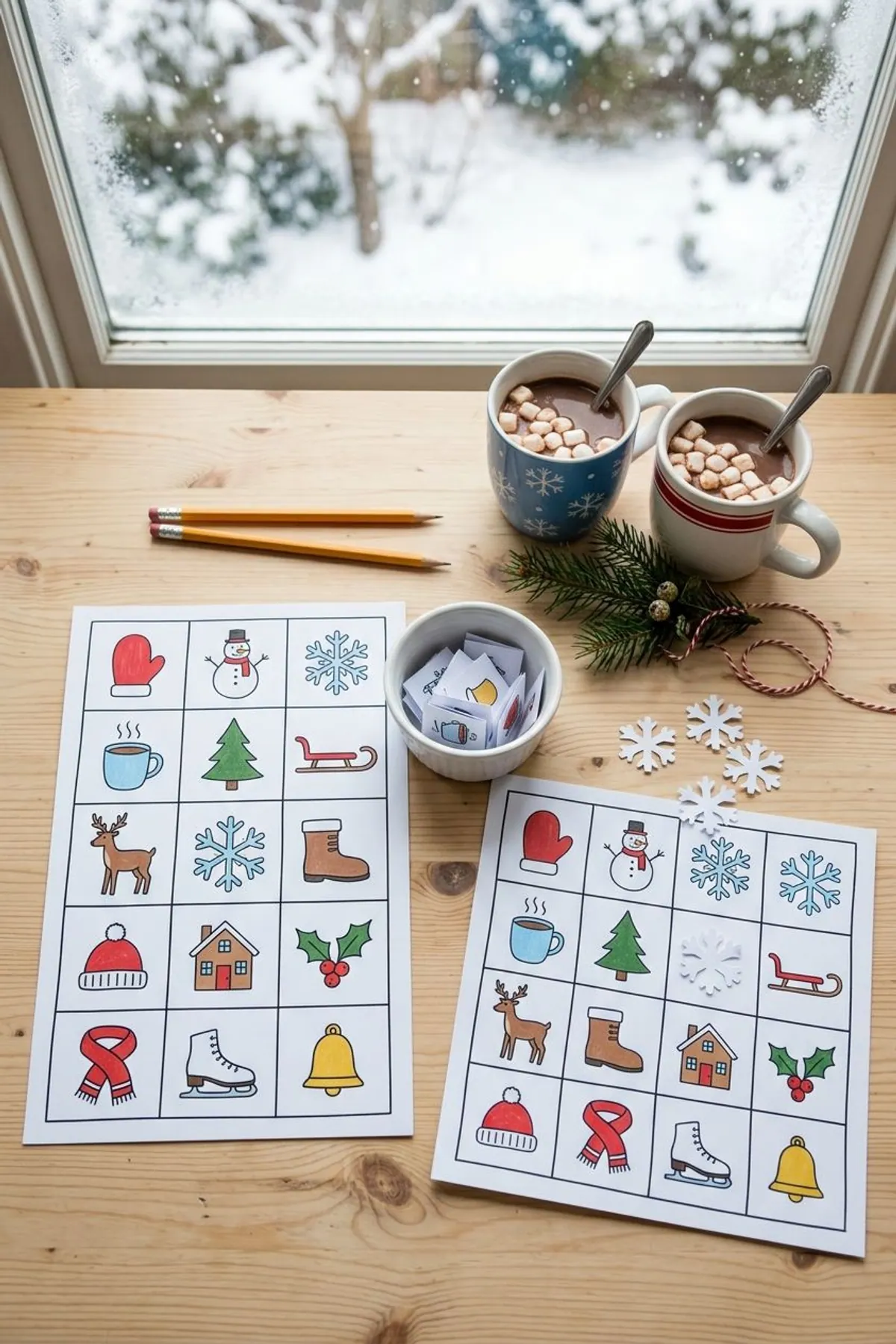
Drape two blankets over dining chairs and cushions, put a flashlight in the entrance and play winter bingo inside, with crayons for marking. It gets the kids calm without calling it rest, and the fort lasts for the hour before dinner. Let the fort come down at dinner, not before.
Ages: 3 to 8.
Prep: 10 minutes to build.
Mess: low.
Supplies: two blankets, chairs, a flashlight, the free winter bingo, crayons.
Safety: keep blankets away from heaters, lamps and candles, and keep batteries out of reach of children under 3.
One per child so nobody fights over the one flashlight.
Evening snow day activities (5 to 6 pm): cooking hour and cozy lights
The 5 pm hour is the hardest one for most parents, because everyone is tired and you are standing at the stove. Give the kids a spot you can see from the kitchen and keep the plan low-prep.
10While dinner cooks: cards and drawing (5 pm, calm)
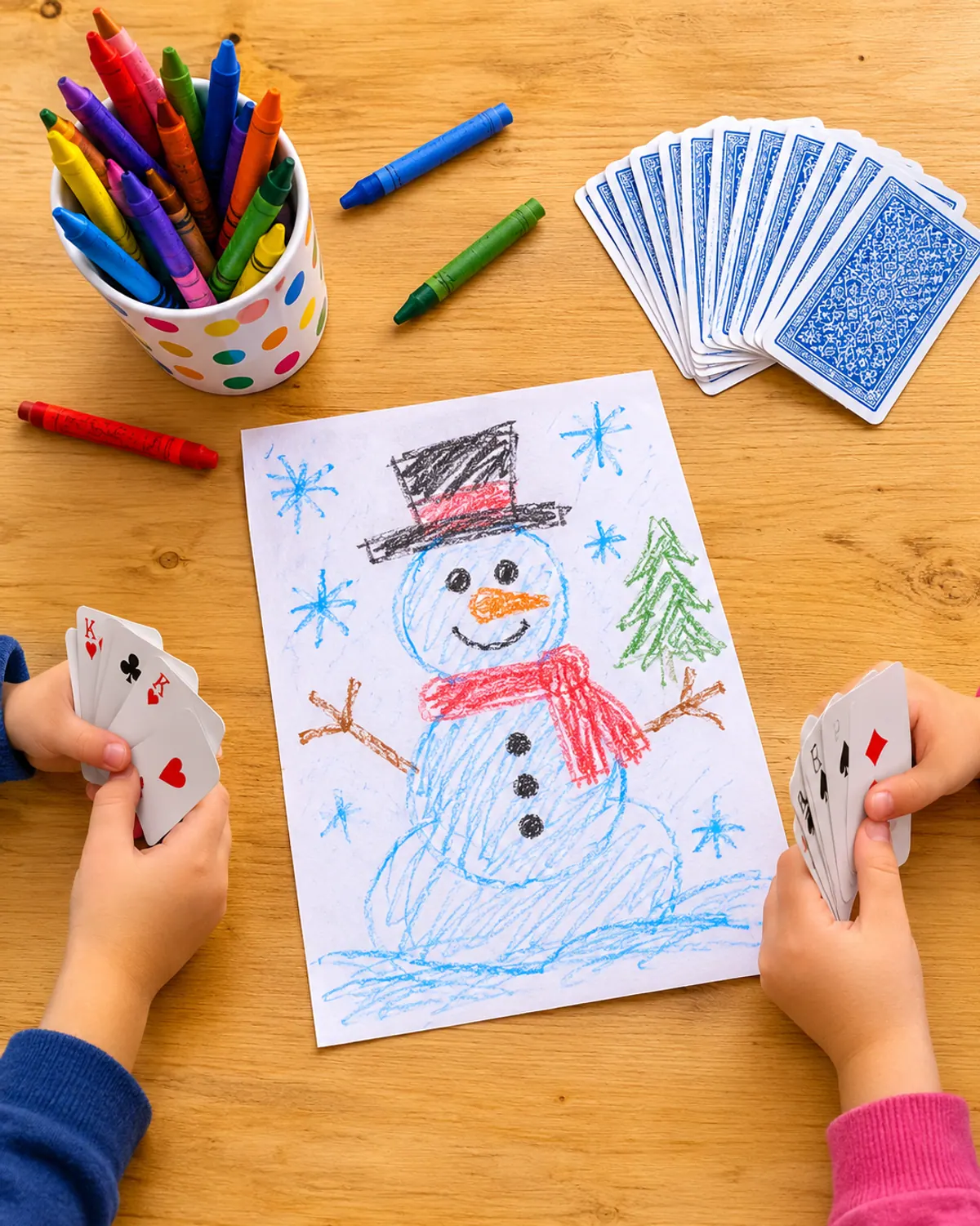
Spread a big sheet of paper on the kitchen table and let everyone draw what the snow day looked like, then deal a game of matching pairs: turn all the cards face down and find two that match. Both can run for the whole hour at the table beside the stove, which means you can stir and watch at once. Hang the drawings on the fridge when dinner is on the table.
Ages: 4 to 8.
Prep: 2 minutes.
Mess: low.
Supplies: a deck of playing cards, a big sheet of paper, crayons.
Safety: set the table away from hot pots and the oven so the kids stay out of the cooking zone.
11Cozy lights, one story and a flashlight shadow game (6 pm, calm)
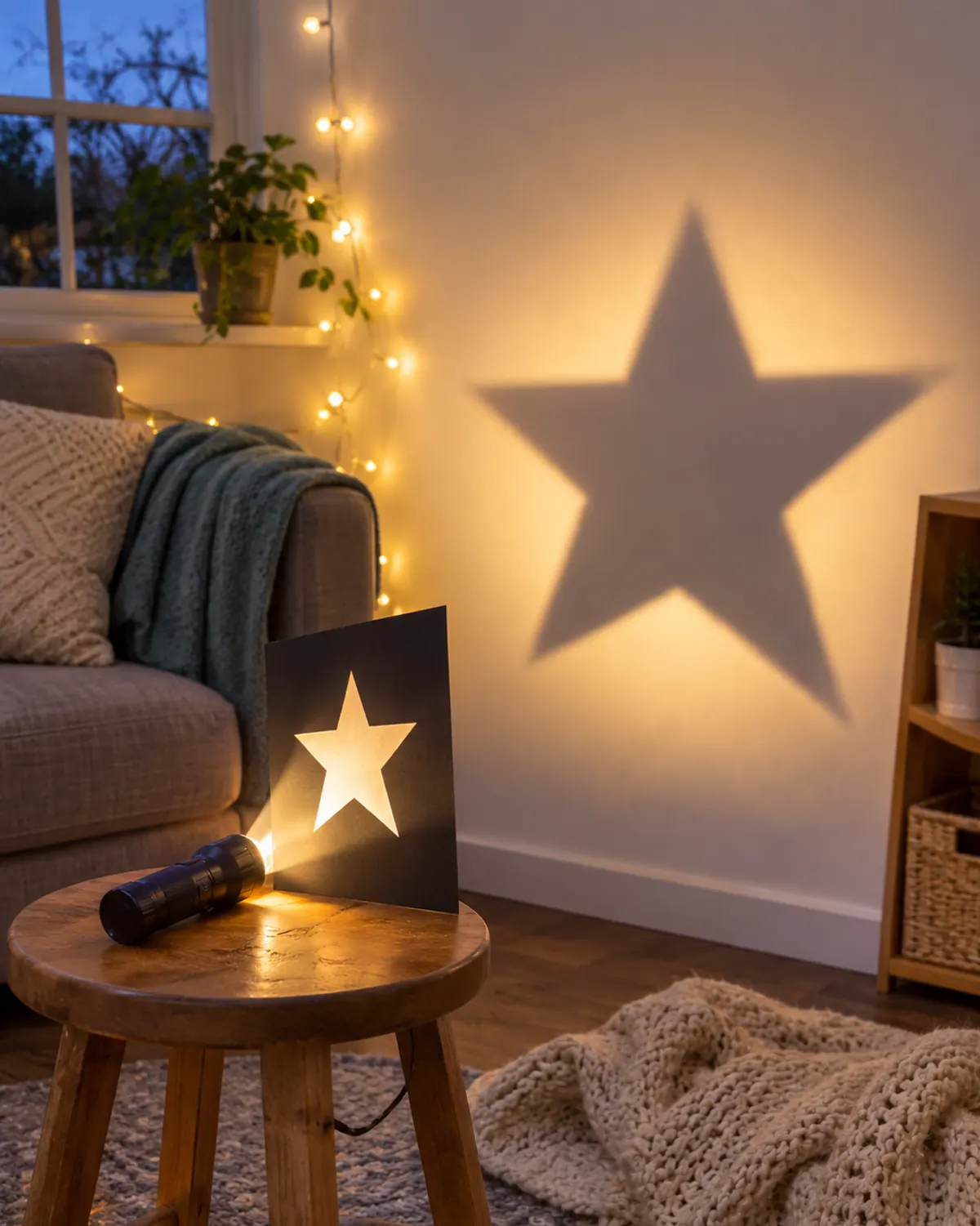
Dim the lights, turn on a string of warm lights if you have them and read one story. Then cut a snowflake, a star and a mitten out of dark paper and shine a flashlight through each one at the wall. Kids guess which shape is on the wall. This is the last block of the day and the lowest-energy one, which is why it works as the bridge into pajamas.
Ages: 3 to 8.
Prep: 5 minutes to cut the shapes.
Mess: low, paper scraps.
Supplies: a flashlight, dark paper, scissors.
Safety: a grown-up cuts the shapes with scissors, and the light stays out of anyone's eyes.
Swap when the plan breaks
Snow days rarely follow the plan. The table lists the five things that go wrong most often and what to swap in from what is already in the box.
| What went wrong | Swap in |
|---|---|
| Everyone is wild at 1 pm | Run the paper snowball toss early, then start the quiet hour 30 minutes late. |
| Nobody wants to leave the fort | Let the fort be the quiet hour: books and a flashlight inside, 4 pm bingo moves to 5 pm. |
| Too cold or too windy for snow time | Move the 3 pm toss league into the 10 am slot and add a second tape course round. |
| A child under 3 is in the mix | Skip the scissors (tear the paper), keep small items and batteries out of reach, and hold the crayons. |
| The box is empty by 11 am | Pull a card from the paid Indoor Day Rescue Kit, which has 100 cards sorted by energy level. |
Snow day activities by energy level
If you would rather pick by mood than by clock, use the energy tags. Wild blocks are the 9 am tape course, the 10 am snow time and the 3 pm toss league. Mid blocks are the 11 am snowball target, the 2 pm snowflakes and the 4 pm fort with bingo. Calm blocks are the 8 am picnic, the 12 pm read-aloud, the 1 pm quiet hour, the 5 pm cards and drawing and the 6 pm shadow game.
Wild first when kids are bursting, mid when they need a reset, calm when you need five minutes. The mid-morning meltdown is real: a kid who is wild at 10 am and flat at 11 am usually needs the mid block, not another run.
When one snow day turns into three
One snow day fits in the box. A run of them needs more ideas than a bin holds. The Winter Break Activity Pack is $6 for 34 pages: 14 days planned from December 26 to the return to school, winter bingo with 6 boards, indoor and outdoor snow scavenger hunts, mitten matching, coloring pages and word searches. If you also want rainy days, car rides and restaurant waits covered, the Year of Play Bundle is four packs and 137 pages for $12, where the four bought one at a time come to $24.
For a free plan across the whole break, see the two-week winter break plan, and for rainy days and school breaks without snow, the rainy day activities for kids have 25 low-prep ideas.
Snow day safety notes
Next step: the Indoor Day Rescue Kit
The free box and plan get you through one snow day. When the second one arrives and the box is empty by 11 am, the Indoor Day Rescue Kit is the next step for that exact problem: 37 printable pages, $7, with 100 activity cards in five decks (Burn Energy, Calm Down, Play Alone, Play Together and While I Cook), 4 painter's tape floor games, 12 obstacle course station cards and 6 rescue plans that include the snow day and the 5 pm cooking hour. It comes in US Letter, A4 and low-ink PDFs.
Supplies for the snow day box
- Most used
Painter's tape, multi-pack
Typically $8 to $16
Floor course and throwing line.
Check price on Amazon for Painter's tape, multi-pack -
Blunt-tip kids safety scissors, 6 pack
Typically $7 to $14
Snowflakes and shadow shapes.
Check price on Amazon for Blunt-tip kids safety scissors, 6 pack -
Kids LED flashlights, 6 pack
Typically $10 to $18
Fort and shadow game, one per child.
Check price on Amazon for Kids LED flashlights, 6 pack -
Foldable clothes drying rack
Typically $15 to $32
Wet mittens dry between outings.
Check price on Amazon for Foldable clothes drying rack -
Washable markers and crayons set
Typically $6 to $14
Quiet hour and 5 pm drawing.
Check price on Amazon for Washable markers and crayons set -
Picture book bundle for ages 3 to 8
Typically $15 to $30
A fresh stack for the read-aloud.
Check price on Amazon for Picture book bundle for ages 3 to 8 -
Plastic storage bin with lid, 12 gallon
Typically $8 to $16
The snow day box itself.
Check price on Amazon for Plastic storage bin with lid, 12 gallon
Frequently asked questions
What do you do with kids on a snow day at home?
Run the day in one-hour blocks tagged wild, mid and calm, from 8 am to 6 pm, so loud play and quiet play take turns. Pack a 10-item snow day box the night before. The free checklist in this post lists the box and the 11 blocks.
What should go in a snow day box?
Painter's tape, white paper, markers and crayons, child-safe scissors and clear tape, a laundry basket, a flashlight, a deck of cards, about six picture books, the free winter bingo and a spare pair of dry mittens with a towel. Each item is used in at least one hour of the plan.
How do you keep kids busy on a snow day with no screens?
Use blocks with a job: a tape course in the morning, a paper snowball toss league in the afternoon and a blanket fort with winter bingo before dinner. The quiet hour at 1 pm gives you the break.
What snow day activities work for different ages?
Ages 3 to 4 can run the tape course, toss paper snowballs and tear paper instead of cutting it. Ages 5 to 8 can cut snowflakes, keep league scores and play bingo. Keep scissors, small items and batteries with a grown-up for children under 3.
Is the snow day checklist really free?
Yes. The 3-page PDF is a free download on this page. Page 3 shows the paid Indoor Day Rescue Kit, but the box checklist and the hour-by-hour plan are complete without it.
Save it for later
Pin this to your Outdoor & Rainy Day board so it's there when you need it.
Save to Pinterest