This post contains affiliate links. As an Amazon Associate we earn from qualifying purchases, at no extra cost to you. Read our disclosure.
Safety first: Always supervise little ones, and skip small parts for kids who still put things in their mouths. Please read our play safety notes before you start.
Key takeaways
- Toddlers need a container, something to put in it and you nearby; repetition is fine.
- Preschoolers play longer with 2 or 3 choices on a tray than with a full toy shelf.
- Kids 5 to 8 can run card games, forts and builds on their own once the supplies are in reach.
- Swap one moment a day at a time: after school, dinner prep, wind-down, car or sick days.
- The AAP suggests no screens but video chat under 18 months and about 1 hour a day of quality programs for ages 2 to 5.
In this post23 sections
- Screen-free activities for kids at a glance
- Screen-free activities for toddlers (ages 1 to 3)
- 1. Pom-pom posting box
- 2. Water play at the sink or tray
- 3. Board book basket
- Screen-free activities for preschoolers (ages 3 to 5)
- 4. Playdough tray
- 5. Magnetic tile towers
- 6. Puzzle and audiobook
- Screen-free activities for kids 5 to 8
- 7. Card games and building sets
- 8. Blanket fort reading den
- 9. Sidewalk chalk hopscotch
- The 5-day screen swap plan, by moment
- 10. After school: snack and draw
- 11. Dinner prep: a real kitchen job
- 12. Evening wind-down: audiobook and puzzle
- 13. Car rides: an activity bag
- How to set up a quiet bin for independent play
- How much screen time is OK for kids?
- Screen-free activities for the holidays and winter break
- Screen-free activity supplies
- FAQ
This guide is sorted two ways: by age, and by the moments in the day when screens usually come out. Every activity lists ages, prep time, mess level, supplies and a safety note, so you can pick one in under a minute.
Screen-free activities for kids at a glance
| Age | What works | Independent play to aim for | Your role |
|---|---|---|---|
| 1 to 2 | Posting, stacking, water play, board books | A few minutes at a time, building up | Sit nearby, set up, join in |
| 2 to 3 | Playdough, simple sensory bins, pretend kitchen | 5 to 15 minutes | Set up, step back, stay in the room |
| 3 to 5 | Building tiles, art trays, puzzles, dress-up | 15 to 30 minutes | Rotate toys, offer a starting idea |
| 5 to 8 | Card games, Lego builds, forts, reading, chores | 30 to 60 minutes | Agree on rules, then leave them to it |
These ranges are our planning estimates, not research figures. A tired 4 year old may last 5 minutes; a focused one may build for an hour. Start small and stretch it a few minutes each week.
Screen-free activities for toddlers (ages 1 to 3)
Toddlers do not need much: a container, something to put in it and an adult in the room. Repetition is the point at this age, so the same activity can come out every day for a week.
1Pom-pom posting box
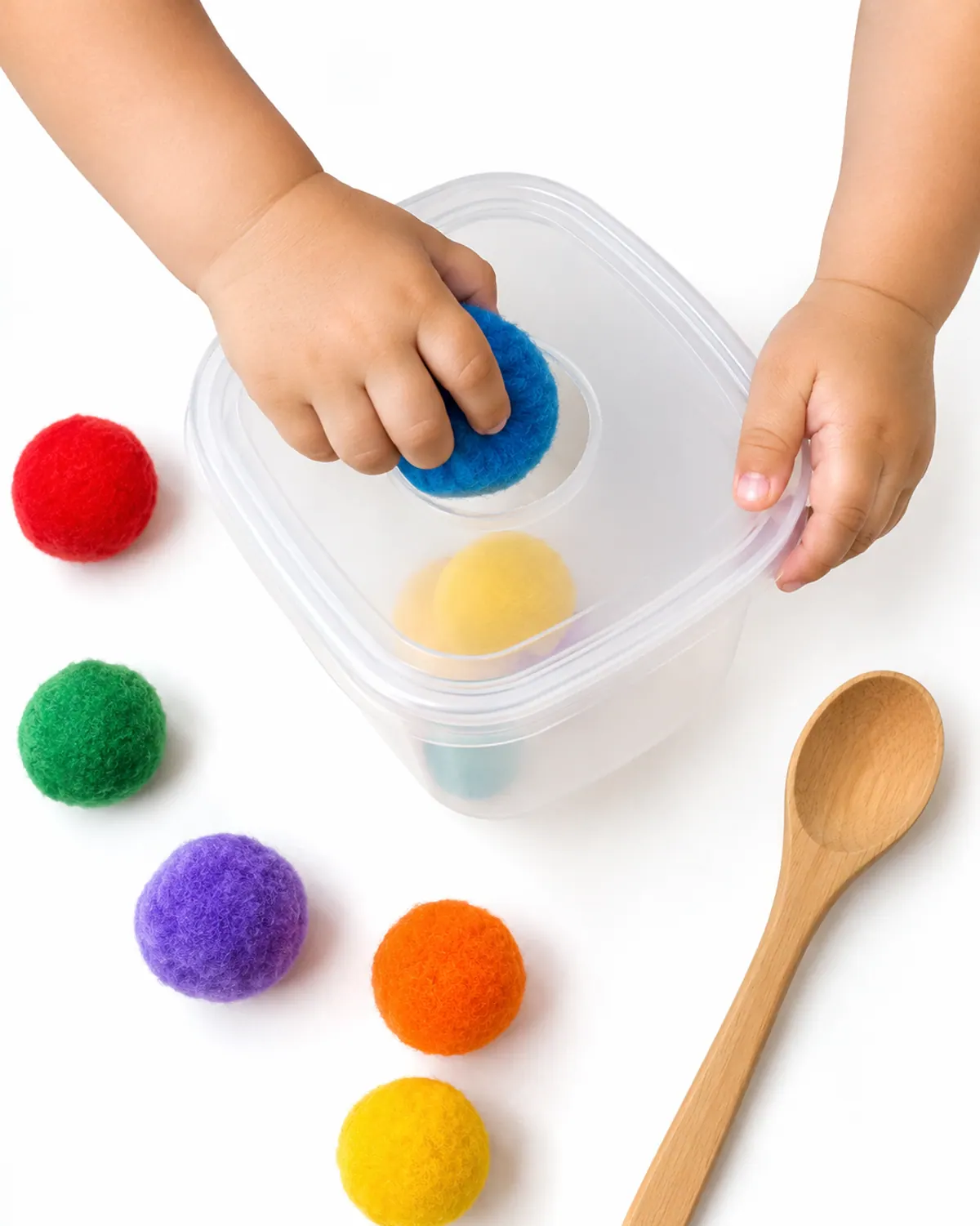
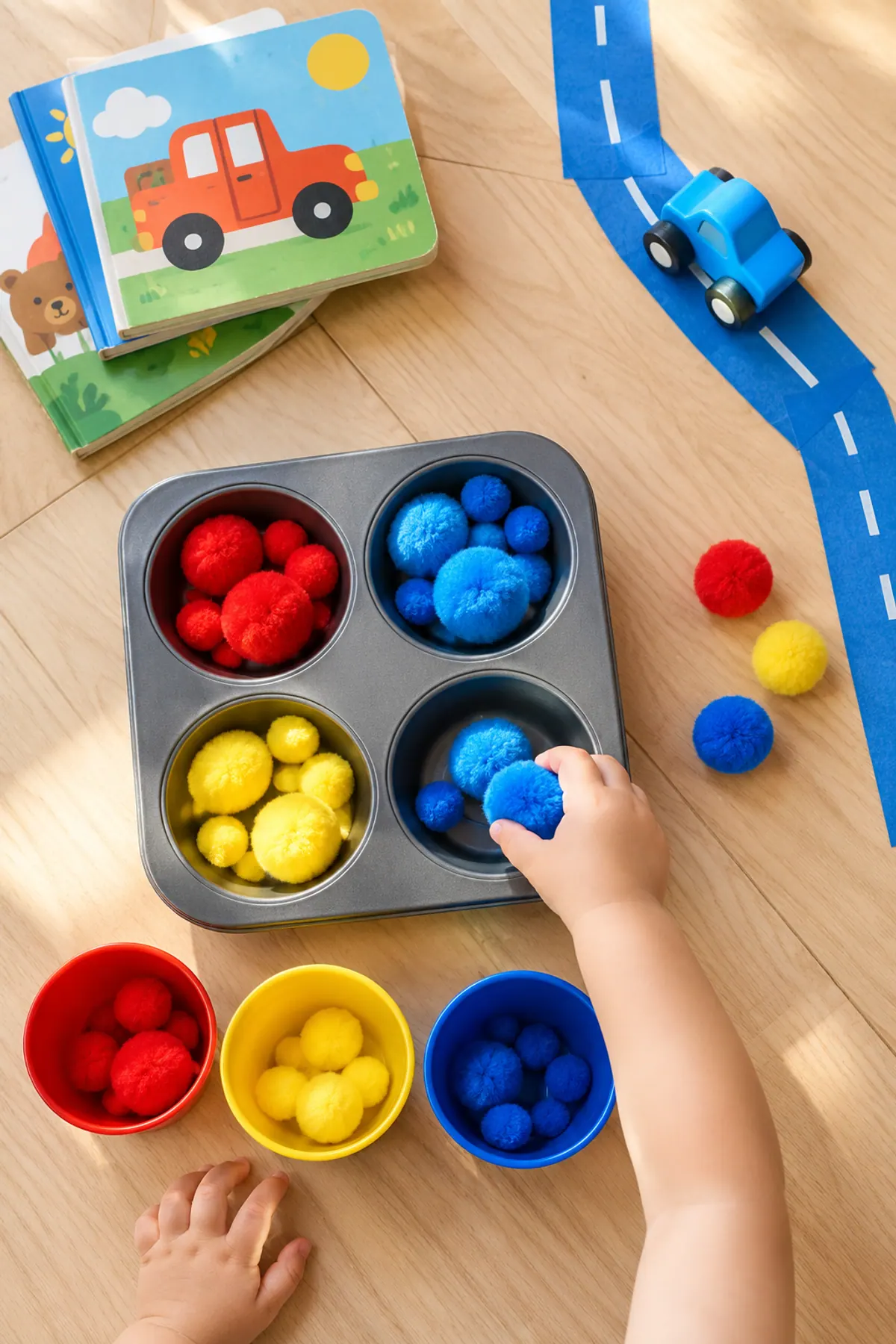
Cut a hole in the lid of a plastic food container and hand your toddler a pile of big pom-poms to post through it. Open the lid, tip them out and start again. It is simple, but it builds the grip and hand-eye skills toddlers are working on, and it fits in a diaper bag.
Ages: 1 to 2
Prep: 2 minutes
Mess: Low
Supplies: a plastic container with a lid, 2 inch pom-poms or large balls, craft knife for you
Safety: use pom-poms bigger than a toilet paper tube opening and count them back in; stay beside a child who still mouths things.
- Swap the pom-poms for jar lids and a slot cut in the lid to make it new again.
Big enough for a toddler posting game, and reused in a dozen crafts.
2Water play at the sink or tray
Put a towel down, fill a tray or the sink with an inch of water, and hand over cups, a sponge and a funnel. Pouring and squeezing keeps most toddlers busy longer than any toy. For more ideas see our toddler activities at home by age.
Ages: 1 to 3
Prep: 2 minutes
Mess: Medium (wet floor)
Supplies: a tray or sink, cups, a sponge, a funnel, towels
Safety: a child can drown in very little water; stay within arm's reach the whole time and empty the water after.
- A drop of washable paint in the water makes it feel like a brand new activity.
3Board book basket
Keep 6 to 8 board books in a low basket and swap half of them every week. Toddlers will happily flip through familiar books on their own for a few minutes, which is a real screen-free break for you.
Ages: 1 to 3
Prep: None
Mess: None
Supplies: board books, a low basket
Safety: choose board books without small detachable parts for under 3s.
- Put the basket where the tablet used to live.
Screen-free activities for preschoolers (ages 3 to 5)
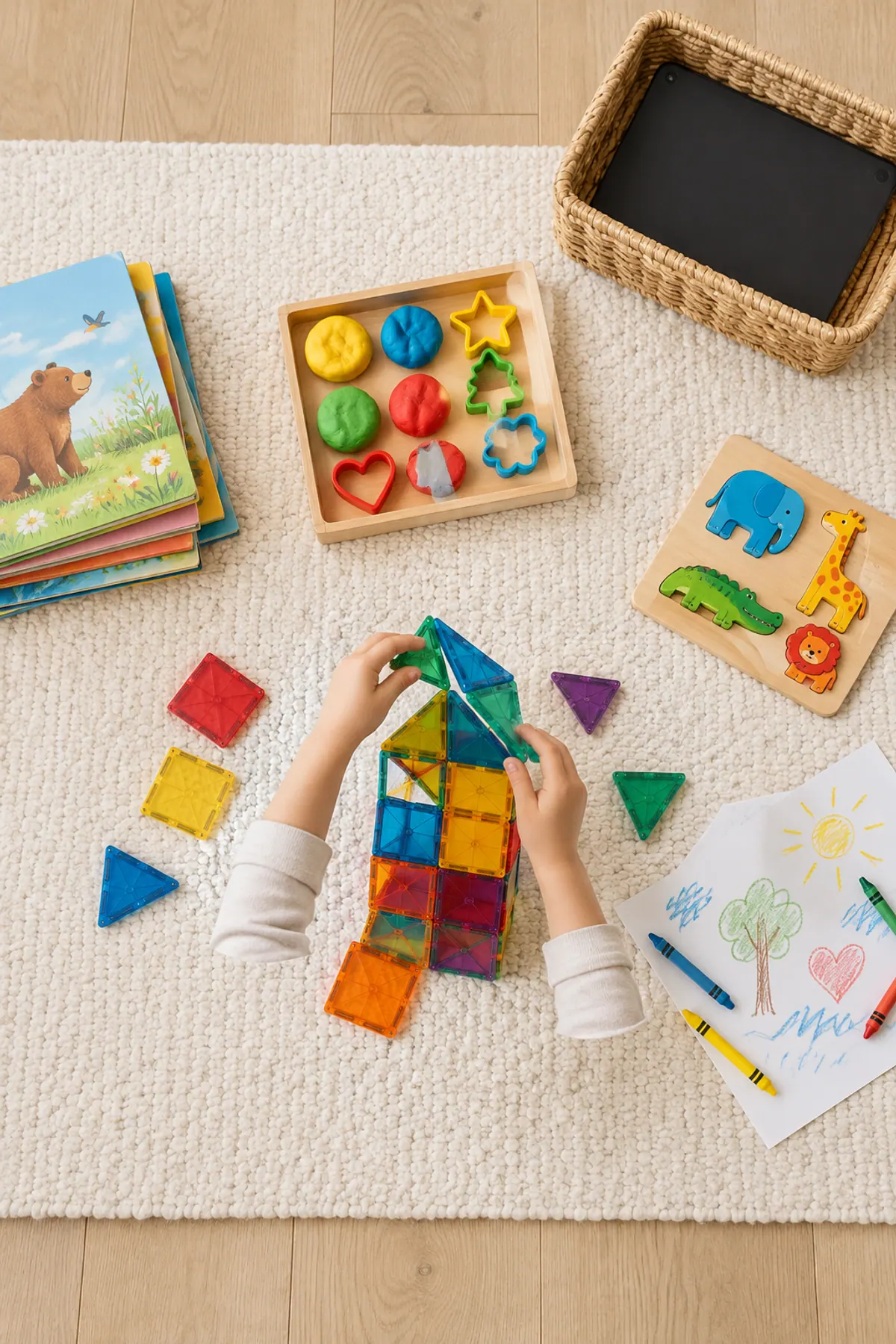
Preschoolers can play alone for longer if the setup is ready and the choices are limited. Two or three options on a tray works better than a whole toy shelf.
4Playdough tray
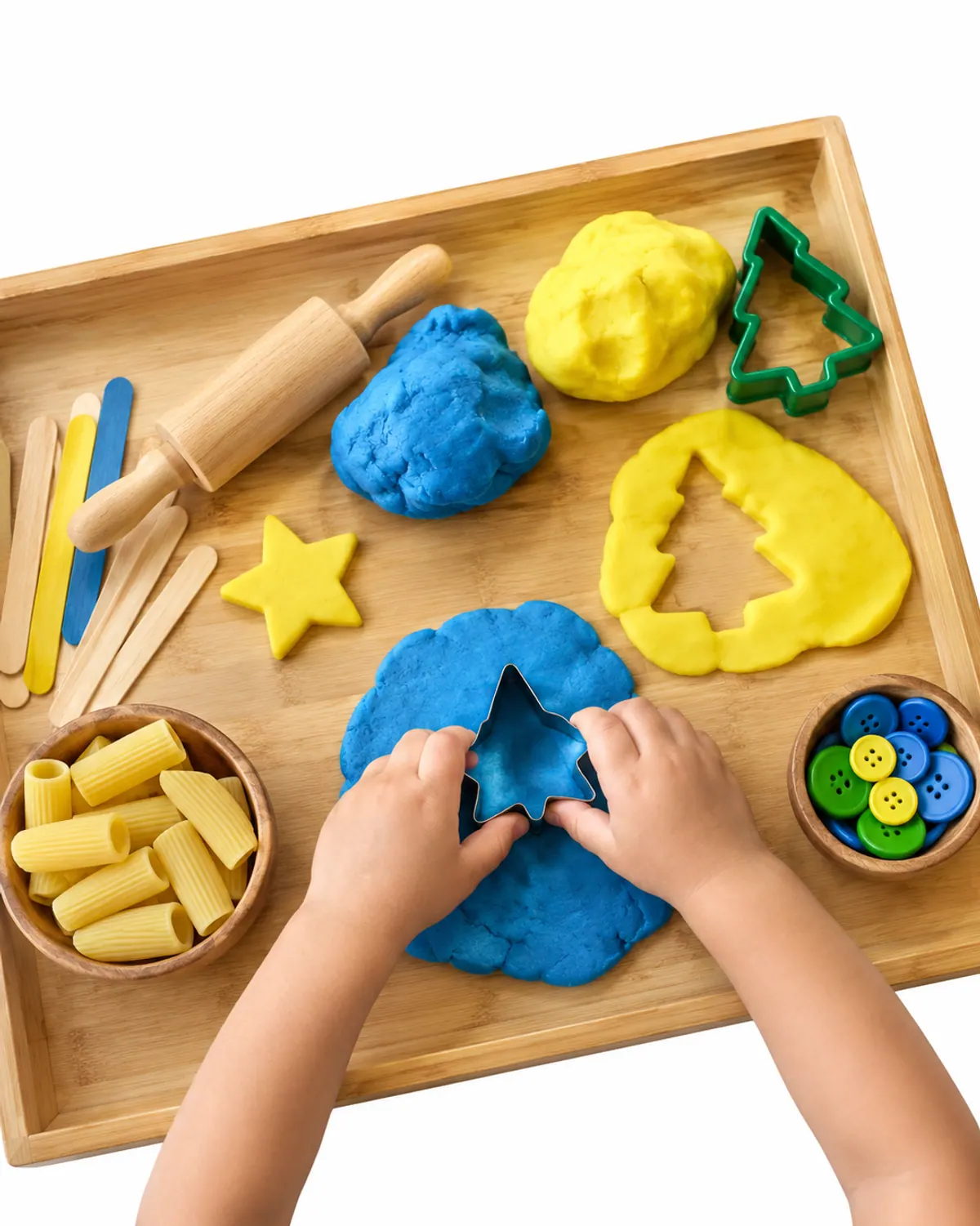
Put two colors of dough on a tray with a rolling pin, two cookie cutters and a small bowl of loose parts like pasta tubes and craft sticks. Kids make cakes, snakes and cookie shops. A tray keeps the mess in one place.
Ages: 3 to 5
Prep: 5 minutes
Mess: Medium
Supplies: playdough, cookie cutters, rolling pin, craft sticks, dry pasta, a tray
Safety: buttons and small loose parts are a choking risk for under 3s; leave them out if a younger sibling is near.
- Store the whole tray in a bag so it comes out ready to go.
Cutters, rollers and stampers turn one tub of dough into 30 quiet minutes.
5Magnetic tile towers
Magnetic tiles are a toy many kids keep coming back to once the TV goes off. Challenge your preschooler to build a tower taller than their knee, a garage for a toy car or a house for a stuffed animal.
Ages: 3 to 5
Prep: None
Mess: None
Supplies: magnetic building tiles
Safety: check tiles for cracks; loose magnets are dangerous if swallowed, so throw away any broken tile.
- Build on a window in the morning sun and the colors light up the room.
The open-ended toy kids 3 to 8 return to most when screens go off.
6Puzzle and audiobook
A 24 to 48 piece floor puzzle and a story or audiobook playing in the background is our favorite pairing for preschoolers. Our preschool activities at home has more quiet table ideas.
Ages: 3 to 6
Prep: None
Mess: Low
Supplies: a floor puzzle, an audio player or speaker
Safety: keep puzzle pieces from smaller puzzles away from babies and young toddlers.
- Do the puzzle on a tray so it can move off the table at dinner.
A good evening activity for 3 to 6 year olds, alone or with you.
Want 50 ideas like these on cards you can grab and go? Our free screen-free activity pack has ages, prep time and mess level on every card, plus a rainy day page.
Screen-free activities for kids 5 to 8
School-age kids can run their own activities. Your job is to have the supplies where they can reach them and to say yes to the mess sometimes.
7Card games and building sets
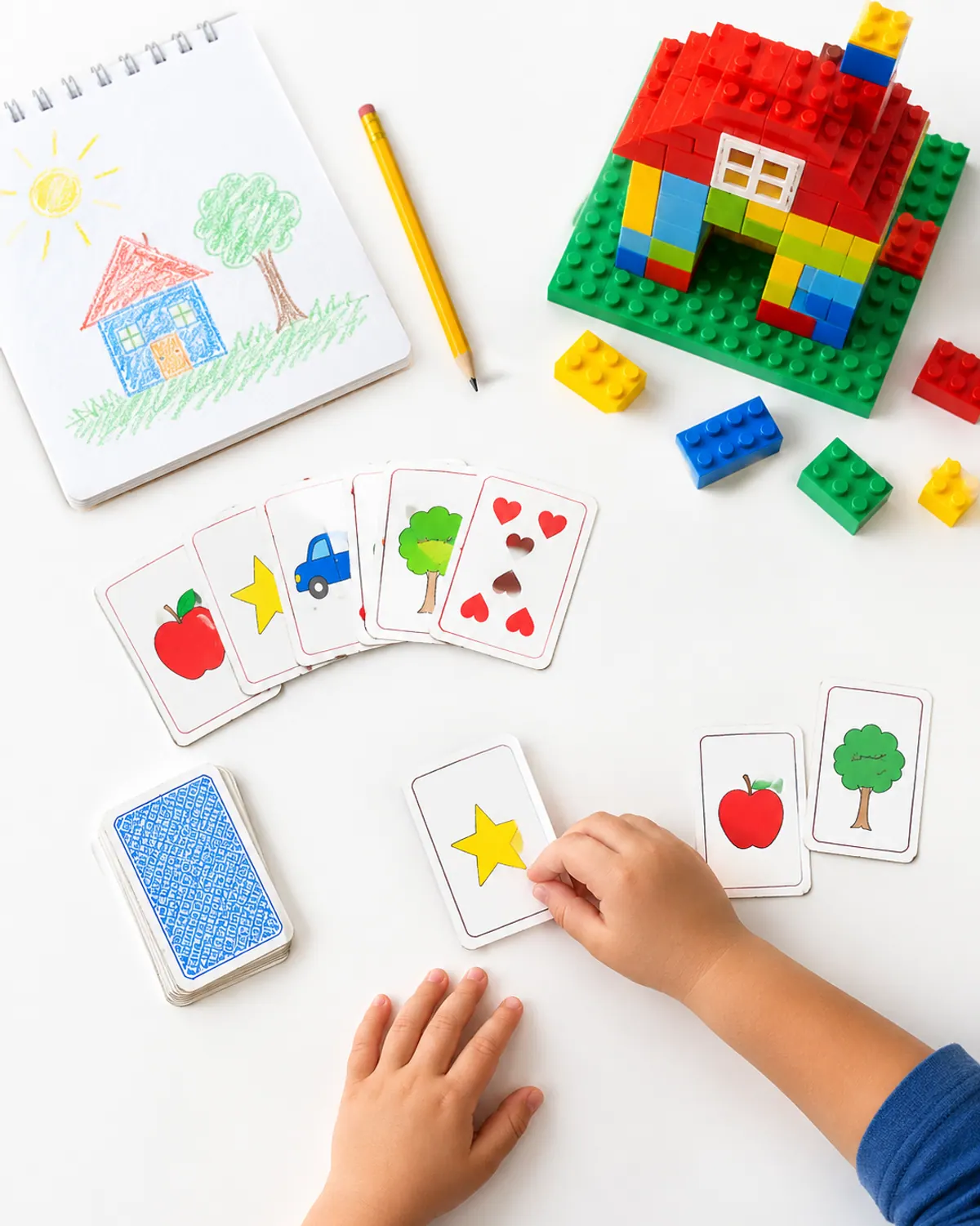
Teach one new card game a week: Go Fish, Crazy Eights, Memory, War. Then leave the deck out. Building bricks and a sketch pad on the same table give kids three choices without asking you.
Ages: 5 to 8
Prep: None
Mess: Low
Supplies: a deck of cards, building bricks, a drawing pad, pencils
Safety: small bricks are a choking hazard for younger siblings; keep them in a lidded box when a toddler is around.
- Write the rules of each new game on an index card and keep it with the deck.
8Blanket fort reading den
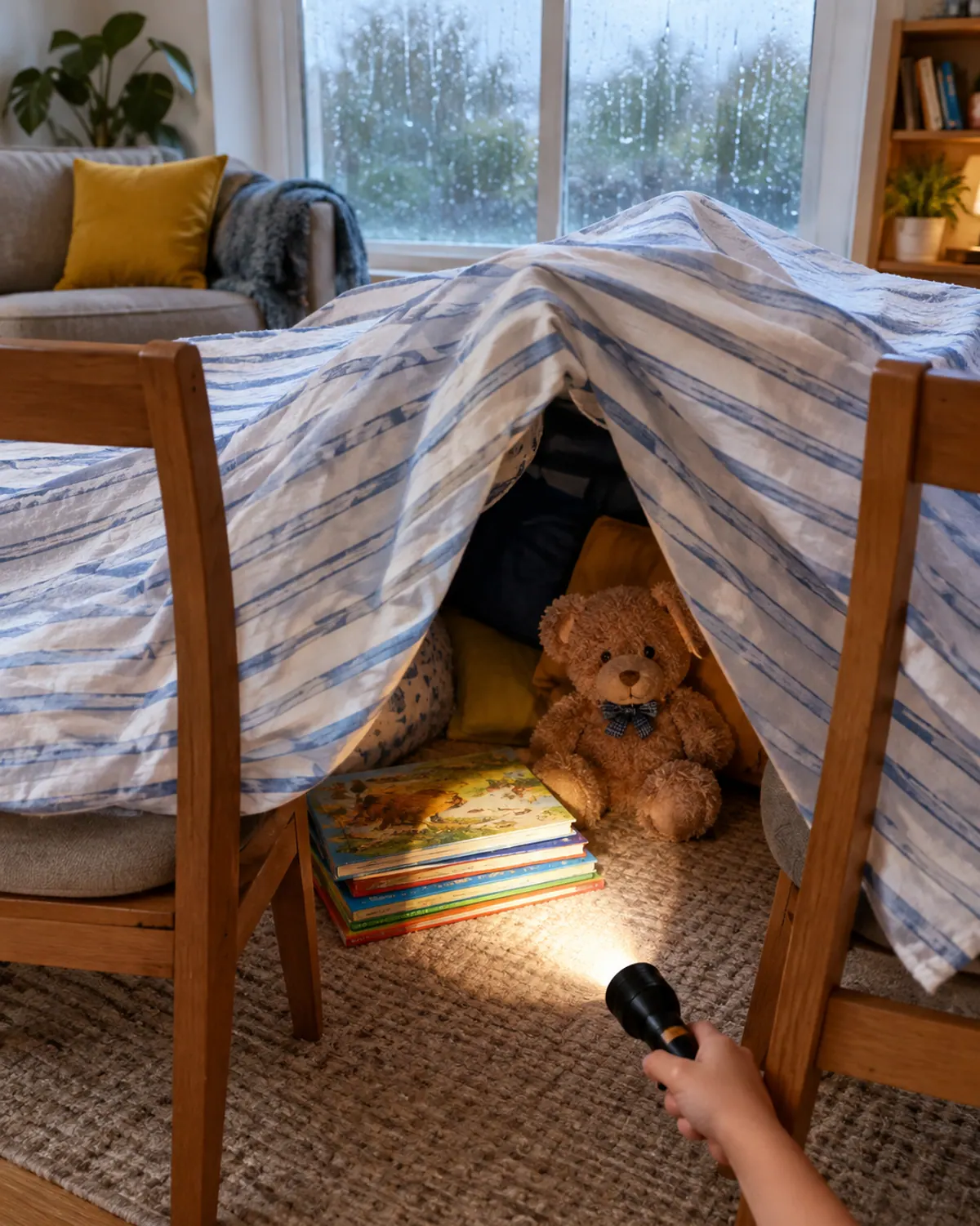
Two chairs, a sheet and a stack of library books turn into an afternoon. Kids 5 and up can build the fort themselves, then read, play with a flashlight or have a snack inside. It is the classic rainy day activity for a reason.
Ages: 3 to 8
Prep: 5 minutes
Mess: Low
Supplies: 2 chairs, a sheet or blanket, clothespins, books, a flashlight
Safety: use chairs that will not tip, and no heavy books or furniture on top of the sheet.
- Clothespins hold the sheet to the chair backs better than tucking.
9Sidewalk chalk hopscotch
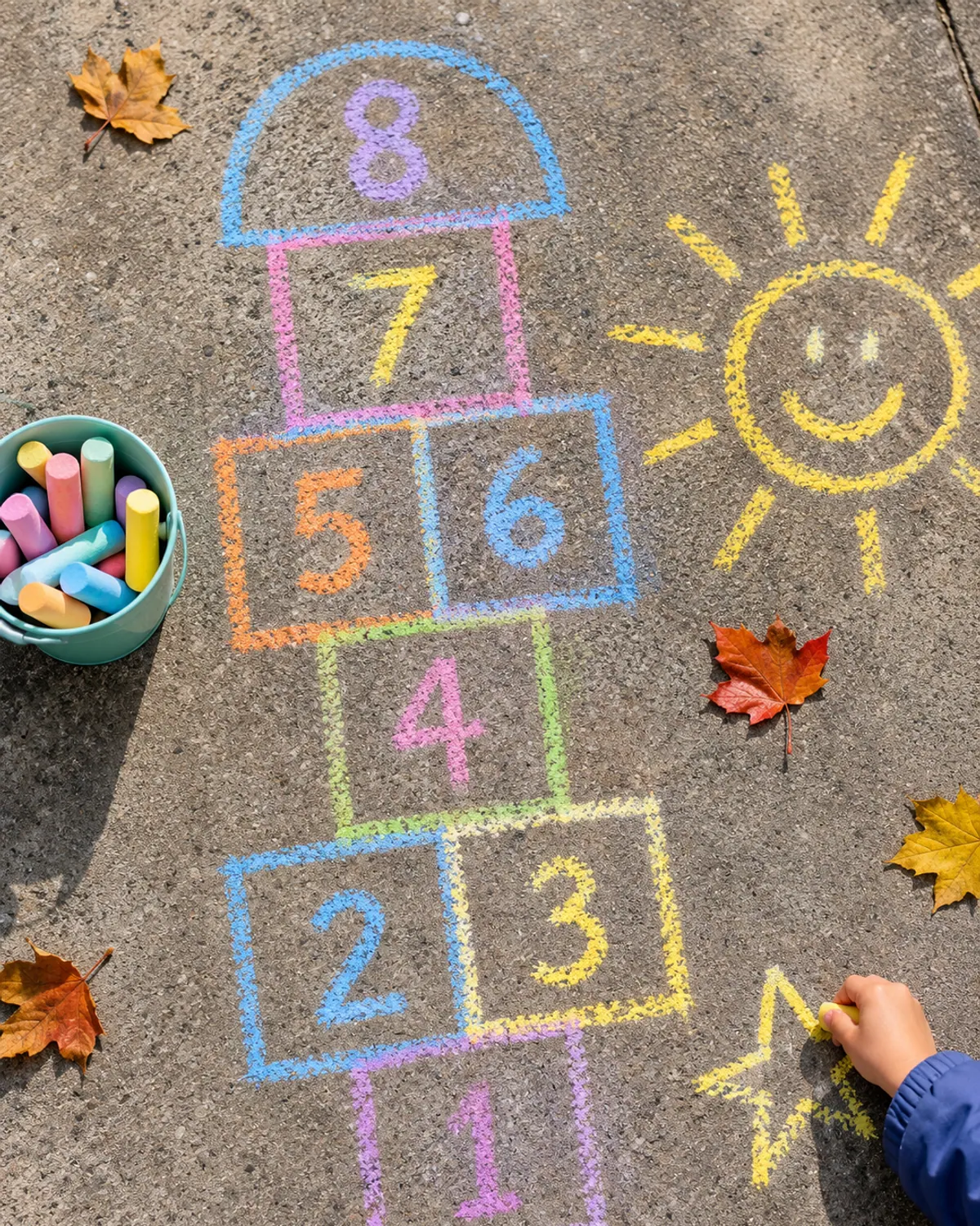
Draw a hopscotch grid, a racetrack for scooters or a giant board game with chalk squares. It works in a coat in November as well as in summer. Fresh air and moving around makes the evening calmer, too.
Ages: 3 to 8
Prep: 2 minutes
Mess: Low (chalk dust)
Supplies: jumbo sidewalk chalk, a driveway or path
Safety: stay away from the street; an adult checks for traffic and stays outside with younger kids.
- A bucket of water and a paintbrush wipes the board clean for a new game.
Thick sticks that small hands can grip and that survive being dropped.
The 5-day screen swap plan, by moment
Most screen time happens at the same 5 moments of the day. Instead of cutting screens everywhere at once, swap one moment at a time. Pick one moment for this week and use the ideas below.
| Moment | The screen habit | The swap | Ready in |
|---|---|---|---|
| After school | Tablet with a snack | Snack at the table with a drawing pad or a puzzle | 2 minutes |
| Dinner prep | TV while you cook | A kitchen job: washing vegetables, setting the table | 1 minute |
| Evening wind-down | Shows before bed | Audiobook plus a puzzle or Lego on the floor | 2 minutes |
| Car rides | Phone or tablet | Activity bag with a drawing board and sticker book | Pack once |
| Sick or rainy day | All-day TV | A quiet bin, a blanket fort and a few chosen shows | 10 minutes |
10After school: snack and draw
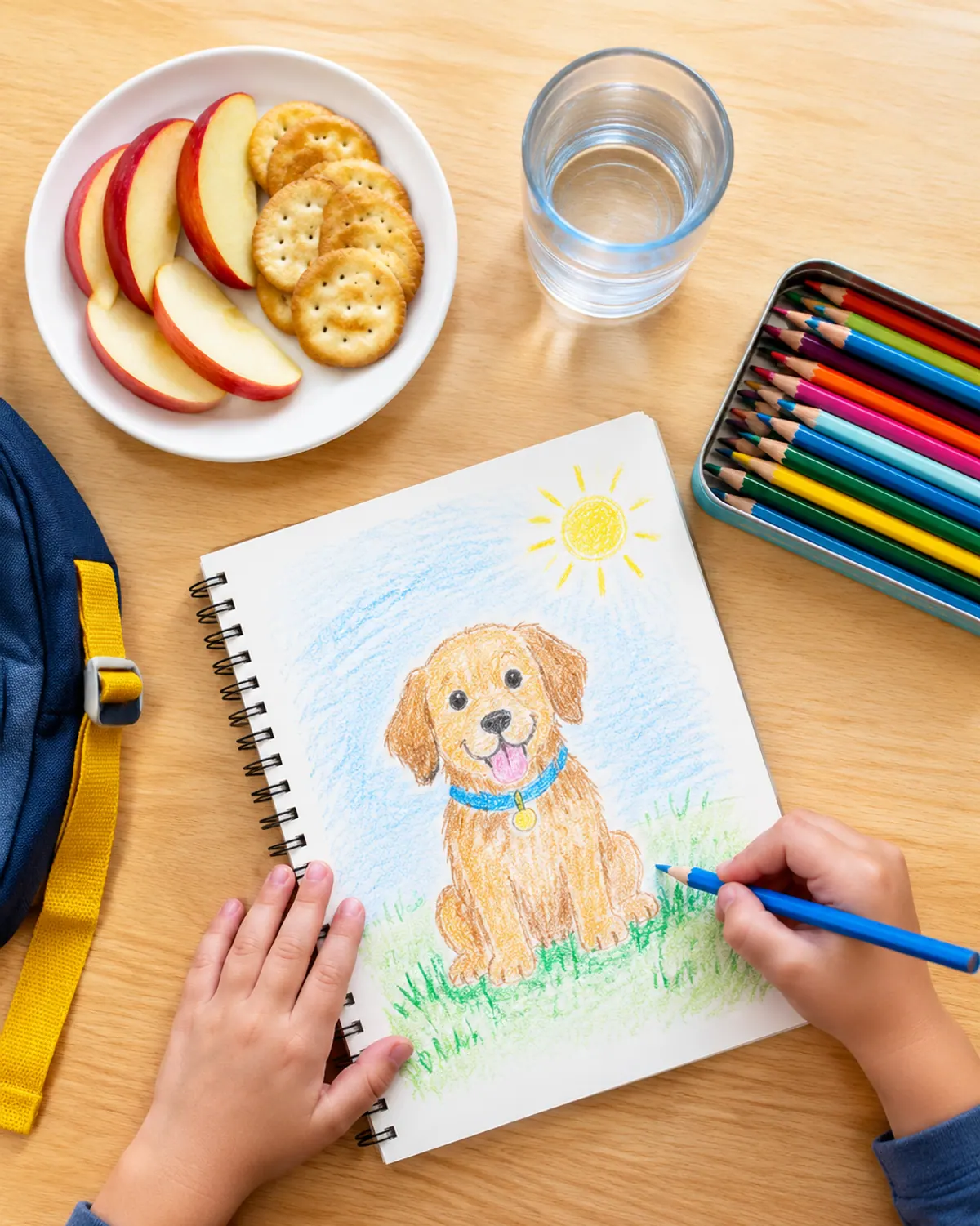
Put the snack on the table next to a sketchbook and pencils before your child gets home. Most kids come in hungry and tired, and a snack plus drawing gives them the quiet reset the tablet used to.
Ages: 4 to 8
Prep: 2 minutes
Mess: Low
Supplies: a snack, a sketchbook, colored pencils
Safety: none beyond normal snack supervision for younger kids.
- Keep a sketchbook just for after school so it becomes a habit.
11Dinner prep: a real kitchen job
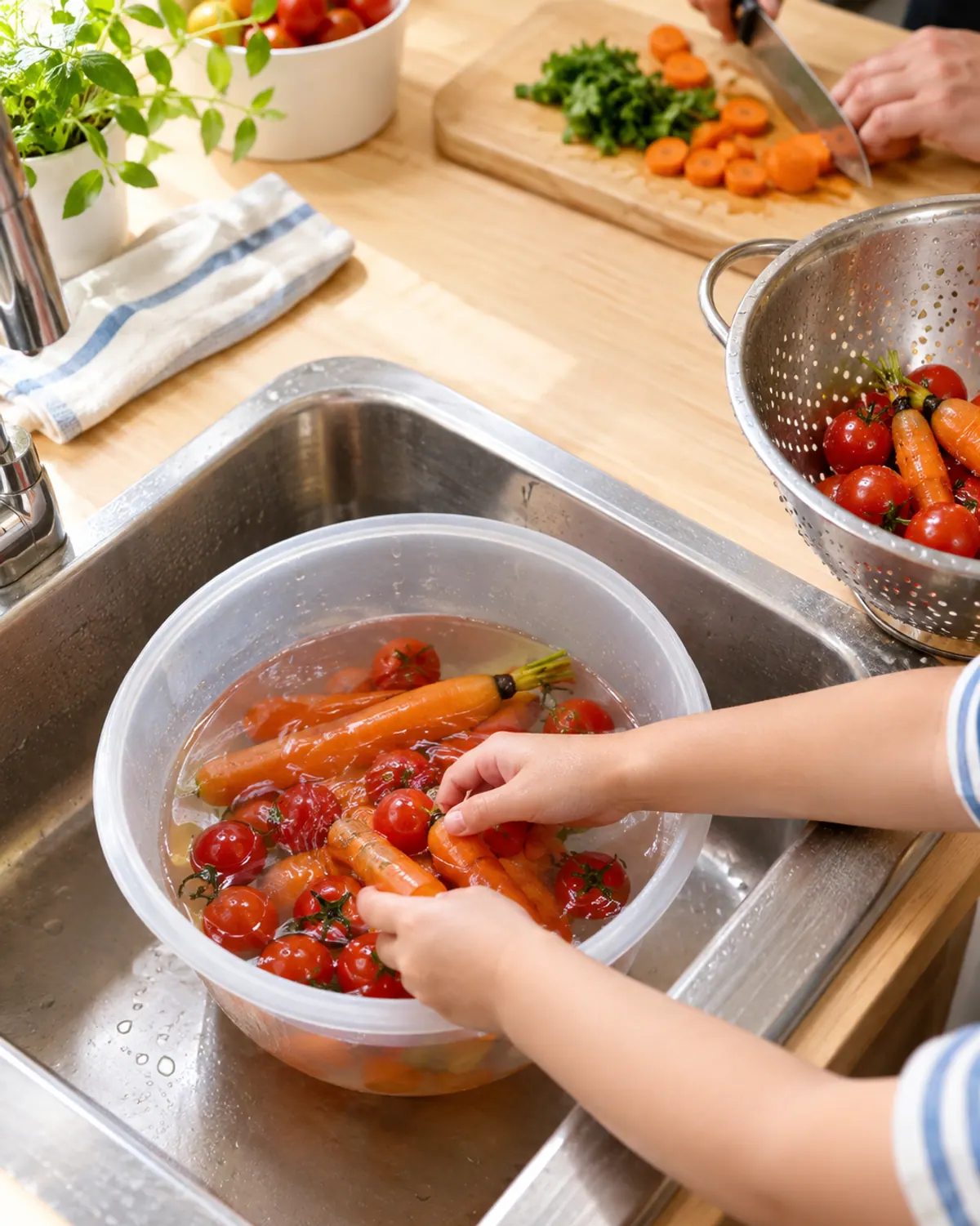
Give your child a real job while you cook: washing vegetables, tearing lettuce, setting the table or folding napkins. Kids like being useful, and you are not stuck refereeing a screen fight while the pan heats.
Ages: 3 to 8
Prep: None
Mess: Medium (water)
Supplies: a bowl, vegetables to wash, a step stool, a towel
Safety: use a stable step stool, keep knives and hot pans out of reach, and stay right beside your child at the counter.
- A kids apron makes the job feel official.
12Evening wind-down: audiobook and puzzle
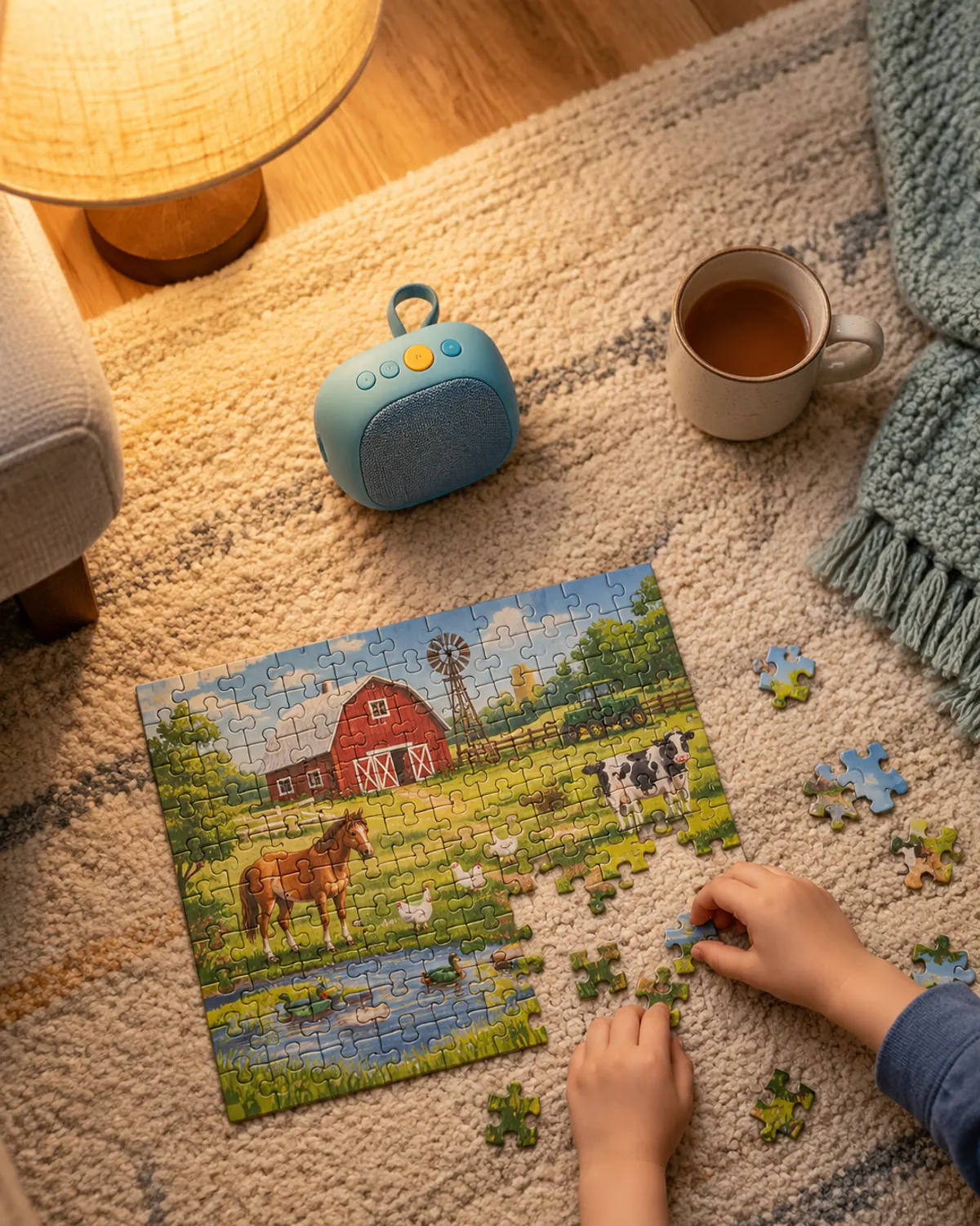
Dim the lights, put on an audiobook or calm music and set out a puzzle. Kids can listen and build at the same time, and it gives you a way to end the day without a show. Our toddler schedule chart shows how to make it part of bedtime.
Ages: 3 to 8
Prep: 1 minute
Mess: Low
Supplies: a puzzle, an audio player or speaker
Safety: keep cords out of reach of toddlers.
- The same audiobook every night for a week is a good thing, not a problem.
Stories and songs without a screen for car rides and wind-down time.
13Car rides: an activity bag
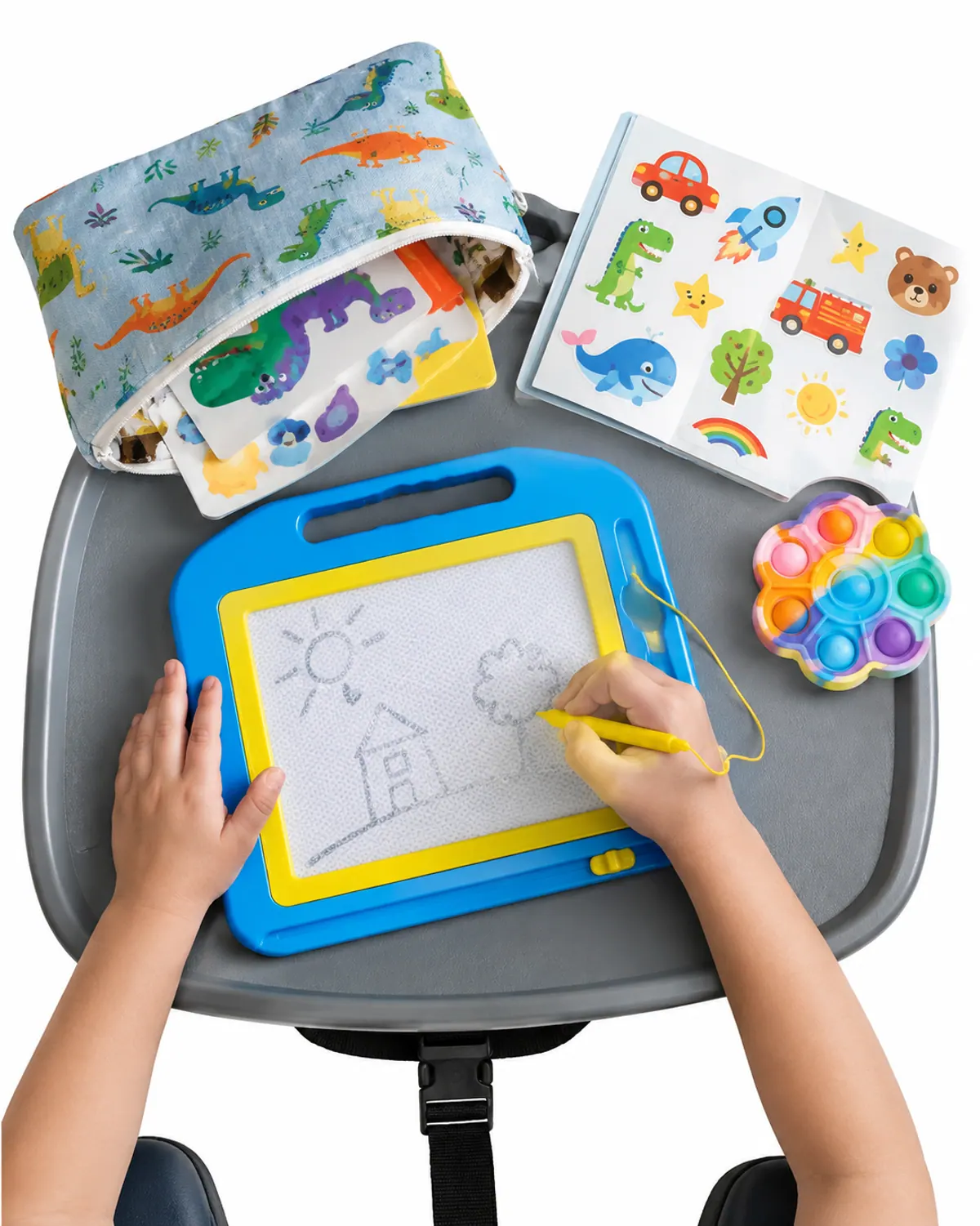
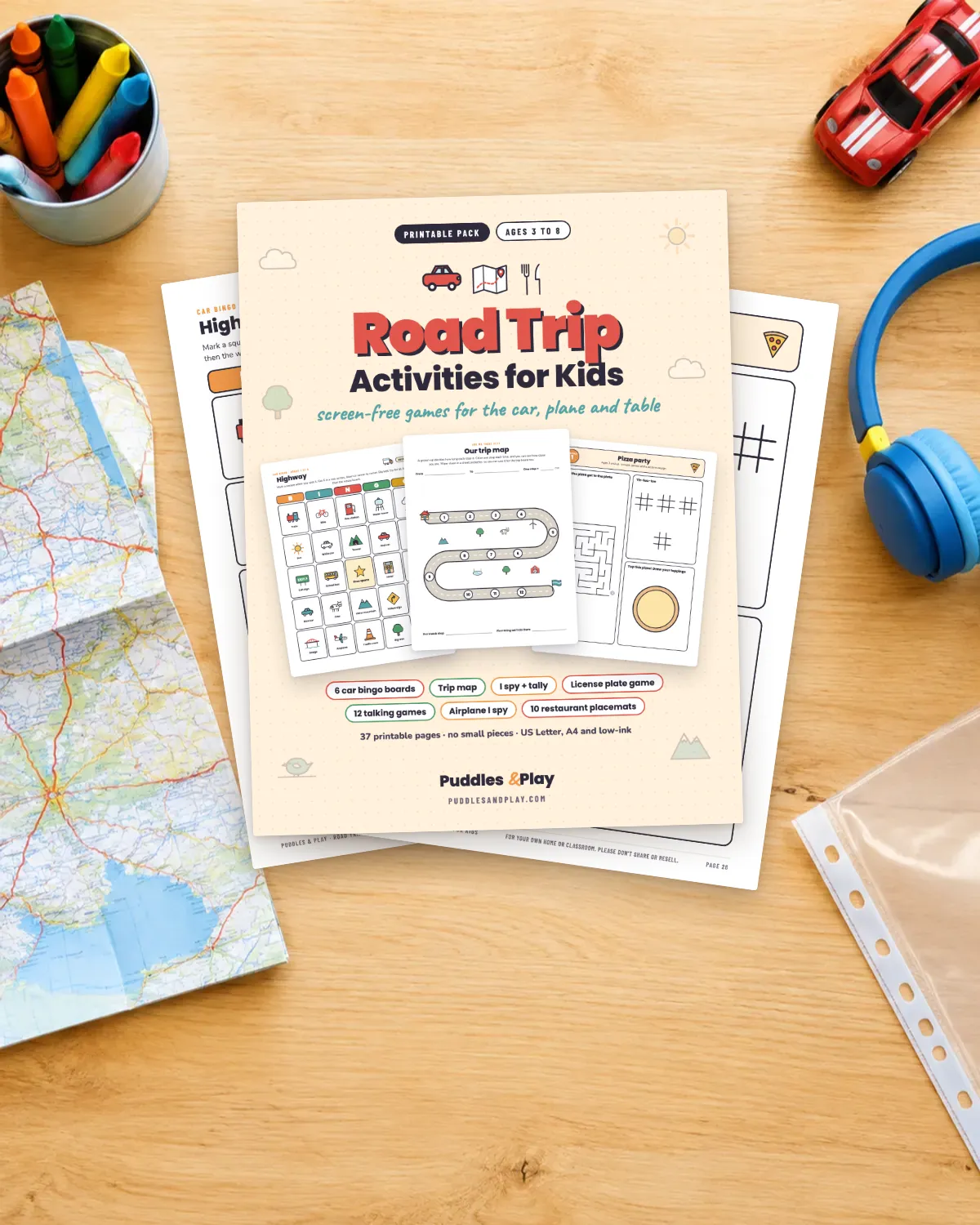
Pack one bag that lives in the car: a magnetic drawing board, a sticker book, a fidget toy and a few small books. Rotate one item each week so it feels new. For longer drives, our road trip activities for kids have car bingo and printable games.
Ages: 2 to 8
Prep: Pack once
Mess: None
Supplies: a pouch, a magnetic drawing board, a sticker book, a fidget toy
Safety: nothing heavy or hard on a car seat tray, since loose objects can fly in a sudden stop.
- Only use the car bag in the car so it stays special.
Mess-free drawing for car seats, waiting rooms and restaurants.
Heading out to eat or on a long drive this winter? The Road Trip and Restaurant Pack has car bingo cards and printable restaurant placemats to keep kids busy without a phone.
How to set up a quiet bin for independent play
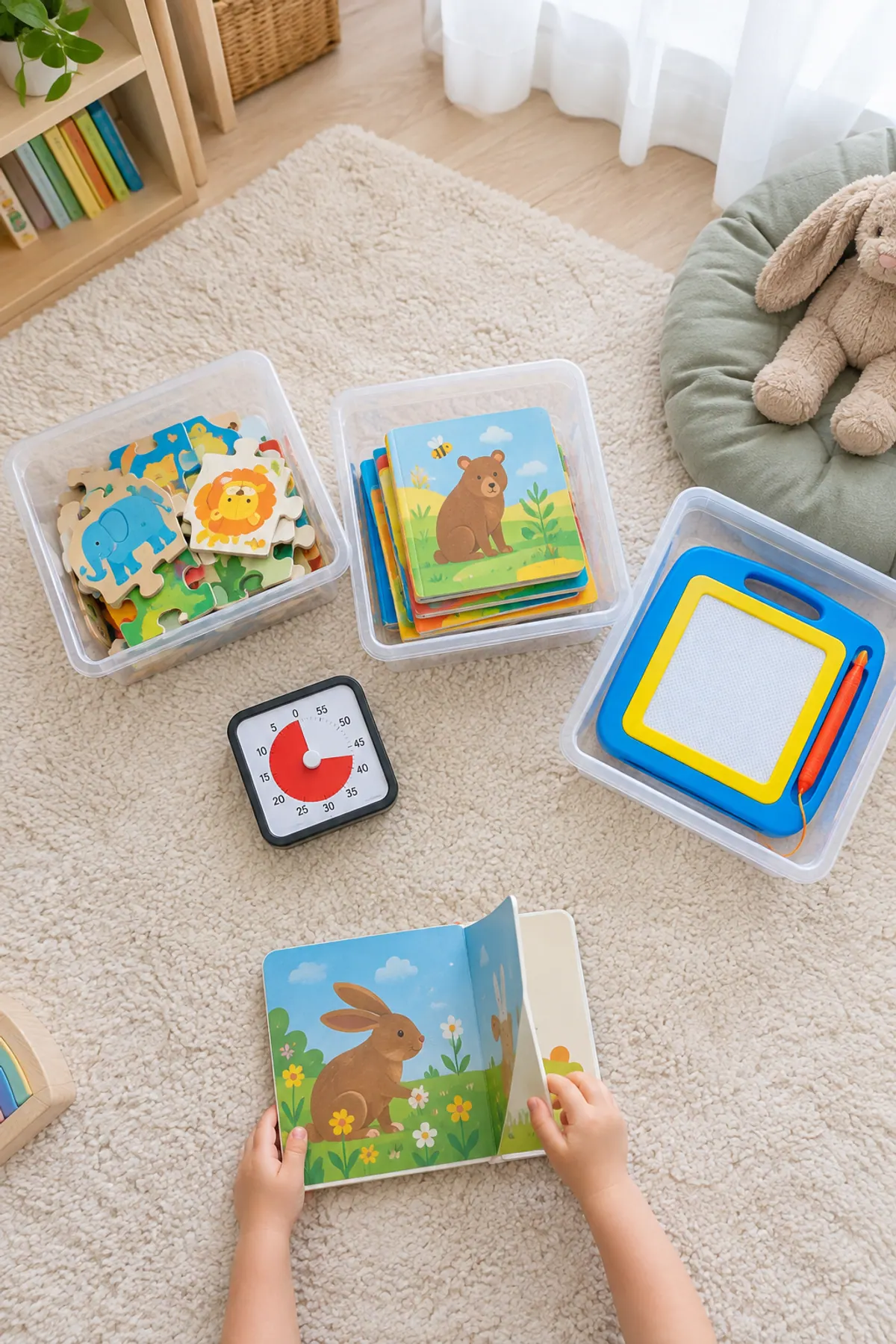
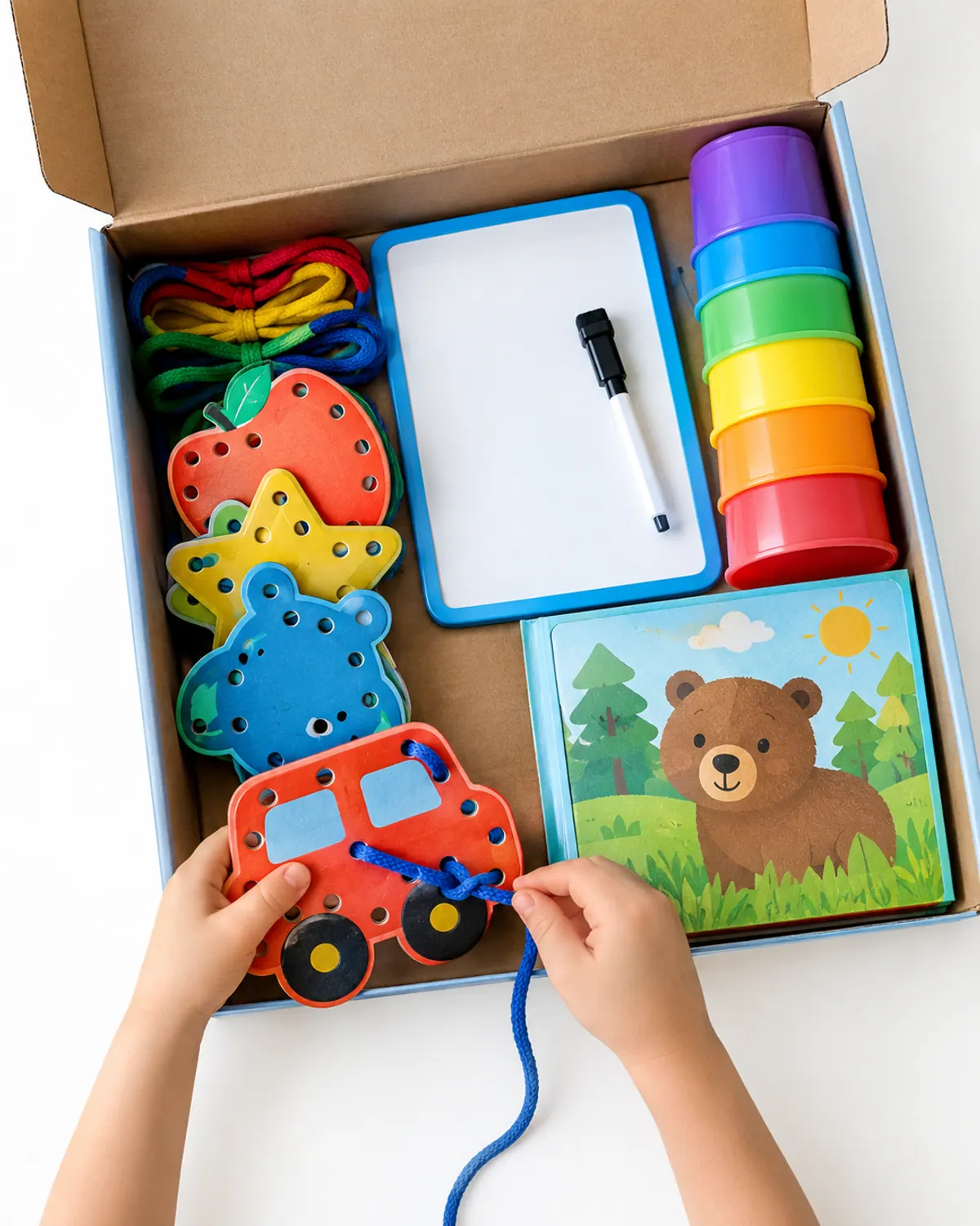
A quiet bin is a box of special activities that only comes out at one time of day: quiet time, a work call or a sibling's nap. Because it is not available all day, it holds attention much longer than the regular toy shelf. Our quiet time guide covers how to build up to an hour.
What to put in a quiet bin
How much screen time is OK for kids?
The American Academy of Pediatrics suggests avoiding screens other than video chat for children under 18 months. For 18 to 24 months it suggests choosing high-quality programs and watching with your child, and for ages 2 to 5 about 1 hour a day of high-quality programming.
For kids 6 and up, the AAP suggests a family media plan rather than a single number, with screens kept out of meals and bedtime. You can build one with the AAP Family Media Plan tool.
Reality
- Short, simple activities count; 10 minutes of play is still play
- Boredom is fine and often leads to the best games
- Swapping one moment a day is a real change
Myth
- Screen-free means hours of planned crafts
- Kids need constant entertainment
- You have to cut all screens at once
Screen-free activities for the holidays and winter break
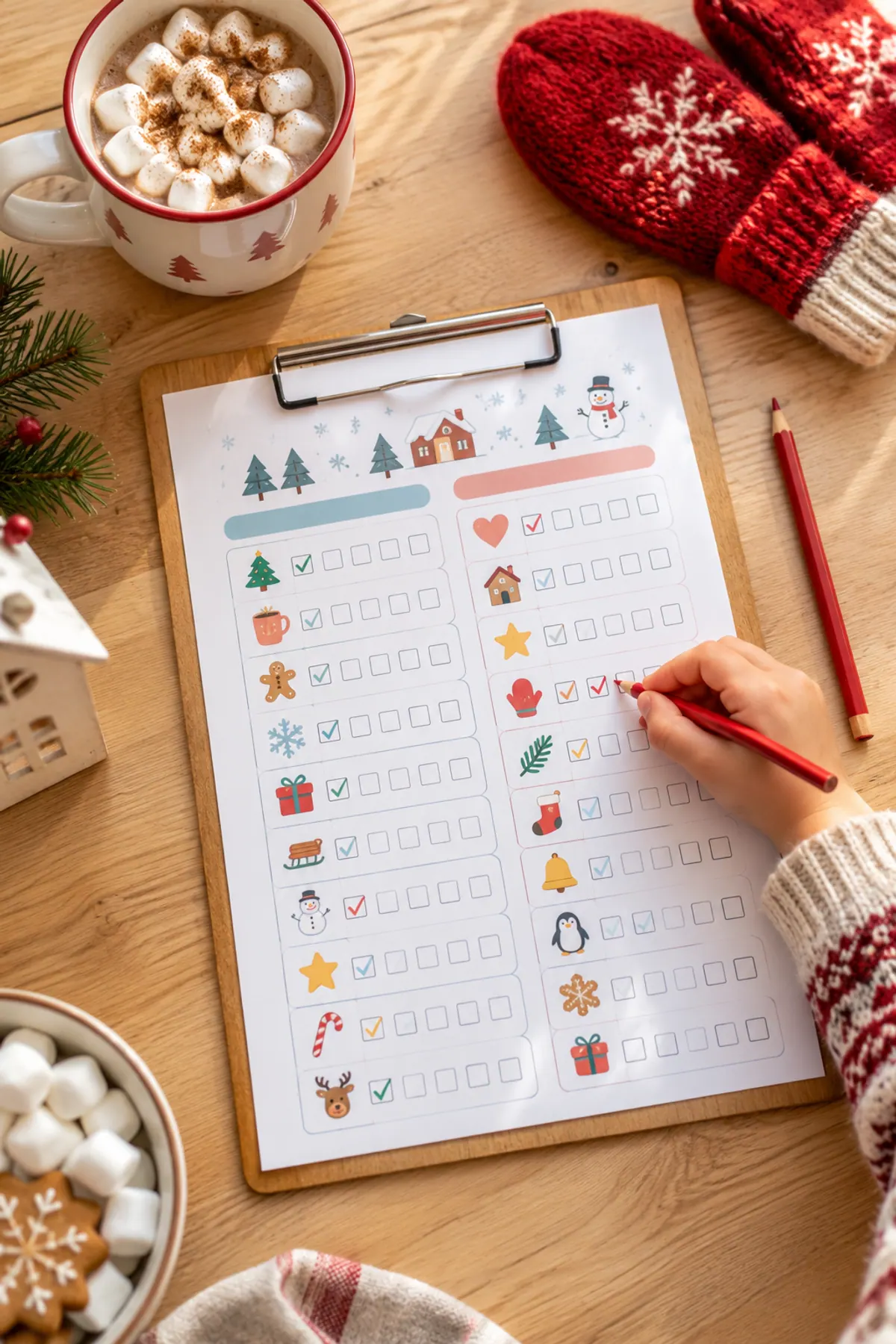
The two weeks of winter break are when screen time climbs most. Our winter break two-week plan gives one easy activity per day, and the Christmas Activity Pack adds a 24-day countdown, Christmas bingo for up to 6 players and big coloring pages for ages 3 to 8.
Shopping for gifts? Our list of toddler Christmas gifts that encourage play, not screens is a good place to start.
Screen-free activity supplies
The supplies that cover most of this guide
- Most used
Magnetic building tiles
Typically $25 to $60
The open-ended toy kids 3 to 8 return to most when screens go off.
Check price on Amazon for Magnetic building tiles -
Playdough tools set with cookie cutters
Typically $10 to $20
Cutters, rollers and stampers turn one tub of dough into 30 quiet minutes.
Check price on Amazon for Playdough tools set with cookie cutters -
Floor puzzles 24 to 48 pieces
Typically $10 to $20
A good evening activity for 3 to 6 year olds, alone or with you.
Check price on Amazon for Floor puzzles 24 to 48 pieces -
Magnetic drawing board
Typically $10 to $18
Mess-free drawing for car seats, waiting rooms and restaurants.
Check price on Amazon for Magnetic drawing board -
Wooden lacing cards
Typically $10 to $18
A quiet bin staple that builds fine motor skills.
Check price on Amazon for Wooden lacing cards -
Jumbo sidewalk chalk
Typically $8 to $15
Thick sticks that small hands can grip and that survive being dropped.
Check price on Amazon for Jumbo sidewalk chalk -
Jumbo craft pom-poms (2 inch)
Typically $6 to $12
Big enough for a toddler posting game, and reused in a dozen crafts.
Check price on Amazon for Jumbo craft pom-poms (2 inch) -
Screen-free kids audio player
Typically $50 to $100
Stories and songs without a screen for car rides and wind-down time.
Check price on Amazon for Screen-free kids audio player
Frequently asked questions
What are some screen-free activities for kids?
Playdough trays, magnetic tiles, puzzles with an audiobook, card games, blanket forts, sidewalk chalk, water play, a quiet bin and real kitchen jobs. The guide above sorts them by age with prep and mess for each.
How do I keep my toddler busy without screens?
Use short, repeatable setups: a pom-pom posting box, water play on a tray or a board book basket. Stay nearby, set up in under 2 minutes and repeat the same activity for a week.
What can kids do instead of screens after school?
Have a snack ready at the table with a sketchbook or puzzle. Most kids want a calm reset after school, and food plus drawing gives them that without a tablet.
How much screen time should a 3 year old have?
The American Academy of Pediatrics suggests about 1 hour a day of high-quality programming for ages 2 to 5, watched with a parent when you can.
How do I start cutting screen time?
Pick one moment of the day, such as dinner prep, and swap the screen for one ready activity. Once that sticks, move to the next moment.

Save it for later
Pin this to your Outdoor & Rainy Day board so it's there when you need it.
Save to Pinterest