This post contains affiliate links. As an Amazon Associate we earn from qualifying purchases, at no extra cost to you. Read our disclosure.
Safety first: Always supervise little ones, and skip small parts for kids who still put things in their mouths. Please read our play safety notes before you start.
Key takeaways
- Fine motor skills are small hand and finger movements; gross motor are big body movements.
- Group activities by skill: pinch, grasp with tools, post, thread, pour, squeeze and draw.
- 5 to 15 minutes a day is plenty for a toddler.
- Under 3, anything that fits through a toilet paper tube stays out.
- Talk to your pediatrician if your child loses skills or does not use their hands to play.
In this post9 sections
- What are fine motor skills for toddlers?
- What fine motor skills should a 2 year old have?
- 21 easy fine motor activities for toddlers, by skill
- How can I improve my toddler's fine motor skills at home?
- Myths vs reality
- Christmas fine motor activities for toddlers
- When should I talk to a doctor about fine motor skills?
- Fine motor toys worth buying
- FAQ
| Question | Short answer |
|---|---|
| What they build | Small muscles in the hands and fingers, plus hand and eye working together |
| Best ages for this list | About 18 months to 3 years |
| How long per activity | 5 to 15 minutes is plenty |
| Cost | Mostly free: pantry, recycling bin, craft drawer |
| Biggest safety rule | Under 3, anything that fits through a toilet paper tube stays out |
What are fine motor skills for toddlers?
Fine motor skills are the small movements of the hands and fingers: pinching, twisting, poking, squeezing and letting go on purpose. Gross motor skills are the big ones, like running and climbing. Toddlers need both, and play is how they practice.
Fine motor activities for toddlers are simply play that makes those small muscles work. Tongs, play dough, stickers and lacing all count. You do not need a kit or a worksheet.
What fine motor skills should a 2 year old have?
The CDC milestone checklists list hand skills at each age. Between 2 and 3, the checklists include eating with a spoon, turning book pages one at a time, using hands to twist things like doorknobs, and, by 3, drawing a circle after you show how. Every child gets there on their own timeline.
If you have questions about your child's hand skills, bring them to your pediatrician or ask about a free developmental screening. The CDC's free Milestone Tracker app is another simple way to keep notes.
21 easy fine motor activities for toddlers, by skill
Group activities by the movement they practice, then rotate one from each group through the week.
Ages: 18 months to 3 unless noted.
Prep: under 5 minutes for most.
Mess: low, except play dough and water.
Safety: sit with your toddler for every activity, and use the toilet paper tube test on every small item.
| Skill | Activities | Ages |
|---|---|---|
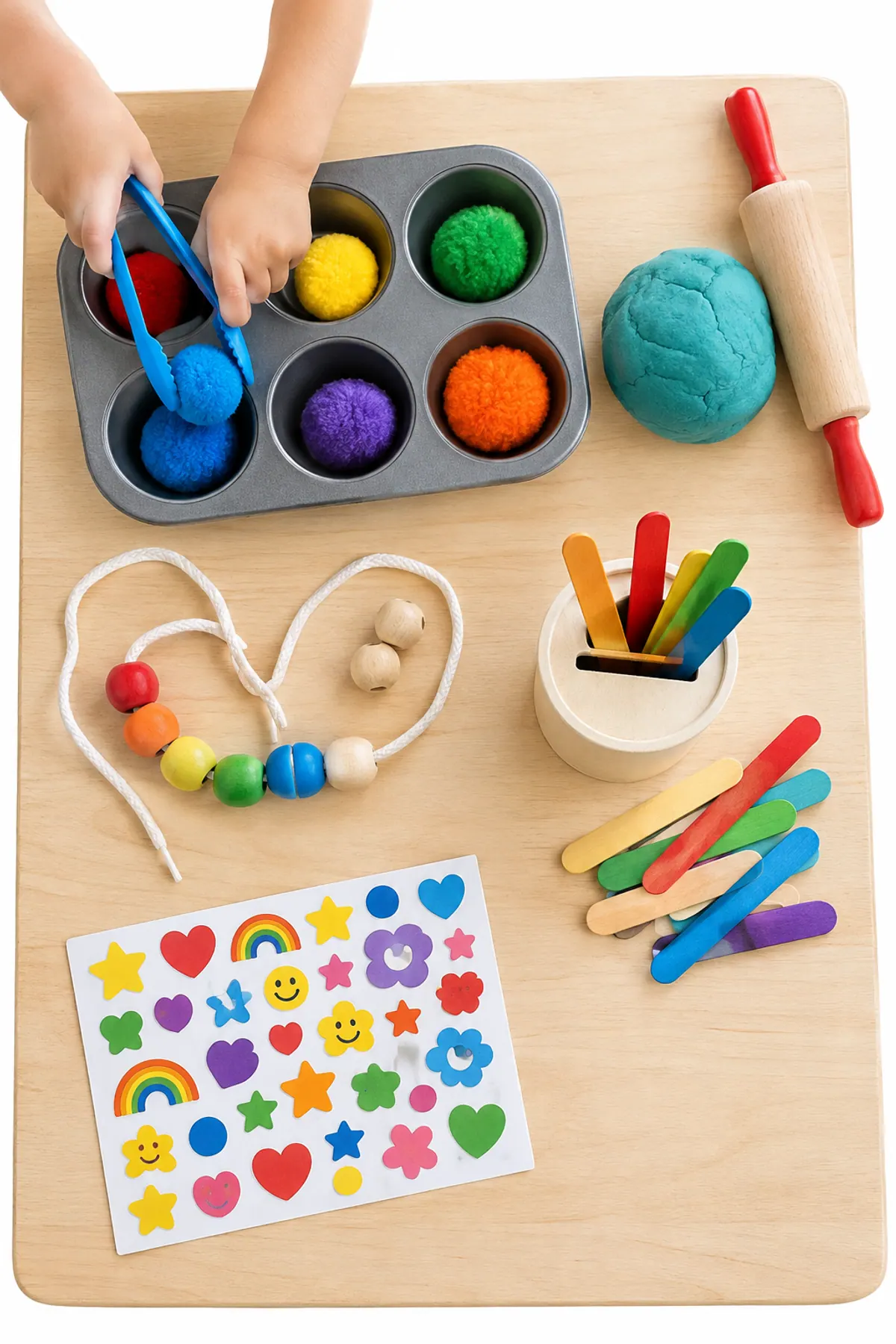
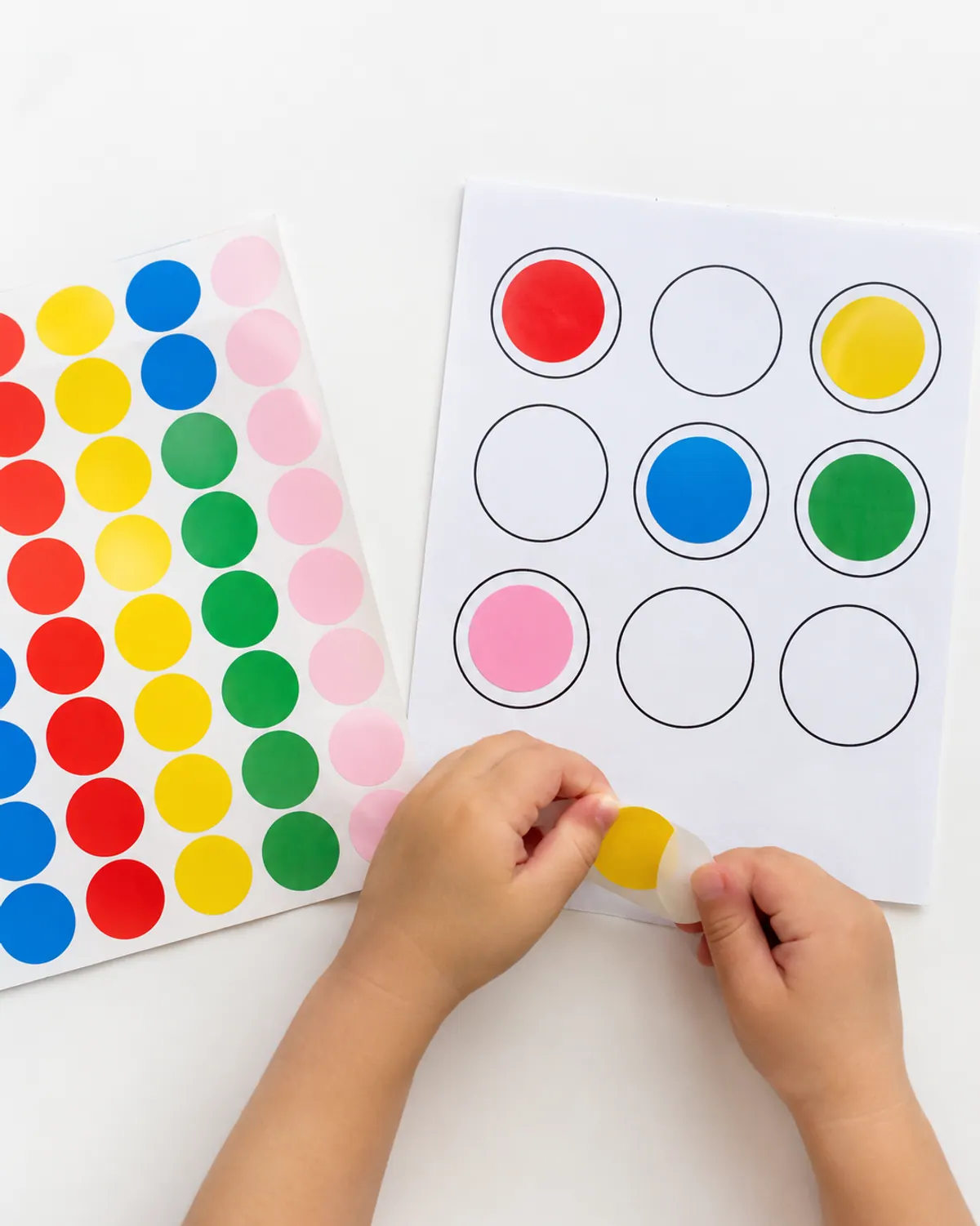
| Pinch | 1. Peel big stickers 2. Pull scarves from a tissue box 3. Pick up O-shaped cereal (taste-safe) 4. Clothespins on a box edge | 18 months+ (clothespins 2+) |
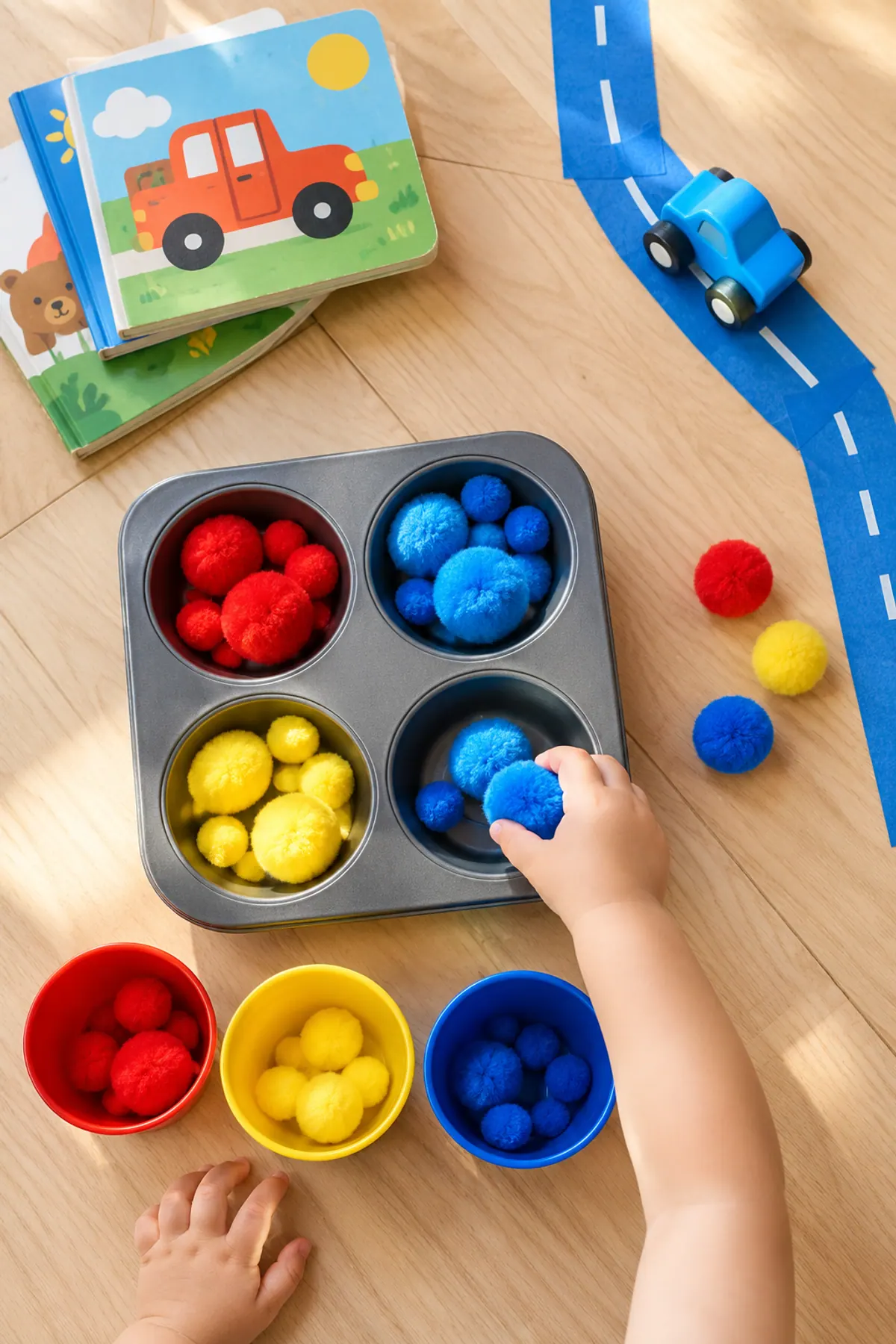
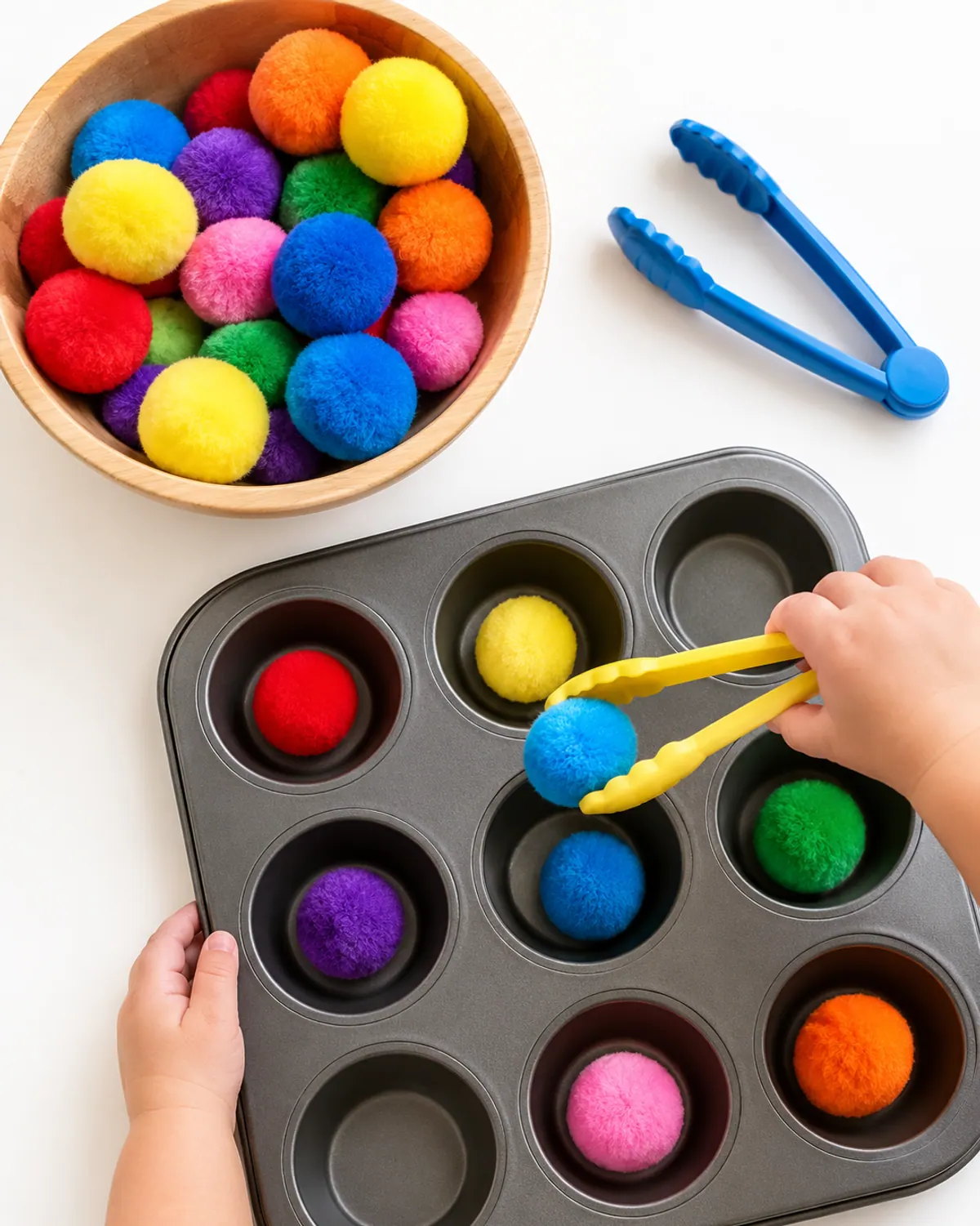
| Grasp with tools | 5. Tongs and jumbo pom poms 6. Scoop with a spoon from bowl to bowl 7. Chunky pegboard | 2+ |
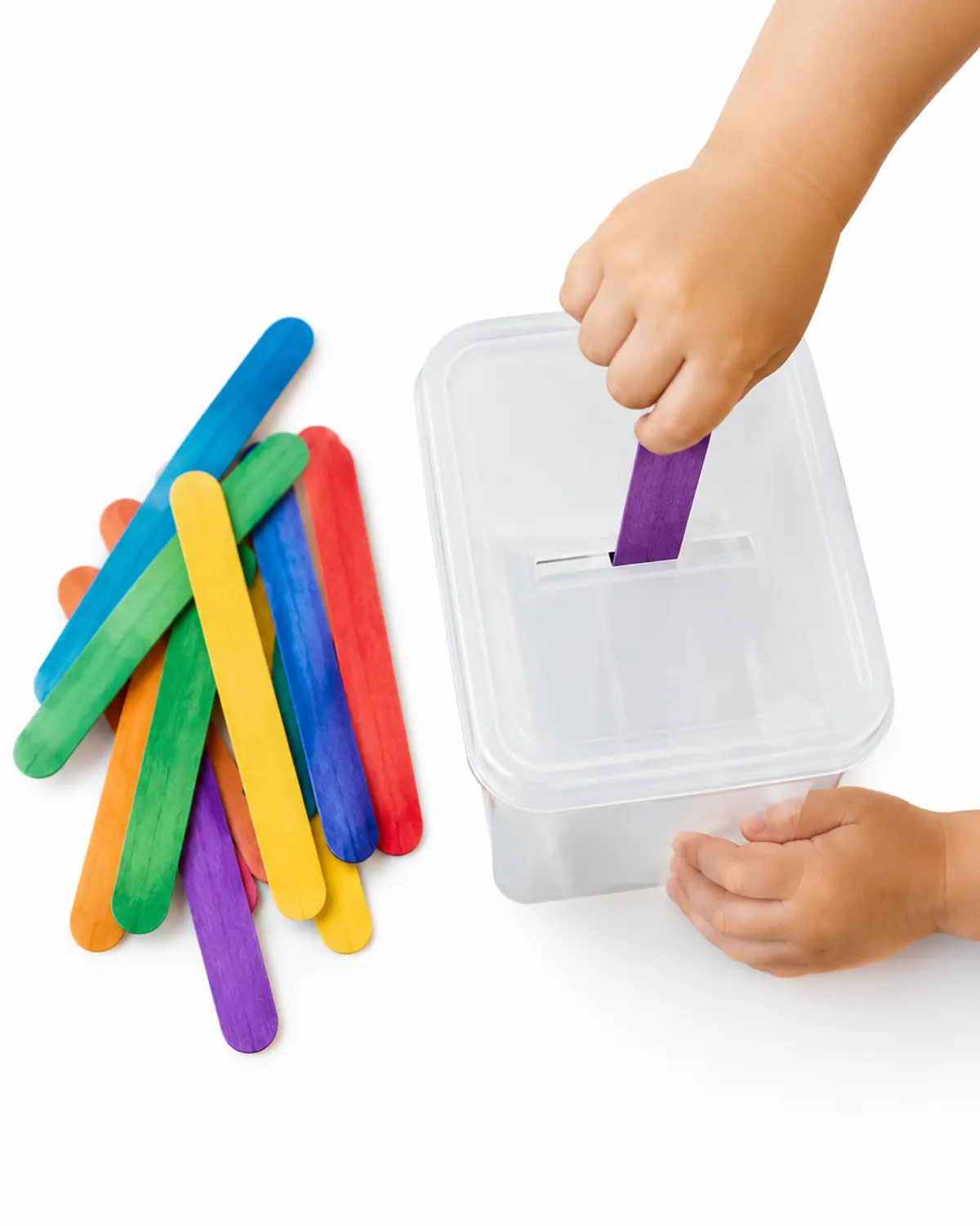
| Push and post | 8. Craft sticks into a slot 9. Straws into a colander 10. Pipe cleaners into a colander 11. Coins swapped for big chips into a piggy bank slot | 18 months+ |
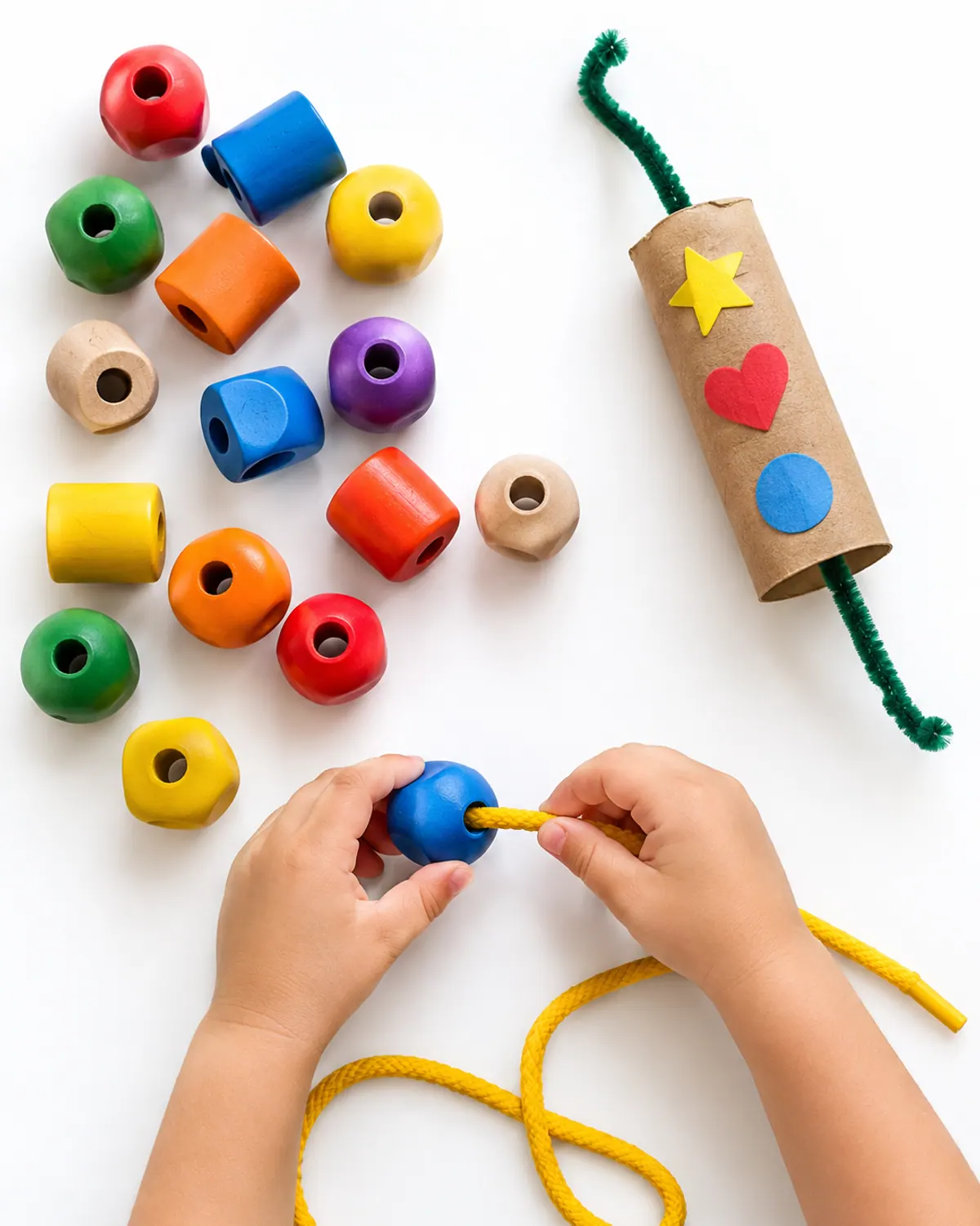
| Thread | 12. Jumbo beads on a stiff lace 13. Cardboard tubes on a pipe cleaner 14. Pasta tubes on a pipe cleaner (3+) | 2 to 3+ |
| Pour | 15. Water from a small pitcher to cups 16. Dry oats between cups | 2+ |
| Squeeze and twist | 17. Play dough rolling and pressing 18. Squeeze sponges in water 19. Twist lids on jars 20. Spray bottle on a window | 2+ |
| Draw | 21. Chunky crayons on paper taped to the table | 18 months+ |
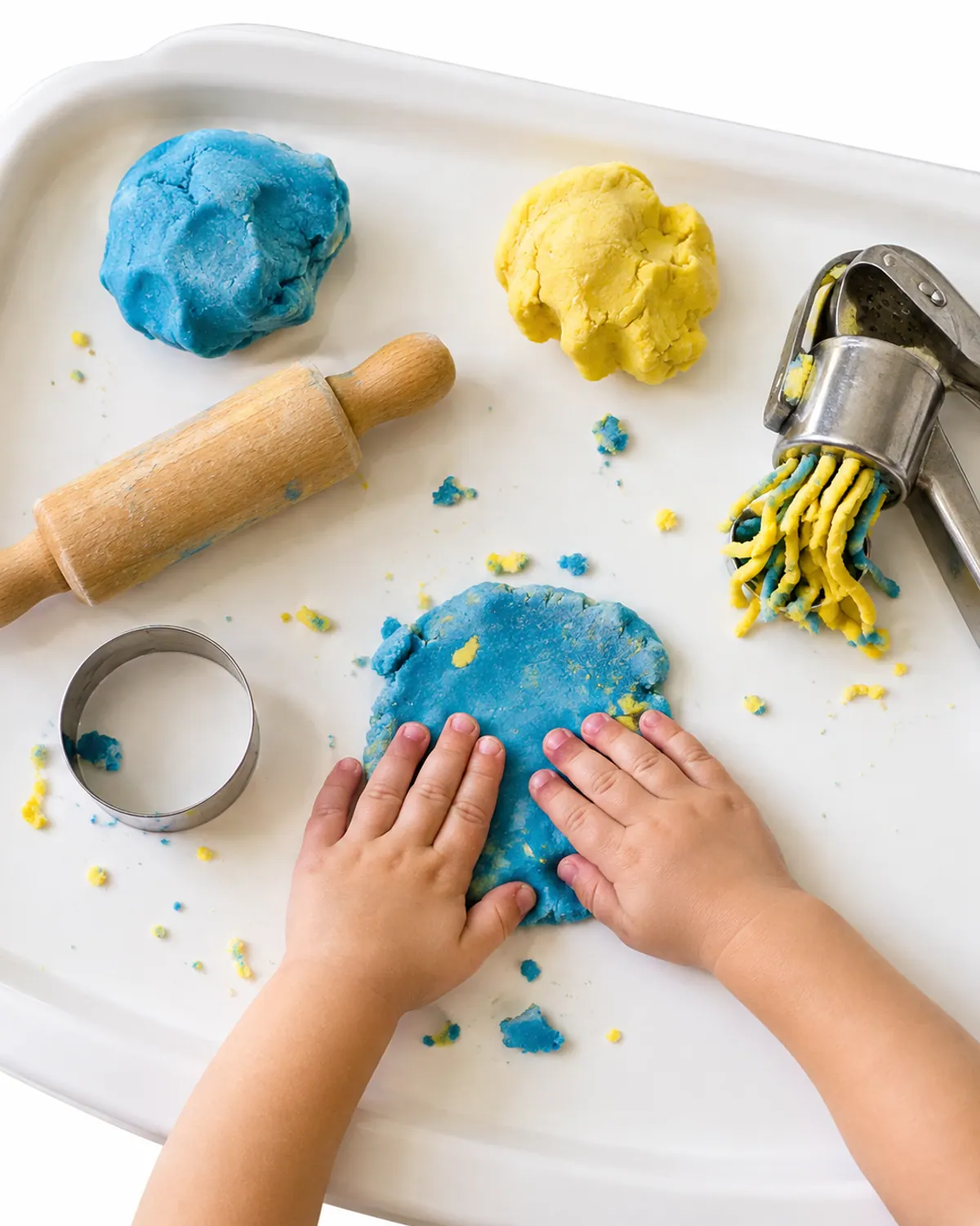
Play dough may be the best all round tool here. Pushing, rolling and squeezing it works every muscle in the hand. Homemade dough is salty and not for eating, so keep watch for tasting.

How can I improve my toddler's fine motor skills at home?
Short and often beats long and rare. Five minutes with tongs before lunch does more than one big craft on Saturday. Put one fine motor tray out each morning and change it every few days.
Everyday jobs count too. Let your toddler pull off socks, open snack containers with loose lids, turn board book pages and help wipe the table. Our learning activities for toddlers adds more low prep ideas, and sensory bin fillers by age covers scooping and pouring safely.
Myths vs reality
Reality
- Everyday play and jobs build fine motor skills
- Big items keep fine motor play safe under 3
- Ages are ranges; children develop at their own pace
- 5 to 15 minutes is a full session for a toddler
Myth
- You need special toys or worksheets
- Small beads and pom poms are needed for real practice
- A toddler who cannot thread yet is behind
- Longer sessions mean faster progress
Christmas fine motor activities for toddlers
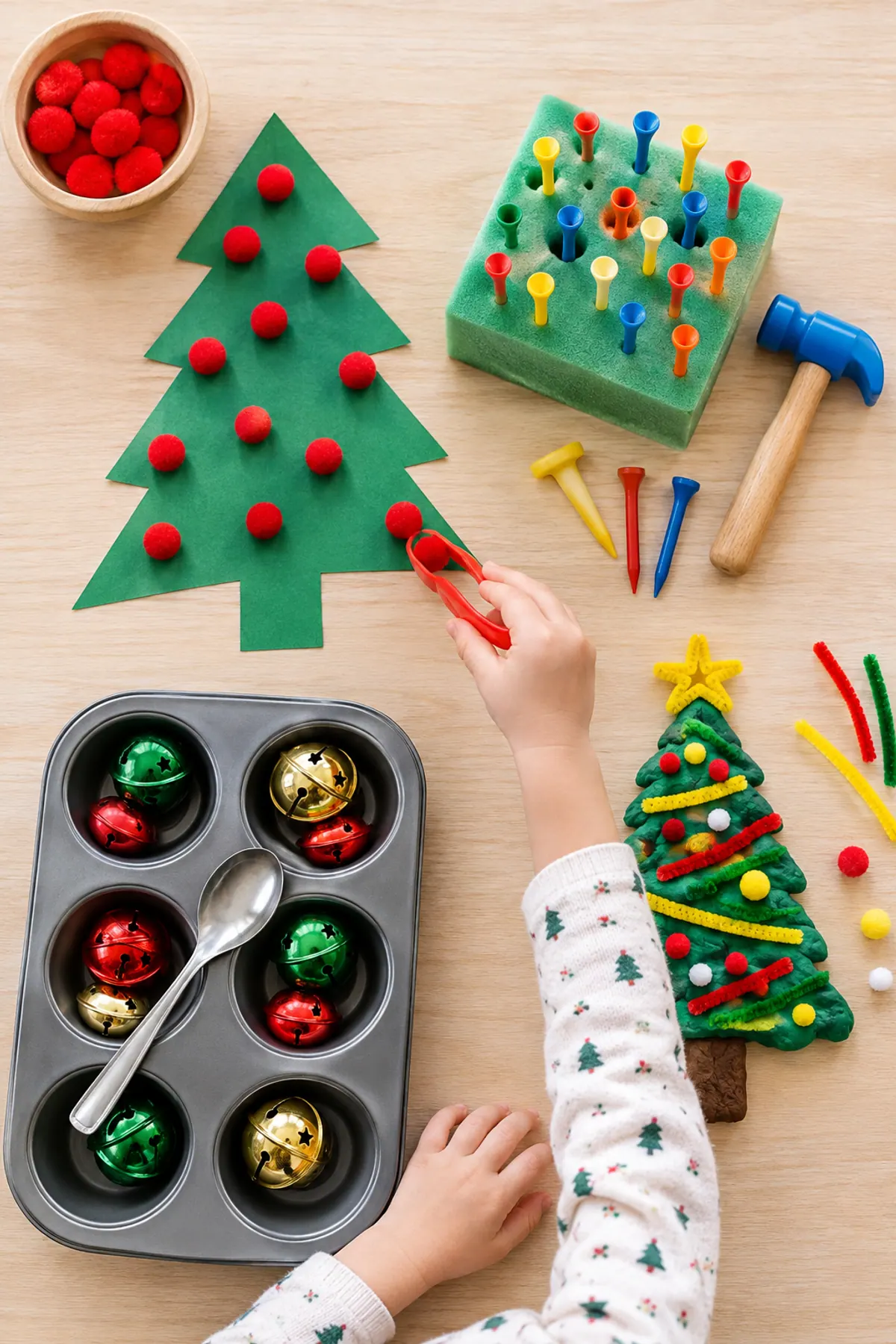
The Christmas version uses the same skills with seasonal props. Push pipe cleaners into holes on a cardboard tree, decorate it with jumbo pom pom ornaments using tongs, or peel star stickers onto a paper tree.
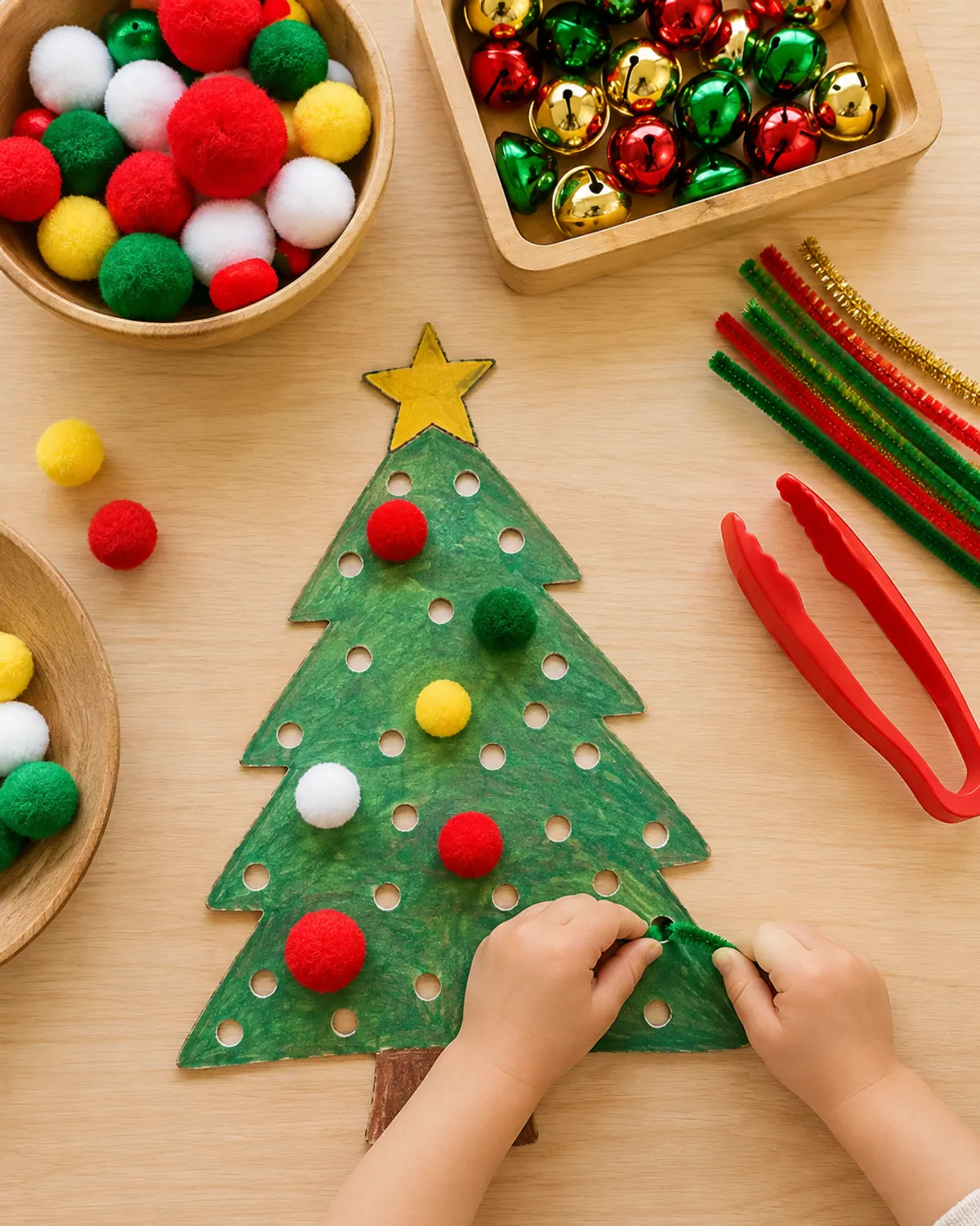
For more seasonal ideas, our Christmas activities for toddlers has 20 more, and Christmas activities for preschoolers sorts ideas by fine and gross motor for ages 3 to 5.
When should I talk to a doctor about fine motor skills?
Ask your pediatrician if your child loses a skill they had, does not use their hands to play with toys, or strongly favors one hand before about 18 months. The CDC also suggests acting early on any worry, since early support works best.
Fine motor toys worth buying
Fine motor toys for toddlers
- Start here
Toddler tongs and squeezers set
Typically $8 to $15
Chunky handles sized for small hands, for pom pom and food transfers.
Check price on Amazon for Toddler tongs and squeezers set -
Jumbo pom poms (2 inch)
Typically $7 to $12
Big enough to fail the toilet paper tube test, so safer for tong transfers.
Check price on Amazon for Jumbo pom poms (2 inch) -
Jumbo wooden lacing beads
Typically $10 to $18
Big beads and stiff tipped laces made for ages 2 to 3.
Check price on Amazon for Jumbo wooden lacing beads -
Chunky pegboard for toddlers
Typically $12 to $22
Big pegs to pinch, push and pull, a classic fine motor toy.
Check price on Amazon for Chunky pegboard for toddlers -
Play dough tool set
Typically $10 to $20
Rollers, cutters and a press that build hand strength while they play.
Check price on Amazon for Play dough tool set
Frequently asked questions
What is the difference between fine and gross motor skills?
Fine motor skills use the small muscles of the hands and fingers, like pinching and drawing. Gross motor skills use big muscles, like running, jumping and climbing.
What are good fine motor activities for a 2 year old?
Tongs with jumbo pom poms, play dough, peeling big stickers, posting craft sticks into a slot, threading jumbo beads and pouring water between cups.
How long should fine motor activities last for toddlers?
About 5 to 15 minutes. Stop while your toddler is still interested and bring it back another day.
Are pom poms safe for toddlers?
Only jumbo pom poms that are too big to fit through a toilet paper tube, and only with an adult sitting close. Small pom poms are a choking risk under 3.
Do toddlers need fine motor toys?
No. Kitchen tongs, play dough, a container lid with a slot and stickers work well. A pegboard or lacing beads are nice extras.
Save it for later
Pin this to your Learning Activities board so it's there when you need it.
Save to Pinterest