This post contains affiliate links. As an Amazon Associate we earn from qualifying purchases, at no extra cost to you. Read our disclosure.
Safety first: Always supervise little ones, and skip small parts for kids who still put things in their mouths. Please read our play safety notes before you start.
Key takeaways
- Under 3, or any child who still mouths things, use taste-safe fillers and stay within arm's reach.
- Use the toilet paper tube test: anything that fits through the tube is too small for kids under 3.
- Dry rice, dry pasta and dried beans are best for kids 3 and up who no longer mouth things.
- Never use water beads, dry flour, raw kidney beans or foam packing peanuts.
- Store dry fillers in lidded bins and toss any taste-safe filler the same day.
In this post12 sections
- What sensory bin fillers are safe for a 1 year old?
- Sensory bin fillers for 18 months to 3 (supervised)
- Pantry fillers for 3 and up: rice, pasta, oats and beans
- Non-food sensory bin fillers
- What is the cheapest sensory bin filler?
- What can I use instead of rice in a sensory bin?
- What should you not put in a sensory bin?
- Myths vs reality
- Seasonal sensory bin fillers
- How do you store sensory bin fillers?
- Sensory bin supplies
- FAQ
| Age | Best fillers | Type | Adult |
|---|---|---|---|
| 12 to 18 months | Cooked pasta, rolled oats, O-shaped cereal, water with cups | Taste-safe only | Within arm's reach |
| 18 months to 3 | Oats, cooked pasta, real snow, big scarves, jumbo pom-poms | Taste-safe plus large items | Within arm's reach |
| 3 and up | Dry rice, dry pasta, chickpeas, kinetic sand, crinkle paper | Small parts, not for eating | Nearby, checking in |
| Any age | Water beads, dry flour, raw kidney beans, foam peanuts | Never use | Leave them out |
What sensory bin fillers are safe for a 1 year old?
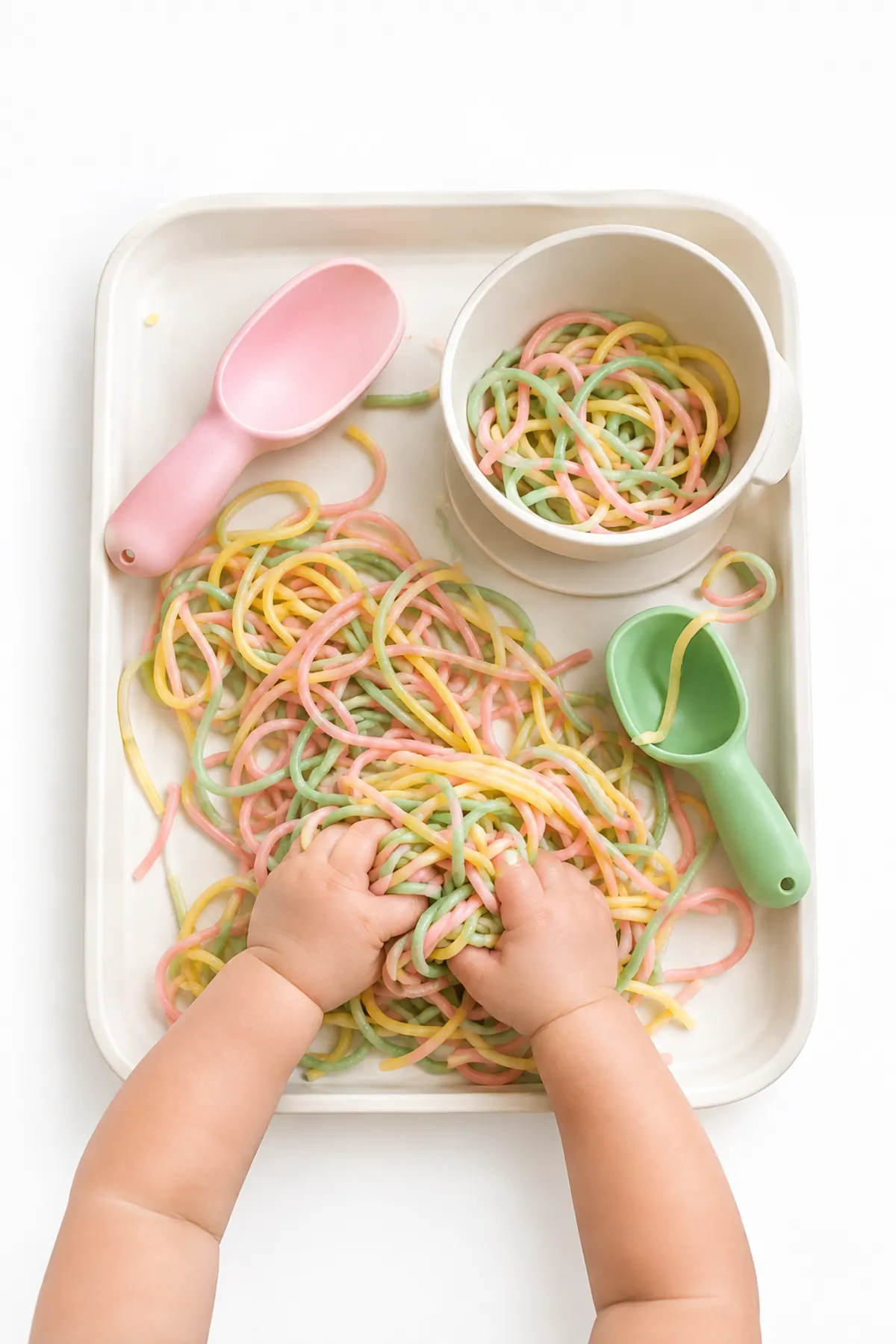
For a 1 year old, only use fillers that are fine if they end up in the mouth, because they will. Some health sites, including WebMD, suggest waiting until about 18 months for classic sensory bins at all. So for 12 to 18 months, think of it as a taste-safe tray with you sitting right beside it, not a bin your child plays in alone.
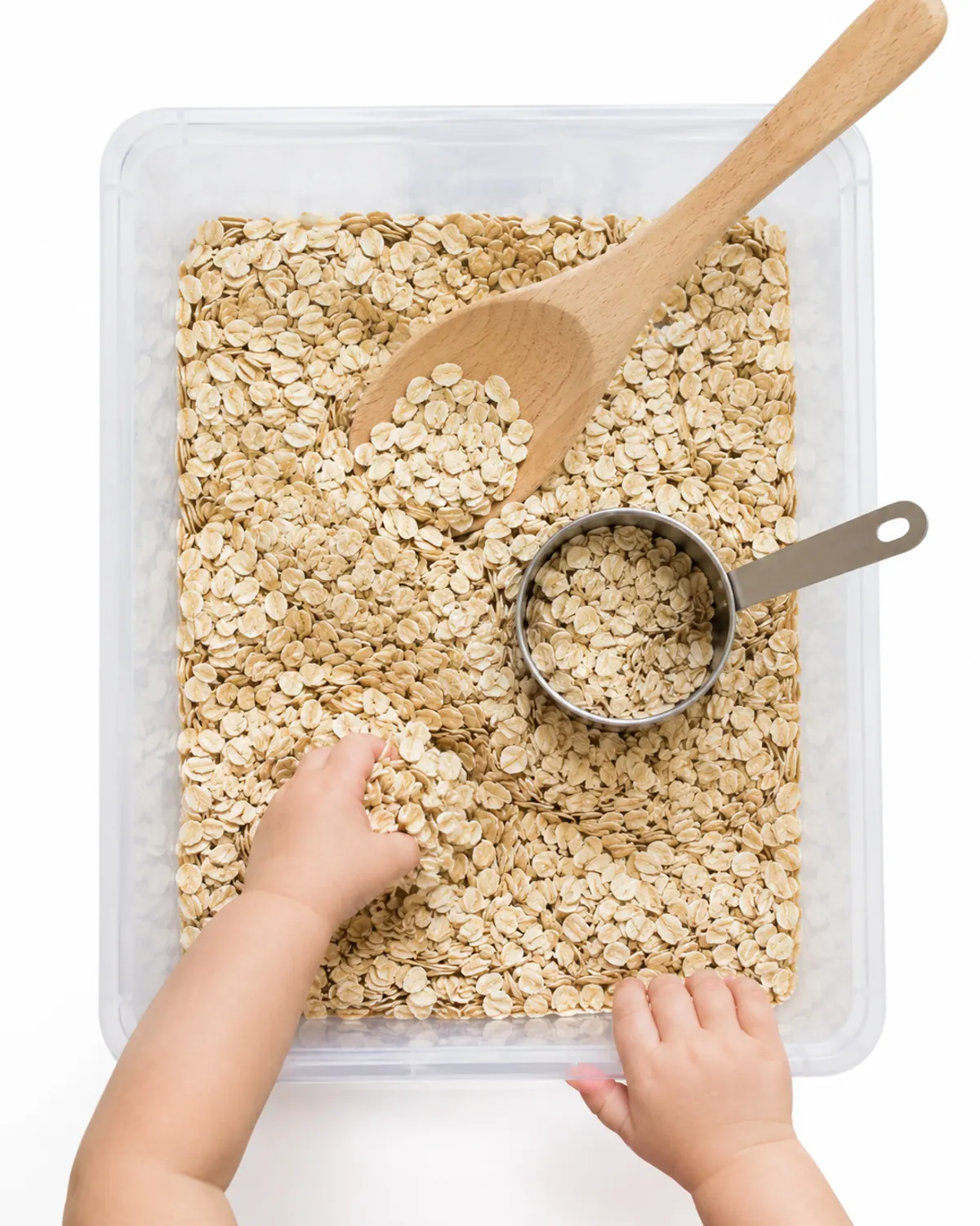
Taste-safe fillers for 12 to 18 months
Taste-safe means the food is fine to taste, not that you can walk away. The AAP notes that most choking deaths happen in children under 5, so keep scoops and cups big and stay close.
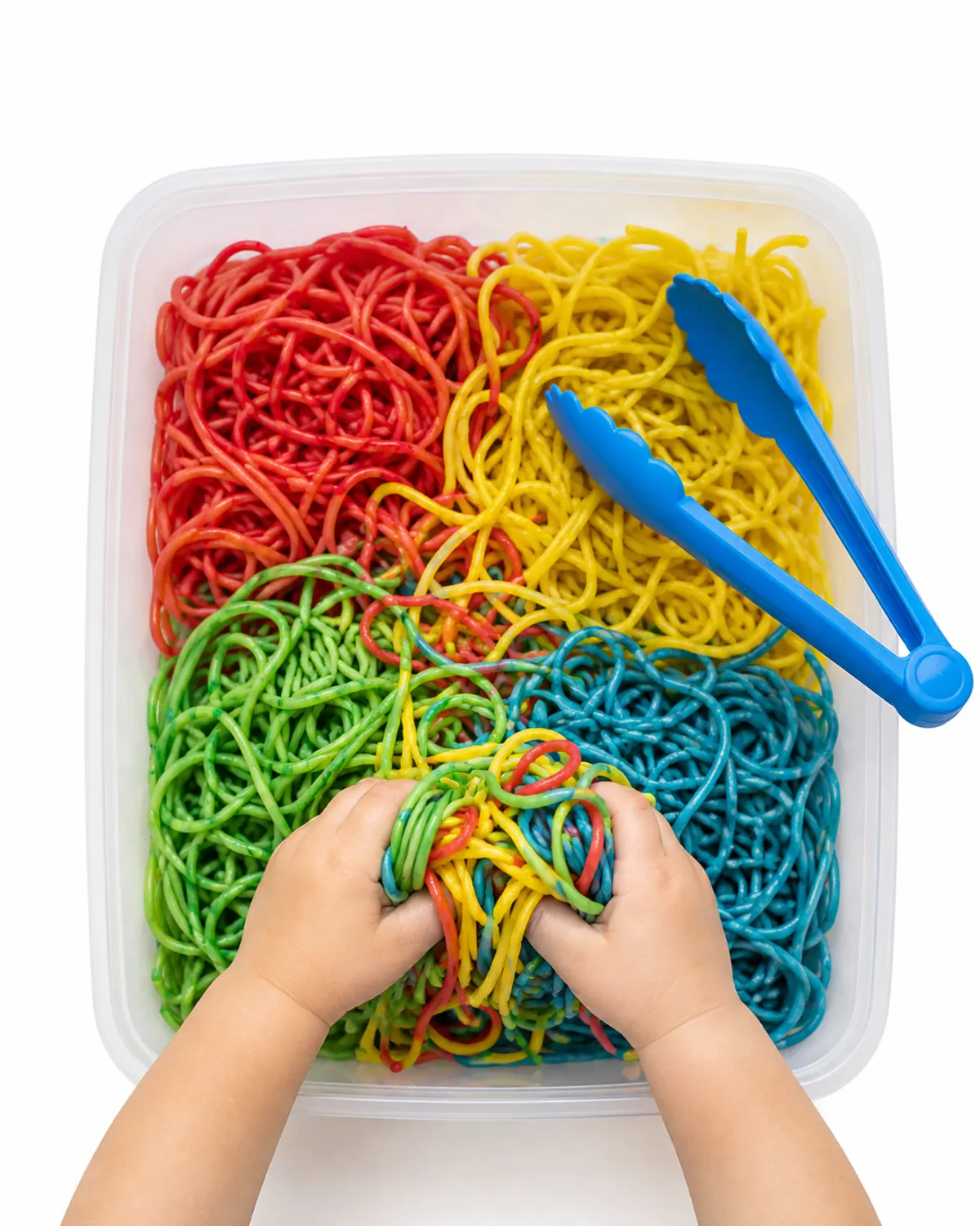
Sensory bin fillers for 18 months to 3 (supervised)
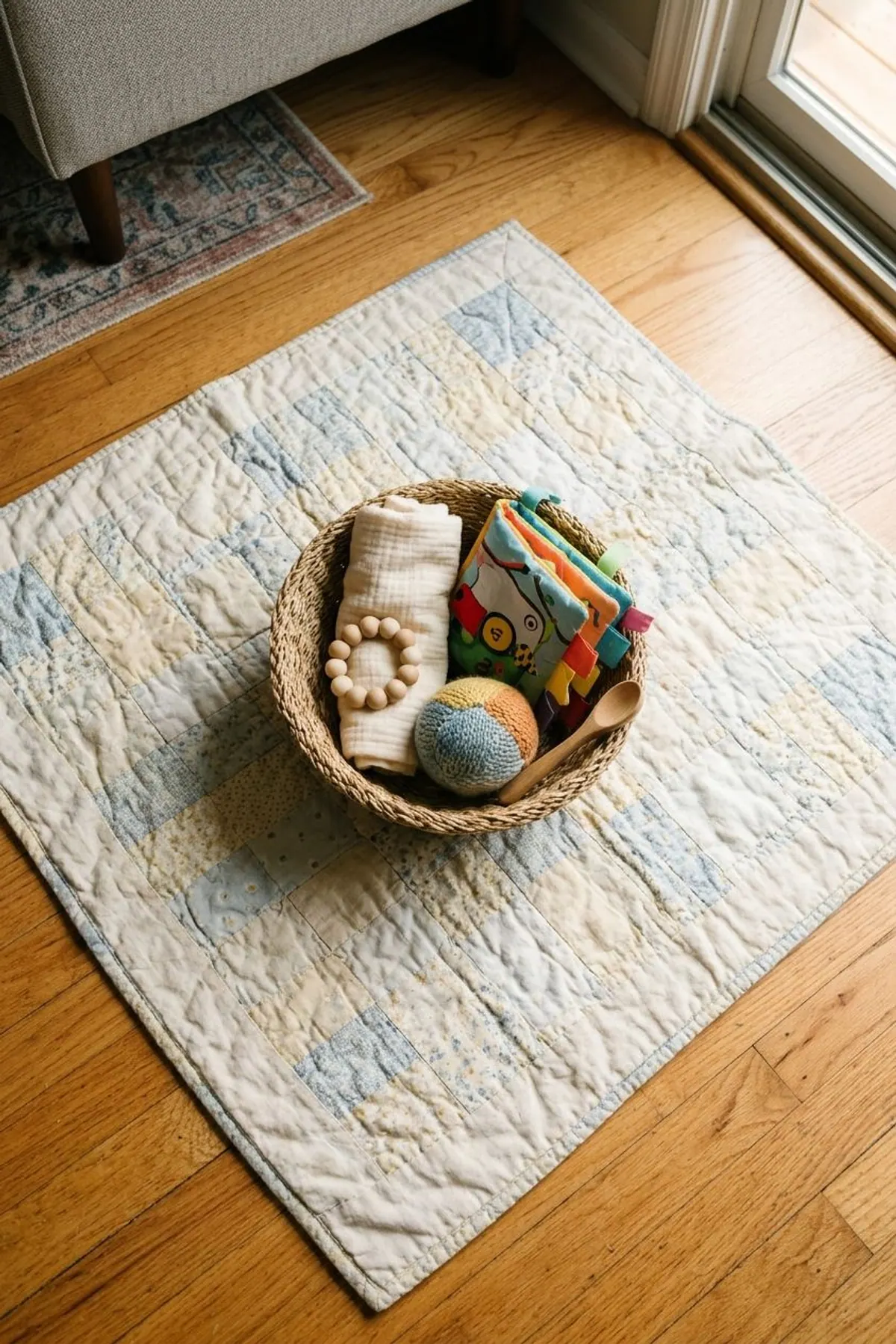
Between 18 months and 3, most kids still mouth things now and then, so the rule is the same: taste-safe fillers or items too big to swallow. The CPSC small parts rule says anything that fits entirely inside its test cylinder is a choking hazard for children under 3. At home, an empty toilet paper tube is a slightly more cautious stand-in. If it slides through, it stays out of the bin. Our play safety page has the full rule.
Good picks at this age:
- Oats and cooked pasta, now with funnels and muffin tins
- Real snow in a tub on a towel, with mittens on
- Big scarves or fabric squares in a tissue box
- Jumbo pom-poms about 2 inches wide, after the tube test
- Cotton balls for scooping, only while you sit with them
Pantry fillers for 3 and up: rice, pasta, oats and beans
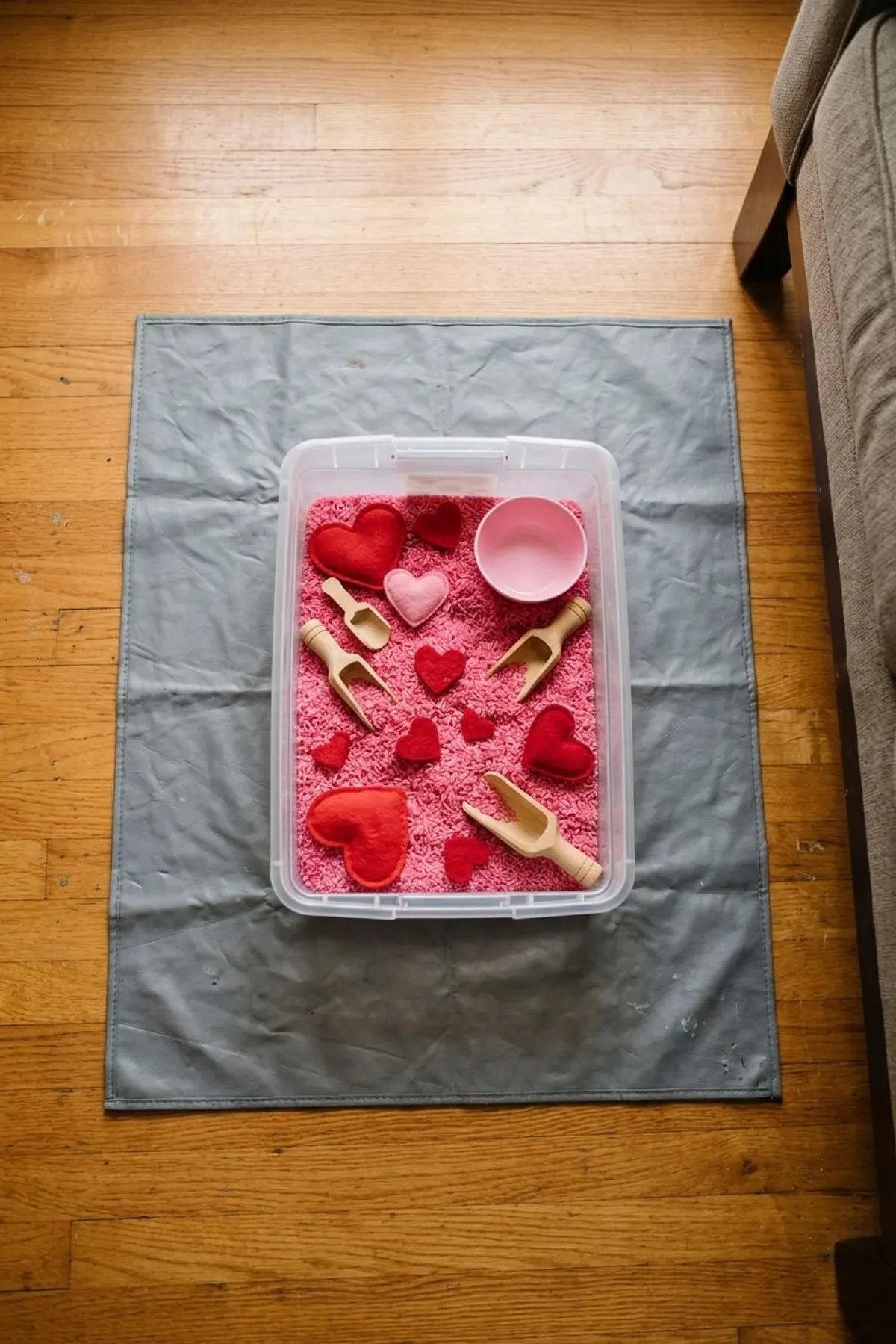
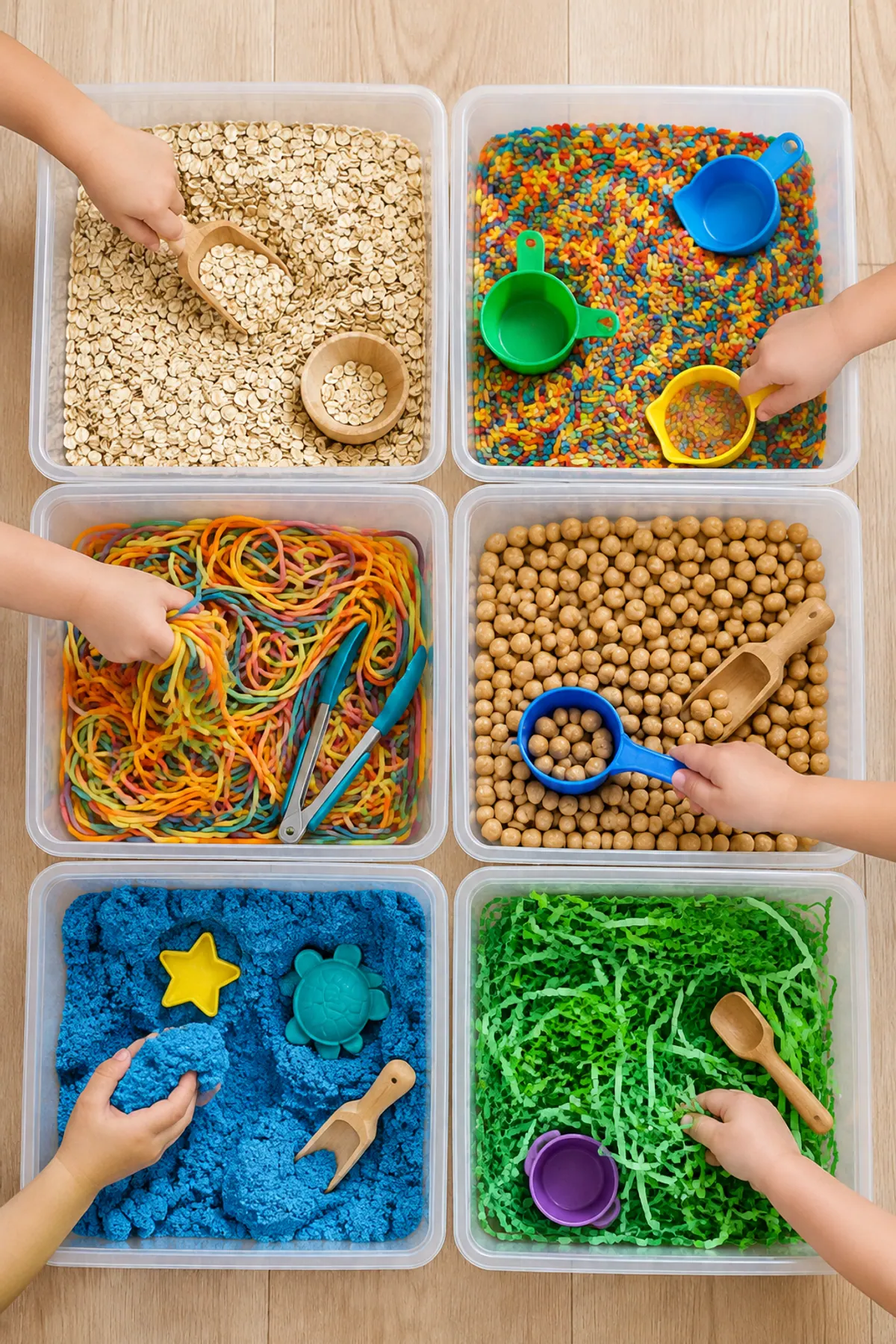
Once your child has stopped putting things in their mouth, usually around 3, the pantry opens up. Dry rice is the most popular filler for a reason: it pours like sand and sweeps up easily. Dry pasta shapes, rolled oats, lentils and dried chickpeas or lima beans work too. Watch noses and ears as well as mouths, since small grains can end up there.
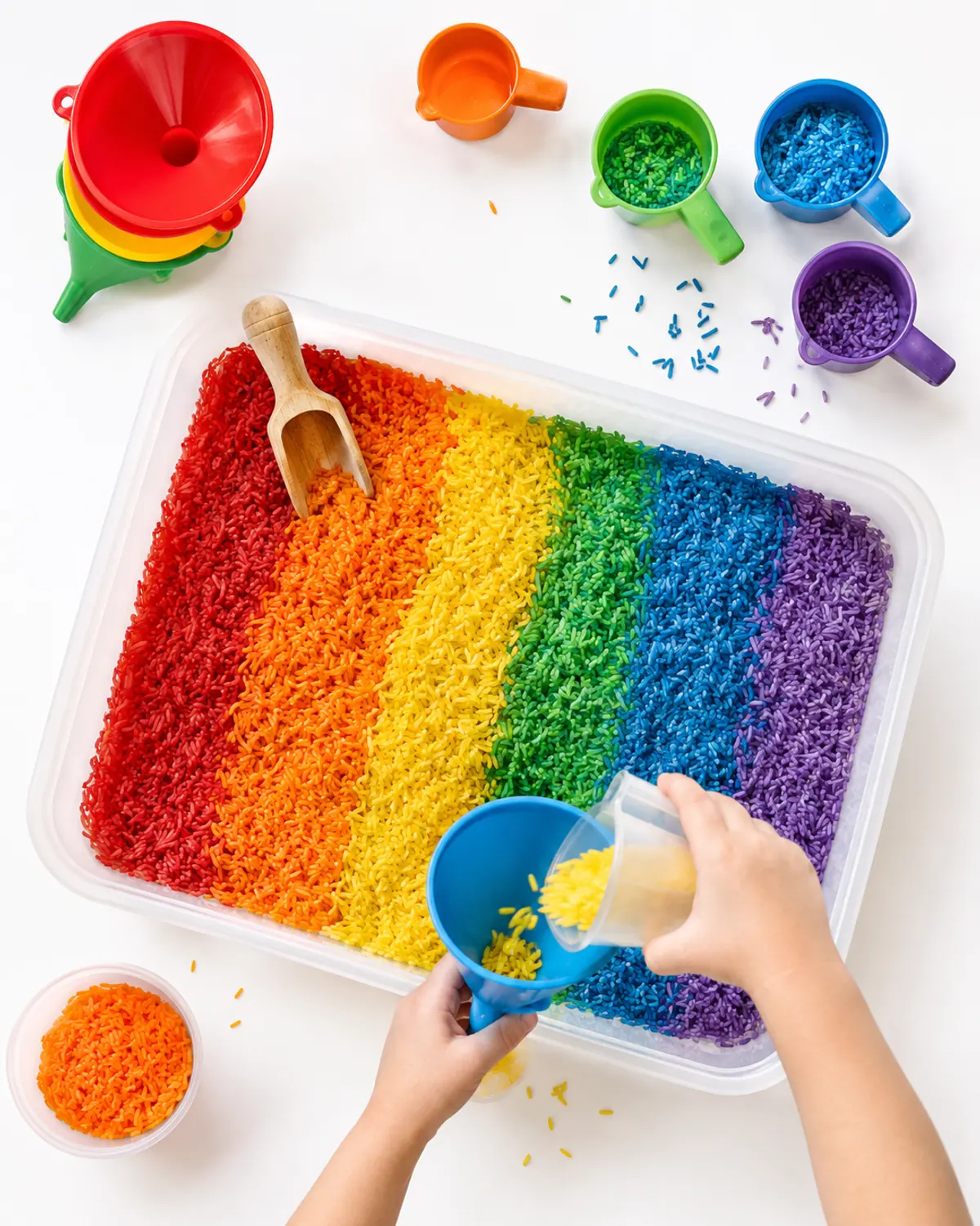
To dye rice or pasta, put it in a zip bag with a splash of white vinegar and a few drops of food coloring, shake until coated, then spread it on a tray to dry fully before play. A grown-up handles the vinegar. Dyed fillers are for play only, not for eating.
Non-food sensory bin fillers
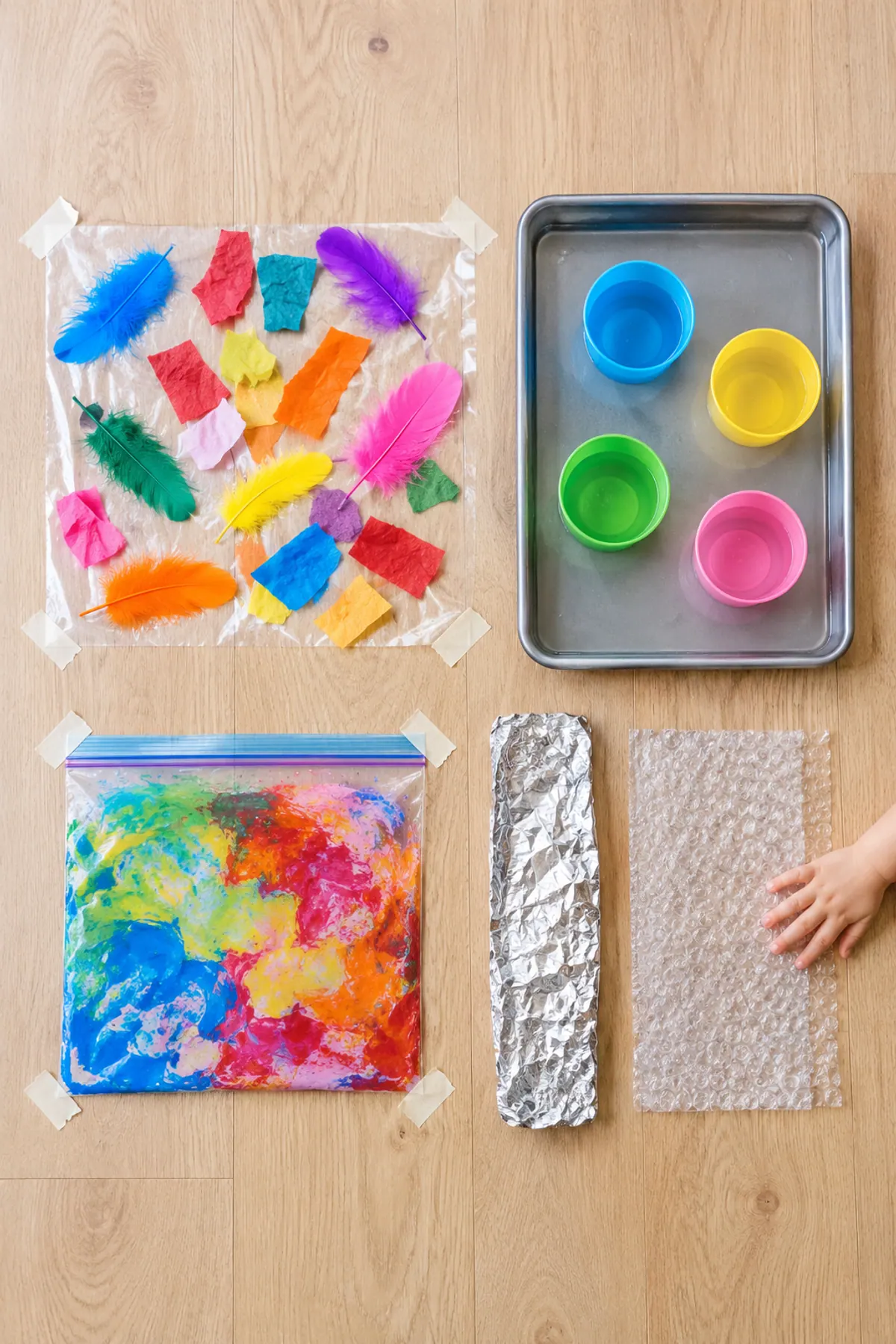
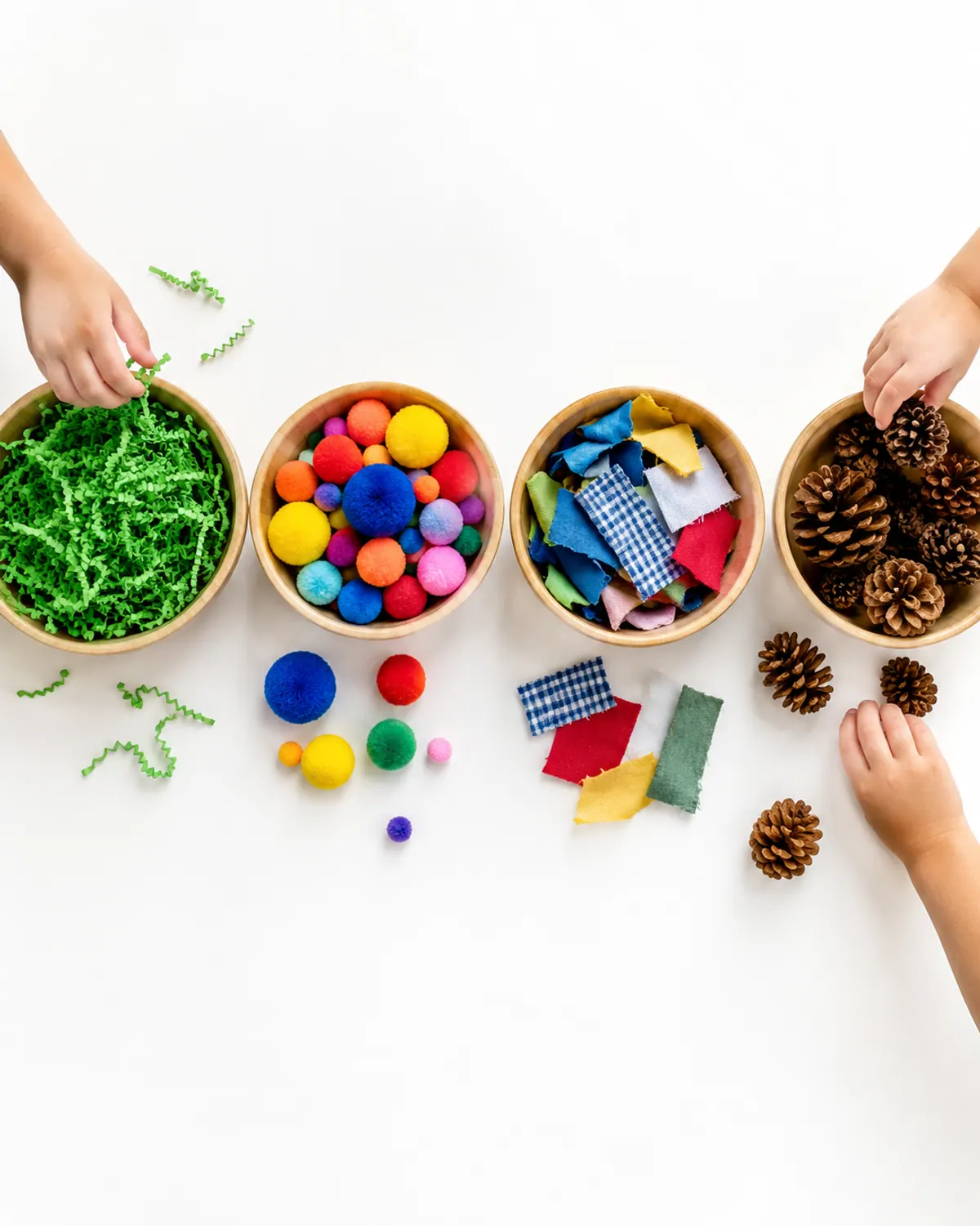
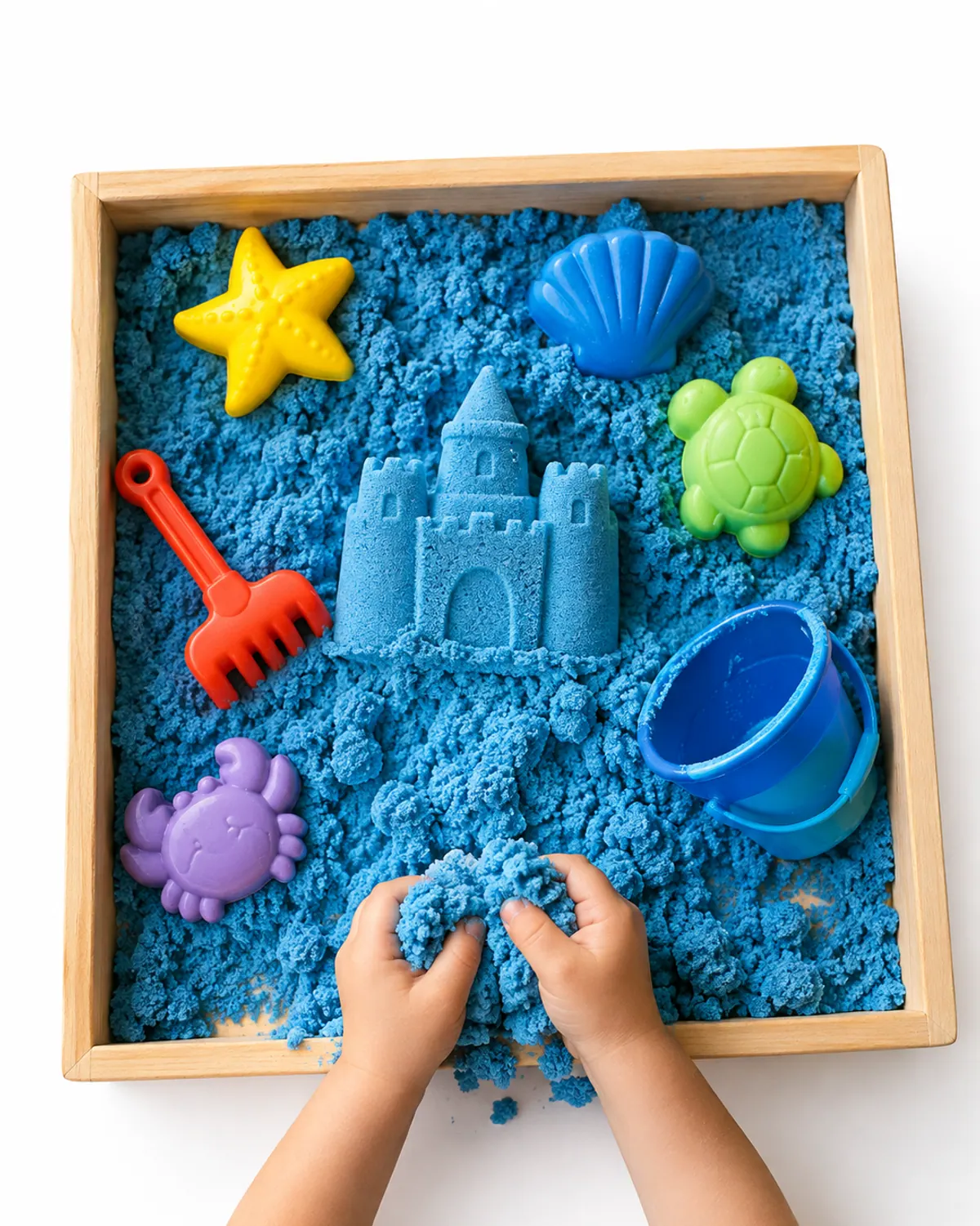
Non-food fillers are a good fit for kids 3 and up, or for families who prefer not to play with food. Try crinkle paper shred, pom-poms, fabric scraps, pinecones, smooth river rocks bigger than the tube, and kinetic sand. Most kinetic sand is labeled for ages 3 and up, so check the box.
What is the cheapest sensory bin filler?
Water is the cheapest filler of all, followed by real snow, shredded paper from your recycling and a bag of store-brand rice or oats. A large bag of rice can fill a bin and be reused for months if you keep it dry and lidded. For a winter bin with fake snow, see our cheap ideas under $5.
What can I use instead of rice in a sensory bin?
If rice ends up everywhere, try bigger, heavier fillers that do not scatter: dried chickpeas, large pasta shapes, oats, or kinetic sand, which sticks to itself. For less mess:
- Set the bin on an old shower curtain or a fitted sheet.
- Fill the bin only a third of the way up.
- Give one or two scoops, not ten tools.
- Keep a dustpan in reach and make tipping out a cleanup job, not a scolding.
What should you not put in a sensory bin?
Four popular fillers are worth leaving out at every age:
- Water beads. They grow after they are swallowed and can block a child's intestines. The CPSC estimates about 6,300 ER visits for water bead ingestion from 2017 to 2022 and approved a federal safety standard in August 2025. Their advice is to keep them away from young children entirely.
- Dry flour. The CDC says most flour is raw and can carry germs like E. coli, and says not to let children play with dough made from raw flour, including homemade play dough. That rules out flour bins and raw-flour cloud dough.
- Raw kidney beans. They contain a natural toxin that is only destroyed by thorough cooking, and dried beans are choking size for young kids.
- Foam packing peanuts. They break into small, light pieces that are easy to swallow or inhale, and they are not made to be handled by children.
Myths vs reality
Reality
- Taste-safe still needs an adult within arm's reach
- Dry rice and beans are for kids who no longer mouth things
- Water beads are risky even when they look small
- Raw flour can carry germs, even in a play bin
Myth
- Taste-safe means I can step away
- Rice is fine for any toddler
- Water beads are safe once they are fully grown
- Flour is just a powder, so it is harmless
Seasonal sensory bin fillers
Change the filler with the season to keep a bin fresh: orange-dyed rice or dried corn kernels for fall (3 and up), real snow or cotton balls for winter, and green crinkle paper with jumbo pom-poms for Christmas. Our Christmas sensory bin ideas sort 21 bins by age with the same safety notes.
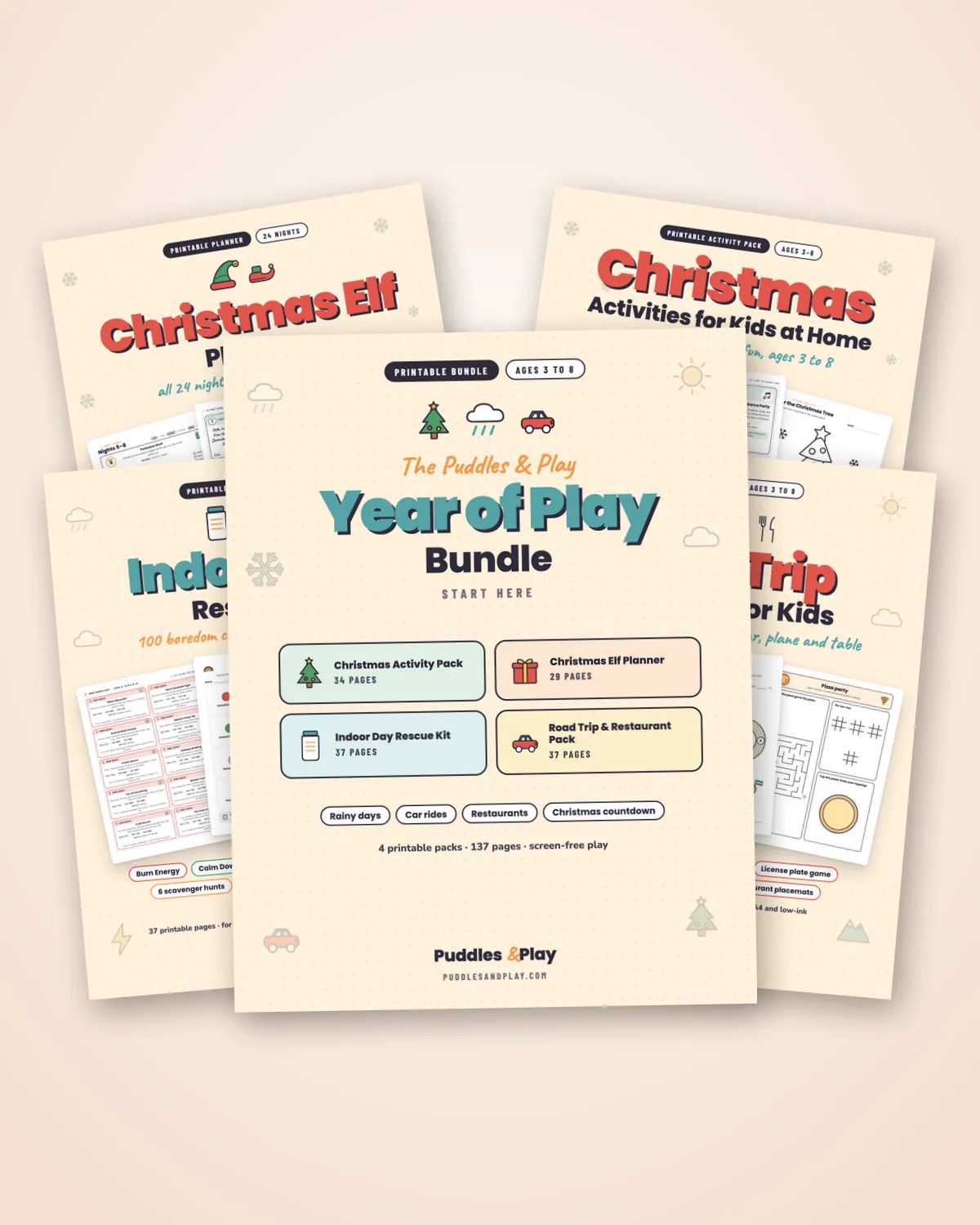
For the rest of December, the Christmas Activity Pack has a 24-day countdown of low-prep, screen-free activities for ages 3 to 8, plus bingo, word searches and coloring pages.
How do you store sensory bin fillers?
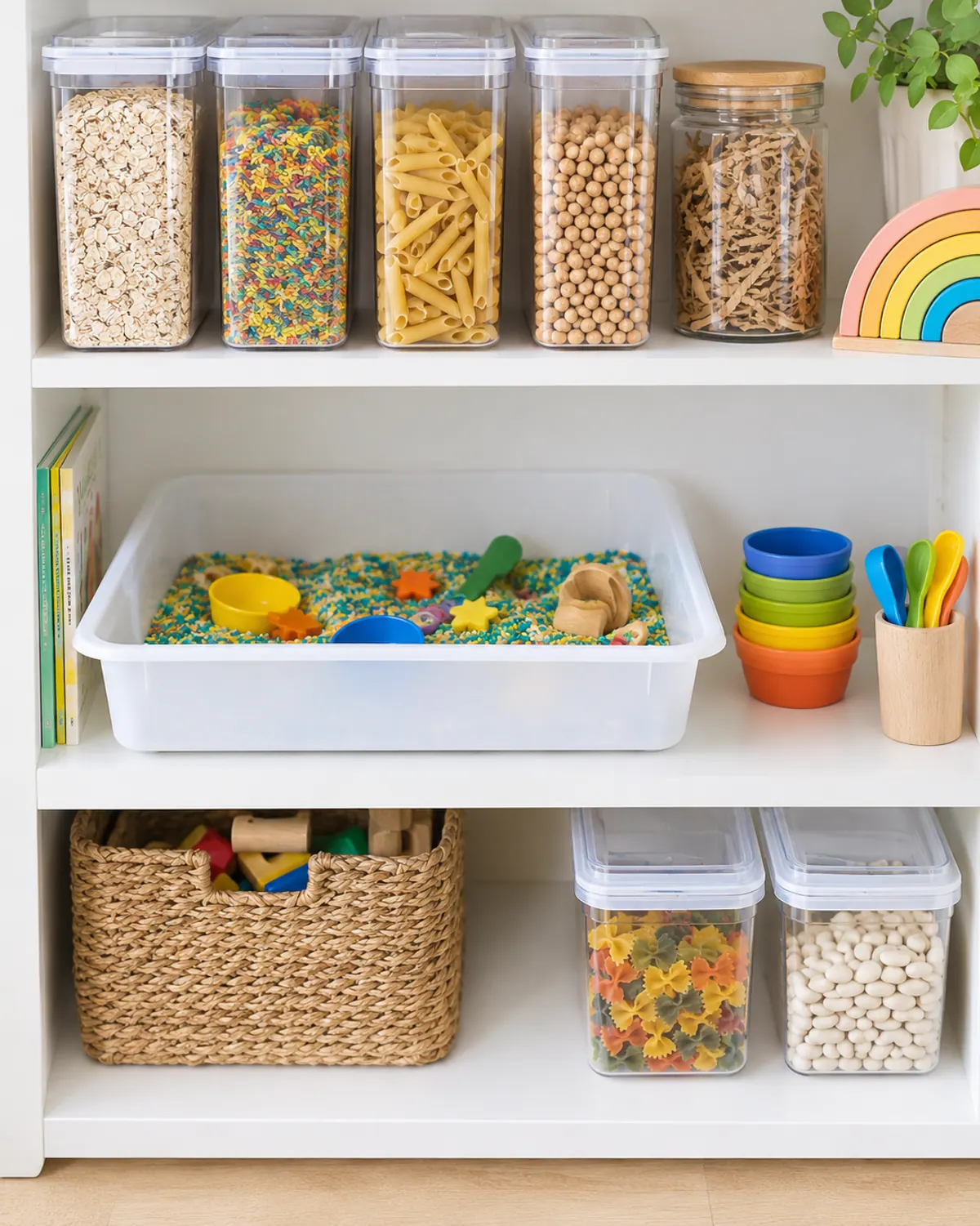
Keep dry fillers like rice, pasta and beans in clear lidded bins, one filler per bin, away from damp. Shake them out on a tray before each use and toss any that smell musty or have been sneezed or drooled on. Taste-safe fillers like cooked pasta and yogurt are a one-day filler: toss them after play.
Sensory bin supplies
A simple sensory bin kit
- Low mess
Kinetic sand (labeled ages 3+)
Typically $10 to $14
A non-food filler that sticks to itself, so less ends up on the floor.
Check price on Amazon for Kinetic sand (labeled ages 3+) -
Clear storage bins with lids
Typically $15 to $30
Works as the play bin and the storage bin, one filler per box.
Check price on Amazon for Clear storage bins with lids -
Sensory bin scoops and funnels set
Typically $10 to $20
Chunky scoops, funnels and tongs work with every filler on this list.
Check price on Amazon for Sensory bin scoops and funnels set
Frequently asked questions
What sensory bin fillers are safe for a 1 year old?
Use taste-safe fillers only, like cooked pasta, plain rolled oats, O-shaped cereal or a shallow tray of water, and stay within arm's reach the whole time.
Are water beads safe for kids?
No. Water beads can grow inside the body after they are swallowed and cause blockages. The CPSC advises keeping them away from young children.
At what age can kids play with rice in a sensory bin?
Dry rice is best for kids who no longer put things in their mouth, usually around age 3. Younger toddlers do better with oats or cooked pasta.
Is cloud dough safe for toddlers?
Cloud dough made with raw flour is not a good choice, since the CDC says not to let children play with raw flour dough. Choose oats or kinetic sand for kids 3 and up instead.
How often should you replace sensory bin fillers?
Toss taste-safe fillers after each play. Dry fillers kept in a lidded bin can last for months; replace them if they get damp, smell musty or get mouthed.
Save it for later
Pin this to your Sensory Play board so it's there when you need it.
Save to Pinterest