This post contains affiliate links. As an Amazon Associate we earn from qualifying purchases, at no extra cost to you. Read our disclosure.
Safety first: Always supervise little ones, and skip small parts for kids who still put things in their mouths. Please read our play safety notes before you start.
Key takeaways
- Start once your baby sits steadily on their own, often around 6 months.
- Use only foods your baby has already eaten; a sensory bin is not the place to try a new allergen.
- Keep dry rice, dry beans, water beads, pom-poms and anything that fits through a toilet paper tube out.
- Taste safe still means an adult within arm's reach the whole time.
- 5 to 10 minutes is a full session.
In this post16 sections
- When can babies use sensory bins?
- 10 taste safe sensory bin ideas for babies
- 1. Plain yogurt paint
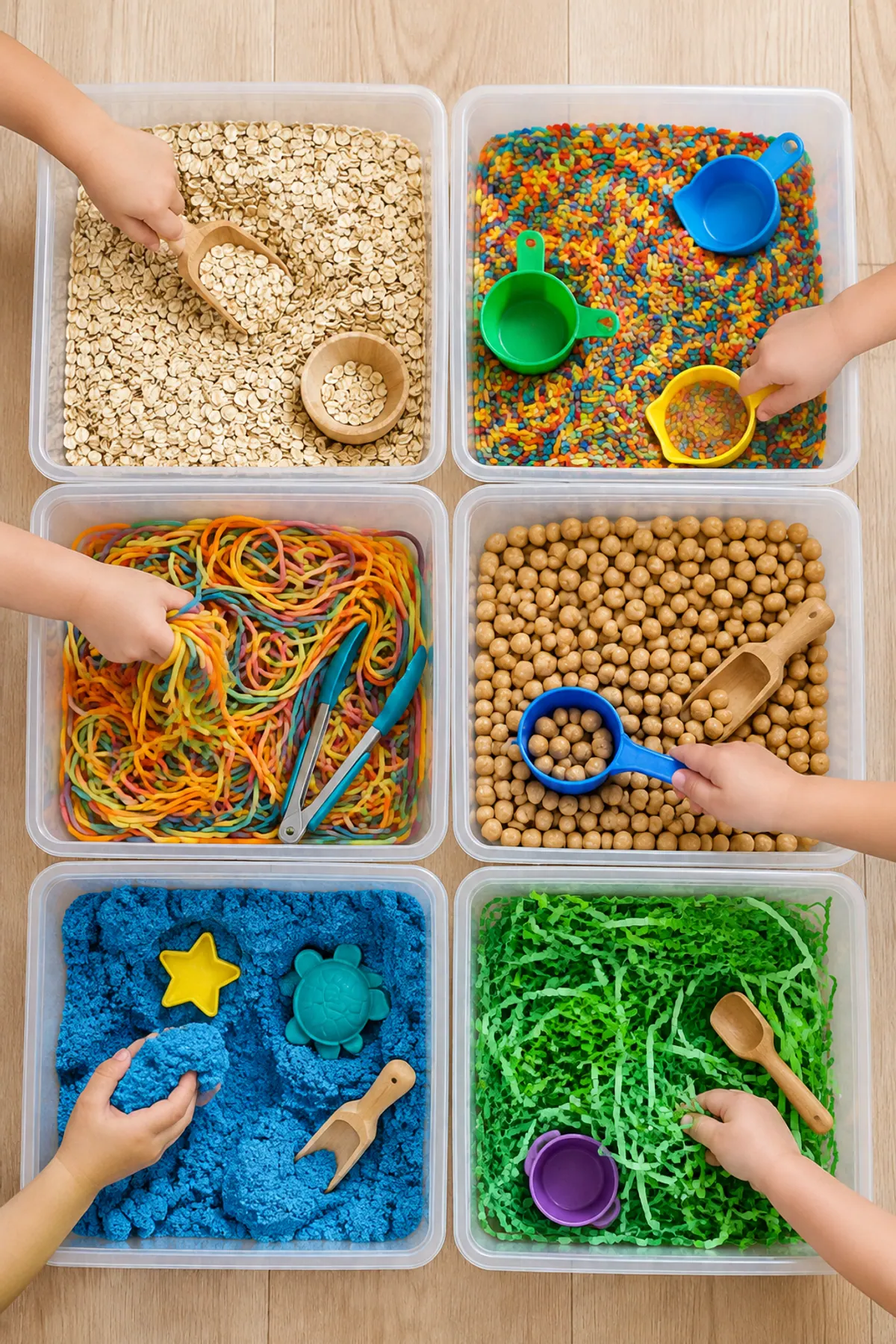
- 2. Cooked rainbow spaghetti
- 3. Rolled oats bin
- 4. Water tray with cups
- 5. Mashed banana and avocado
- 6. Frozen fruit in a mesh feeder
- 7. Sealed sensory bag
- 8. Aquafaba foam
- 9. Christmas O cereal bin
- 10. Set jelly dig
- What should you not put in a baby sensory bin?
- Are taste safe sensory bins for babies really safe?
- Related questions
- FAQ
| Question | Short answer |
|---|---|
| Earliest age | Once your baby sits steadily on their own, often around 6 months |
| Best fillers | Taste safe foods your baby already eats: yogurt, cooked pasta, oats, banana |
| Avoid | Dry rice, dry beans, water beads, pom-poms, buttons, coins, raw flour |
| Session length | 5 to 10 minutes, stop when interest fades |
| Supervision | An adult within arm's reach the whole time |
This guide covers babies about 6 to 12 months. For toddlers, see how to make a sensory bin step by step and our list of safe sensory bin fillers by age.
When can babies use sensory bins?
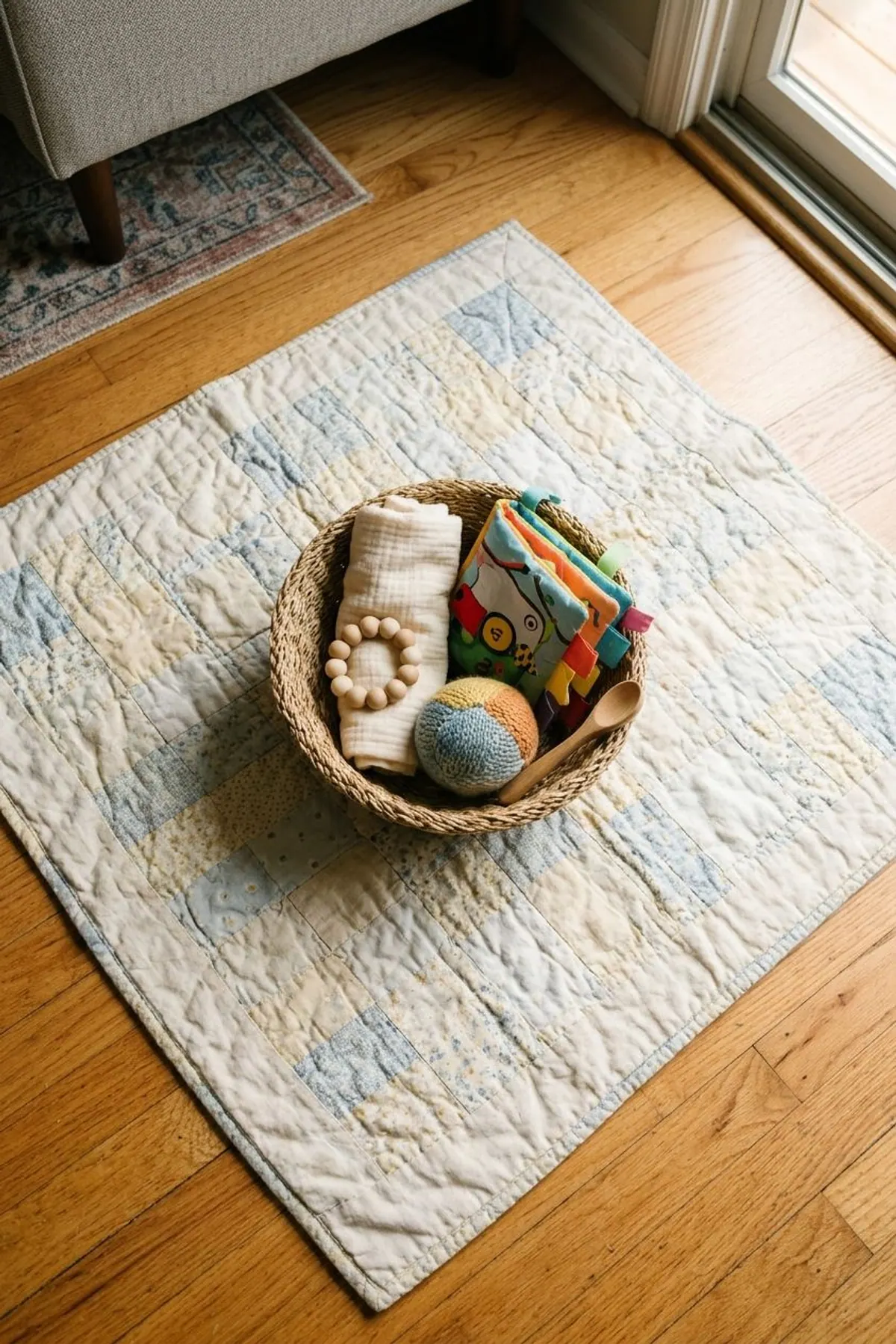
Most babies are ready once they can sit up well on their own, in a high chair or on the floor. Before that, tummy time with different textures (a crinkly blanket, a silicone mat) gives similar sensory input with no mess.
Use only foods your baby has already eaten without a reaction. A sensory bin is not the place to try a new allergen, because some of it will be eaten.
10 taste safe sensory bin ideas for babies
1Plain yogurt paint
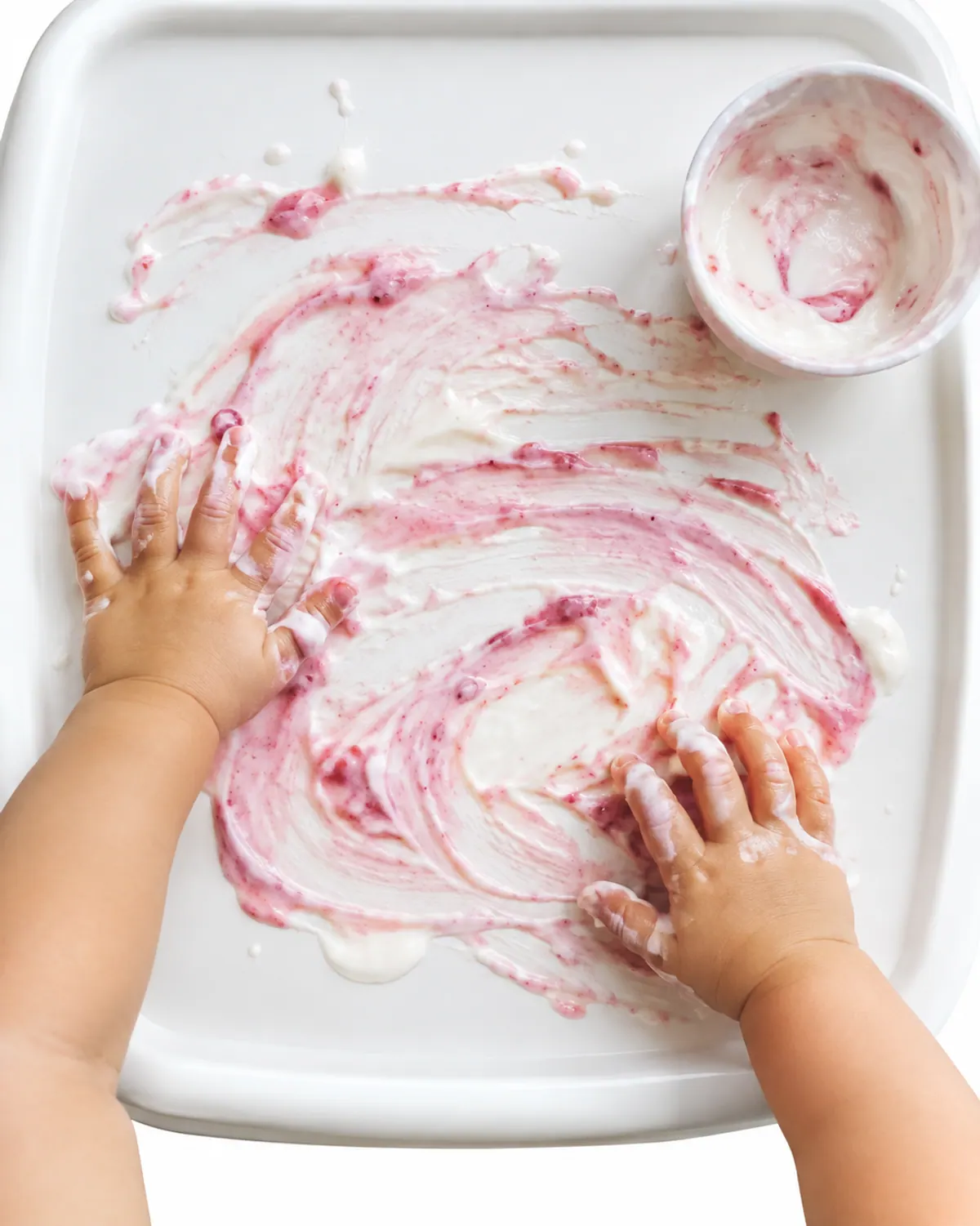
Spoon plain whole milk yogurt onto the high chair tray and stir in a little mashed berry for color. Babies smear, pat and lick it. Clean up is a wipe and a bath.
Ages: 6 to 12 months (once dairy is introduced)
Prep: 2 minutes
Mess: High
Supplies: plain yogurt, a few mashed berries, the high chair tray
Safety: only use yogurt if your baby already eats dairy.
Goes under the high chair for every messy play session.
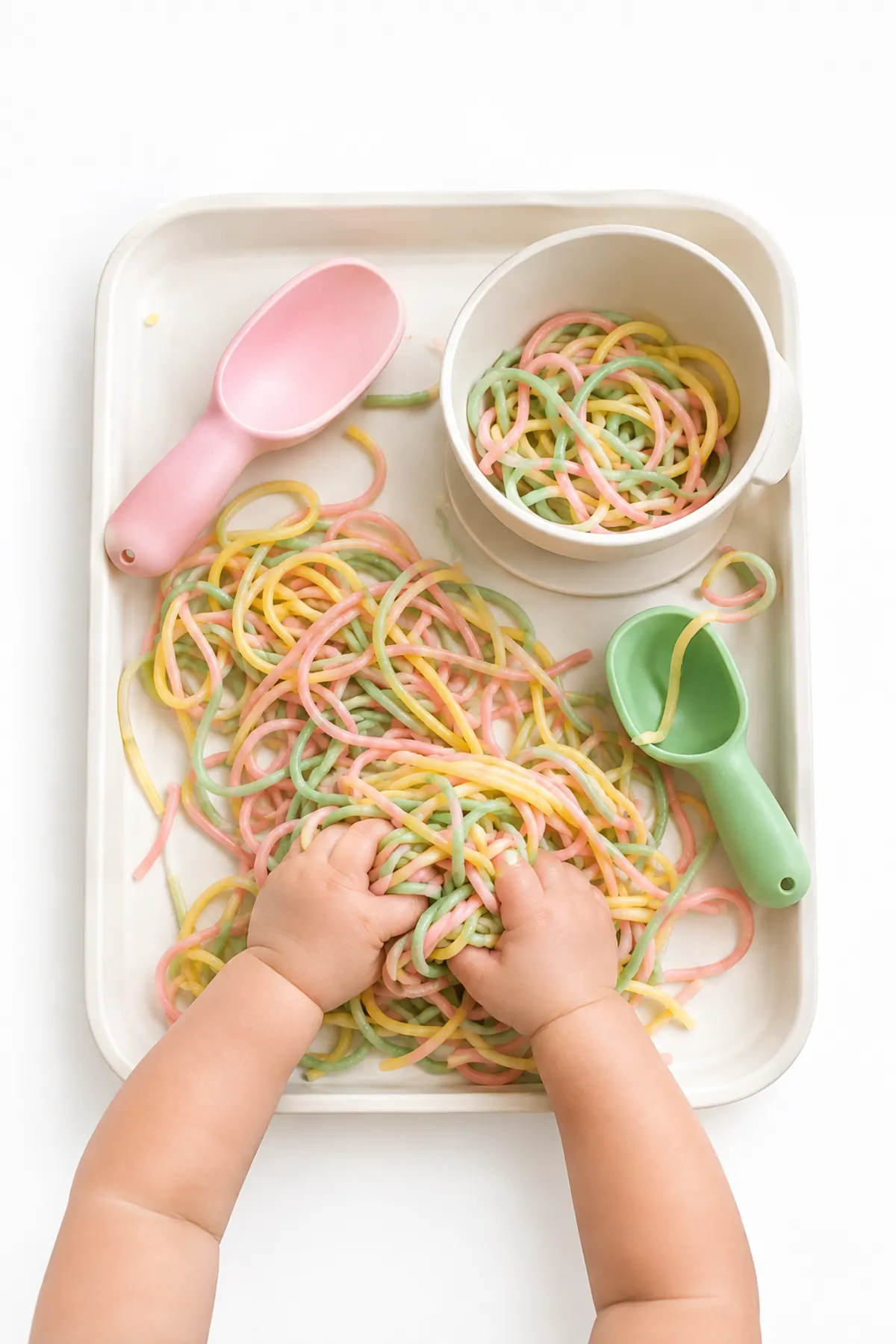
2Cooked rainbow spaghetti
Cook spaghetti until soft, rinse in cool water and toss a portion in a little oil so it does not clump. Babies pull, squeeze and drop the strands. Color is optional; plain pasta works as well.
Ages: 7 to 12 months
Prep: 15 minutes
Mess: Medium
Supplies: cooked spaghetti, a spoon of oil, a tray
Safety: cook it very soft and cut long strands shorter for younger babies.
Sticks to the high chair tray so the bin stays put.
3Rolled oats bin
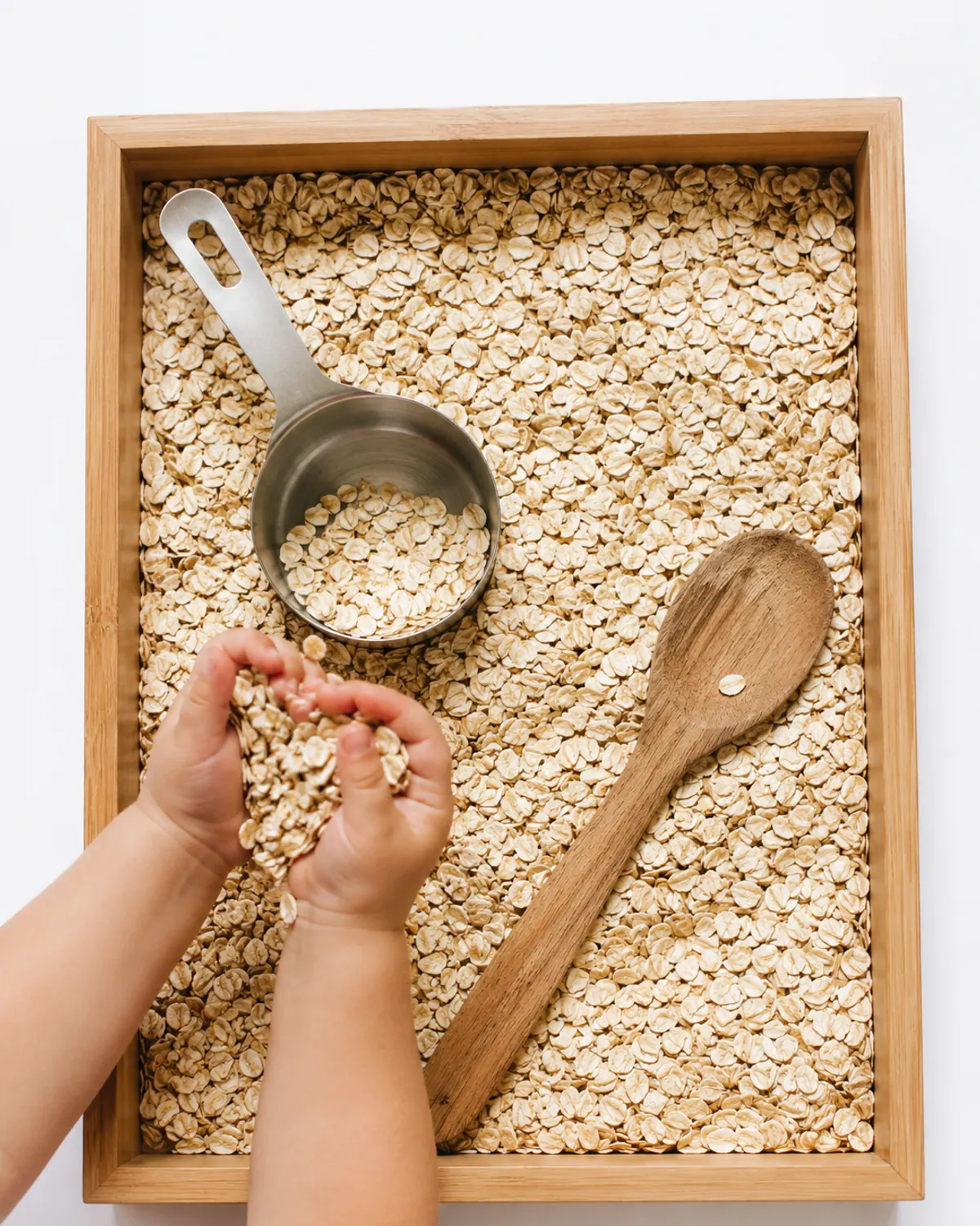
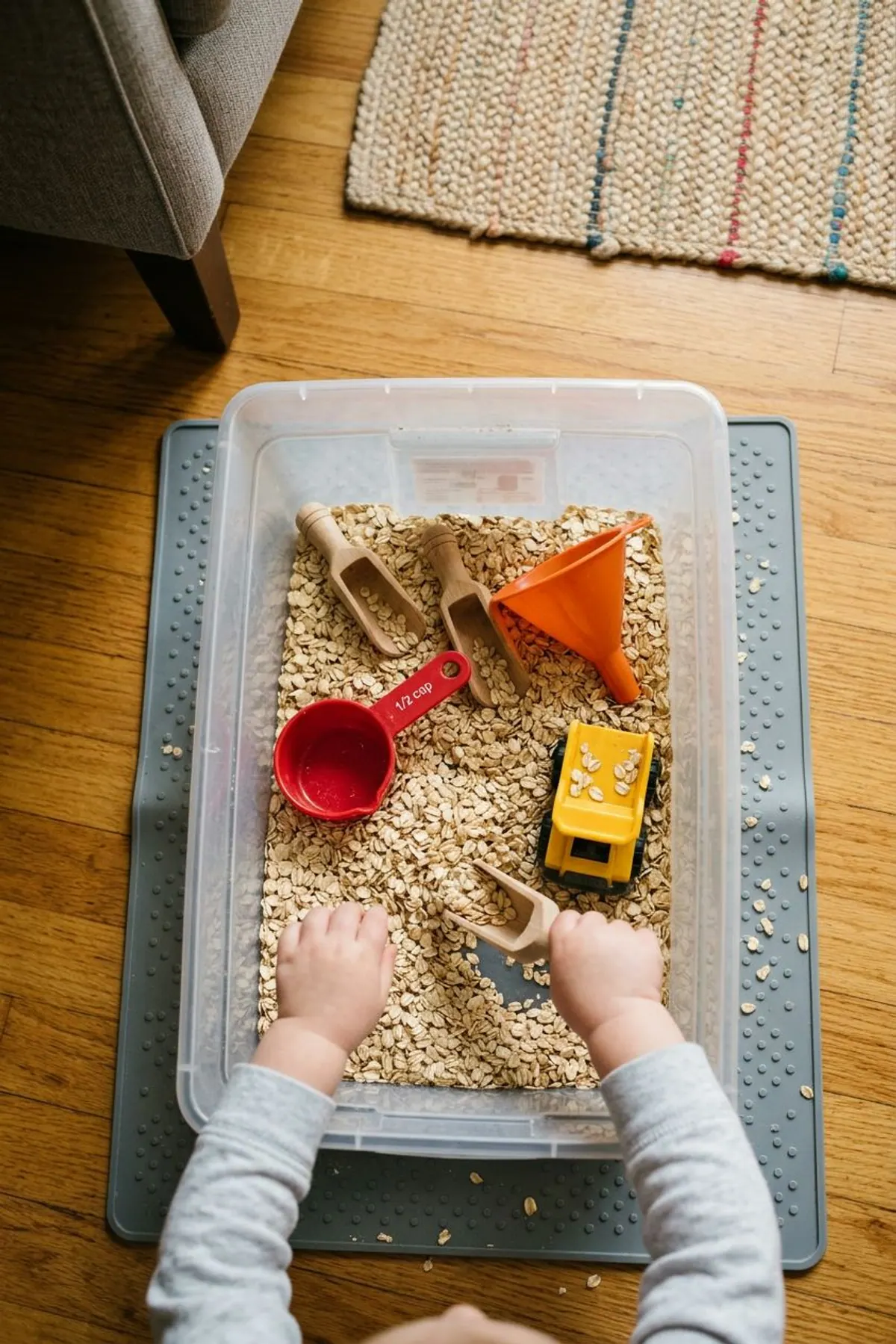
Pour a few cups of plain rolled oats into a shallow tray with a measuring cup and a big spoon. Oats are soft, easy to sweep up and fine if a few get eaten. Skip instant oat packets with added sugar.
Ages: 8 to 12 months
Prep: 2 minutes
Mess: Medium (oats scatter)
Supplies: plain rolled oats, a shallow tray, a cup and spoon
Safety: stay close; a mouthful of dry oats can make a baby gag, so offer water after.
Low sides are easier for a sitting baby to reach into.
4Water tray with cups
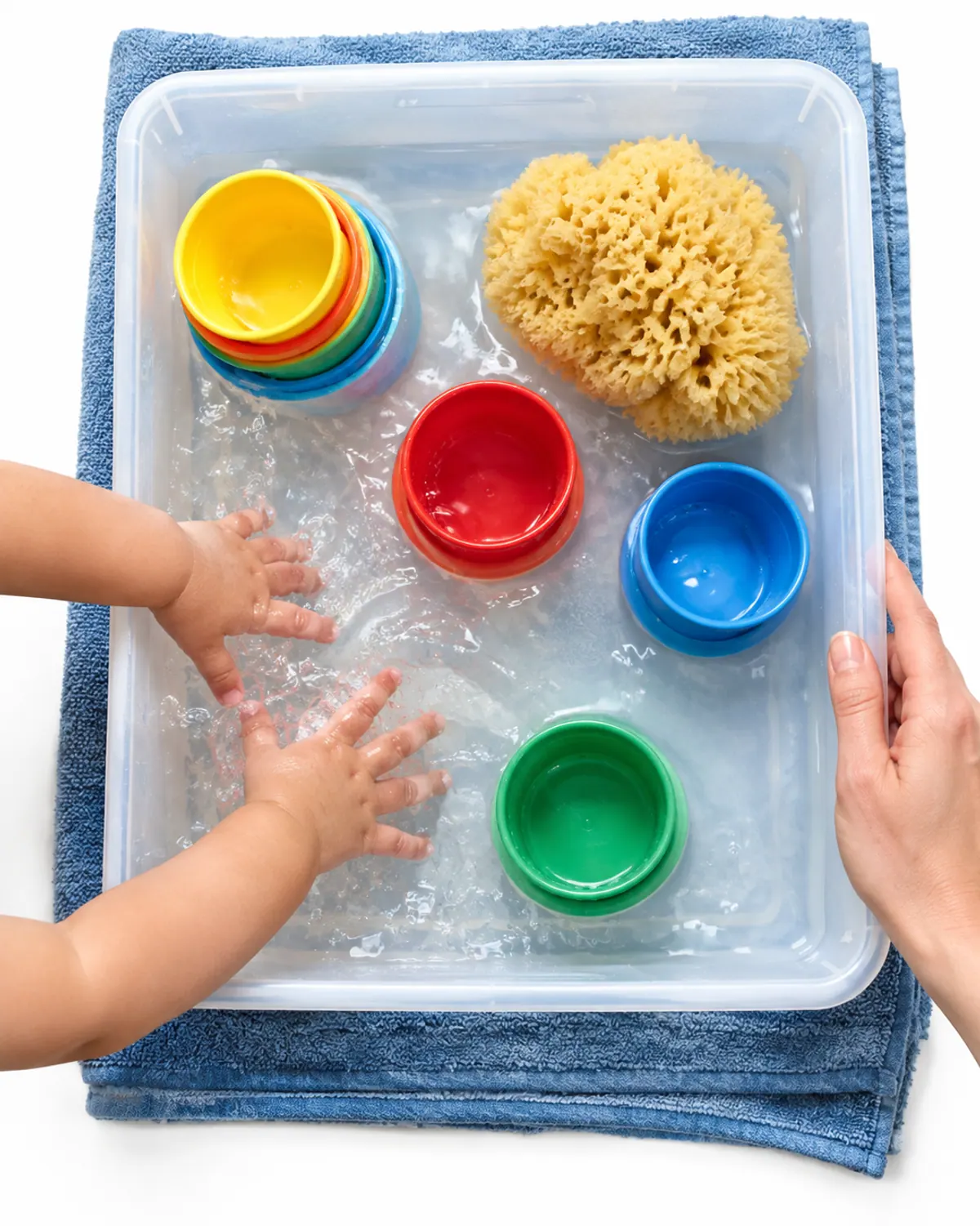
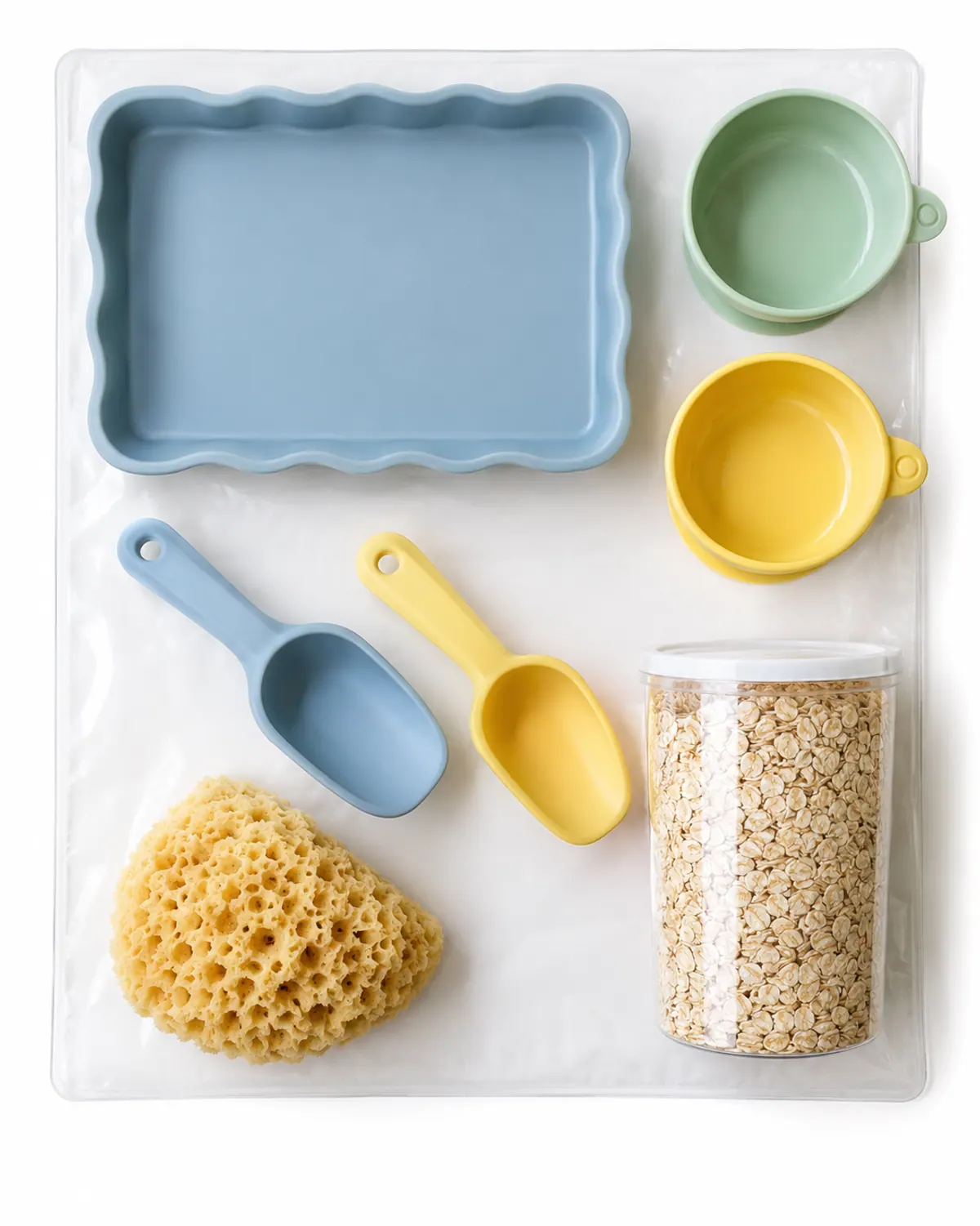
An inch of water in a shallow tray, stacking cups and a sponge is the easiest sensory bin there is. Babies splash, pour and squeeze. Use warm, not hot, water.
Ages: 6 to 12 months
Prep: 2 minutes
Mess: Medium (wet)
Supplies: a shallow tray, stacking cups, a sponge, towels
Safety: babies can drown in very little water; keep a hand on your baby the whole time and empty the tray straight after.
Pour, stack and float; they go from water tray to bath.
5Mashed banana and avocado
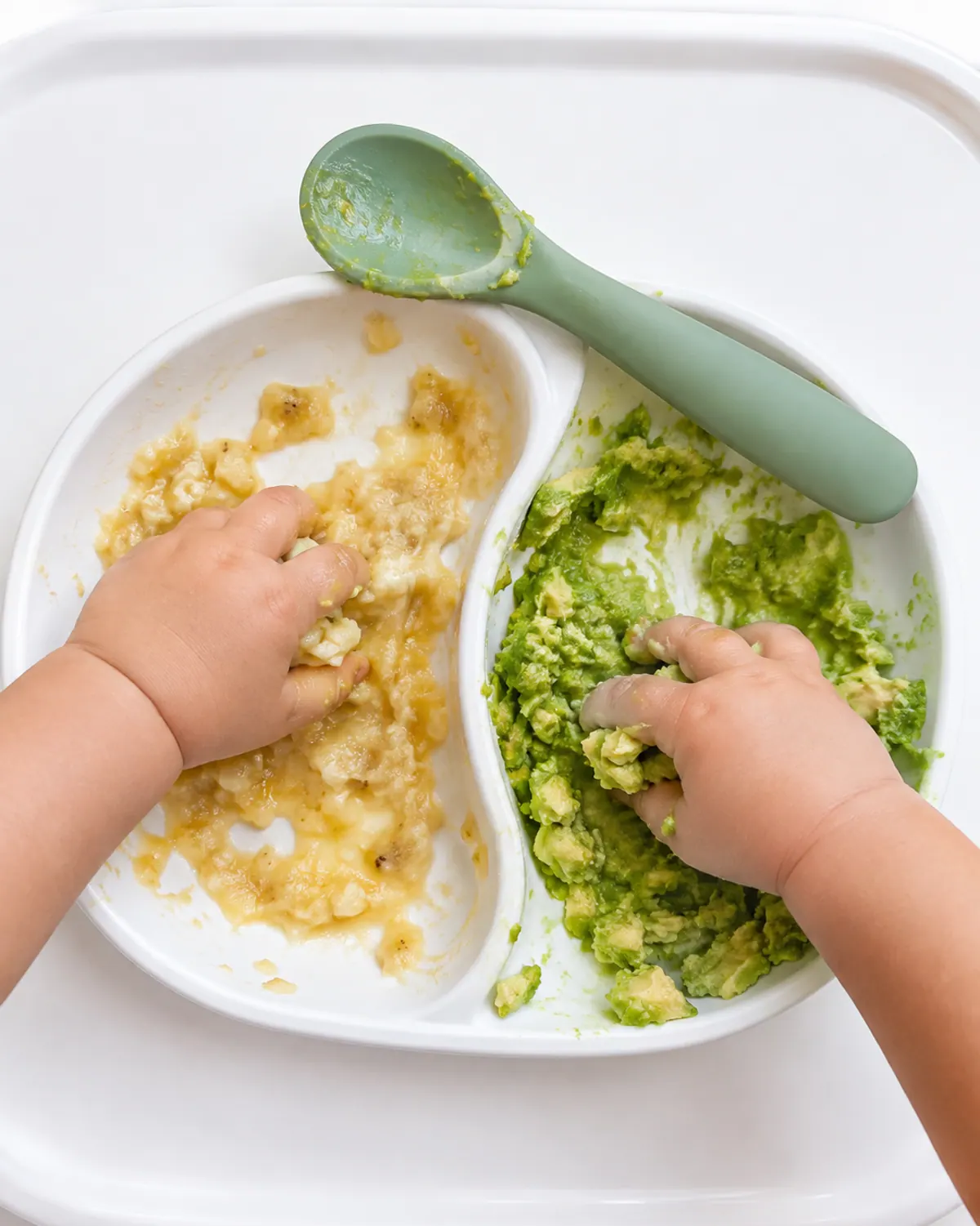
Mash a banana and half an avocado on a divided plate and let your baby squish both. The two textures and colors are a simple first sensory activity, and most of it is food anyway.
Ages: 6 to 12 months
Prep: 3 minutes
Mess: High
Supplies: 1 ripe banana, half an avocado, a divided plate
Safety: mash fully with no chunks for younger babies.
Sticks to the high chair tray so the bin stays put.
6Frozen fruit in a mesh feeder
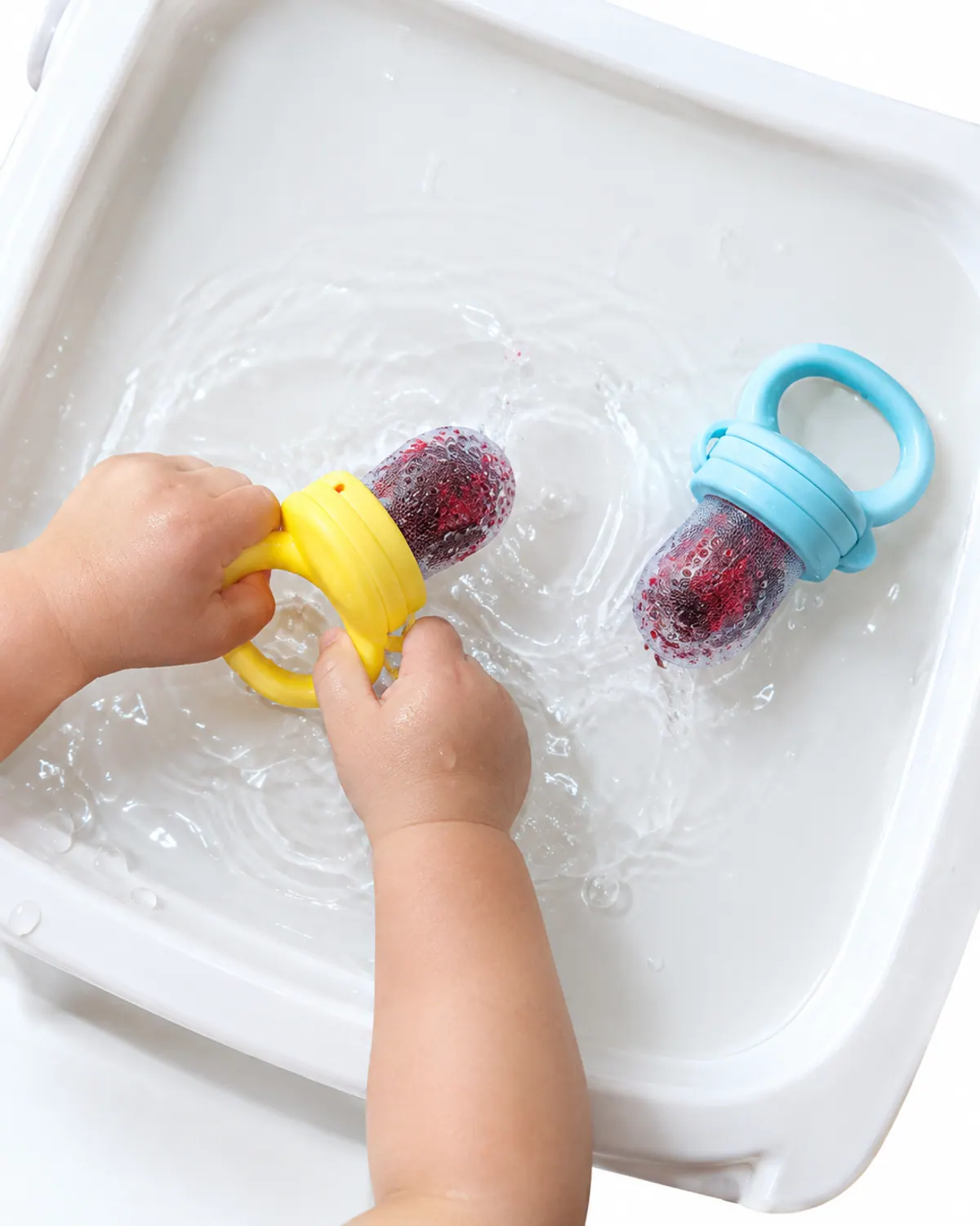
Fill a silicone feeder with frozen berries and let your baby chew and splash it in a tray of water. The cold soothes sore gums. The fruit stays inside the mesh, so there are no loose pieces.
Ages: 6 to 12 months
Prep: 5 minutes (freeze ahead)
Mess: Medium
Supplies: a silicone fresh food feeder, frozen berries, a tray of water
Safety: no loose frozen fruit or ice cubes, which are choking hazards.
Lets babies mouth frozen fruit without loose pieces.
7Sealed sensory bag
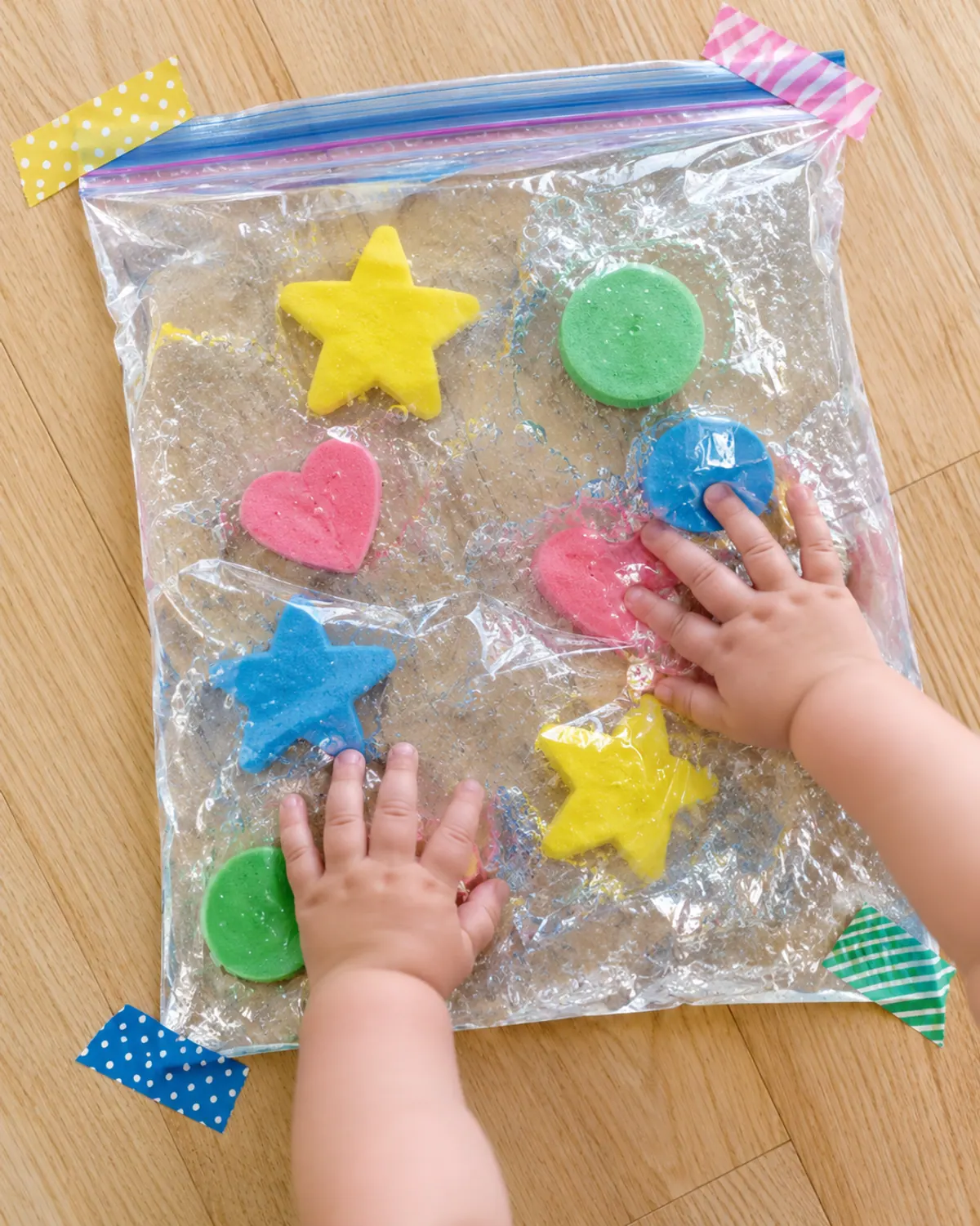
Fill a zip bag with clear hair gel or a cooked cornstarch gel and a few foam shapes, squeeze out the air, seal it and tape every edge to the floor. Babies push the shapes around during tummy time or sitting.
Ages: 6 to 12 months
Prep: 5 minutes
Mess: None
Supplies: a freezer zip bag, gel, foam shapes, strong tape
Safety: check the seal before every use and take it away if it leaks or your baby starts to chew it.
Thicker plastic holds up better to little hands than sandwich bags.
8Aquafaba foam
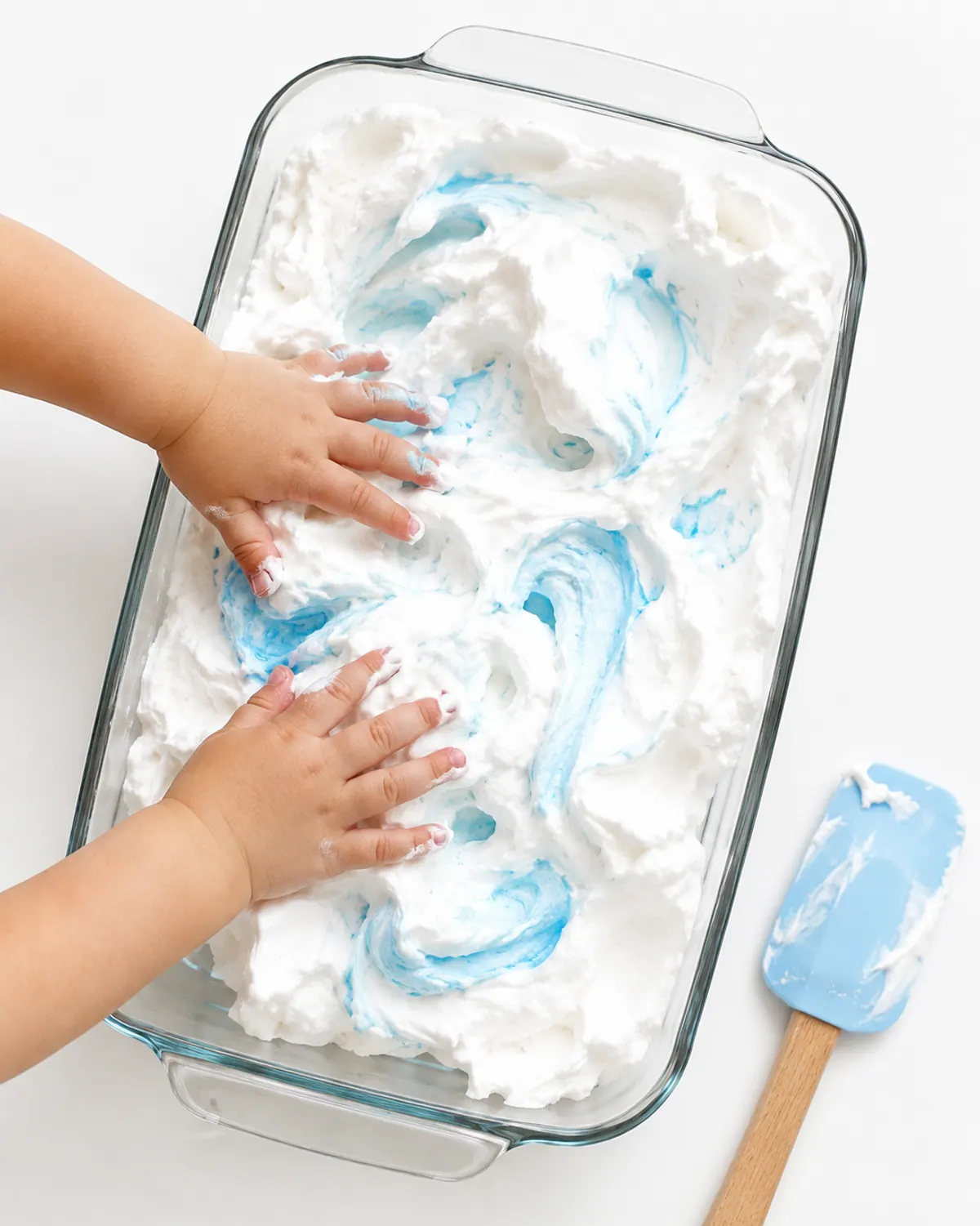
Whisk the liquid from a can of chickpeas (aquafaba) with an electric mixer until it forms stiff white foam, like shaving cream. It is a taste safe swap for shaving cream foam. Add a drop of food coloring if you like.
Ages: 8 to 12 months (if chickpeas are introduced)
Prep: 10 minutes
Mess: High
Supplies: 1 can of chickpeas (liquid only), an electric mixer, a baking dish
Safety: use low-sodium chickpeas, and skip it if your baby has not eaten chickpeas before.
9Christmas O cereal bin
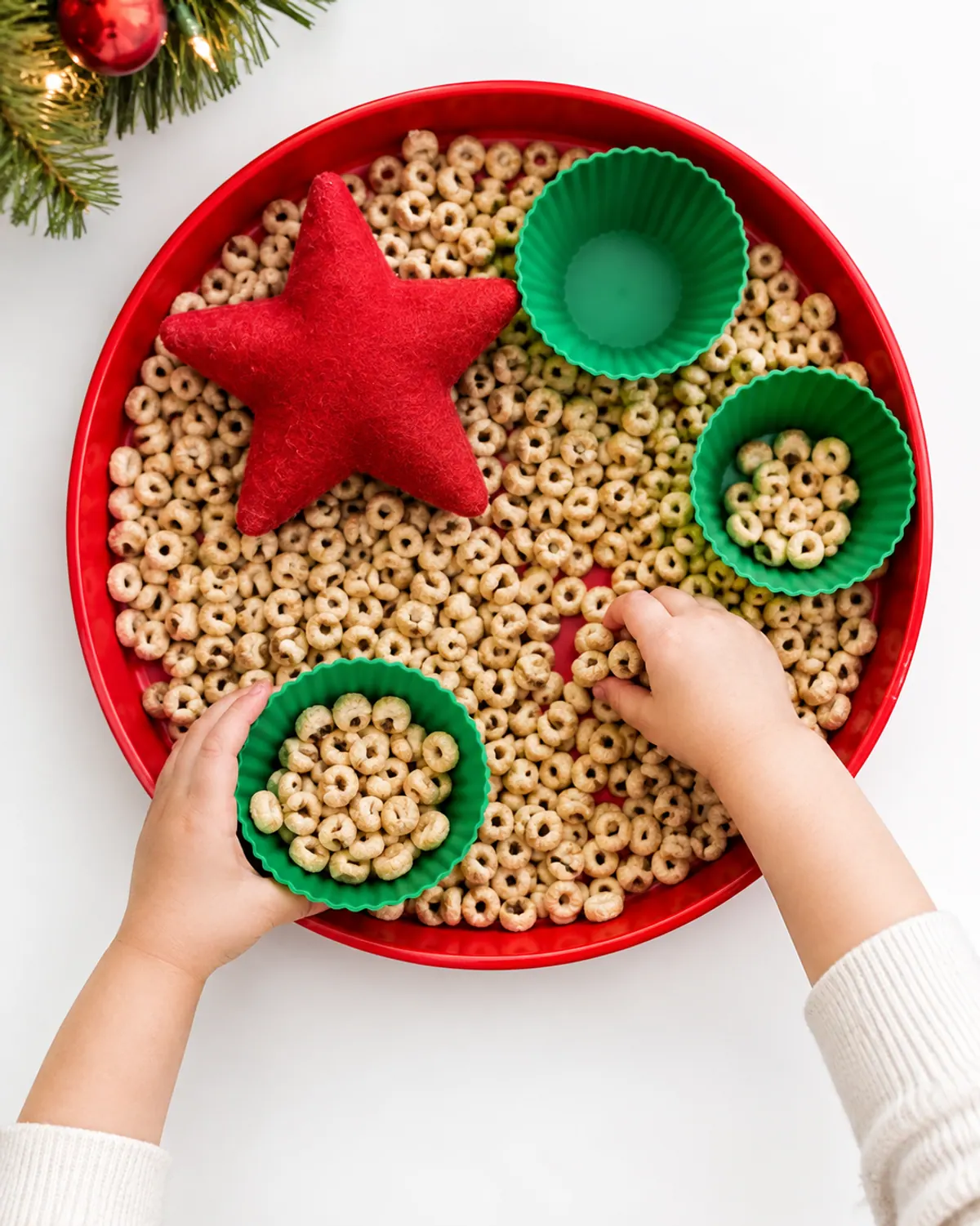
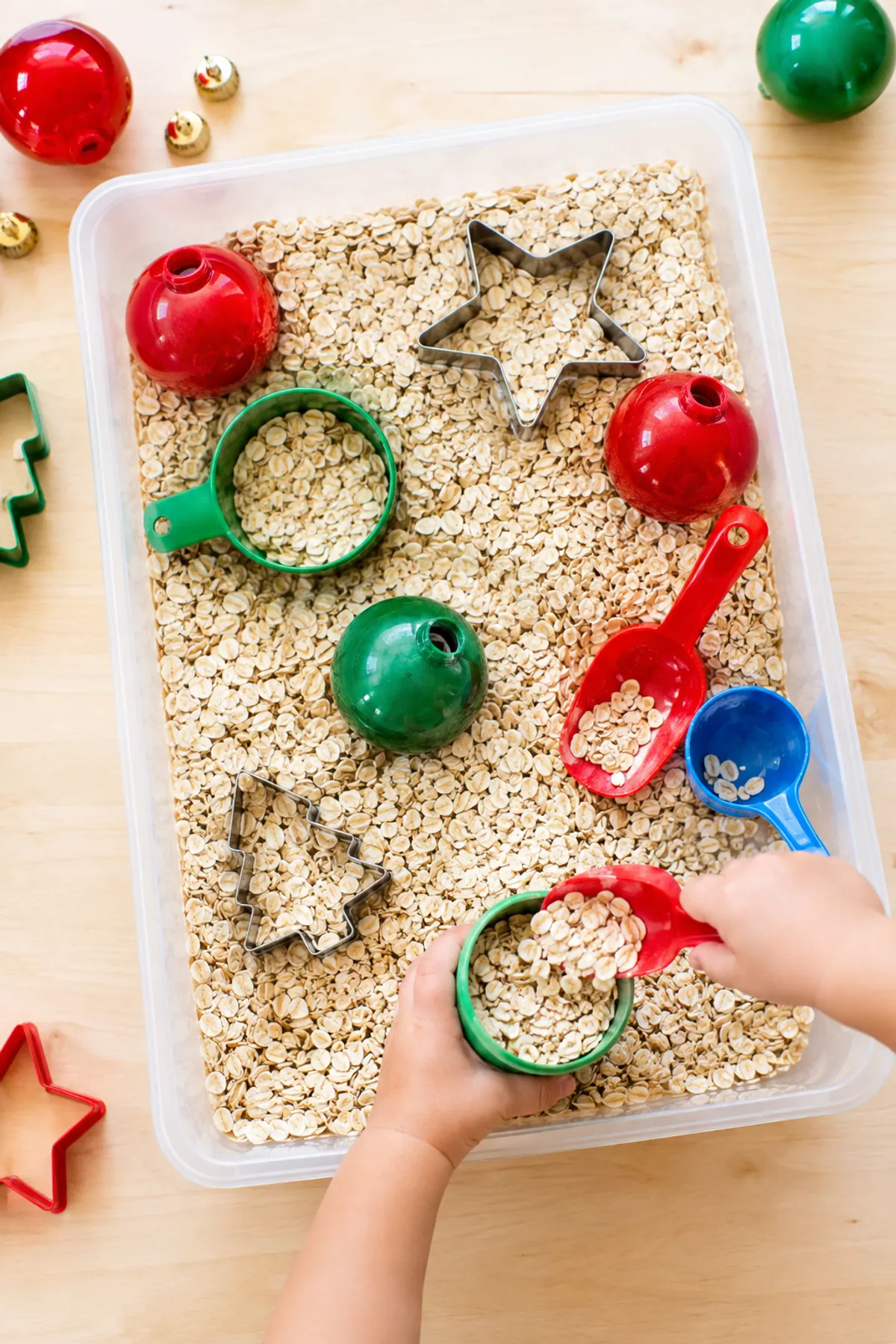
Fill a red tray with plain O-shaped cereal, add silicone muffin cups and one big soft star. It is a festive bin for December that is also a finger food your baby may already know. Our Christmas sensory bins for toddlers have ideas for when they get older.
Ages: 8 to 12 months
Prep: 2 minutes
Mess: Medium
Supplies: plain O cereal, silicone cups, a tray, a large soft toy
Safety: use only cereal your baby already eats, and nothing with nuts or whole grains that do not dissolve.
Sticks to the high chair tray so the bin stays put.
10Set jelly dig
Make plain gelatin or agar jelly in a shallow dish with a few big bath toys set inside. Babies poke, squish and dig the toys out. Every toy should be too big to fit through a toilet paper tube.
Ages: 9 to 12 months
Prep: 10 minutes (plus 2 hours to set)
Mess: High
Supplies: gelatin or agar, a shallow dish, large bath toys
Safety: use unsweetened gelatin, and check every toy is bigger than a toilet paper tube opening.
Looking for more low-prep play? Our free screen-free activity pack has 50 activity cards with ages, prep time and mess level, including baby and toddler ideas.
What should you not put in a baby sensory bin?
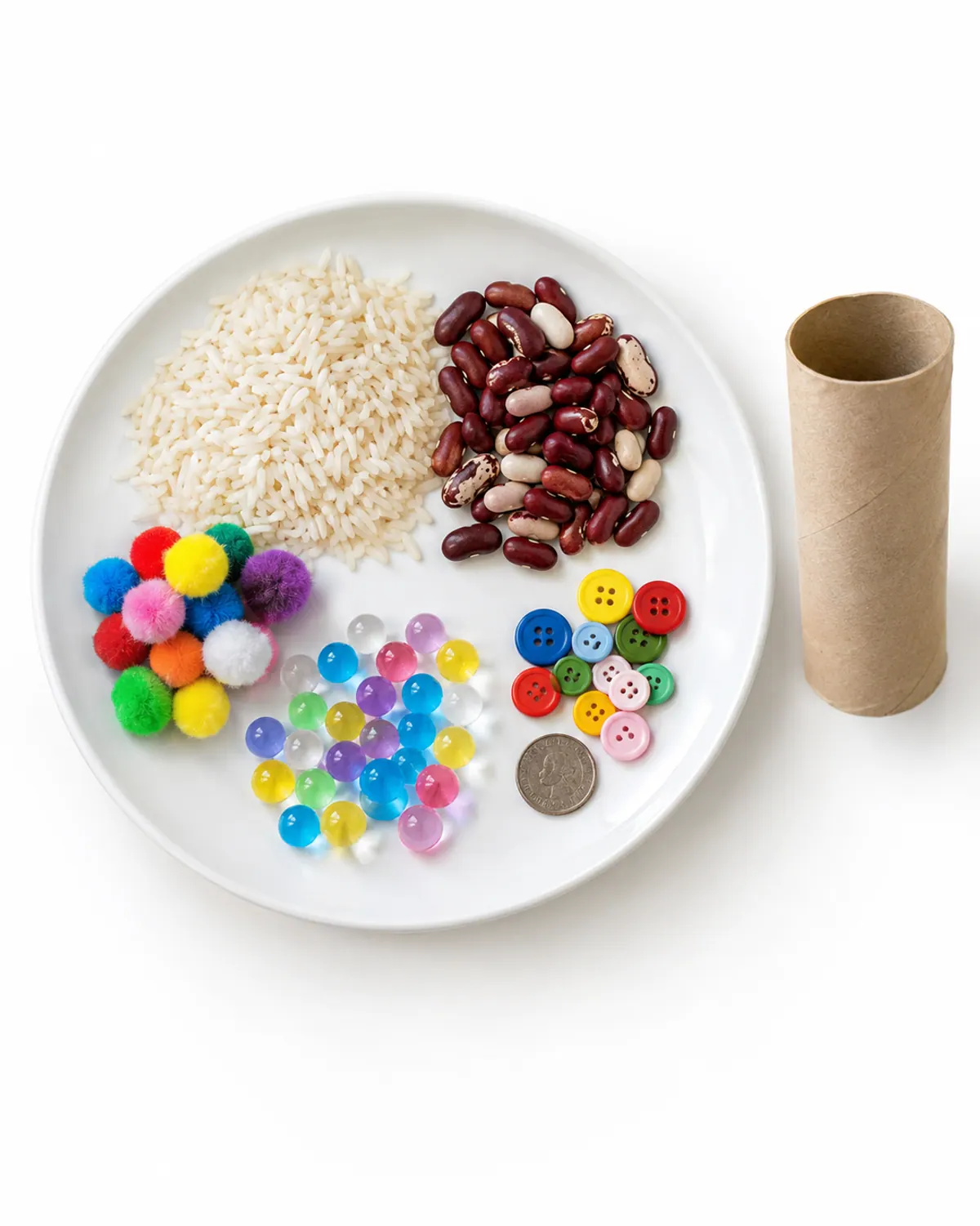
Anything small, hard or that swells is out. The CPSC small parts rule treats items that fit in its test cylinder as a choking hazard for children under 3, and a toilet paper tube is a cautious home check.
Keep these out of baby sensory bins
Are taste safe sensory bins for babies really safe?
Taste safe means the materials are fine if a little is eaten, not that they are a meal or that small pieces are safe. A taste safe bin still needs soft textures, no choking-size pieces and an adult beside the baby.
Reality
- Taste safe still needs close supervision
- Big, soft or mashed textures are the safe ones
- 5 to 10 minutes is a full session for a baby
Myth
- Taste safe means anything goes
- Dry rice is fine because it is food
- Babies need a full sensory bin set to benefit
Related questions
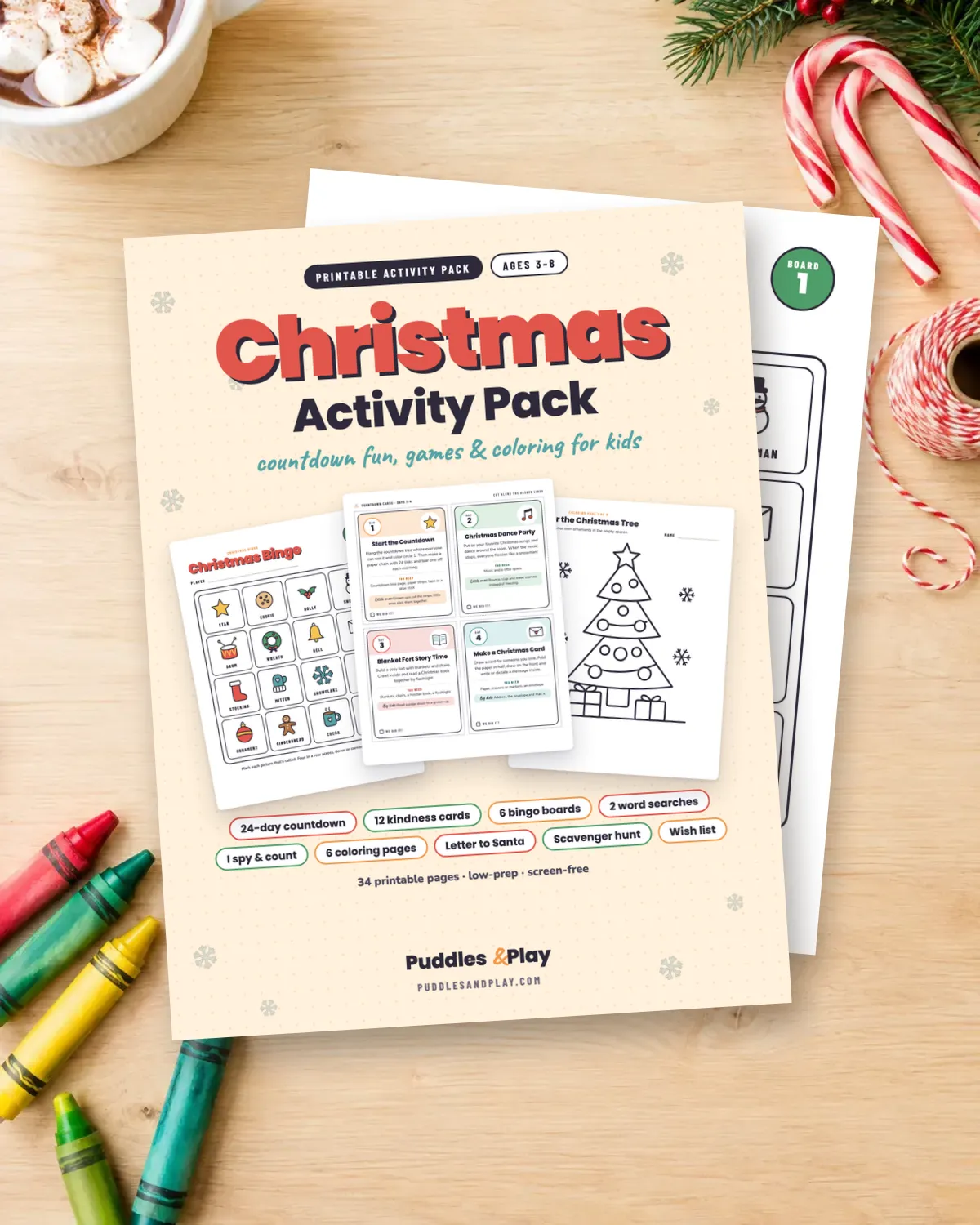
Moving on to winter play? Our winter sensory bins with fake snow has older-toddler options. For December, the Christmas Activity Pack has a 24-day countdown and big coloring pages for older siblings ages 3 to 8.
Baby sensory play supplies
- Start here
Silicone suction tray or divided plate
Typically $10 to $20
Sticks to the high chair tray so the bin stays put.
Check price on Amazon for Silicone suction tray or divided plate -
Washable splash mat
Typically $12 to $25
Goes under the high chair for every messy play session.
Check price on Amazon for Washable splash mat -
Silicone fresh food feeder
Typically $8 to $15
Lets babies mouth frozen fruit without loose pieces.
Check price on Amazon for Silicone fresh food feeder -
Shallow sensory bin with lid
Typically $15 to $30
Low sides are easier for a sitting baby to reach into.
Check price on Amazon for Shallow sensory bin with lid
Frequently asked questions
What age can babies use sensory bins?
Once they can sit steadily on their own, often around 6 months. Start with simple taste safe trays like yogurt paint or water play.
What is a taste safe sensory bin?
A bin made from materials that are fine if a little is eaten, like plain yogurt, cooked pasta or rolled oats. It still needs supervision and no small hard pieces.
Is dry rice safe for babies in a sensory bin?
No. Dry rice and dry beans are choking hazards for babies. Use cooked pasta, oats or mashed foods instead.
How long should a baby sensory session last?
Around 5 to 10 minutes, or until your baby loses interest. Short and often works better than long.
Can I use food coloring in a baby sensory bin?
A drop of food coloring is common, but you can also color with mashed berries, spinach or turmeric. Expect some staining on hands and trays.
Save it for later
Pin this to your Sensory Play board so it's there when you need it.
Save to Pinterest