This post contains affiliate links. As an Amazon Associate we earn from qualifying purchases, at no extra cost to you. Read our disclosure.
Safety first: Always supervise little ones, and skip small parts for kids who still put things in their mouths. Please read our play safety notes before you start.
Key takeaways
- Start around 6 months, when your baby sits with support and reaches.
- Keep sessions to about 5 minutes and stop when your baby turns away.
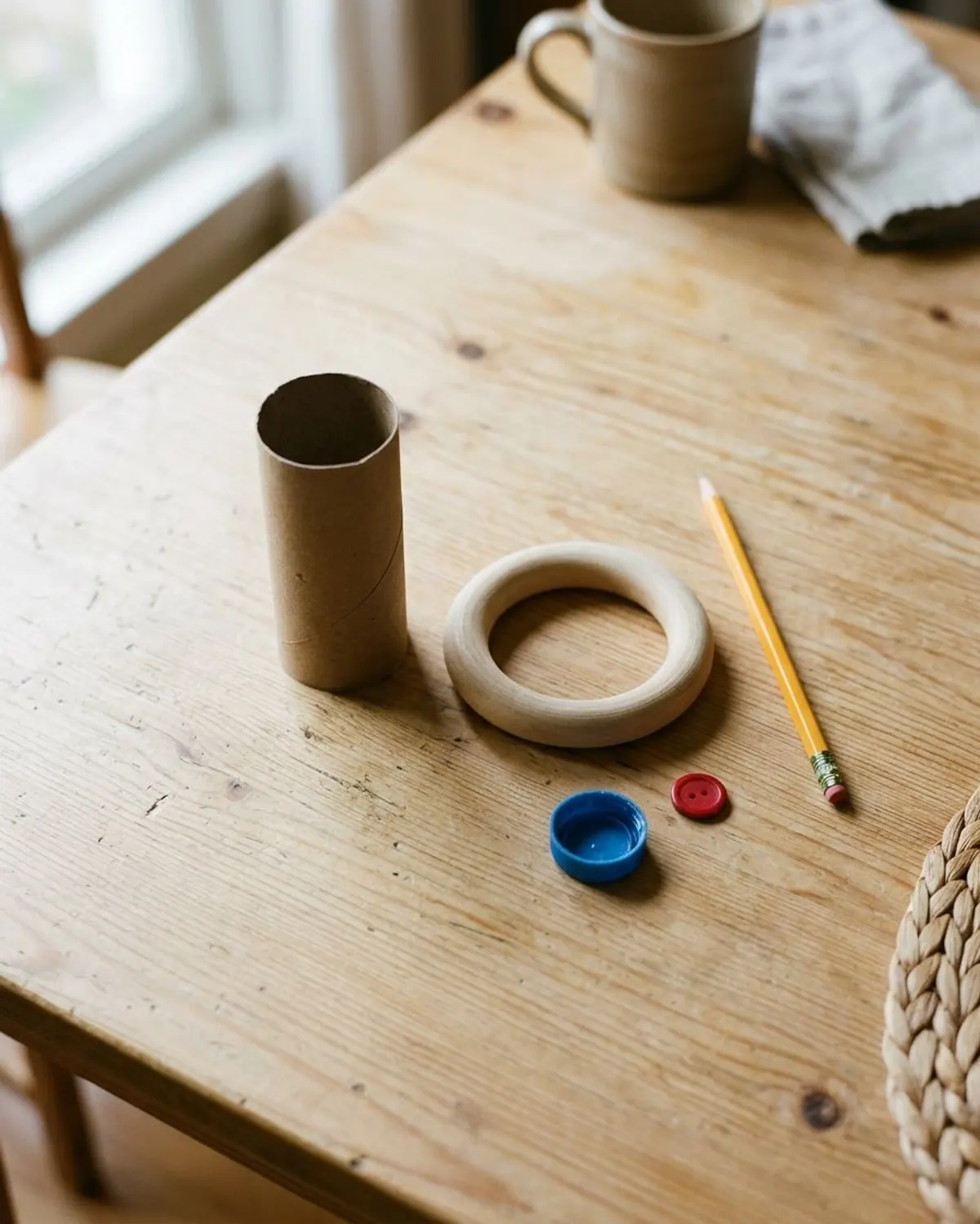
- Everything must be bigger than a toilet paper tube opening, because babies mouth everything.
- Skip dried rice, beans, water beads and honey. Use oats, water, soft pasta and plain yogurt.
- Stay within arm's reach, and rotate a few items instead of adding more.
In this post15 sections
- When can babies start sensory play?
- What you need to start sensory play with a baby
- How to start sensory play with a baby, step by step
- 7 first sensory play ideas for babies 6 months and up
- 1. Treasure basket
- 2. Sealed gel sensory bag
- 3. Shallow water play
- 4. Yogurt painting
- 5. Cooked pasta tray
- 6. Scarves and crinkle paper
- 7. Oat tray with a big spoon
- Baby sensory play safety: mouthing, choking and allergies
- Sensory play mistakes new parents make
- Winter and holiday sensory play for babies
- FAQ
When can babies start sensory play?
Babies are already doing sensory play from birth, because every touch, sound and taste is new. Planned sensory play for babies, with a tray or basket set out on purpose, fits best from about 6 months, once your baby sits with support and reaches for things.
| Age | What baby is doing | Good starting sensory play | Stay close because |
|---|---|---|---|
| 6 months | Sits with support, grabs, mouths everything | Treasure basket, scarves, crinkle paper | Everything goes in the mouth |
| 7 to 8 months | Sits alone, bangs and passes objects | Sealed gel bag on the tray, shallow water play | Water needs hands-on watching |
| 9 to 10 months | Crawls, pokes, pincer grasp starts | Soft cooked pasta, yogurt painting | Small pieces and food allergens |
| 11 to 12 months | Pulls up, scoops, drops things on purpose | Oat tray with a big spoon, cups and a sponge | Dry fillers get tossed and eaten |
What you need to start sensory play with a baby
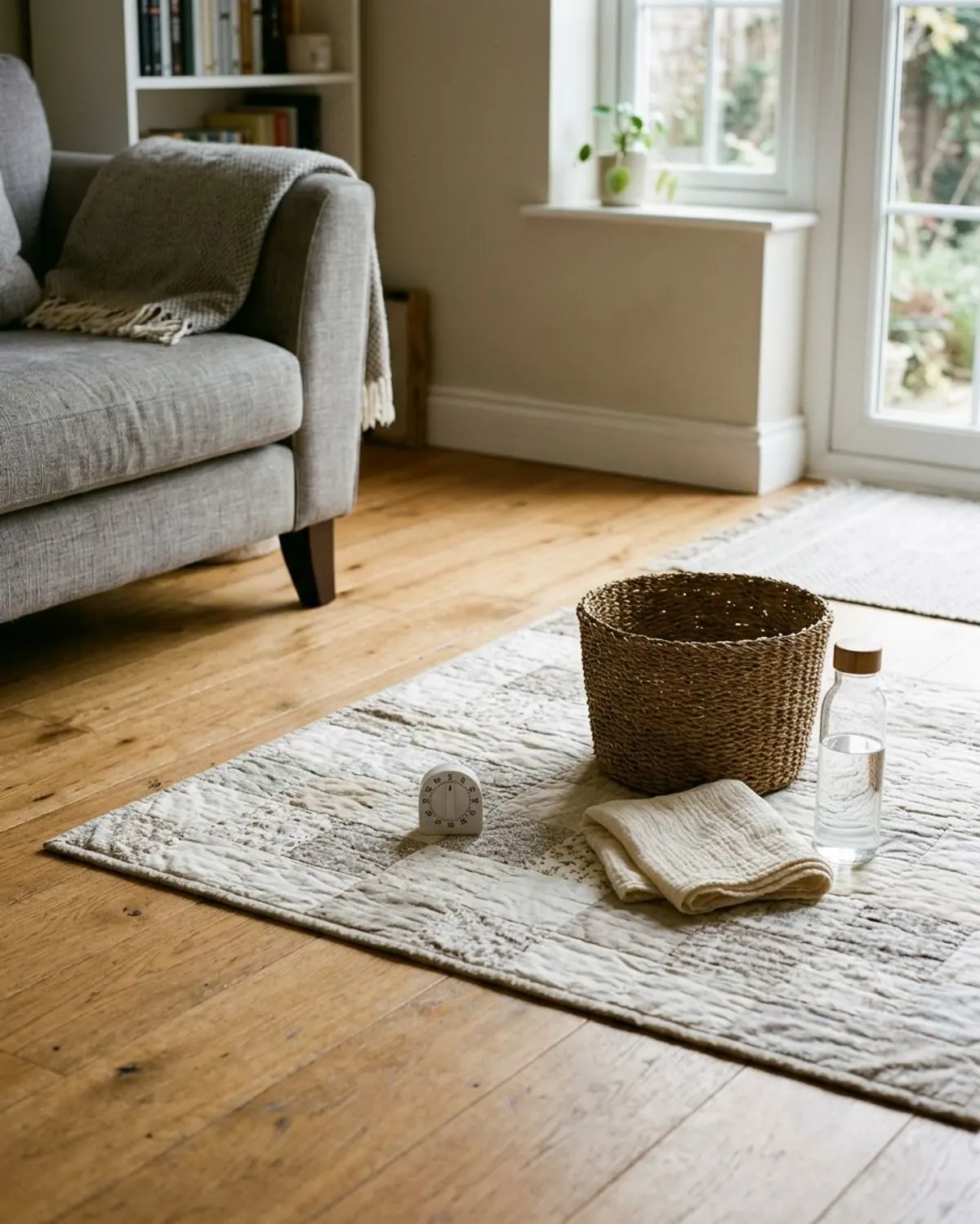
Baby sensory play starter list
Nothing here needs a special baby product. Most of it is already in your kitchen drawer, and a toilet paper tube size check takes ten seconds.
How to start sensory play with a baby, step by step
-
Step 1: Pick the right moment
Play when your baby is awake, fed and calm, not hungry and not right before a nap. A rested baby stays interested; a tired one gets upset fast.
-
Step 2: Choose the spot
Use a mat on the floor for lying and sitting, or a high chair with the tray on. A high chair keeps the mess in a small area, and a floor mat suits tummy time.
-
Step 3: Offer one thing at a time
Start with a single basket or tray. Too many items at once can overwhelm a baby, so pick one texture and let your baby explore it.
-
Step 4: Check every item before you put it down
Anything that fits through an empty toilet paper tube is a choking risk for a baby who mouths. Skip it, or make it too big to swallow.
-
Step 5: Sit within reach and talk
Stay hands-on for the whole session. Name what your baby touches ("soft", "crinkly", "cold") and copy their sounds.
-
Step 6: Keep it to about 5 minutes
Short sessions work best at 6 months. Stop when your baby turns away, fusses or loses interest, even if the tray is still full.
-
Step 7: Rotate, do not add
Swap the basket contents every few days instead of adding more. Familiar things help your baby try new moves, like banging, passing and dropping.
7 first sensory play ideas for babies 6 months and up
1Treasure basket
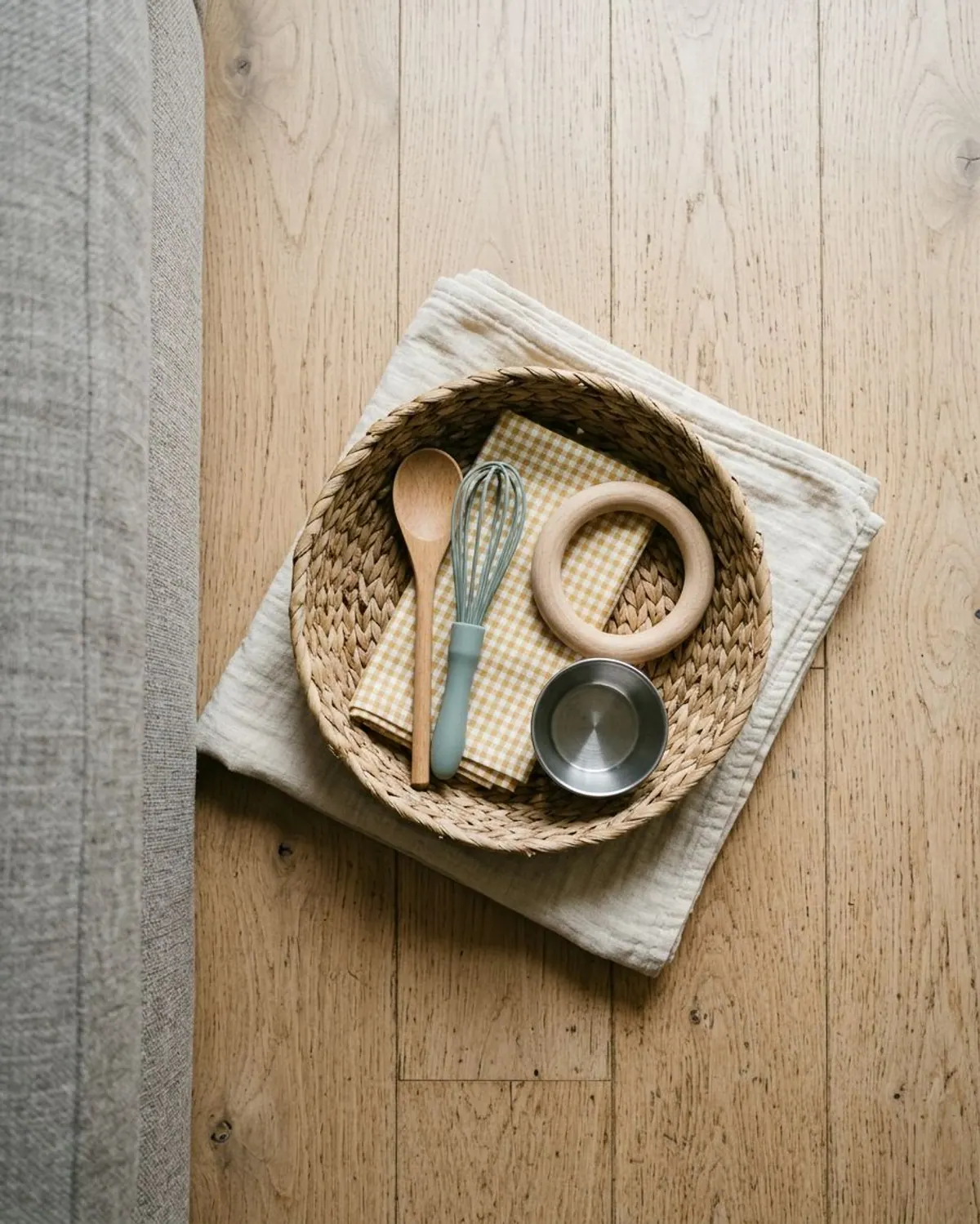
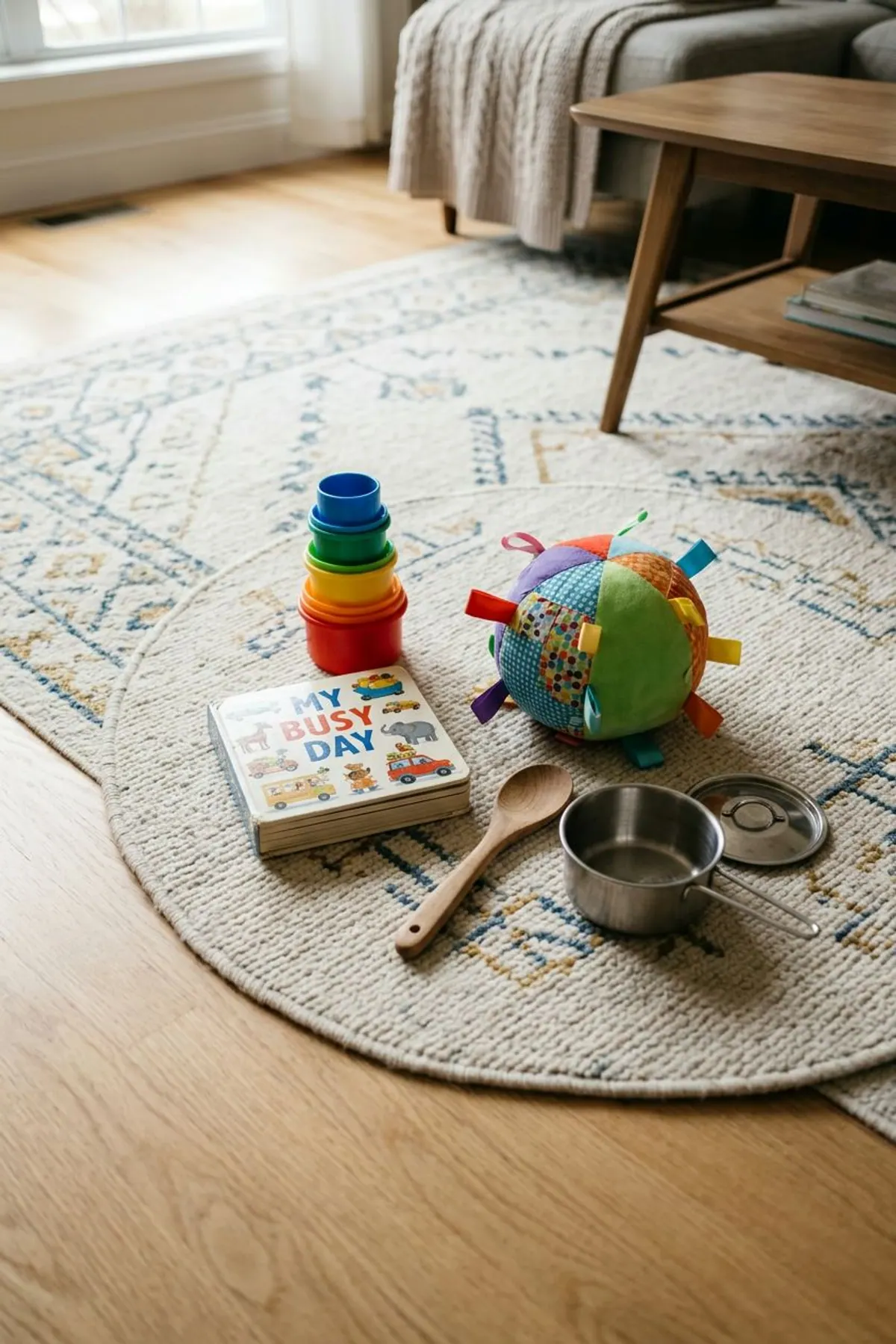
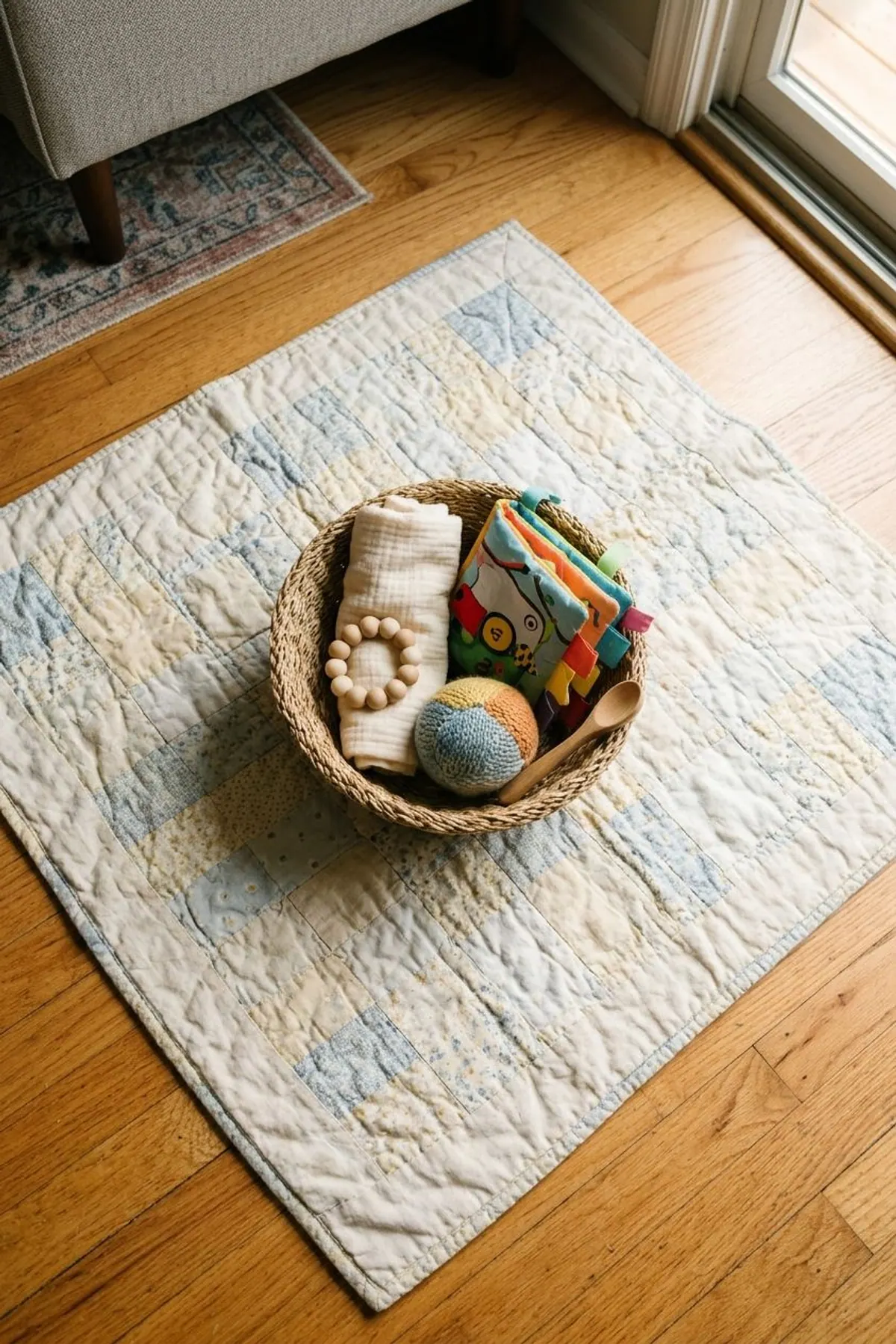
Fill a shallow basket with 5 or 6 safe household objects of different textures: a wooden spoon, a silicone whisk, a stainless steel cup, a large wooden ring and a cloth napkin. Let your baby pick them out one by one and mouth them.
Ages: 6 months and up.
Prep: 3 minutes.
Mess: none.
Supplies: basket, 5 or 6 safe objects.
- Safety: every object must be bigger than a toilet paper tube opening, and free of cracks or loose parts.
Smooth, too big to swallow and easy to wash.
2Sealed gel sensory bag
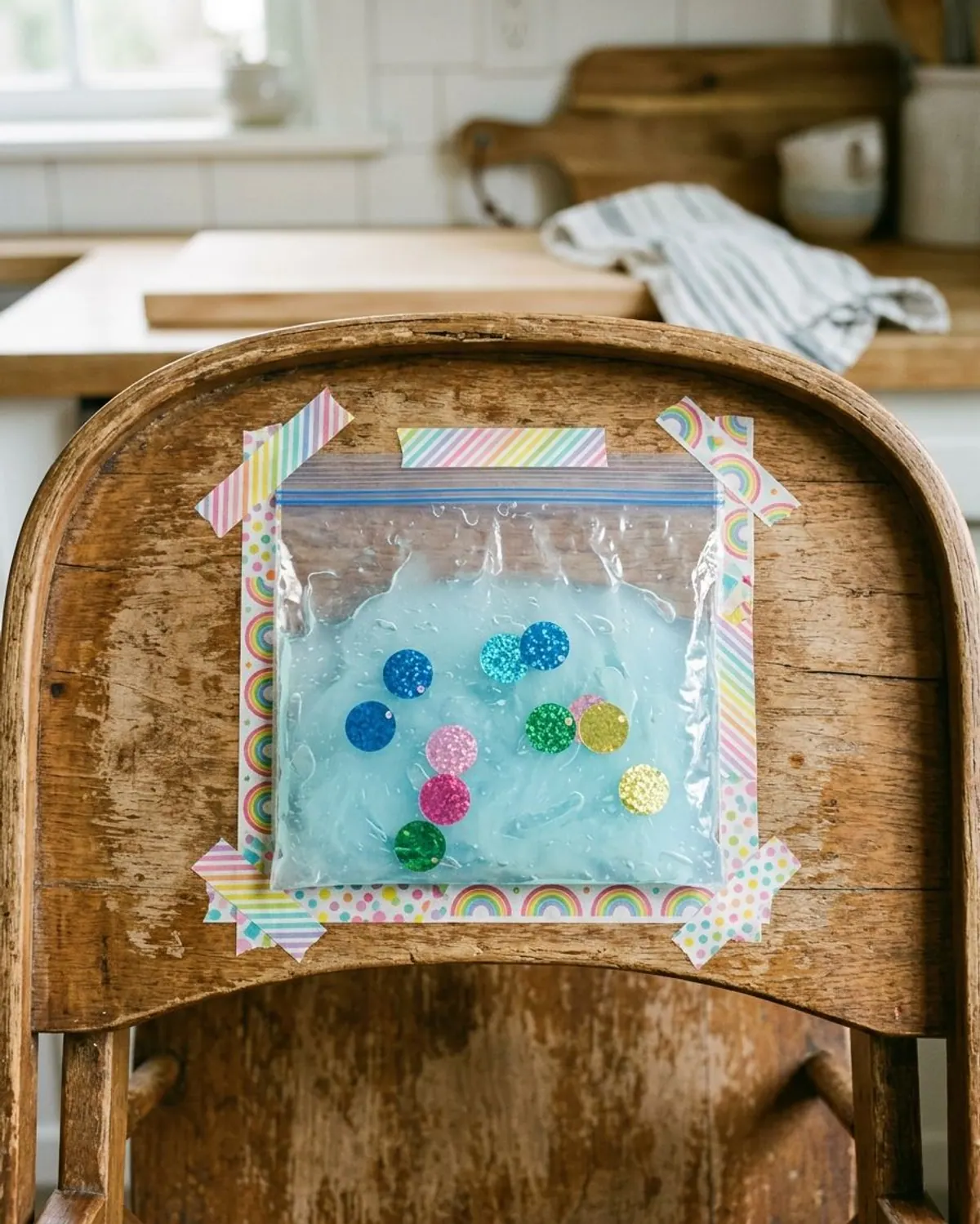
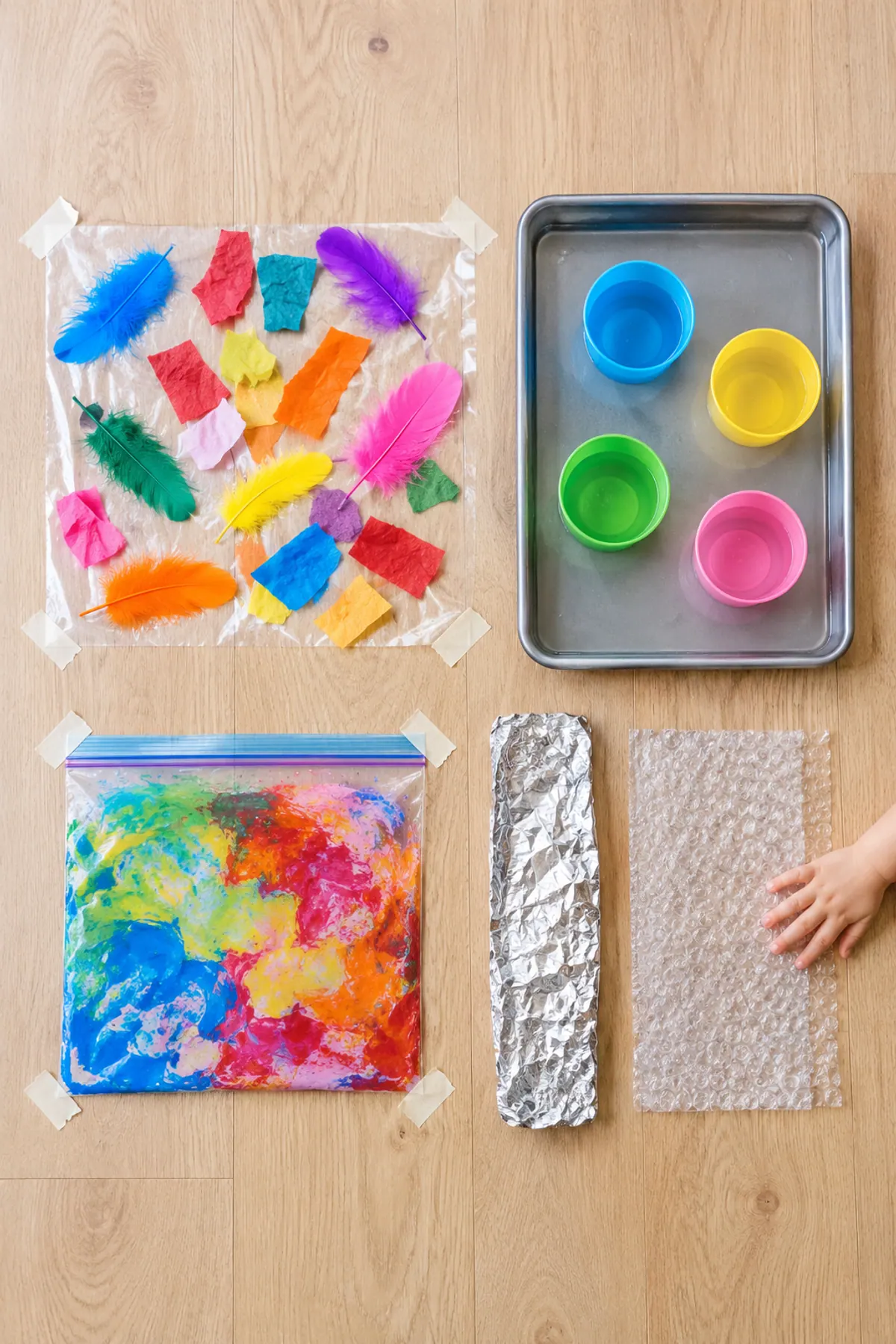
Put hair gel and a few large sequins in a freezer zip bag, squeeze the air out and seal it. Tape the bag flat to the high chair tray with washi tape on all four sides. Your baby pats and presses it with no mess.
Ages: 7 months and up.
Prep: 5 minutes.
Mess: none if sealed.
Supplies: freezer zip bag, hair gel, washi tape.
- Safety: check the seams before every use, and throw the bag away if it tears. Use a double bag if your baby chews at corners.
3Shallow water play
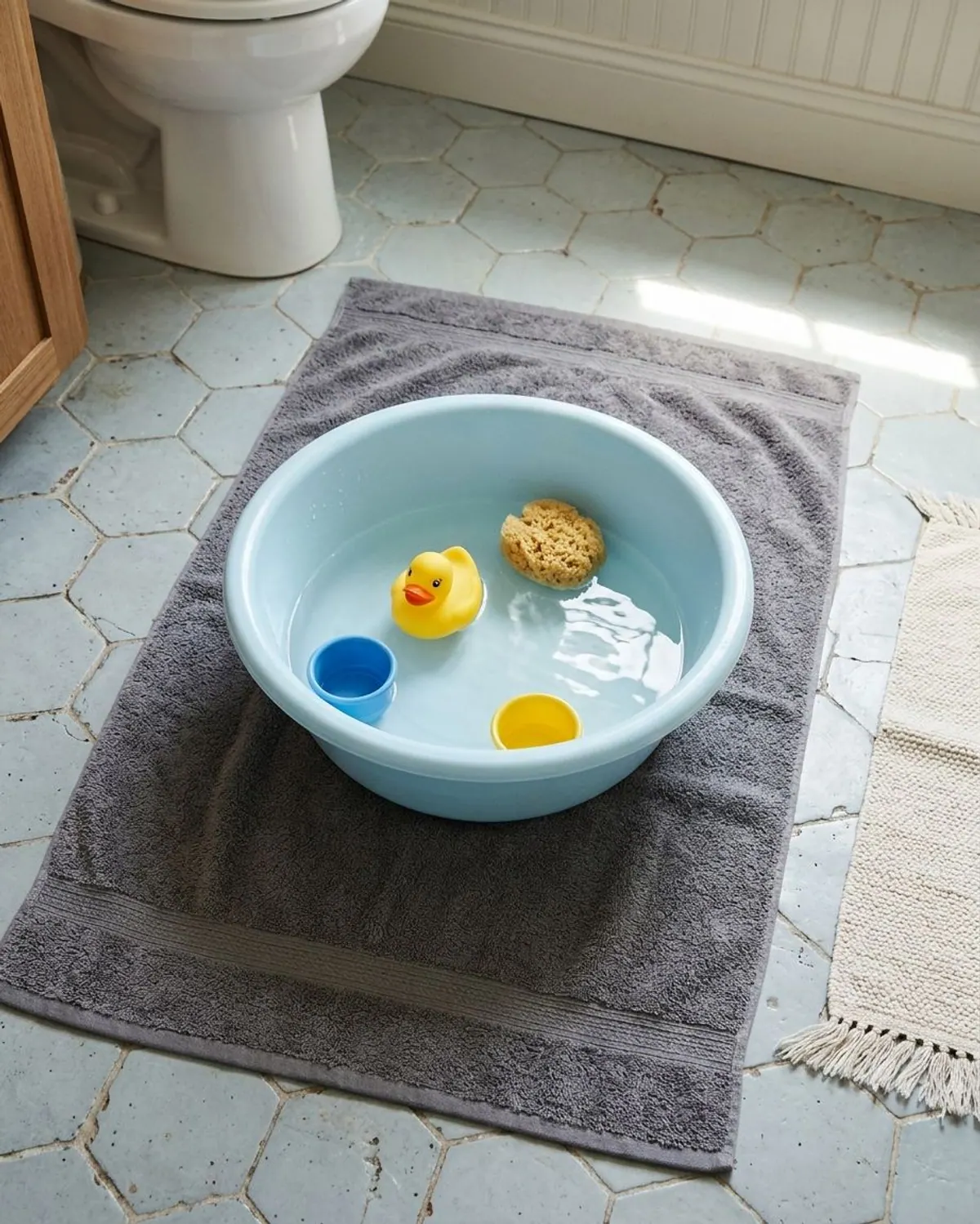
Put an inch of warm water in a wide basin with a sponge and two cups. Your baby splashes and squeezes the sponge. It is also a cheap way to practice pouring later.
Ages: 7 months and up.
Prep: 3 minutes.
Mess: medium (wet).
Supplies: wide basin, sponge, cups, towel.
- Safety: a baby can drown in very little water. Stay within arm's reach the entire time and empty the basin when play ends.
4Yogurt painting
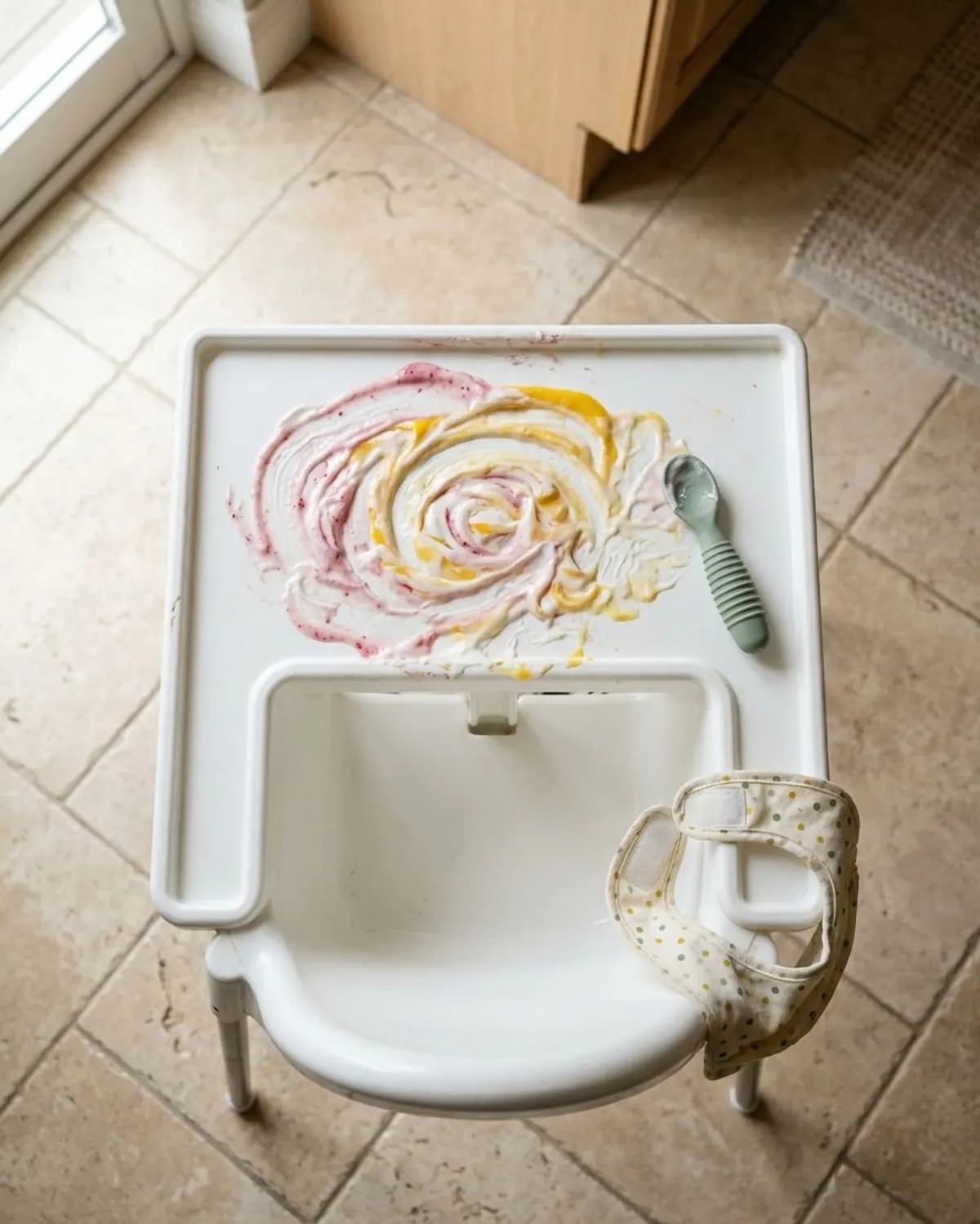
Spread plain whole milk yogurt on the clean high chair tray and swirl in a little fruit puree for color. Your baby smears it with hands and gets a taste-safe sensory experience.
Ages: 8 months and up, once dairy has been tried.
Prep: 3 minutes.
Mess: high.
Supplies: plain yogurt, fruit puree, high chair tray.
- Safety: use food your baby has already eaten. Skip honey under 12 months, and check with your pediatrician if allergies run in your family.
5Cooked pasta tray
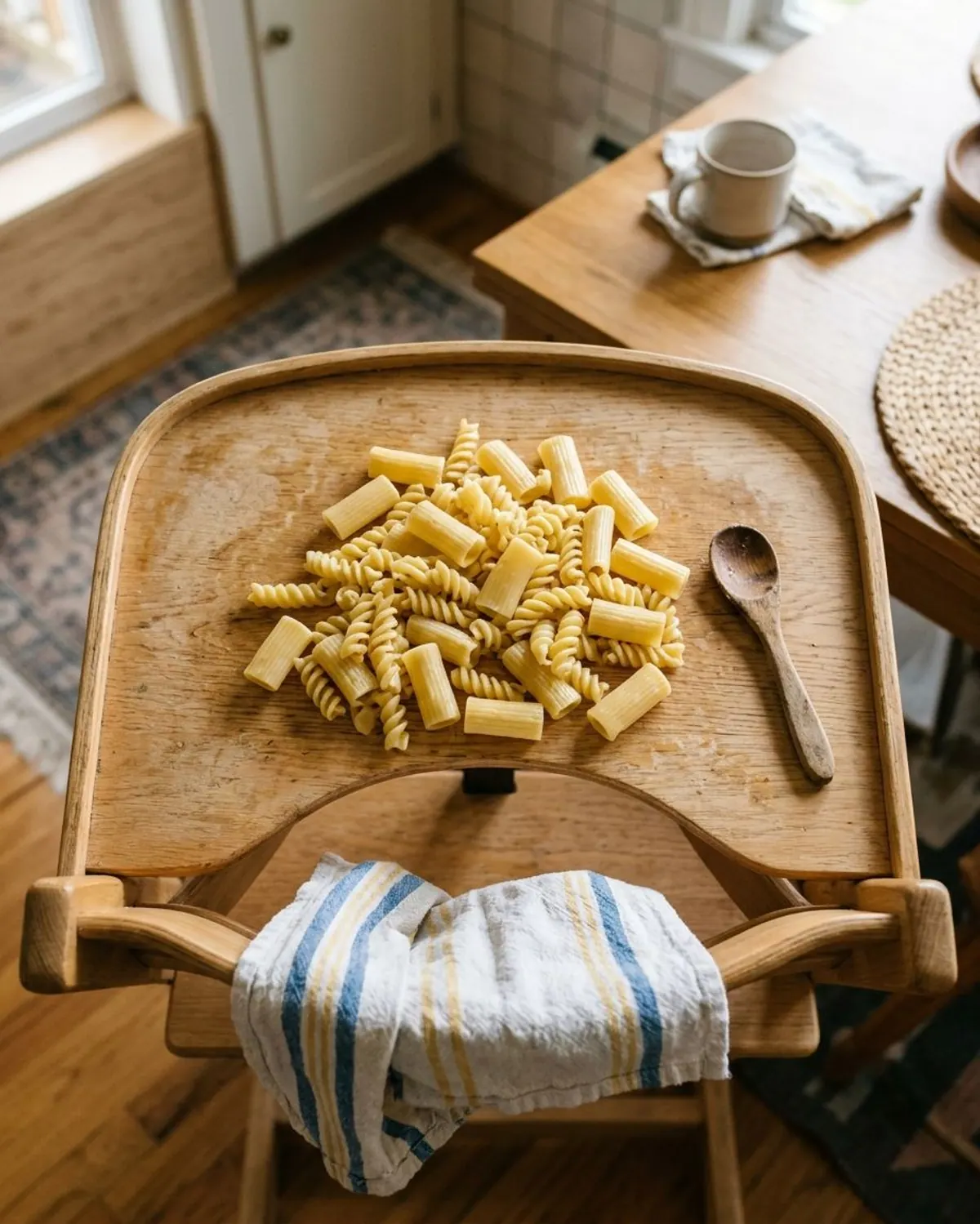
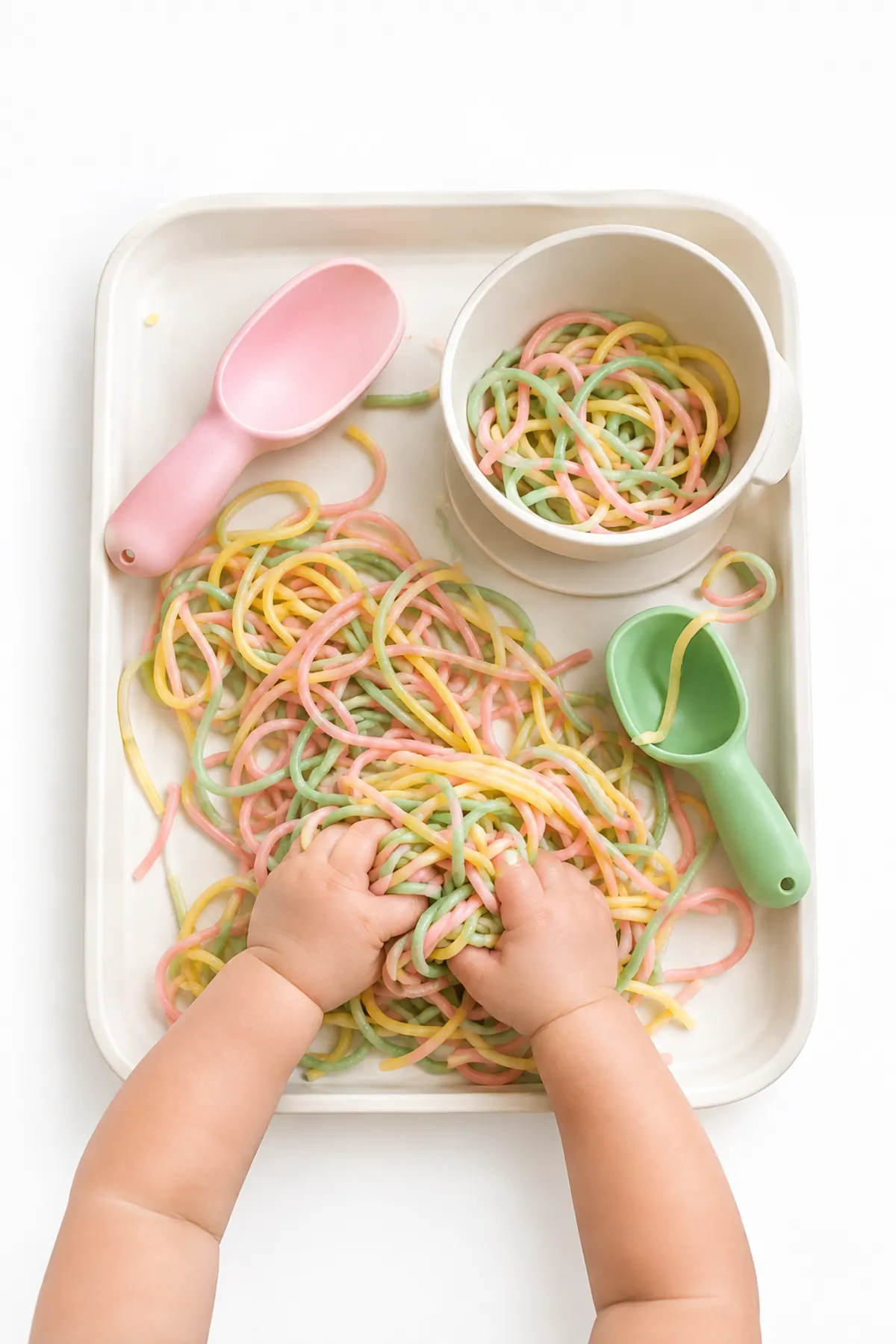
Cook large pasta shapes until very soft, rinse them cool and pile them on the tray. Your baby squishes, grabs and tastes them. The slippery texture is new and the shapes are big enough to hold.
Ages: 9 months and up.
Prep: 12 minutes (mostly cooking).
Mess: high.
Supplies: large pasta shapes, high chair tray.
- Safety: only use soft, cooled pasta and watch for pieces breaking off. Dry pasta is a choking risk.
6Scarves and crinkle paper
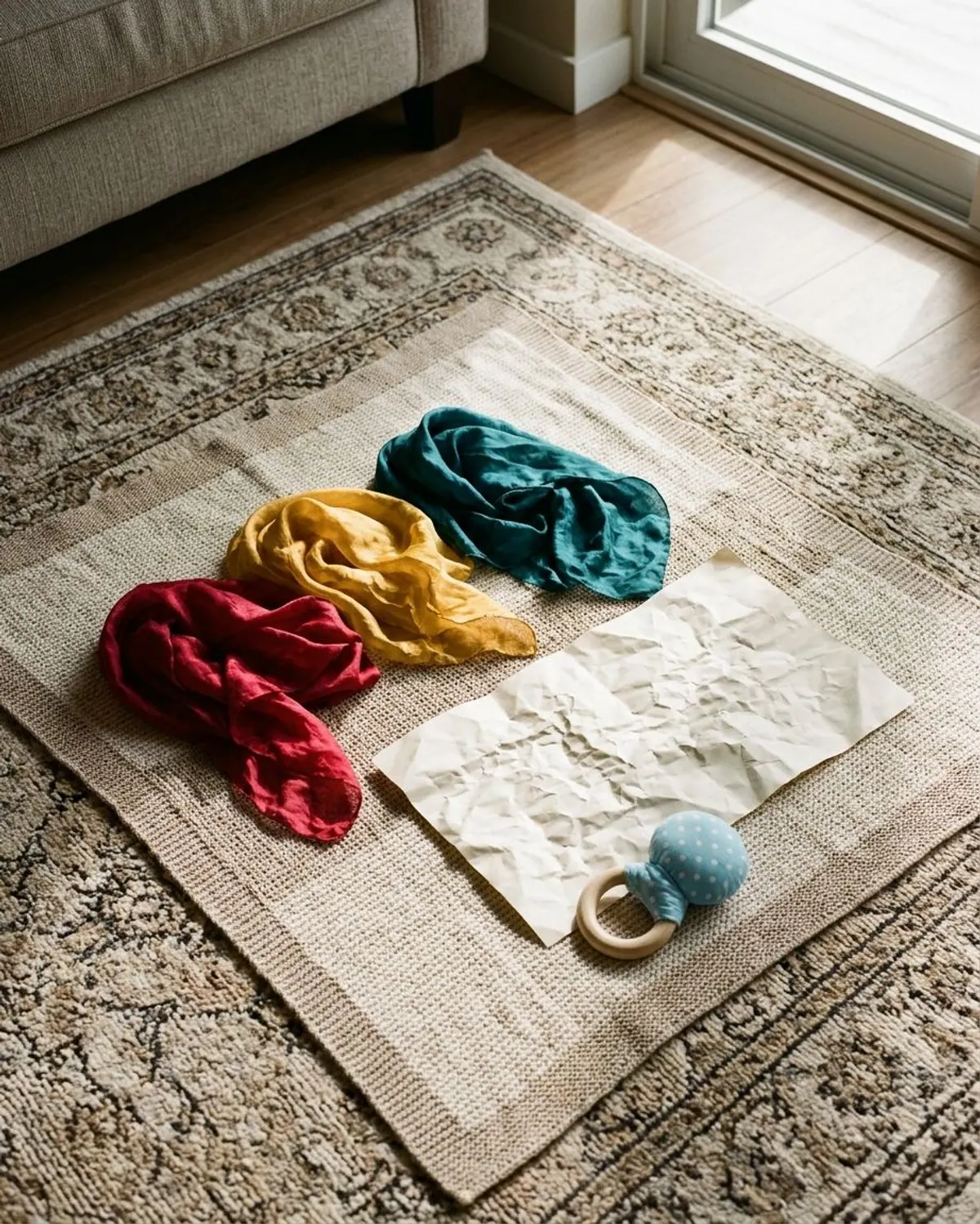
Drape a silk scarf over a toy for peekaboo, then let your baby pull it away. Crinkle a sheet of paper near your baby so they hear it before they touch it.
Ages: 6 months and up.
Prep: 1 minute.
Mess: none.
Supplies: 2 or 3 scarves, paper.
- Safety: scarves can wrap around a neck. Keep play on the floor, hold one end, and put them away when finished.
7Oat tray with a big spoon
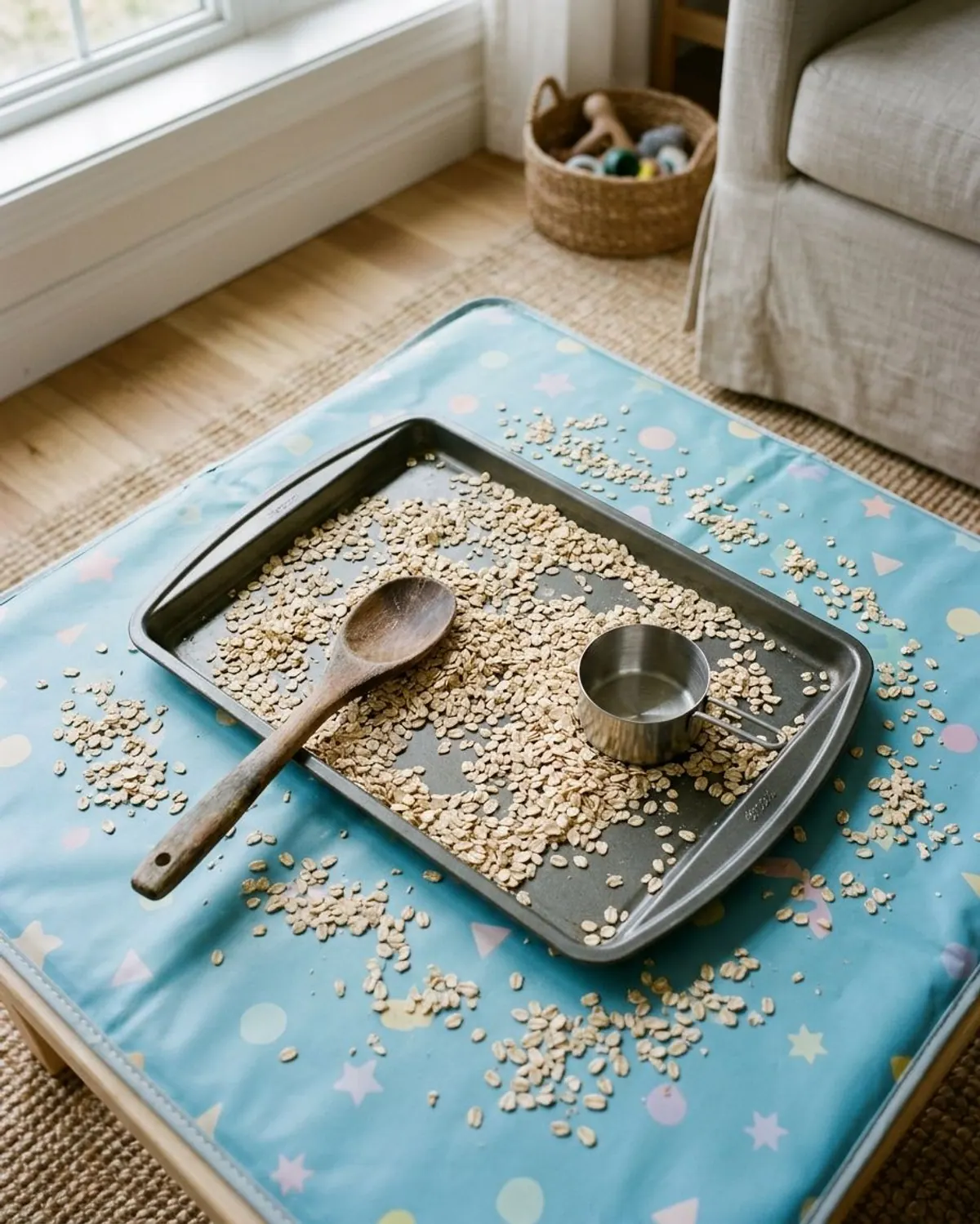
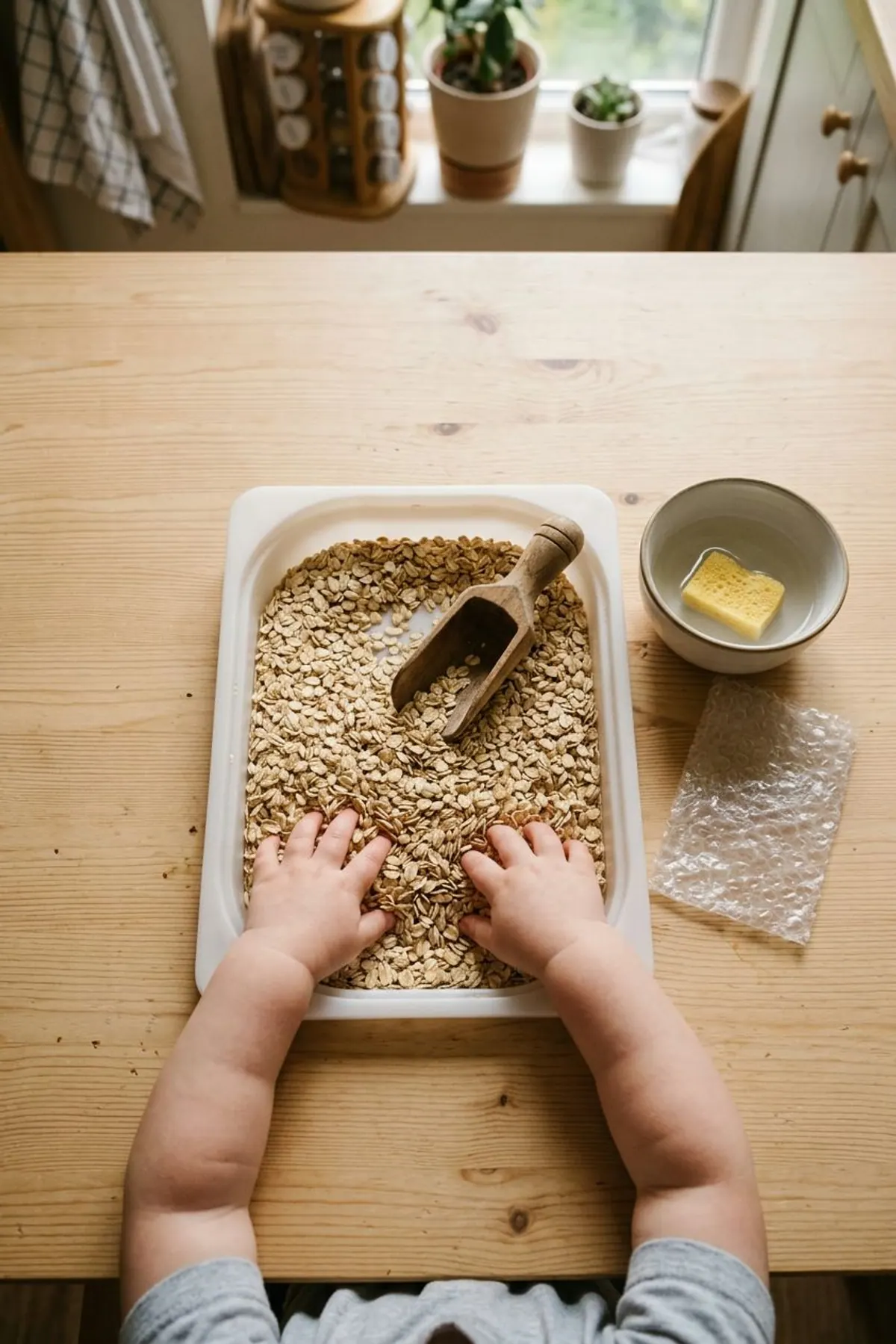
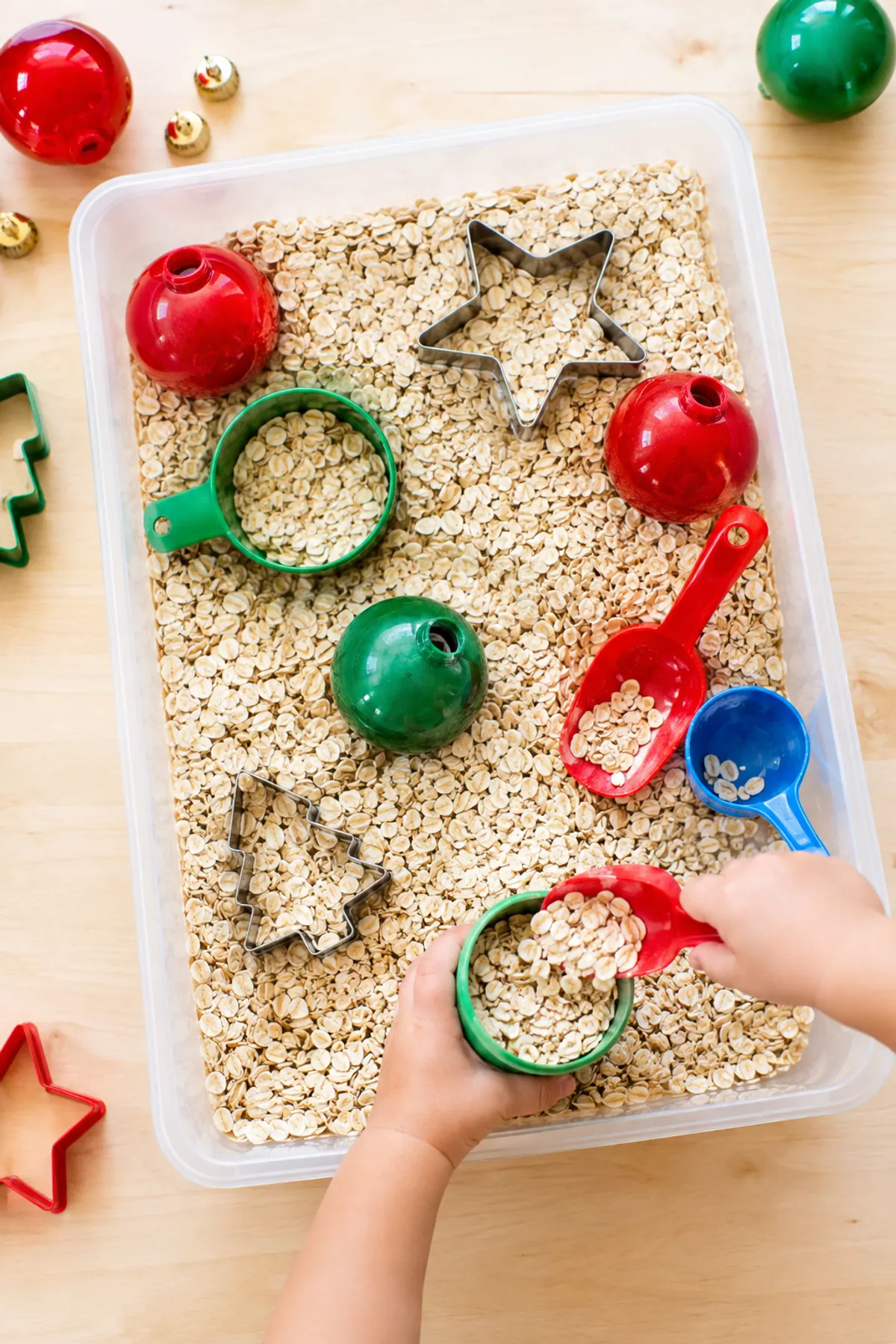
Put a thin layer of dry rolled oats on a baking sheet with raised edges. Your baby grabs, pours and bangs a spoon. Oats are a first dry filler because they are soft, bland and taste safe for most babies.
Ages: 10 months and up.
Prep: 2 minutes.
Mess: medium.
Supplies: rolled oats, baking sheet, big spoon.
- Safety: oats can be a choking risk if your baby stuffs handfuls in. Keep the layer thin and stay within arm's reach.
Baby sensory play safety: mouthing, choking and allergies
The safe-play rules for babies are short, and they apply to every idea above. The CPSC small parts rule is the reason for the toilet paper tube check: anything that fits inside the tube is too small for a child under 3.
What we like
- Large wooden rings, stainless cups, silicone whisks
- Plain yogurt, soft cooked pasta, rolled oats your baby has eaten before
- Sealed, taped bags checked before each use
- Play on the floor or tray with an adult within arm's reach
Keep in mind
- Dried rice, beans or lentils (choking and inhaling risk until your child stops mouthing)
- Water beads, button batteries, magnets, coins or loose googly eyes
- Honey before 12 months
- Any item with a string, cord or loose part that can detach
Not medical advice. If your baby has a food allergy, eczema or a feeding concern, ask your pediatrician before using food-based sensory play. For bins and deeper taste-safe fillers, see our guide to sensory bins for babies and taste safe ideas.
Sensory play mistakes new parents make
Most first attempts go wrong in the same few ways, and every one is easy to fix.
| Mistake | What happens | Fix |
|---|---|---|
| Offering 10 things at once | Baby gets fussy or throws everything | One basket, 5 or 6 safe objects |
| Sessions of 20 minutes | Baby gets overtired, play ends in tears | Aim for about 5 minutes and stop early |
| Playing when baby is hungry or sleepy | Nothing holds attention | Play after a feed and a nap |
| Reaching for rice or beans as a first filler | Choking and inhaling risk | Start with oats, water or soft cooked pasta |
| Expecting a result | Frustration for you | The goal is exploring, not making anything |
Winter and holiday sensory play for babies
Holiday and winter sensory play for babies works the same way: one safe theme per tray. Try a tray of soft pine-colored scarves and a silicone whisk, or a bag of blue gel with white sequins for a "snow" sensory bag.
For the toddler stage after this one, our beginner guide to sensory play for toddlers has a 7-day starter plan, and activities for 1 year olds covers the mouthing stage in more depth.
Baby sensory play shopping list
-
Wooden teething rings and rattles
Typically $8 to $15
Smooth, large and washable.
Check price on Amazon for Wooden teething rings and rattles -
Silk play scarves
Typically $10 to $20
Lightweight and good for peekaboo.
Check price on Amazon for Silk play scarves -
Silicone baby whisk and spoons
Typically $8 to $14
Soft on gums and dishwasher safe.
Check price on Amazon for Silicone baby whisk and spoons -
Stainless steel baby cups
Typically $10 to $20
Light to grab and does not stain.
Check price on Amazon for Stainless steel baby cups -
Baby-safe splat mat
Typically $12 to $25
Keeps cleanup to a quick wipe.
Check price on Amazon for Baby-safe splat mat
Frequently asked questions
When can babies start sensory play?
Babies learn through their senses from birth. Planned sensory play, like a basket of safe objects or a taped sensory bag, starts around 6 months when your baby can sit with support and reach for things.
How long should a sensory play session with a 6 month old last?
About 5 minutes. Stop sooner if your baby turns away, fusses or rubs their eyes. Short, calm sessions beat long ones with an overtired baby.
What is safe for a 6 month old to play with?
Objects bigger than a toilet paper tube opening, such as large wooden rings, silicone whisks, stainless steel cups and cloth. Taste-safe foods your baby has already tried also work. Always stay within reach.
Can babies play with rice or dried beans?
Not while they still mouth everything. Dried rice and beans are choking and inhaling risks. Start with oats, water or soft cooked pasta, and bring in rice only when your child stops mouthing, usually after age 2.
Do I need to buy special sensory toys for my baby?
No. A wooden spoon, a stainless cup, a silicone whisk, scarves and a sheet of paper are enough to start. Rotate them rather than buying more.
Save it for later
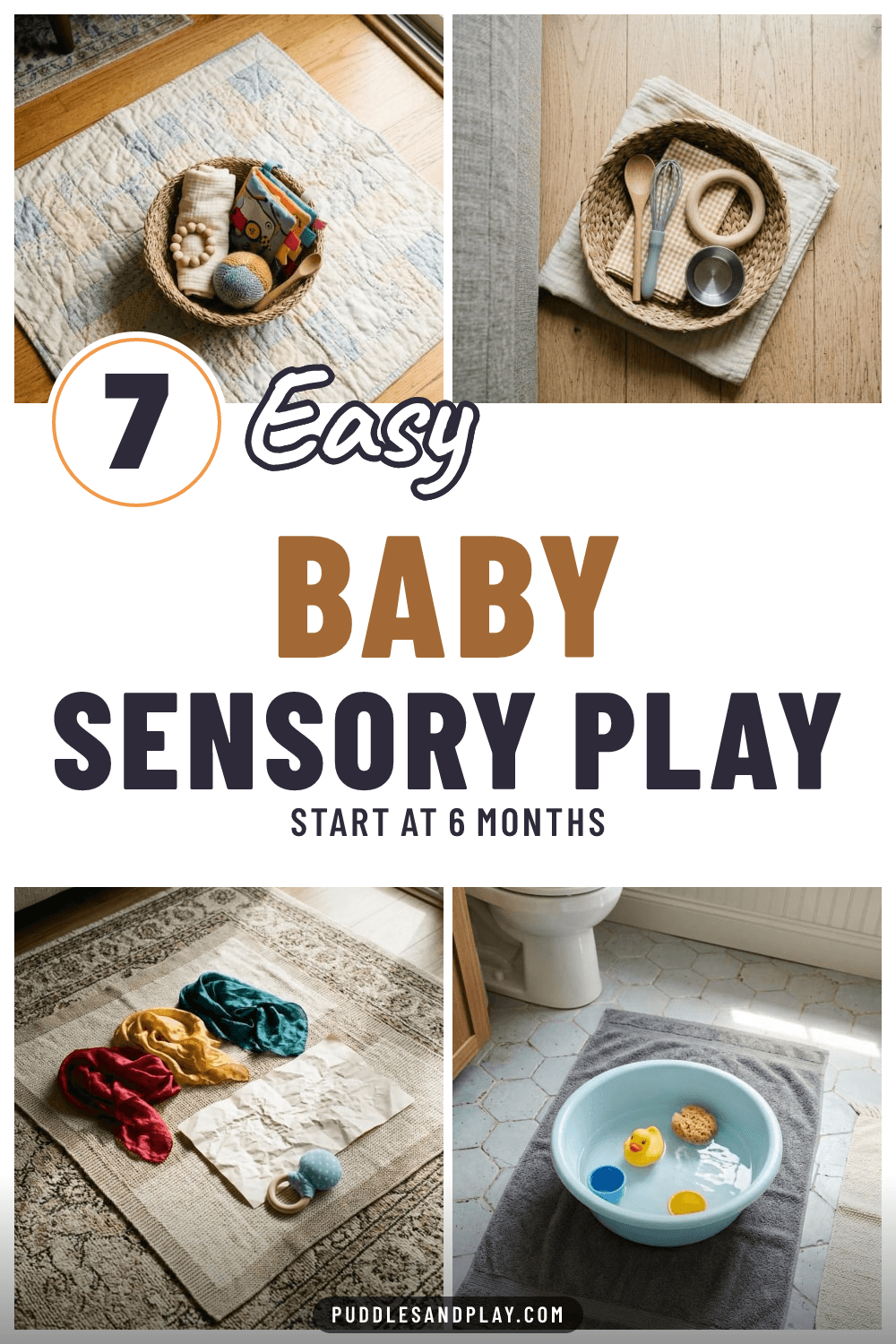
Pin this to your Sensory Play board so it's there when you need it.
Save to Pinterest