This post contains affiliate links. As an Amazon Associate we earn from qualifying purchases, at no extra cost to you. Read our disclosure.
Safety first: Always supervise little ones, and skip small parts for kids who still put things in their mouths. Please read our play safety notes before you start.
Key takeaways
- Sensory play works on trays, windows, walls and in tents, not just in bins.
- Pick one idea per sense across a week instead of doing everything at once.
- Start with zero-mess ideas if your toddler dislikes mess.
- Skip water beads, which swell if swallowed.
- Stay within arm's reach and keep every piece bigger than a toilet paper tube is wide.
In this post29 sections
- The short answer: sensory play does not need a bin
- Messy touch play on a tray or table
- 1. Water painting on dark paper
- 2. Yogurt finger paint
- 3. Soap foam tray
- 4. Ice painting
- 5. Cooked noodle tray
- Dry touch, textures and window play
- 6. Contact paper sticky wall
- 7. Squish bag on a window
- 8. Texture walk
- 9. Sensory bottles
- 10. Feel-and-find sock
- 11. Store-bought playdough squish
- Sight: light, color and movement
- 12. Flashlight tent
- 13. Scarf pull from a tissue box
- 14. Warm and cool washcloths
- 15. Bubble wrap stomp
- Smell and sound
- 16. Smell jars
- 17. Pots and spoons band
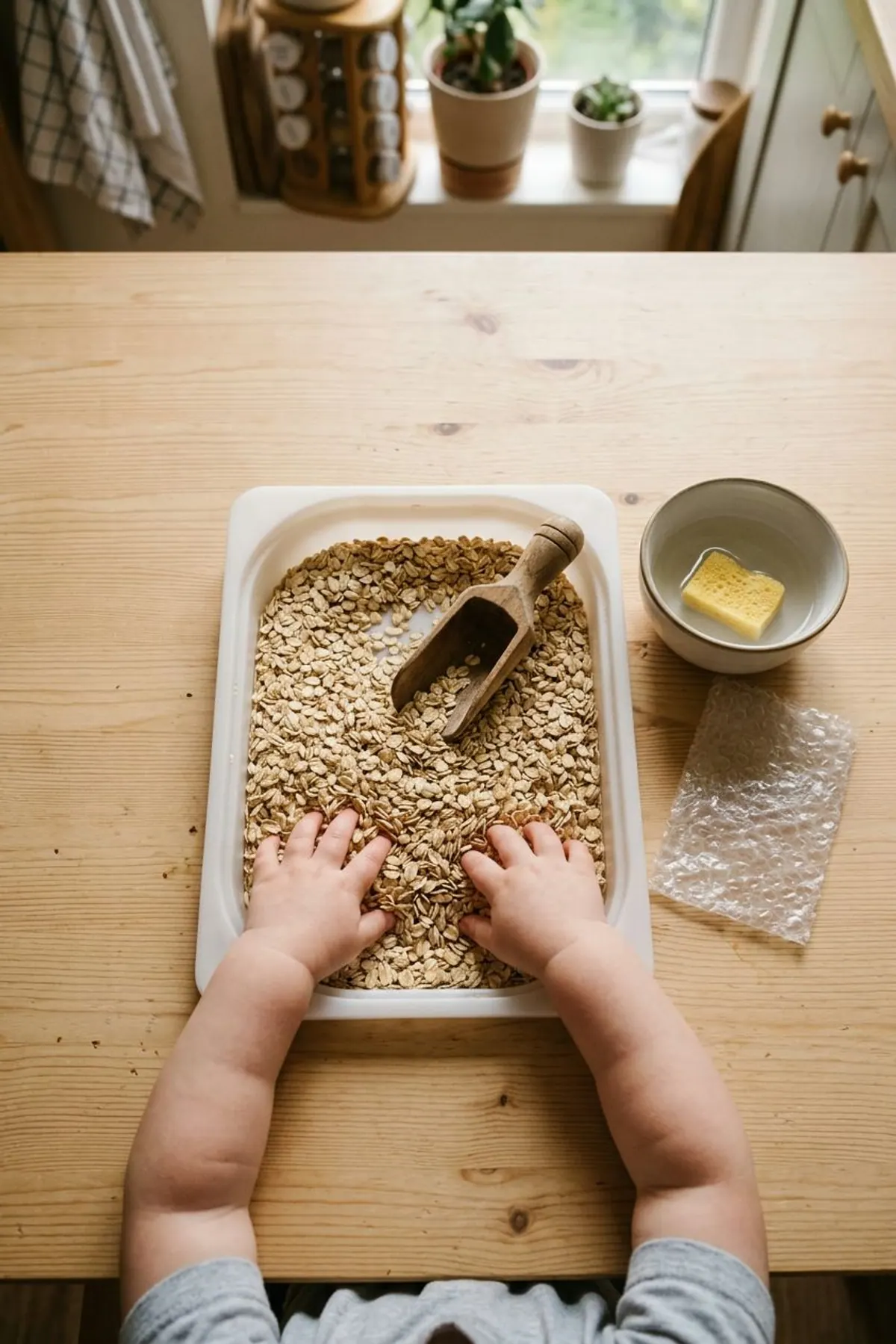
- 18. Sponge squeeze
- 19. Whisk and pour
- 20. Bottle shakers
- 21. Lotion hand massage
- A simple way to use this list
- Supplies that make sensory play easier
- FAQ
This post may contain Amazon affiliate links. If you buy through them we may earn a small commission at no extra cost to you.
The short answer: sensory play does not need a bin
Sensory activities for toddlers work on a tray, a window, a wall, a flashlight beam or a sink. The 21 ideas below use things from the kitchen and recycling bin, and they cover touch, sight, smell and sound. Each one lists ages, prep time, mess level, supplies and a safety note. Nothing here uses water beads, which swell if swallowed.
| Mess level | Prep | Try these |
|---|---|---|
| None | 1 to 2 minutes | Texture walk, smell jars, flashlight tent, scarf pull, squish bag on a window |
| Low | 2 to 3 minutes | Contact paper wall, water painting, pots and spoons, sensory bottles, feel-and-find sock |
| Medium | 3 to 5 minutes | Soap foam, ice painting, sponge squeeze, whisk and pour, warm and cool washcloths |
| High | 5 minutes | Yogurt finger paint, cooked noodles, bubble wrap stomp |
If you do want a container, our sensory bin ideas under $5 and step-by-step safe sensory bin guide cover that. New to sensory play? Start with the complete beginner guide.
Messy touch play on a tray or table
A rimmed baking sheet is the one tool in this section. It keeps the mess in one place and washes in the sink.
1Water painting on dark paper
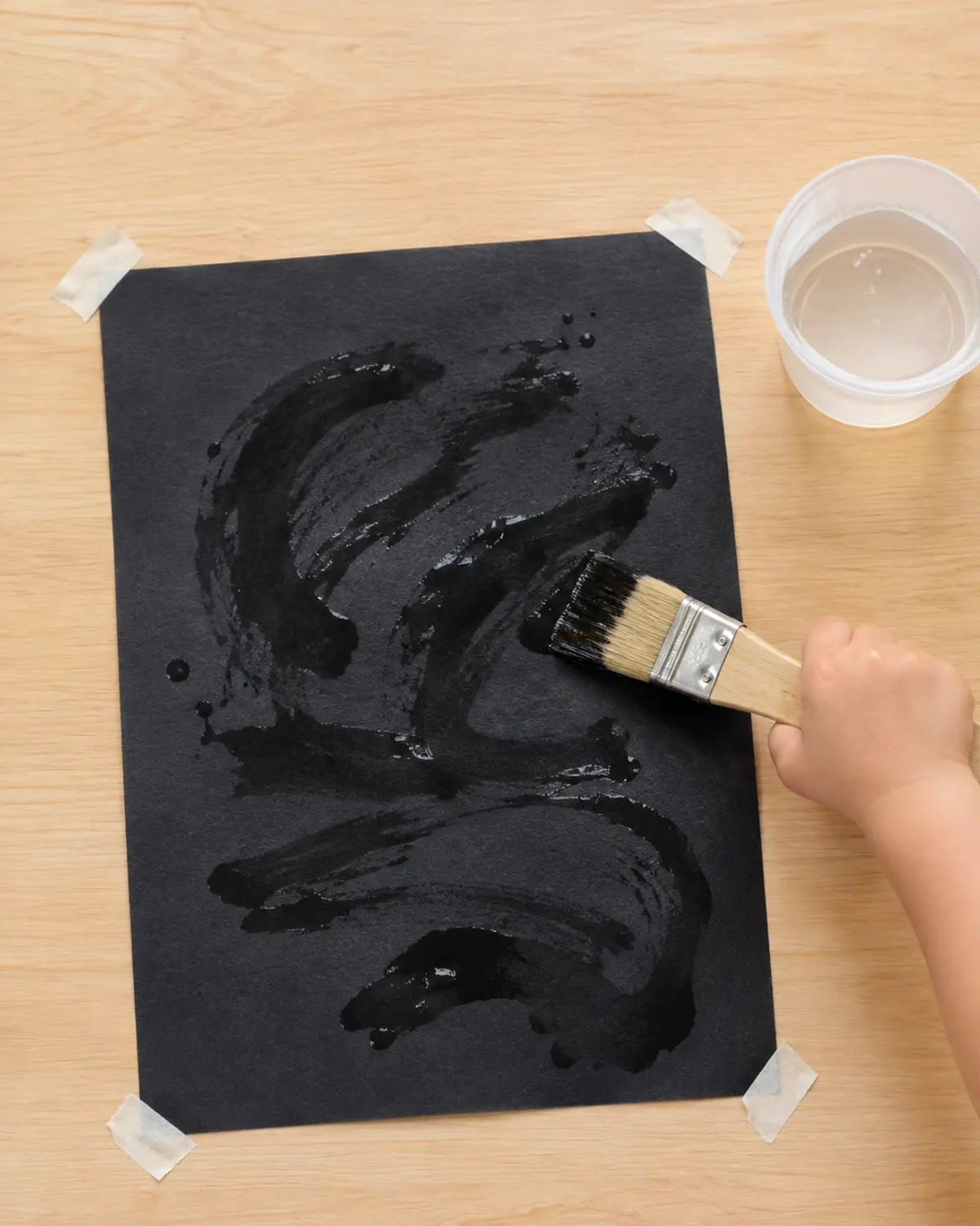
Tape black paper to the table and hand over a wide brush and a cup of water. The strokes show up dark and shiny, then fade, so there is nothing to clean and nothing to stain.
Ages: 12 months to 3
Prep: 2 minutes
Mess: low
Supplies: black paper, painter's tape, wide brush, small cup of water
Safety: use a wide chunky brush. Never leave water unattended with a toddler, and stay within arm's reach the whole time and keep any small piece bigger than a toilet paper tube is wide.
Short, wide handles are easier for small hands.
2Yogurt finger paint
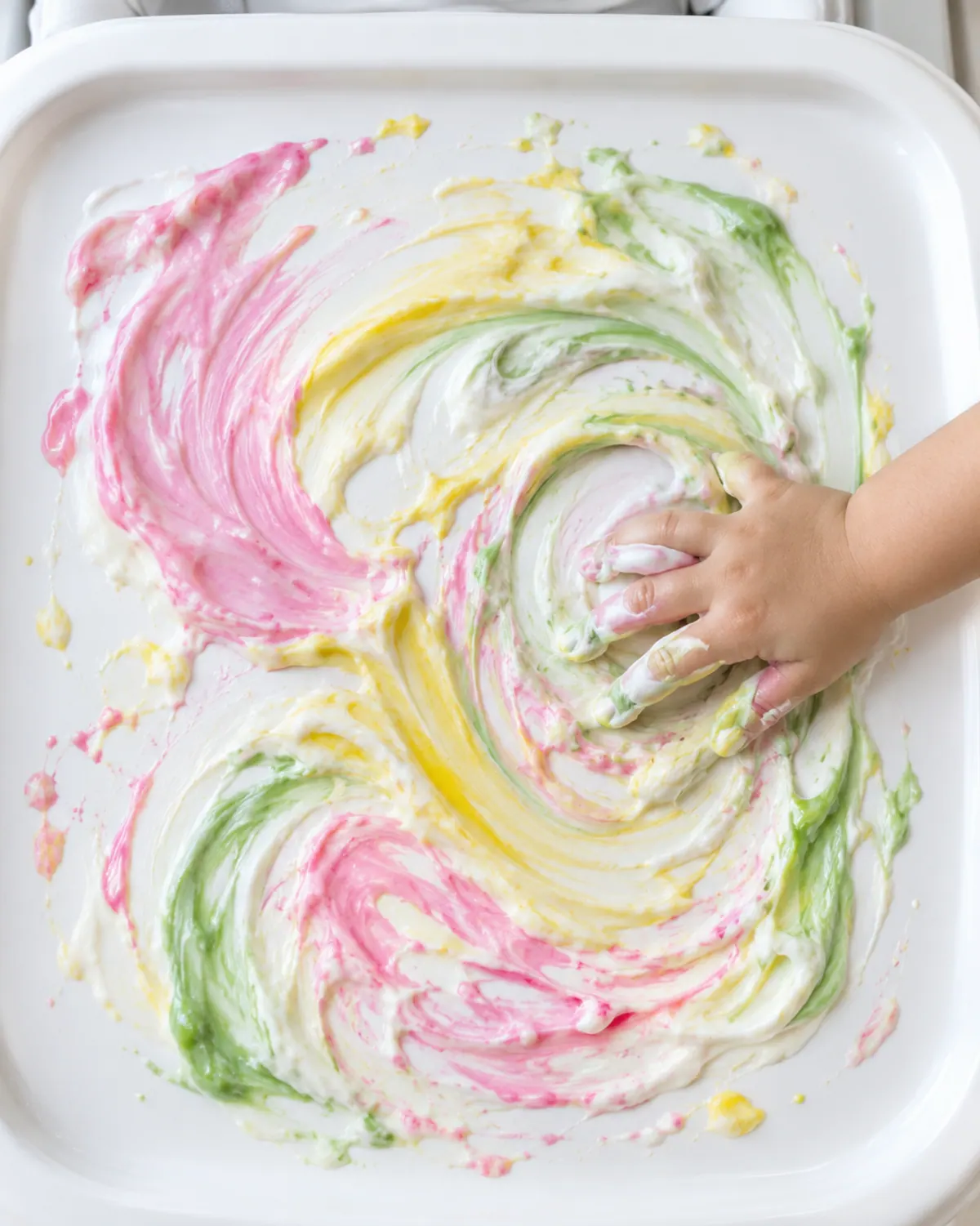
Stir a few drops of food coloring into plain yogurt in muffin cups and spread it on a tray. It is cold, slippery and safe if some ends up in a mouth.
Ages: 12 months to 3
Prep: 3 minutes
Mess: high
Supplies: plain yogurt, food coloring, muffin tin, tray
Safety: check for dairy allergies before you begin, keep colors away from clothes and stay within arm's reach the whole time and keep any small piece bigger than a toilet paper tube is wide.
3Soap foam tray
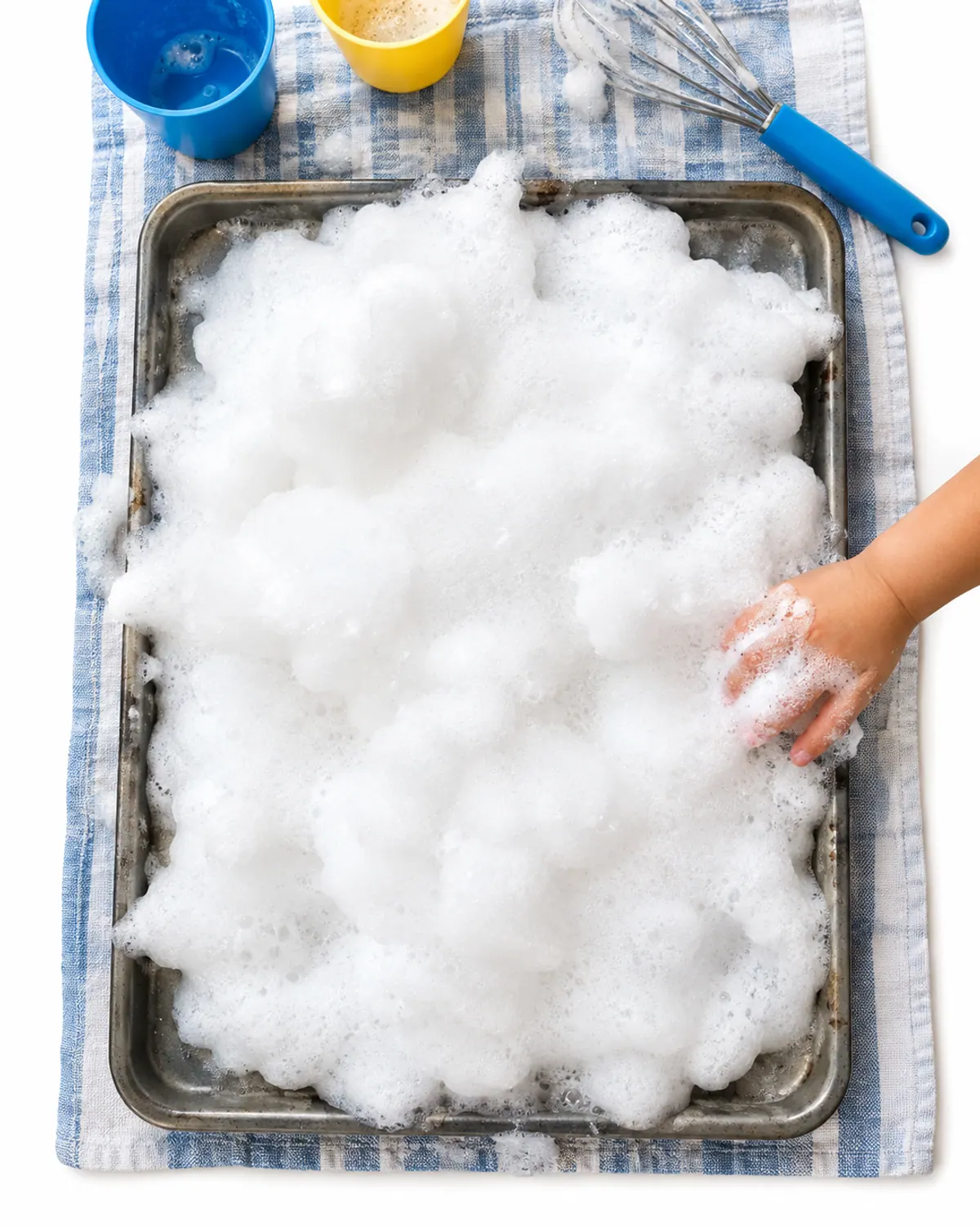
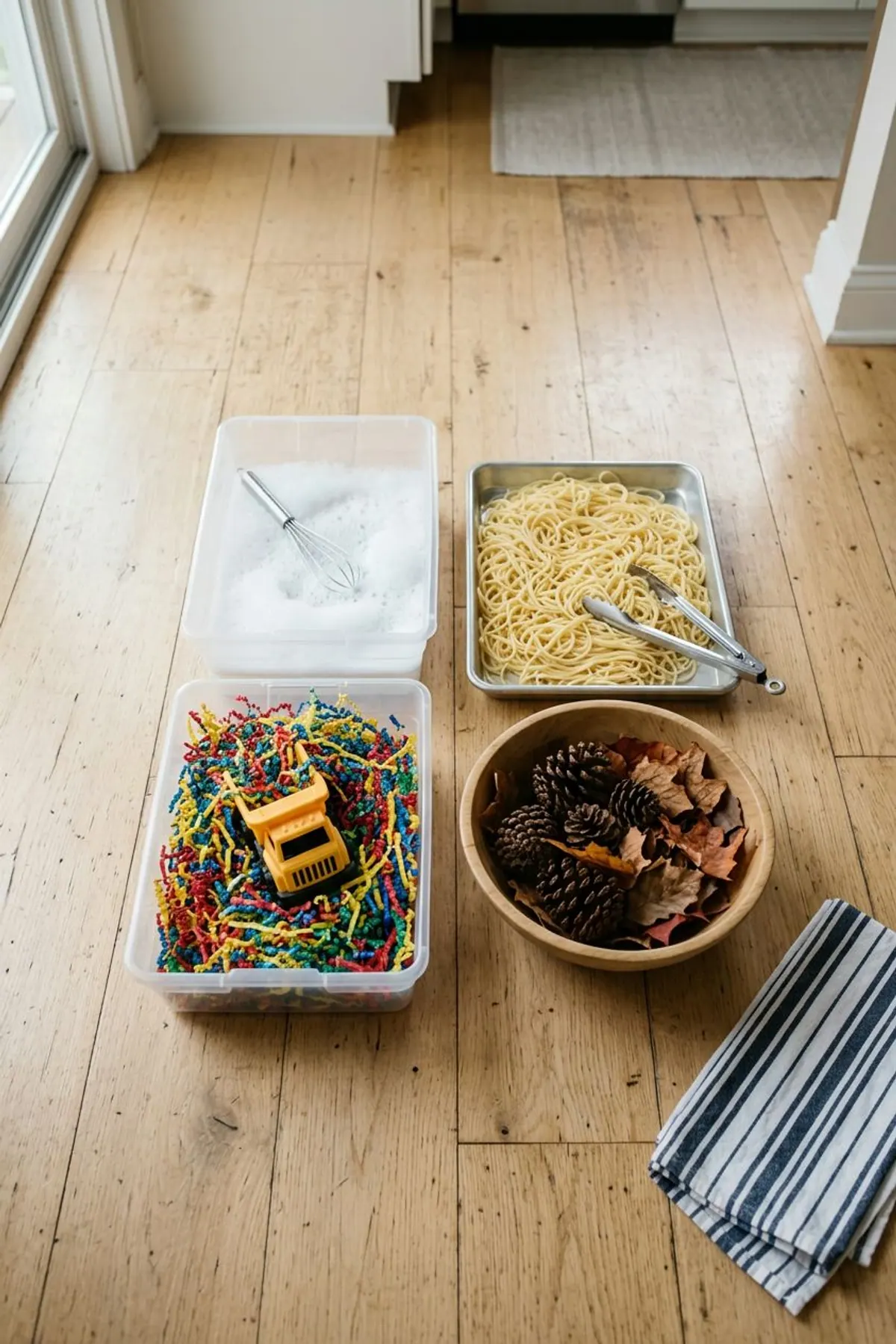
Whisk a squirt of baby wash with a little warm water until it foams, then pile it on a tray with cups and a spoon. It works for scooping, poking and squishing.
Ages: 18 months to 3
Prep: 3 minutes
Mess: medium
Supplies: baby wash, warm water, whisk, tray, towel
Safety: soap foam is not food. Keep it out of eyes and mouths, rinse hands afterward and stay within arm's reach the whole time and keep any small piece bigger than a toilet paper tube is wide.
4Ice painting
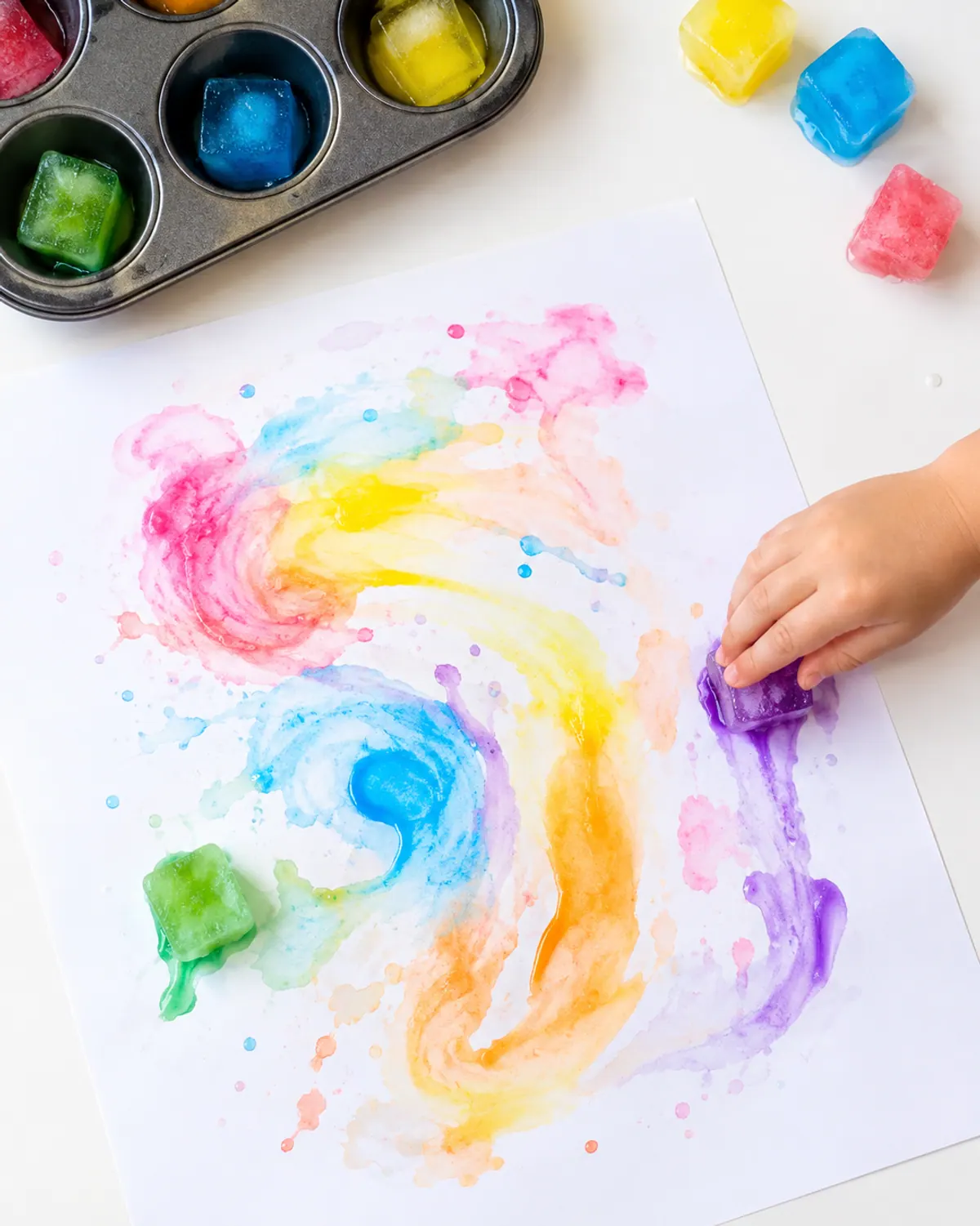
Freeze water with a few drops of food coloring in a muffin tin, with a spoon handle in each as a holder. Slide the cubes across paper and watch the color melt and swirl.
Ages: 2 to 3
Prep: 5 minutes, plus freezing
Mess: medium
Supplies: ice cube tray or muffin tin, food coloring, paper
Safety: ice is slippery and cold. Use large cubes, never let them go in the mouth and stay within arm's reach the whole time and keep any small piece bigger than a toilet paper tube is wide.
5Cooked noodle tray
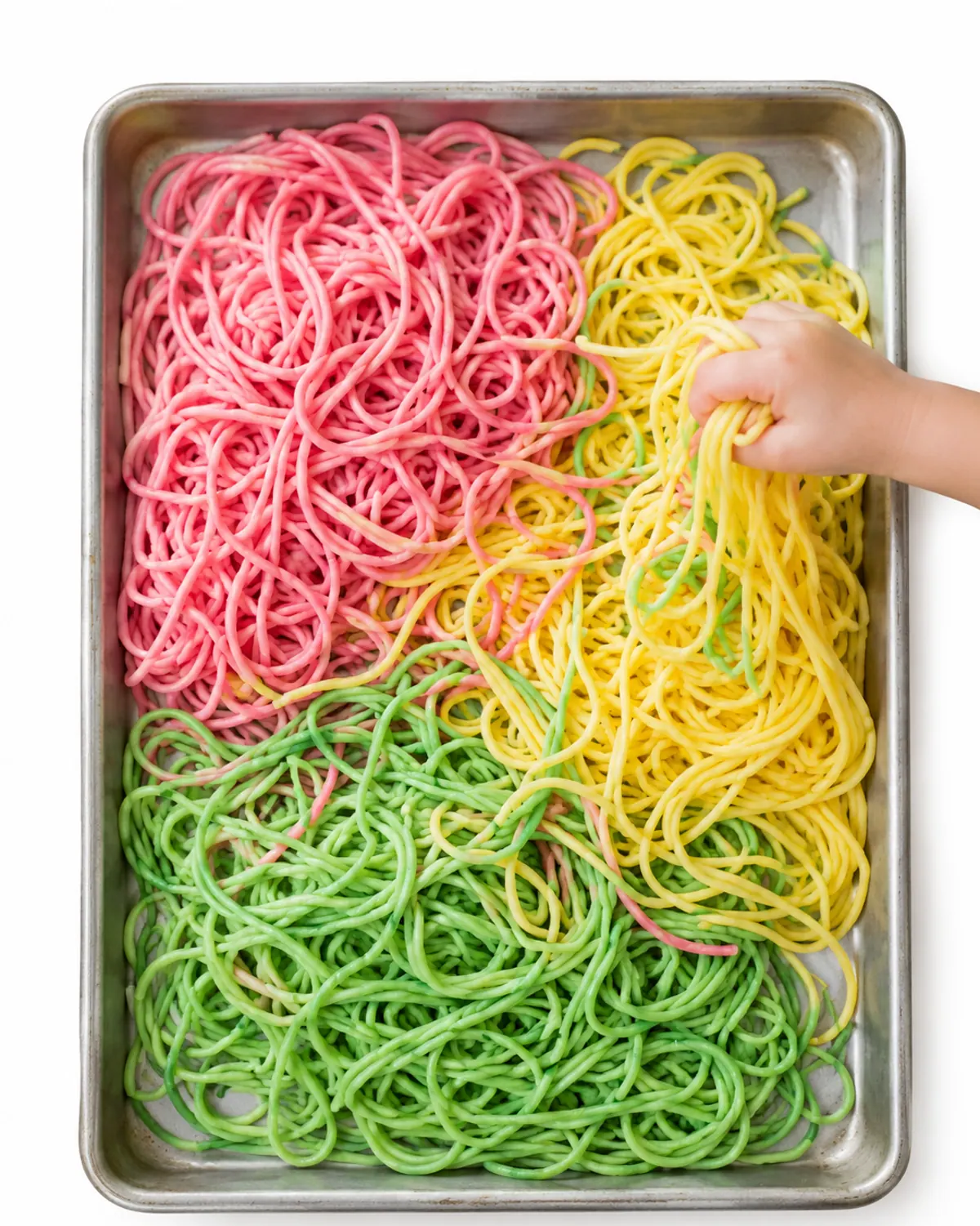
Cook spaghetti, cut into short lengths, then toss with a little oil and food coloring. It feels slippery and squiggly and is great for pulling, snipping and sorting by color.
Ages: 18 months to 3
Prep: 5 minutes
Mess: high
Supplies: cooked pasta, oil, food coloring, tray
Safety: check for wheat allergies, cut noodles short so they are not a choking risk and discard after play. Food is not a snack once it has been played with. stay within arm's reach the whole time and keep any small piece bigger than a toilet paper tube is wide.
Dry touch, textures and window play
These keep the mess near zero and travel well. For a longer list of bin-free fillers, see our guide to safe sensory bin fillers by age.
6Contact paper sticky wall
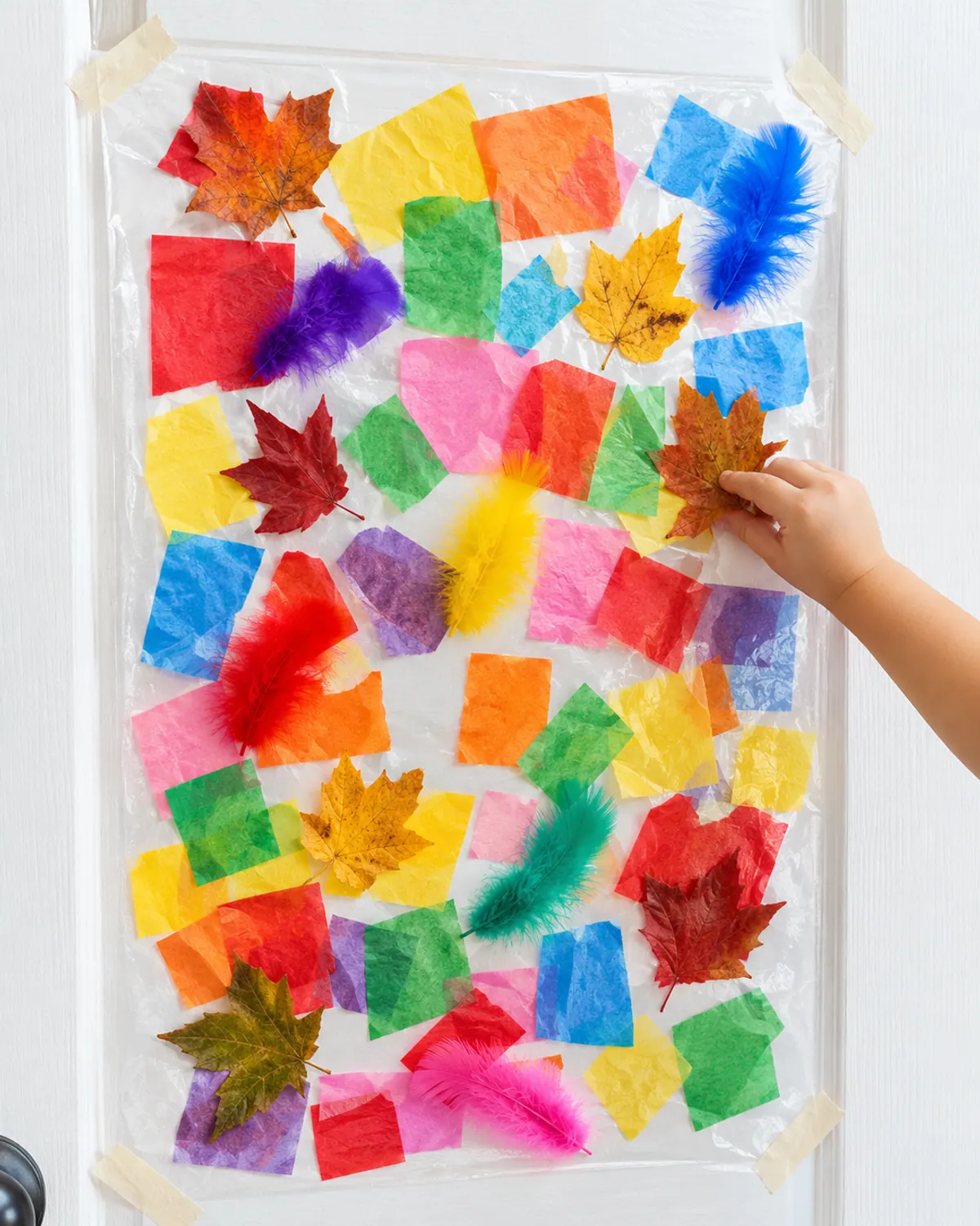
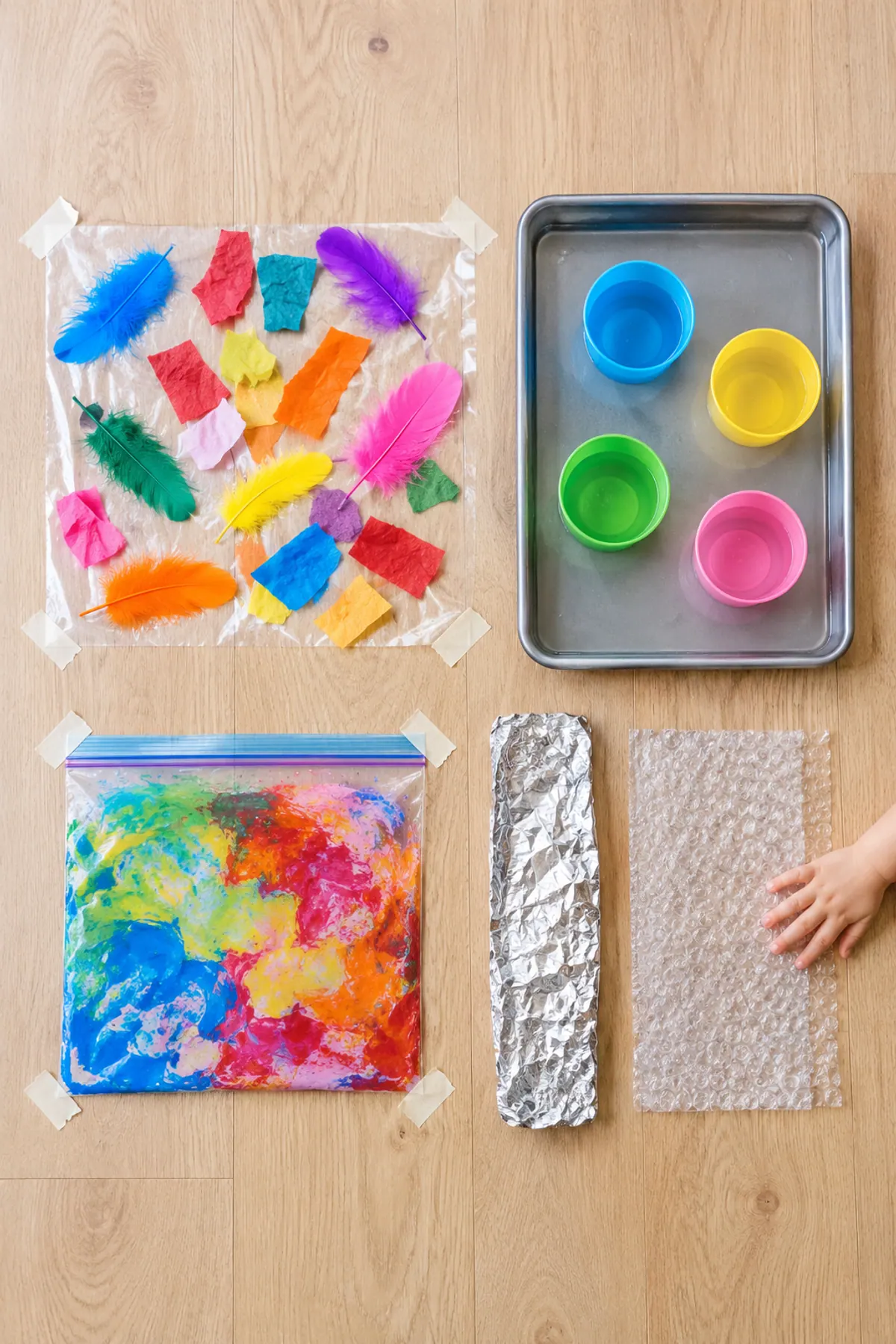
Tape a sheet of clear contact paper to a wall, sticky side out, and set out tissue paper squares, big leaves and ribbon. Your toddler sticks and peels with no glue needed.
Ages: 12 months to 3
Prep: 3 minutes
Mess: low
Supplies: clear contact paper, painter's tape, tissue squares, big leaves
Safety: keep pieces bigger than a toilet paper tube is wide, skip small beads and sequins and take the sticky sheet down when you are finished.
Sticky on one side, so it holds shapes without glue.
7Squish bag on a window
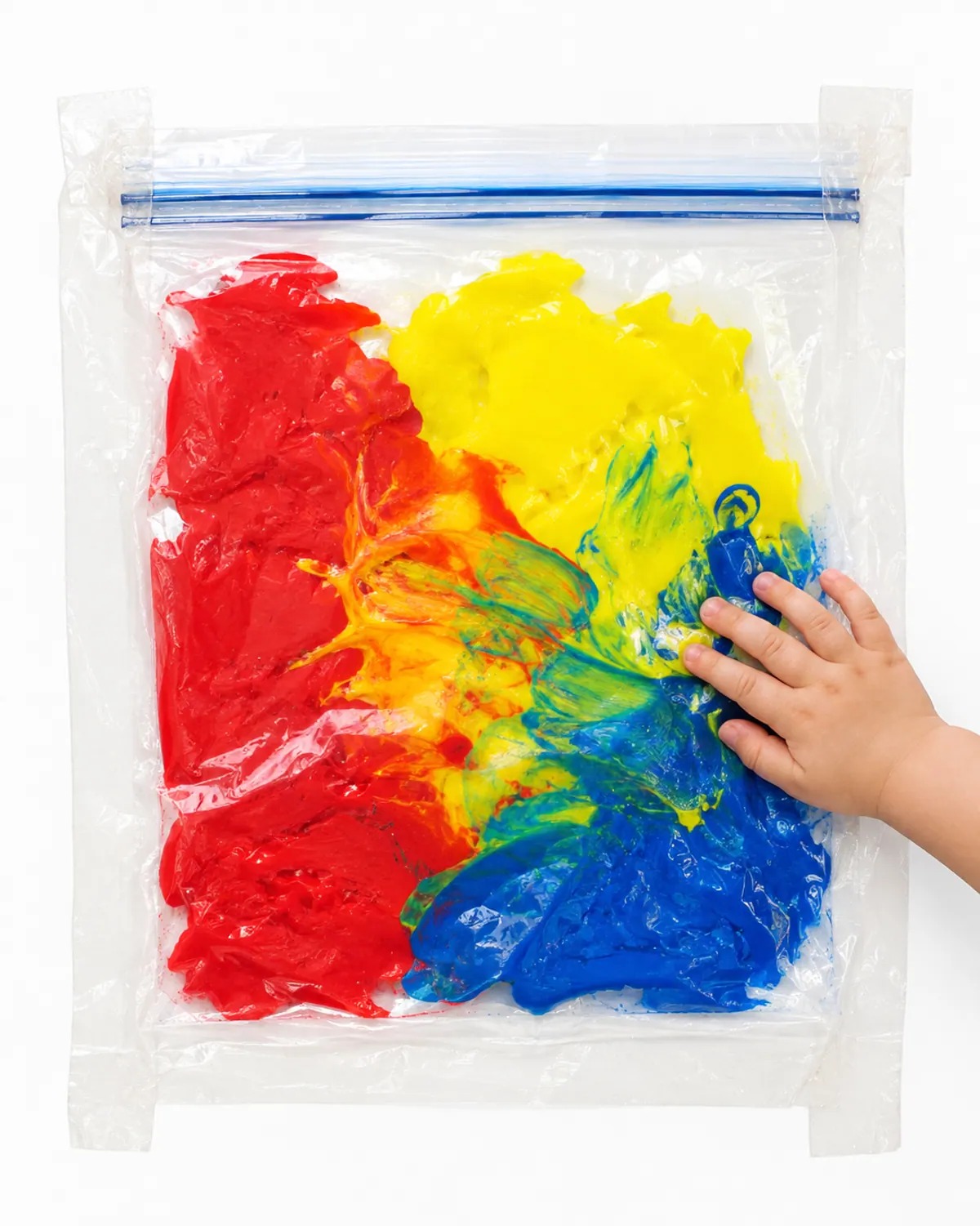
Put a few spoonfuls of washable paint in a heavy zip bag, seal it and tape it to a window or table. Toddlers press the colors together without touching paint.
Ages: 12 months to 3
Prep: 3 minutes
Mess: none
Supplies: freezer zip bag, washable paint, packing tape
Safety: seal the bag with tape along the edge and check it for leaks each time. stay within arm's reach the whole time and keep any small piece bigger than a toilet paper tube is wide.
8Texture walk
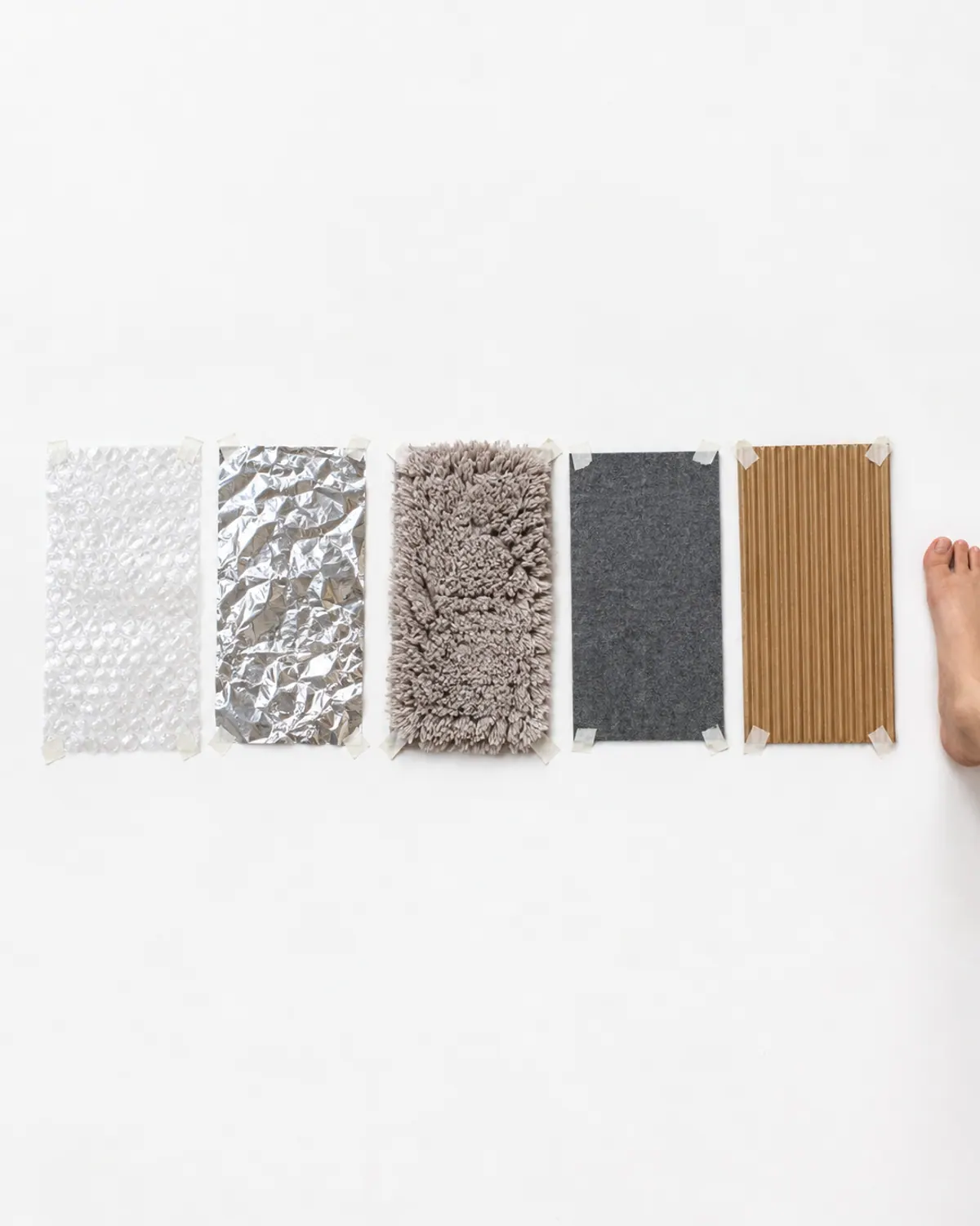
Tape five textures to the floor: bubble wrap, foil, a bathmat, felt, cardboard. Your toddler crawls or walks along them with bare hands and feet and you name what they feel.
Ages: 12 months to 3
Prep: 3 minutes
Mess: none
Supplies: tape, 5 textures from around the house
Safety: tape all edges flat so nobody trips, and skip anything with sharp corners. stay within arm's reach the whole time and keep any small piece bigger than a toilet paper tube is wide.
9Sensory bottles
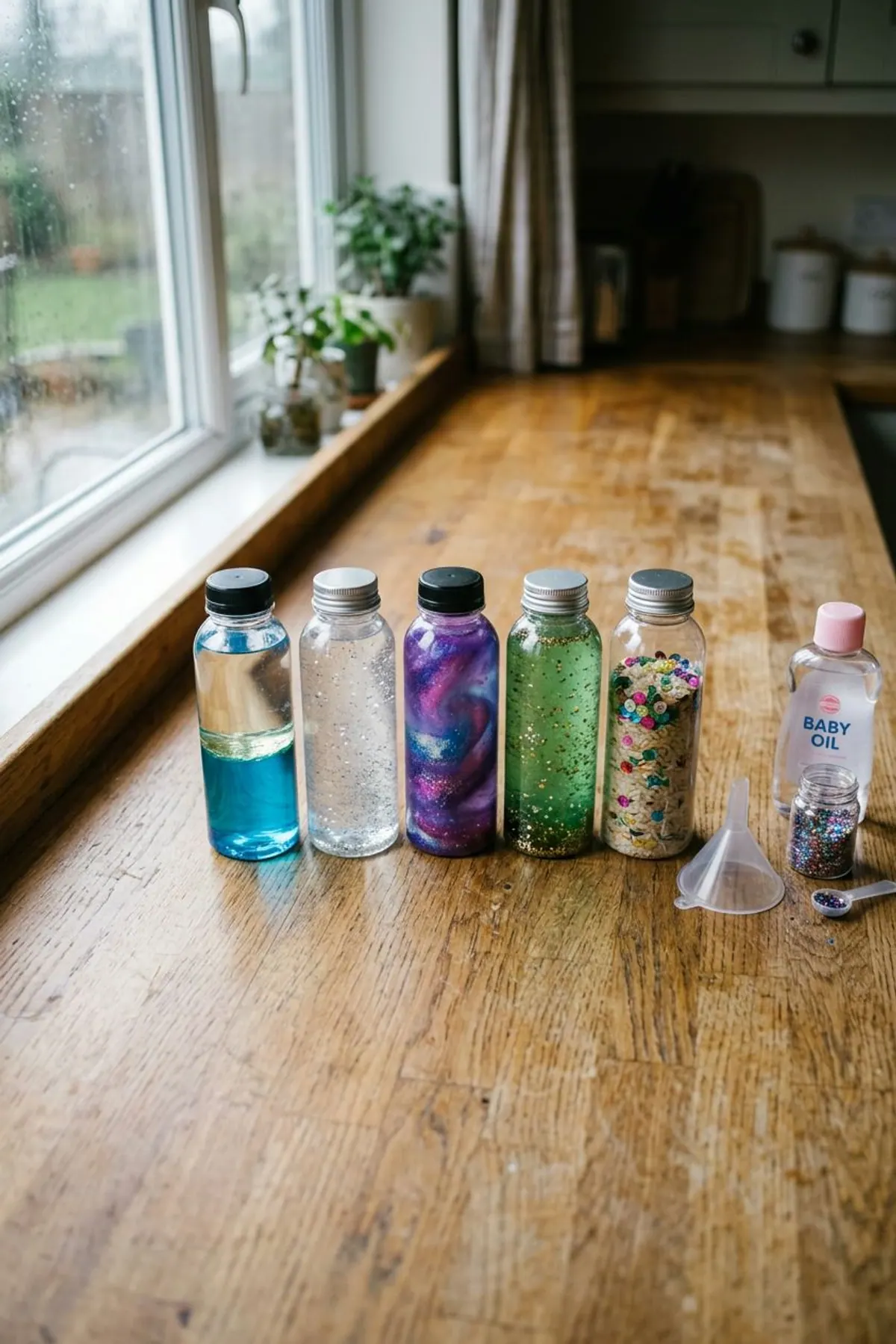
Fill a clear plastic bottle with water, a squirt of baby oil or glitter glue, and a few large beads, then glue the lid shut. See our sensory bottle how-to for fillers and ratios.
Ages: 12 months to 3
Prep: 5 minutes
Mess: none
Supplies: clear plastic bottle, water, oil or glitter glue
Safety: glue and tape the lid shut and check it each time. Throw the bottle out if it cracks. stay within arm's reach the whole time and keep any small piece bigger than a toilet paper tube is wide.
10Feel-and-find sock
Drop 3 or 4 large objects like a wooden spoon, a ball and a soft toy into a clean sock. Your toddler reaches in, feels and guesses before pulling the object out.
Ages: 2 to 3
Prep: 2 minutes
Mess: none
Supplies: a sock, large objects
Safety: use only large, clean objects and no small parts. stay within arm's reach the whole time and keep any small piece bigger than a toilet paper tube is wide.
11Store-bought playdough squish
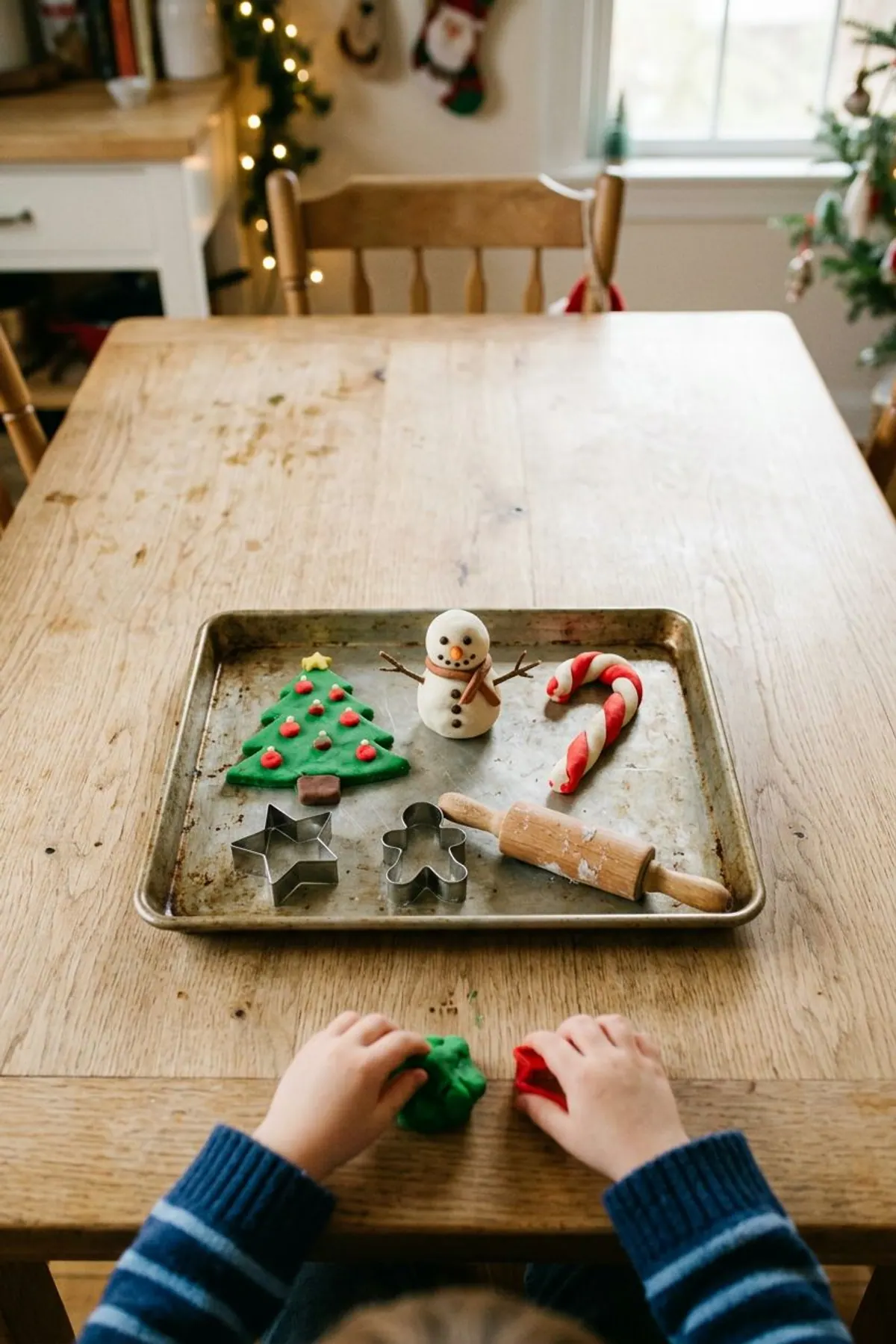
Hand over a ball of store-bought dough and a rolling pin. Poking, pinching and rolling give a lot of sensory input in a small space.
Ages: 2 to 3
Prep: 1 minute
Mess: low
Supplies: playdough, rolling pin
Safety: playdough is not food and often contains wheat, so check for allergies. stay within arm's reach the whole time and keep any small piece bigger than a toilet paper tube is wide.
Sight: light, color and movement
12Flashlight tent
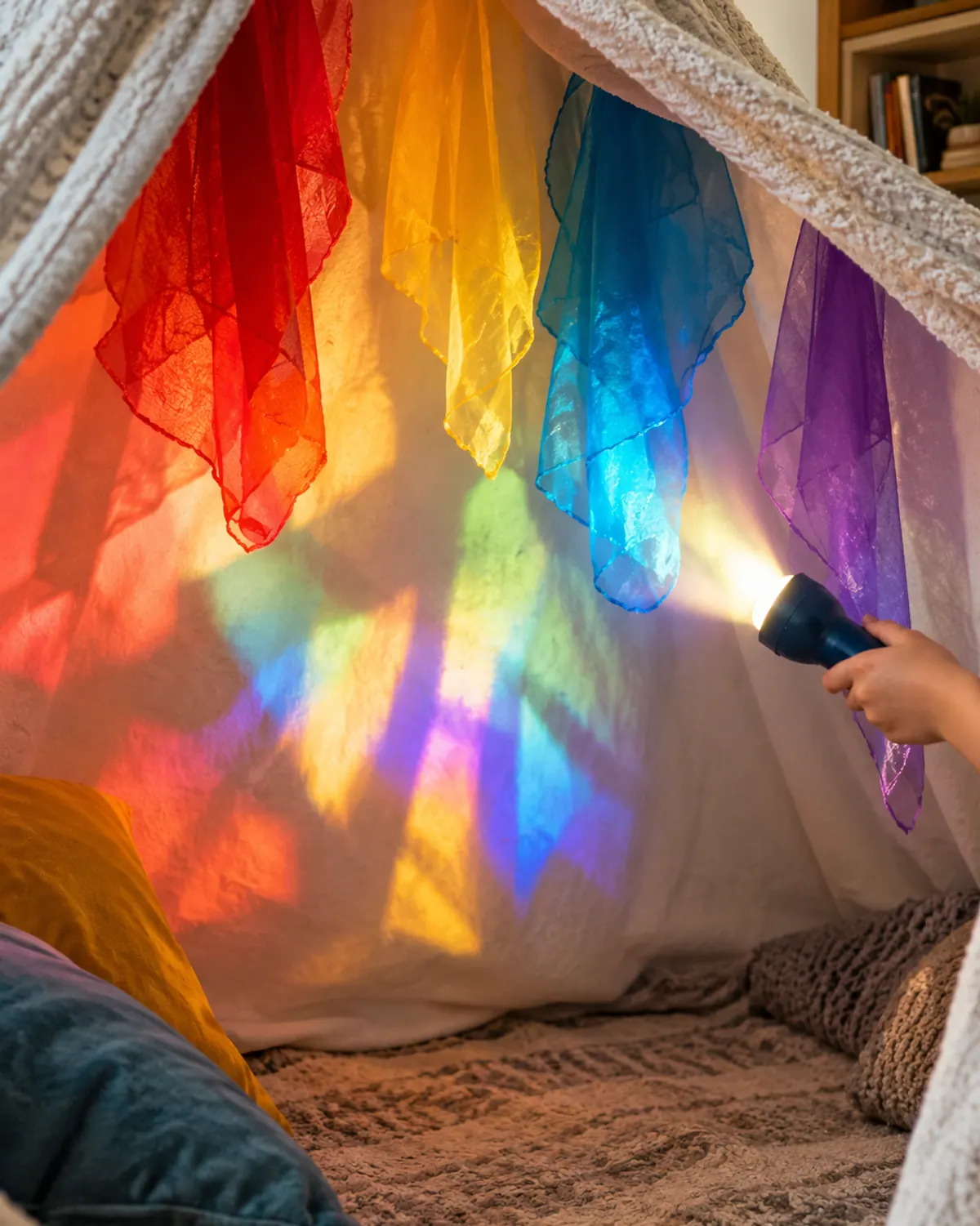
Hang play silks over a table or clothes rack, drape a blanket over the top and hand over a flashlight. The colored light moves across the tent walls.
Ages: 18 months to 3
Prep: 3 minutes
Mess: none
Supplies: blanket, play silks, flashlight
Safety: use a flashlight with a closed battery compartment, keep silks away from necks and stay in the room. stay within arm's reach the whole time and keep any small piece bigger than a toilet paper tube is wide.
Light, washable and good for tents, tossing and dress-up.
13Scarf pull from a tissue box
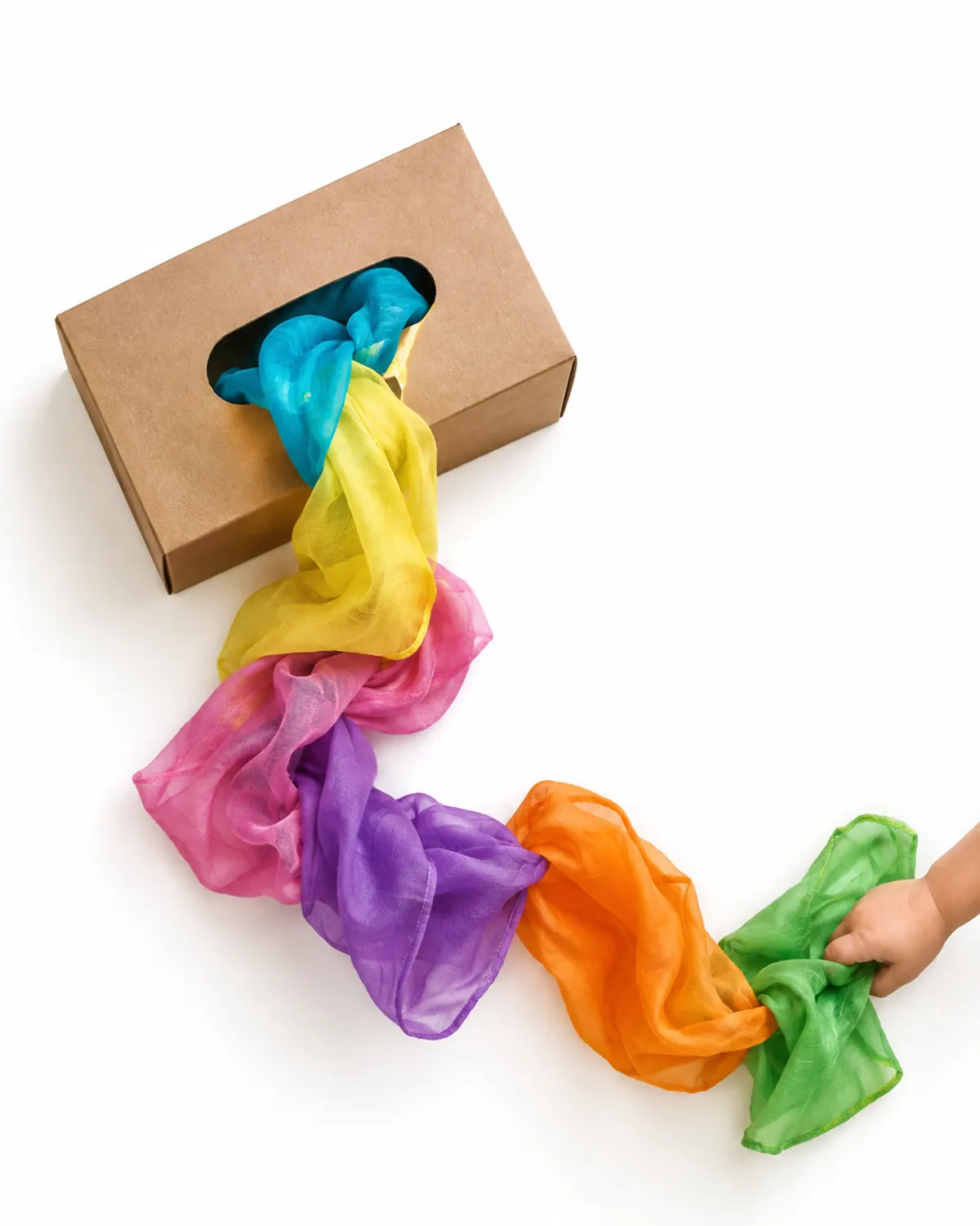
Tie 5 or 6 scarves together and poke one end through the slot of a tissue box. Your toddler pulls them out one by one and stuffs them back in.
Ages: 12 months to 3
Prep: 3 minutes
Mess: none
Supplies: tissue box, 5 or 6 scarves
Safety: tie scarves loosely, keep the line short, never around the neck. stay within arm's reach the whole time and keep any small piece bigger than a toilet paper tube is wide.
14Warm and cool washcloths
Warm one washcloth and chill another in the freezer for a few minutes. Your toddler feels each one, and you name warm and cool as they press them to hands and feet.
Ages: 12 months to 3
Prep: 3 minutes
Mess: low
Supplies: 2 washcloths
Safety: test the warm cloth on your own wrist first, and never use a hot cloth. stay within arm's reach the whole time and keep any small piece bigger than a toilet paper tube is wide.
15Bubble wrap stomp
Tape a long strip of bubble wrap to the floor and let your toddler stomp or crawl across it for the pops. It works on legs, feet and ears at once.
Ages: 18 months to 3
Prep: 2 minutes
Mess: none
Supplies: bubble wrap, tape
Safety: tape every edge down and stop if bubble wrap goes in a mouth. stay within arm's reach the whole time and keep any small piece bigger than a toilet paper tube is wide.
Smell and sound
16Smell jars
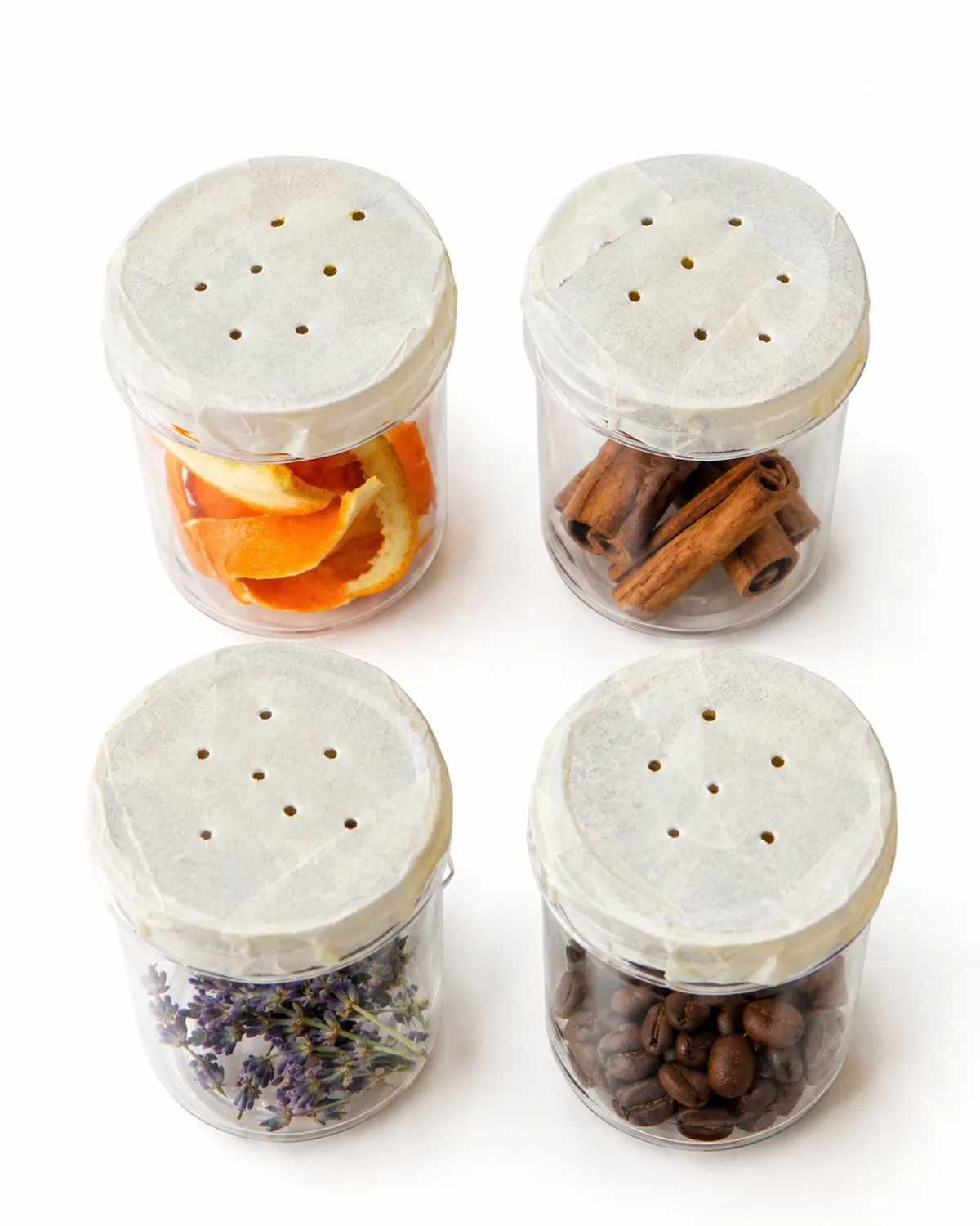
Fill small plastic jars with orange peel, a cinnamon stick, dried lavender or coffee beans. Seal the lids with tape and poke a few small holes so your toddler can sniff but not spill.
Ages: 18 months to 3
Prep: 5 minutes
Mess: none
Supplies: small plastic jars, scents from the kitchen, tape
Safety: tape lids shut so contents cannot spill and skip anything strong like pepper. Check for spice or scent sensitivity. stay within arm's reach the whole time and keep any small piece bigger than a toilet paper tube is wide.
17Pots and spoons band
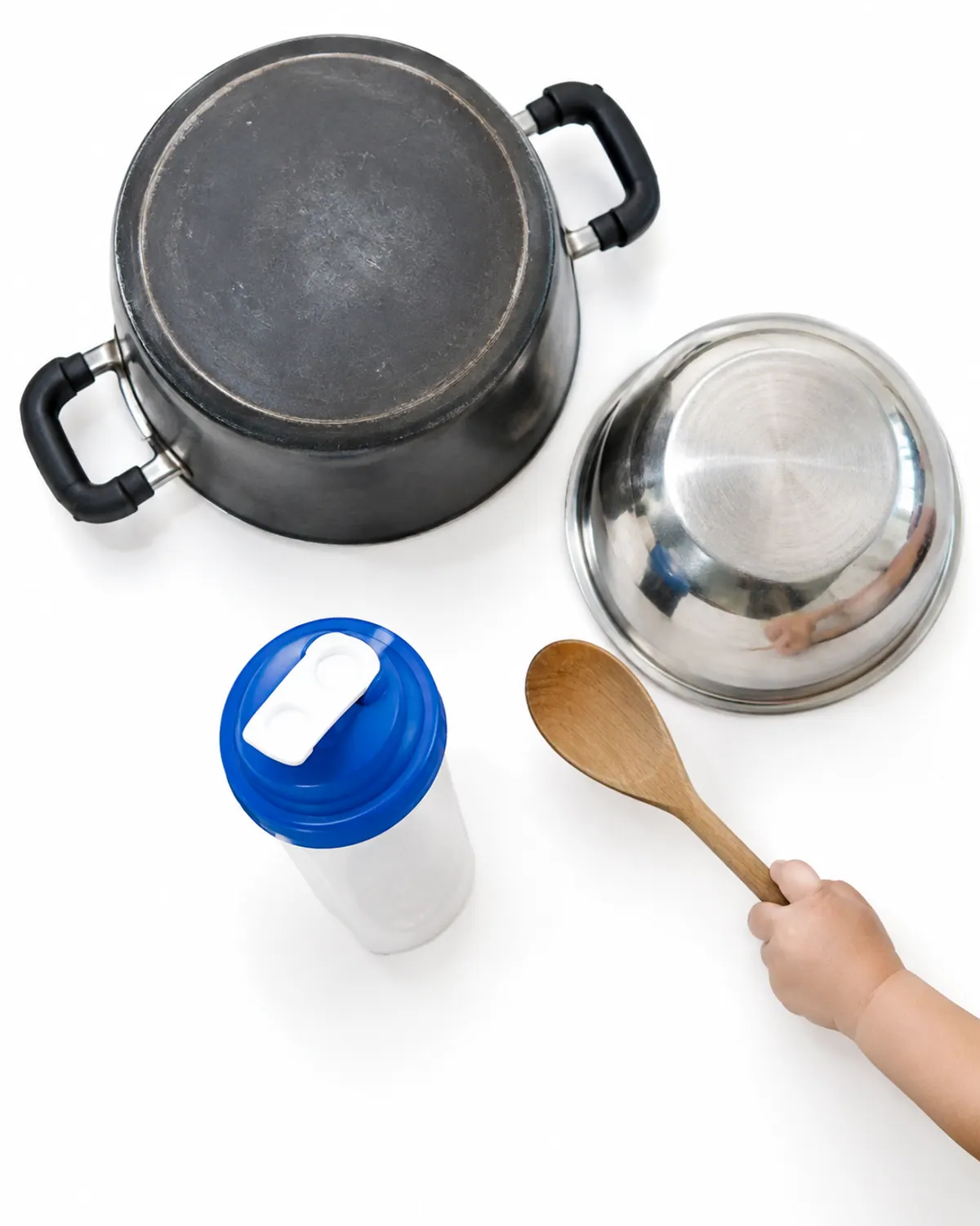
Turn a pot and a bowl upside down and hand over wooden spoons. Try different sounds on each surface, then loud and soft on one.
Ages: 12 months to 3
Prep: 2 minutes
Mess: none
Supplies: pots, bowl, wooden spoons
Safety: use wooden spoons, keep volume reasonable and stay within arm's reach the whole time and keep any small piece bigger than a toilet paper tube is wide.
18Sponge squeeze
Fill a tray with a little water and a large sponge. Dip, squeeze and carry it from the tray to a cup.
Ages: 12 months to 3
Prep: 2 minutes
Mess: medium
Supplies: large sponge, tray, cup
Safety: never leave a toddler alone with water, and use a large sponge only. stay within arm's reach the whole time and keep any small piece bigger than a toilet paper tube is wide.
19Whisk and pour
Set a whisk, a cup and a small jug of water at the sink or on a towel. Whisk, scoop, pour and notice the sounds.
Ages: 18 months to 3
Prep: 2 minutes
Mess: medium
Supplies: whisk, jug, cups
Safety: supervise at all times around water and stay within arm's reach the whole time and keep any small piece bigger than a toilet paper tube is wide.
20Bottle shakers
Fill an empty plastic bottle with large pasta tubes or large wooden beads, glue the lid and shake along to music.
Ages: 12 months to 3
Prep: 3 minutes
Mess: none
Supplies: plastic bottle, large pasta, glue
Safety: glue and tape the lid shut and check it each time. stay within arm's reach the whole time and keep any small piece bigger than a toilet paper tube is wide.
21Lotion hand massage
After a bath, rub a little fragrance-free lotion into hands and feet and name what you are touching. It is calm and works well before bed.
Ages: 12 months to 3
Prep: 1 minute
Mess: low
Supplies: unscented lotion
Safety: patch test any lotion first and keep it out of eyes. stay within arm's reach the whole time and keep any small piece bigger than a toilet paper tube is wide.
A simple way to use this list
You do not need all 21. Pick one idea for each sense across a week, such as touch on Monday, sight on Tuesday, sound on Wednesday and smell on Thursday. Repeat the ones your toddler loves, because familiar sensory play is often where they stay longest. Toddlers who dislike mess often prefer the zero-mess ideas first, so start there.
If you want more ready-to-go ideas on cards, the free Screen-Free Activity Pack has 50 activities for ages 2 to 6. For rainy days, the Indoor Day Rescue Kit ($7) is a printable set of indoor plans.
Supplies that make sensory play easier
Sensory play supplies
-
Clear contact paper roll
Typically $6 to $12
Makes a sticky wall in under 3 minutes.
Check price on Amazon for Clear contact paper roll -
Play silks set
Typically $12 to $25
Used for tents, tossing and scarf pulls.
Check price on Amazon for Play silks set -
Rimmed baking sheet
Typically $8 to $18
A low-cost tray for foam, water and noodles.
Check price on Amazon for Rimmed baking sheet -
Washable toddler paint
Typically $8 to $15
Used for squish bags and finger painting.
Check price on Amazon for Washable toddler paint
Frequently asked questions
What are easy sensory activities for toddlers?
A texture walk, a squish bag taped to a window, water painting on dark paper, soap foam on a tray and a flashlight tent all take under 5 minutes to set up and use things you already own.
How do I do sensory play without a sensory bin?
Use a rimmed baking sheet, a window, a wall with contact paper, a tent or a sink. The activity matters more than the container.
What age can toddlers start sensory activities?
Many of these ideas suit from about 12 months with close supervision, and some, like ice painting, are better from 2. Match the idea to your child and talk to your pediatrician if you have questions.
Are sensory activities safe if my toddler puts things in their mouth?
Choose taste-safe or very large items, skip small parts and stay within arm's reach. Avoid water beads entirely, because they swell if swallowed.
How long should sensory play last?
Often 10 to 20 minutes for toddlers. Stop when your child loses interest rather than pushing on.
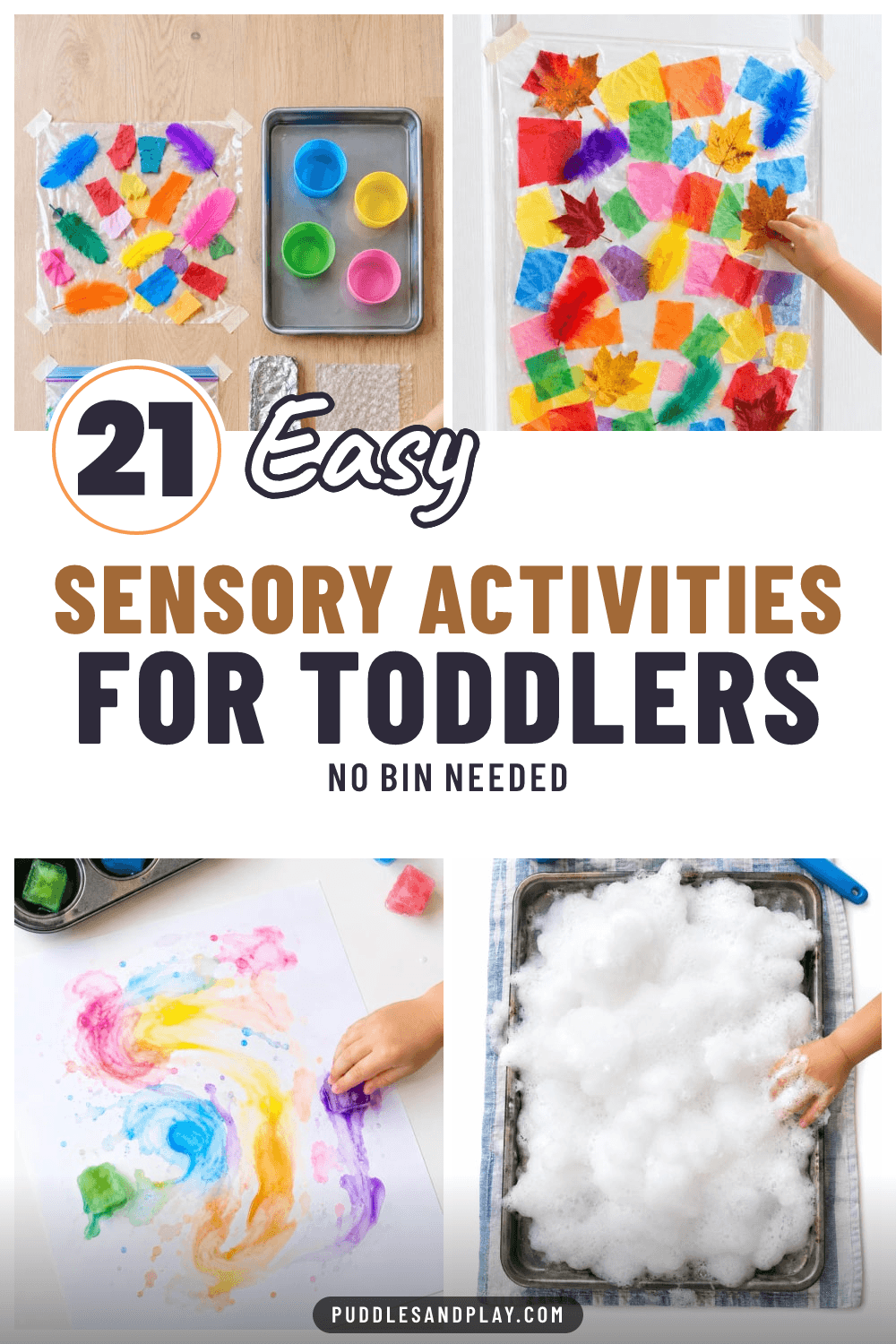
Save it for later
Pin this to your Sensory Play board so it's there when you need it.
Save to Pinterest