This post contains affiliate links. As an Amazon Associate we earn from qualifying purchases, at no extra cost to you. Read our disclosure.
Safety first: Always supervise little ones, and skip small parts for kids who still put things in their mouths. Please read our play safety notes before you start.
Key takeaways
- Sensory play works seven senses: the five you know plus balance (vestibular) and body awareness (proprioception).
- Start with one material at a time, dry before wet, and let your child lead. Ten minutes counts.
- Under 18 months and for any child who still mouths, use taste-safe materials only.
- Loose parts that fit through a toilet paper tube are choking hazards for kids under 3.
- A towel, a tray and three pantry items cover the first week. Buy a bin later, if ever.
In this post22 sections
- What is sensory play for toddlers, and what does it build?
- When to start sensory play and how long a session should run
- Sensory play for toddlers by age
- 12 to 18 months: taste-safe and big
- 1. Water and cups on a towel
- 2. Cooked pasta tray
- 3. Texture basket
- 18 to 24 months: first scooping and dry fillers
- 4. Oats and scoops tray
- 5. Ice cube rescue
- 6. Pot and spoon band
- 2 to 3 years: wet, messy and pretend
- 7. Car wash
- 8. Playdough squish
- 9. Mud kitchen on the step
- 10 sensory play activities with no bin at all
- Your first sensory bin, in short
- A 7-day sensory play starter plan
- Sensory play safety for toddlers: mouthing, small parts and allergies
- Sensory play mistakes beginners make
- Sensory play supplies for toddlers
- FAQ
Most sensory play for toddlers posts jump straight to 25 bin ideas. That skips the questions new parents actually have: what counts, when to start, how long, and how to keep it safe. Here is the short version, then the detail.
What is sensory play for toddlers, and what does it build?
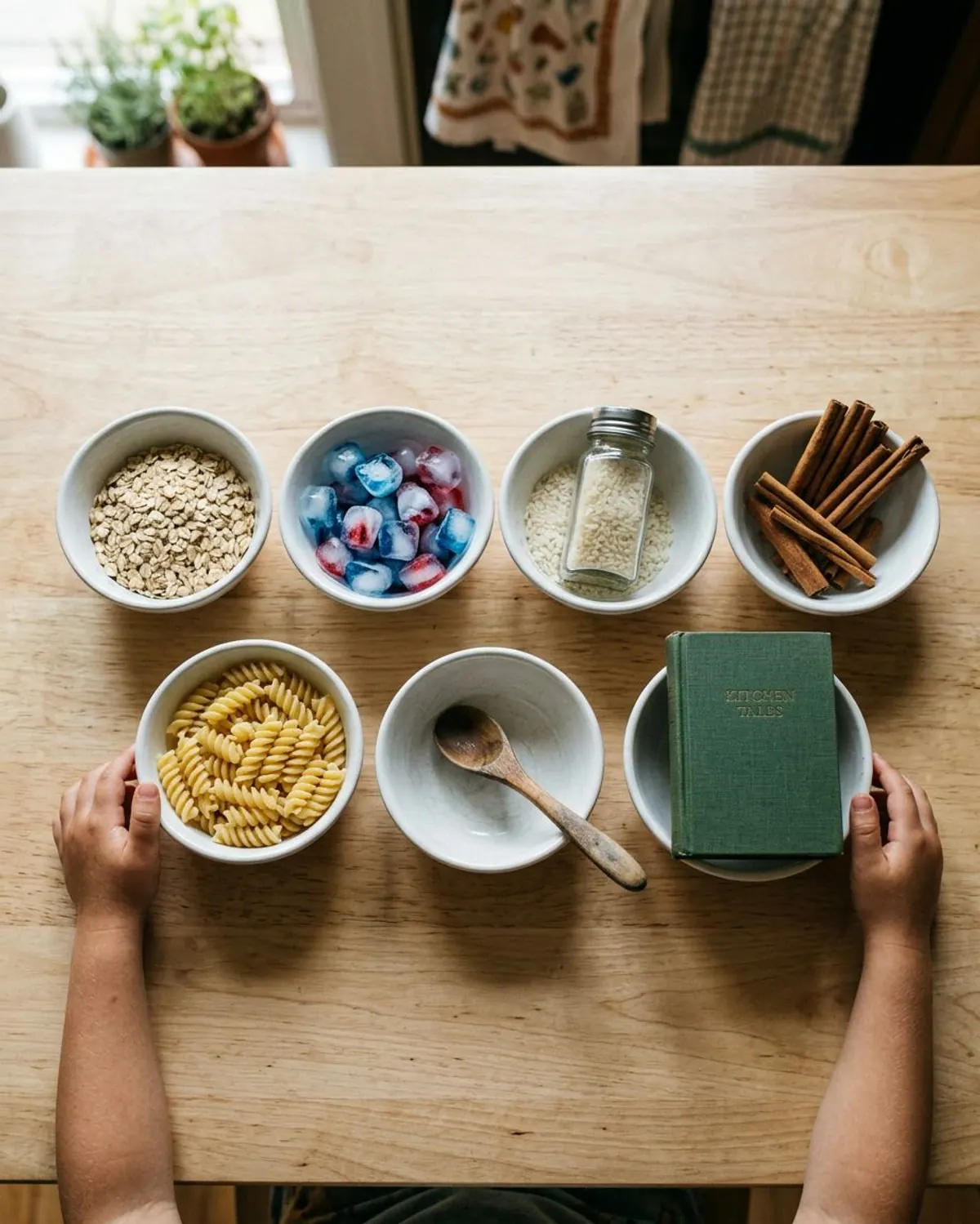
Sensory play is hands-on play that feeds information to the senses. The Cleveland Clinic's guide to sensory play lists seven: sight, sound, smell, taste and touch, plus the vestibular sense (movement and balance) and the proprioceptive sense (where your body is and how much force to use). The last two are the ones most lists forget, and they are why climbing, swinging and pushing a heavy basket count as sensory play too.
The same guide ties sensory play to language (kids learn words like squishy, cold and rough by feeling them), fine motor skills (pouring, pinching, mixing), problem-solving and a calming effect. It also says there is no set amount of time a child should spend on it. In practice, most toddlers are done in 10 to 20 minutes, and that is enough.
| Sense | What it is | Easy toddler example |
|---|---|---|
| Touch | Texture, temperature, pressure | Oats in a tray, warm and cold water bowls |
| Sight | Color, light, movement | Colored ice cubes melting in water |
| Sound | Loud, soft, rhythm | Pot and spoon band, shaker bottles |
| Smell | Scent | Sniffing cinnamon sticks and lemon halves |
| Taste | Flavor (babies and young toddlers) | Taste-safe fillers like cooked pasta |
| Vestibular | Balance and movement | Spinning, rocking, rolling down a slope |
| Proprioception | Body position and force | Pushing a laundry basket, carrying a heavy book |
When to start sensory play and how long a session should run
You can start in the first year with tummy time on different textures and water play at bath time. Loose fillers like oats and rice wait until mouthing stops, which for most kids is somewhere between 18 months and 3 years. Our taste-safe sensory bins for babies guide covers the under-18-month stage in detail.
Three rules make the first month easy. Offer one material at a time, so your child can really explore it. Start with dry materials before wet ones, because dry is easier to clean up and less overwhelming. Stop when your child wanders off; a 10-minute session that ends happy beats a 30-minute one that ends in tears.
Sensory play for toddlers by age
Age matters less than two questions: does your child still put things in their mouth, and can they sit and scoop yet? Use the age bands below as a starting point, then move up or down based on those answers.
12 to 18 months: taste-safe and big
1Water and cups on a towel
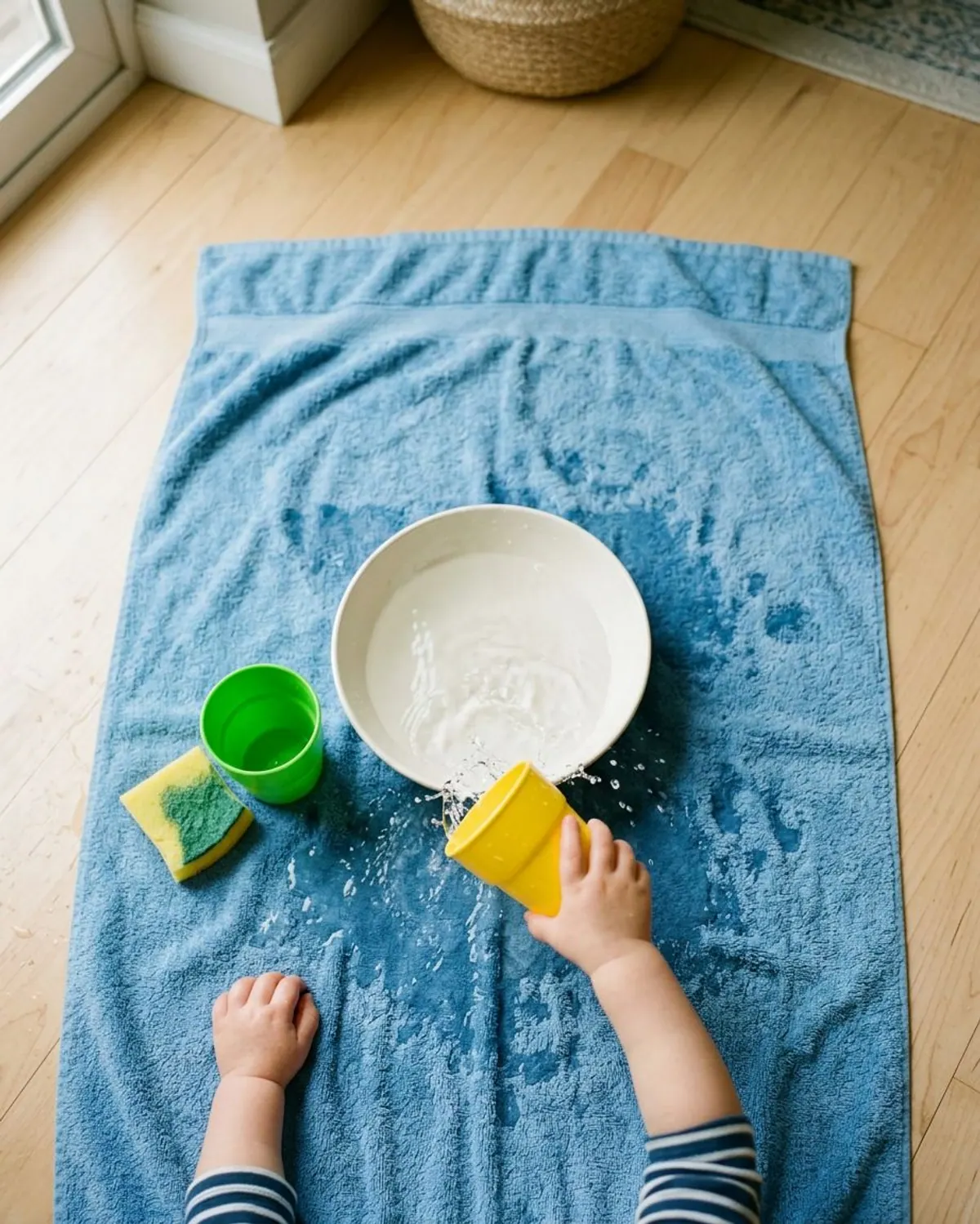
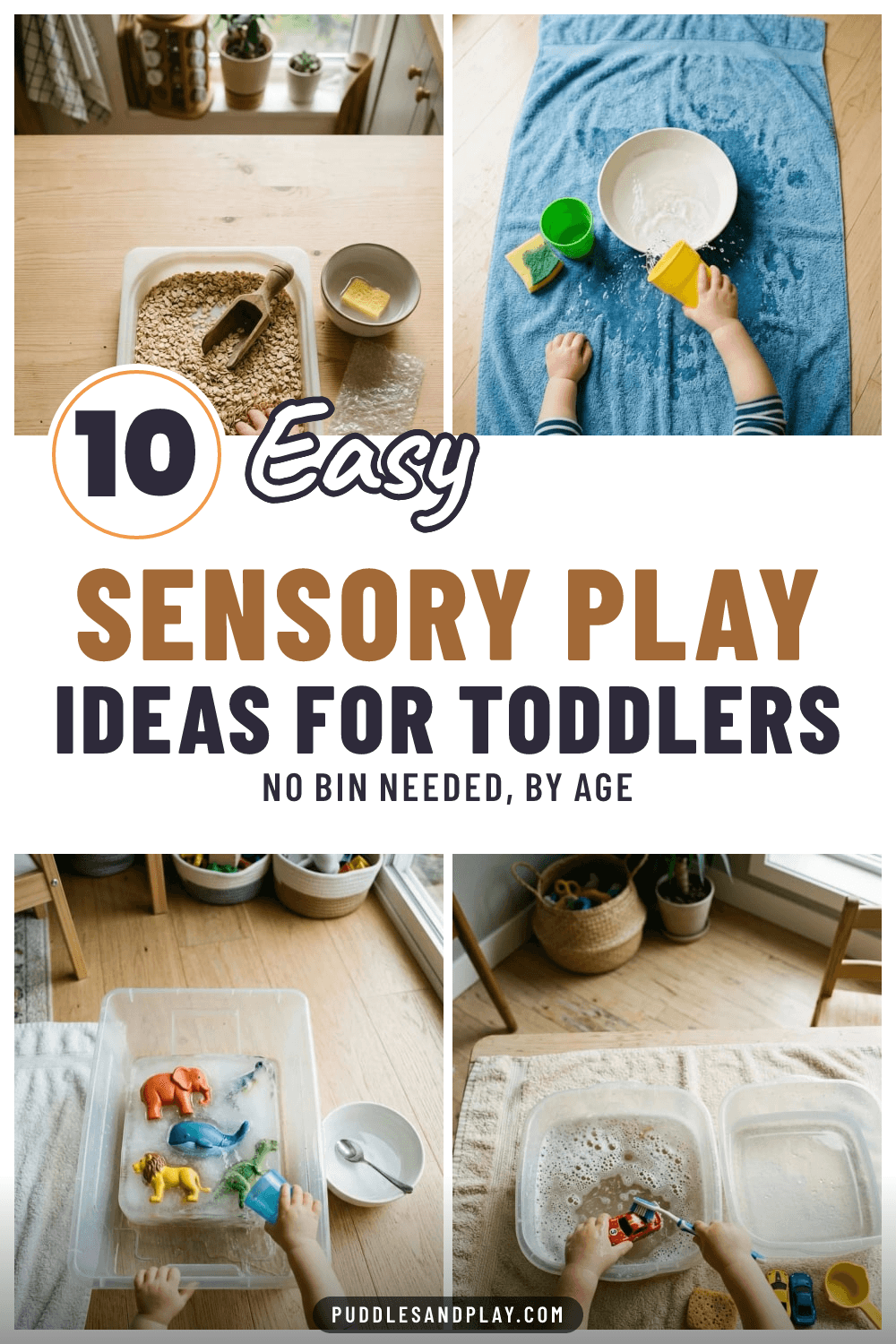
A shallow bowl with an inch of water, two cups and a sponge. Pouring from cup to cup is the whole activity. Add a drop of food coloring on day two and a few ice cubes on day three.
Ages: 12 months to 3.
Prep: 2 minutes.
Mess: high (wet), low on a towel.
Supplies: a bath towel, a shallow bowl or tray, 2 cups, a sponge.
- Safety: stay within arm's reach any time water is out; empty the bowl when play ends.
2Cooked pasta tray
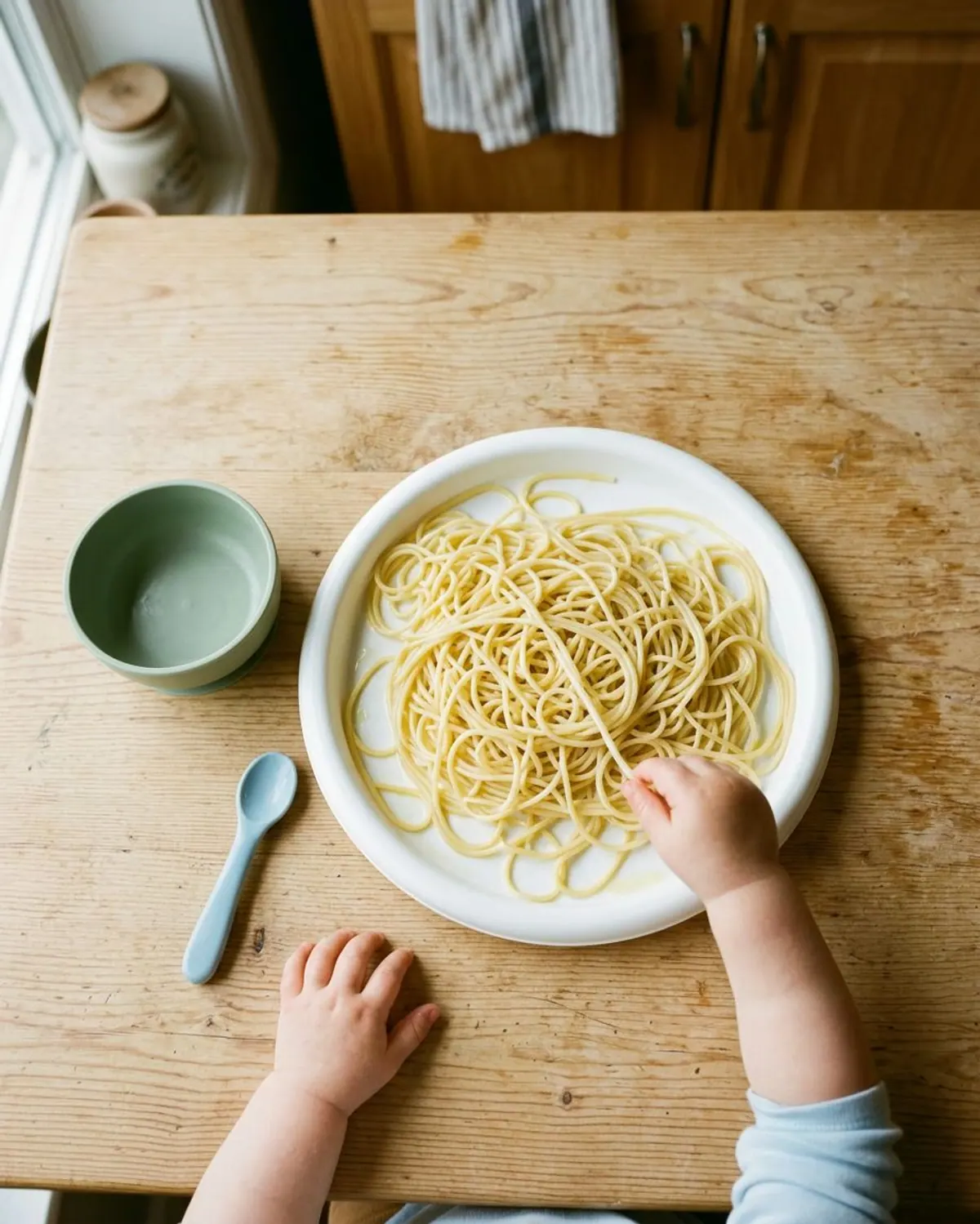
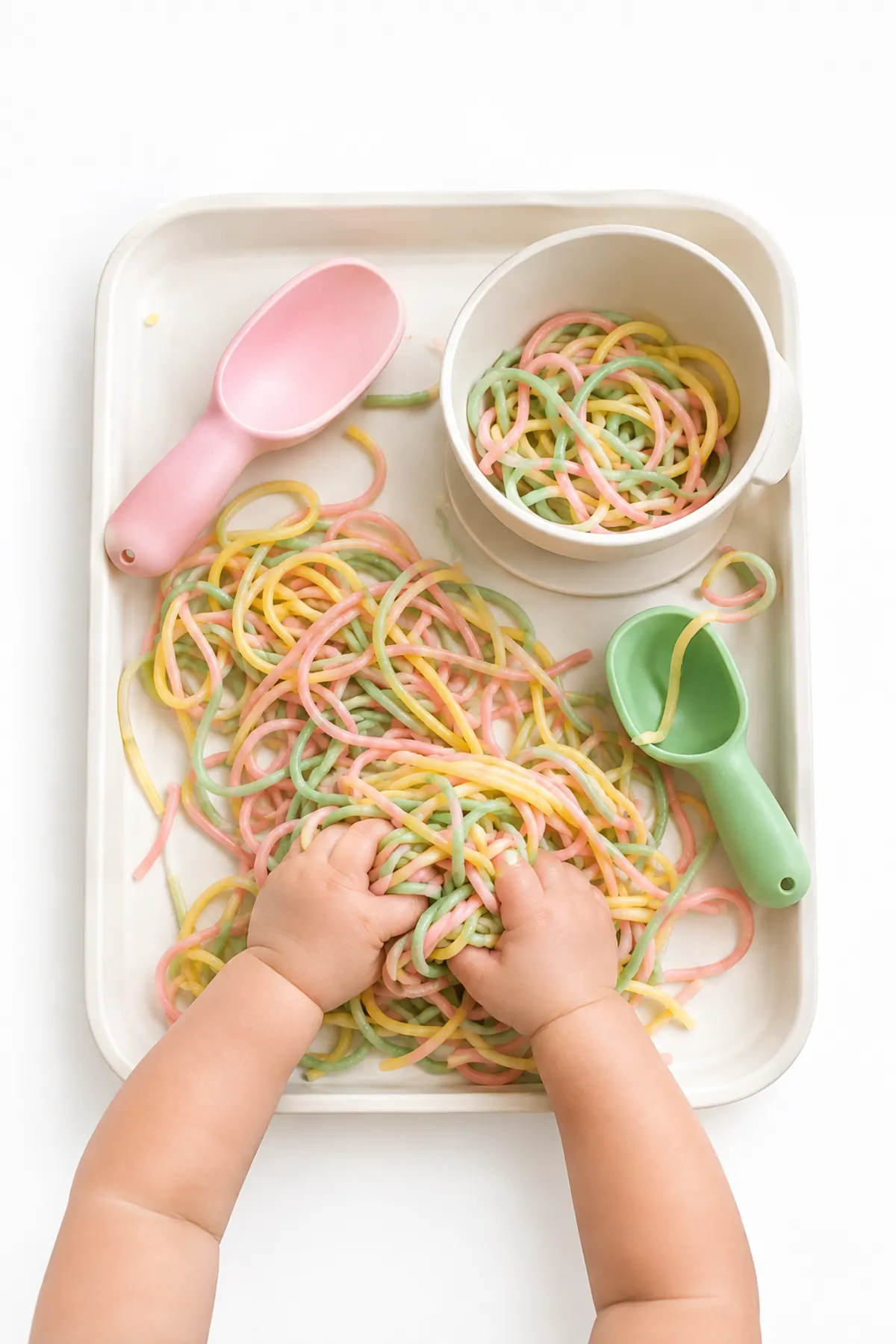
Cook a handful of spaghetti, rinse it cold, toss with a teaspoon of oil and put it on a tray. It is slippery, cold and safe to taste. Add a plastic bowl and a spoon for transferring.
Ages: 12 months to 2.
Prep: 12 minutes (cooking and cooling).
Mess: medium (slippery bits).
Supplies: cooked spaghetti, a teaspoon of oil, a rimmed tray, a bowl and spoon.
- Safety: taste-safe is not the same as a meal; sit beside your child and toss the pasta after play.
3Texture basket
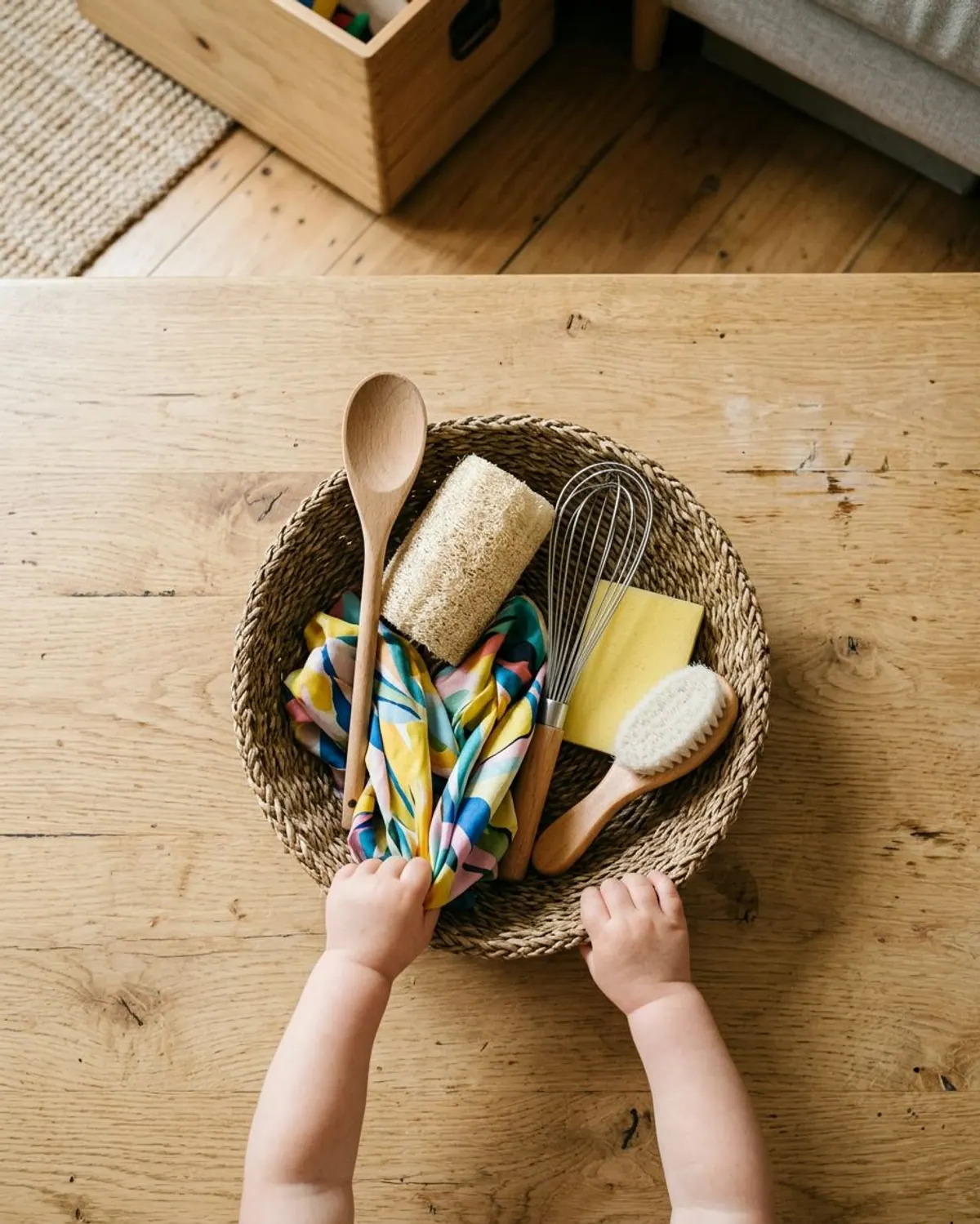
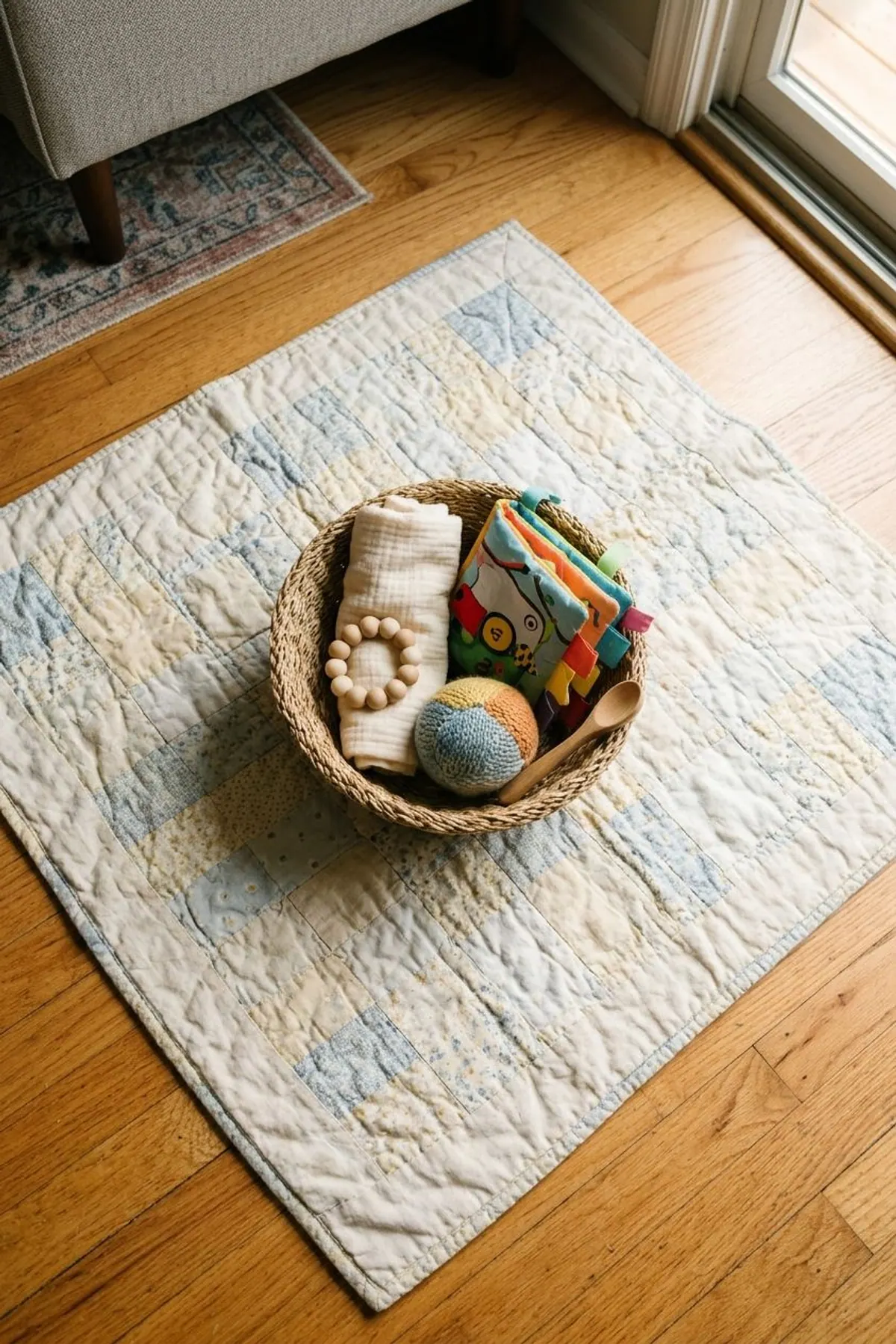
Fill a basket with 6 to 8 safe household items in different textures: a wooden spoon, a loofah, a silk scarf, a metal whisk, a sponge, a soft hairbrush. Let your child pull each one out and explore it.
Ages: 12 months to 2.
Prep: 3 minutes.
Mess: low.
Supplies: a basket, 6 to 8 large household items.
- Safety: every item must be bigger than a toilet paper tube; check for loose parts like whisk wires.
A rough, light texture that is big enough to be safe for a texture basket.
18 to 24 months: first scooping and dry fillers
4Oats and scoops tray
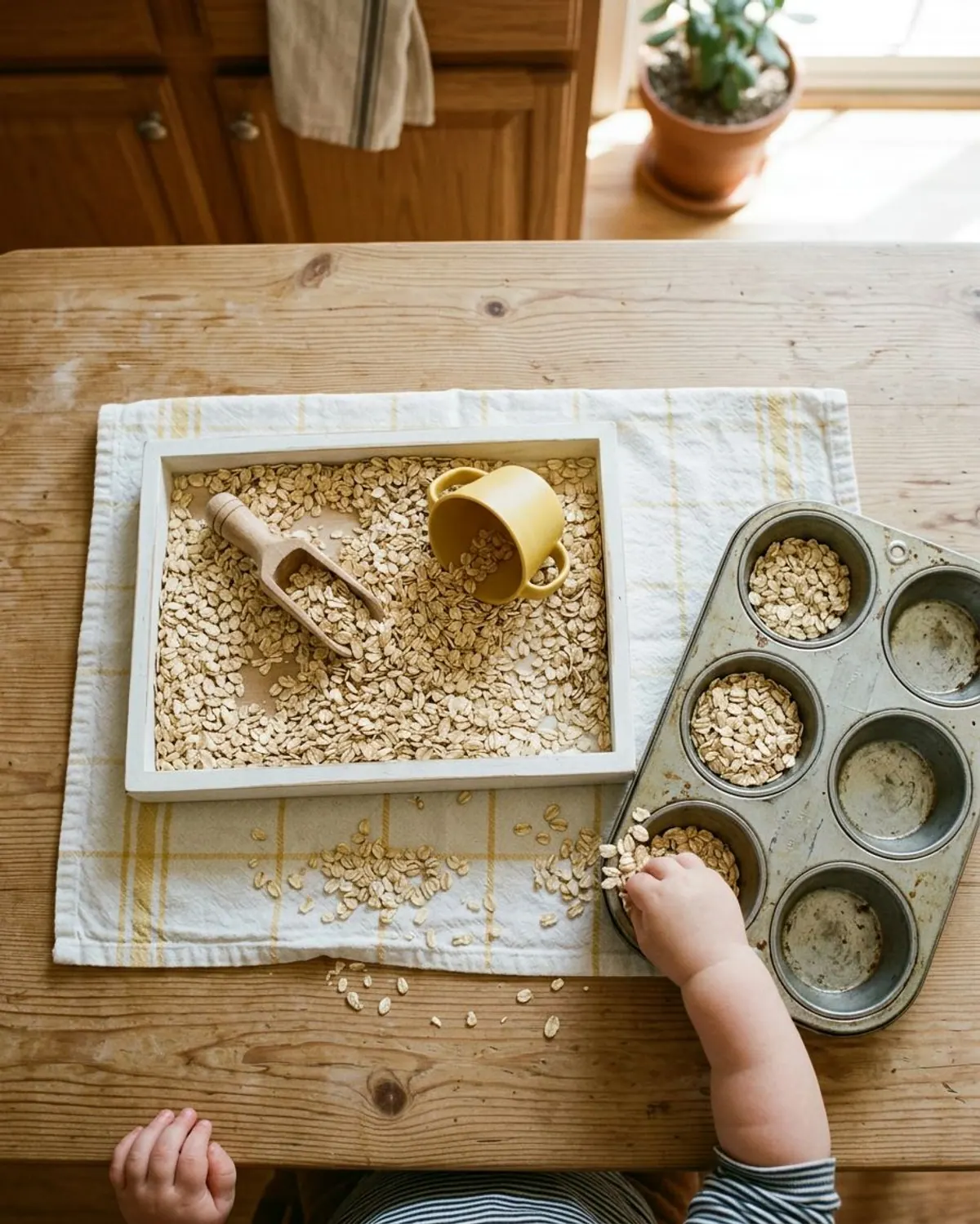
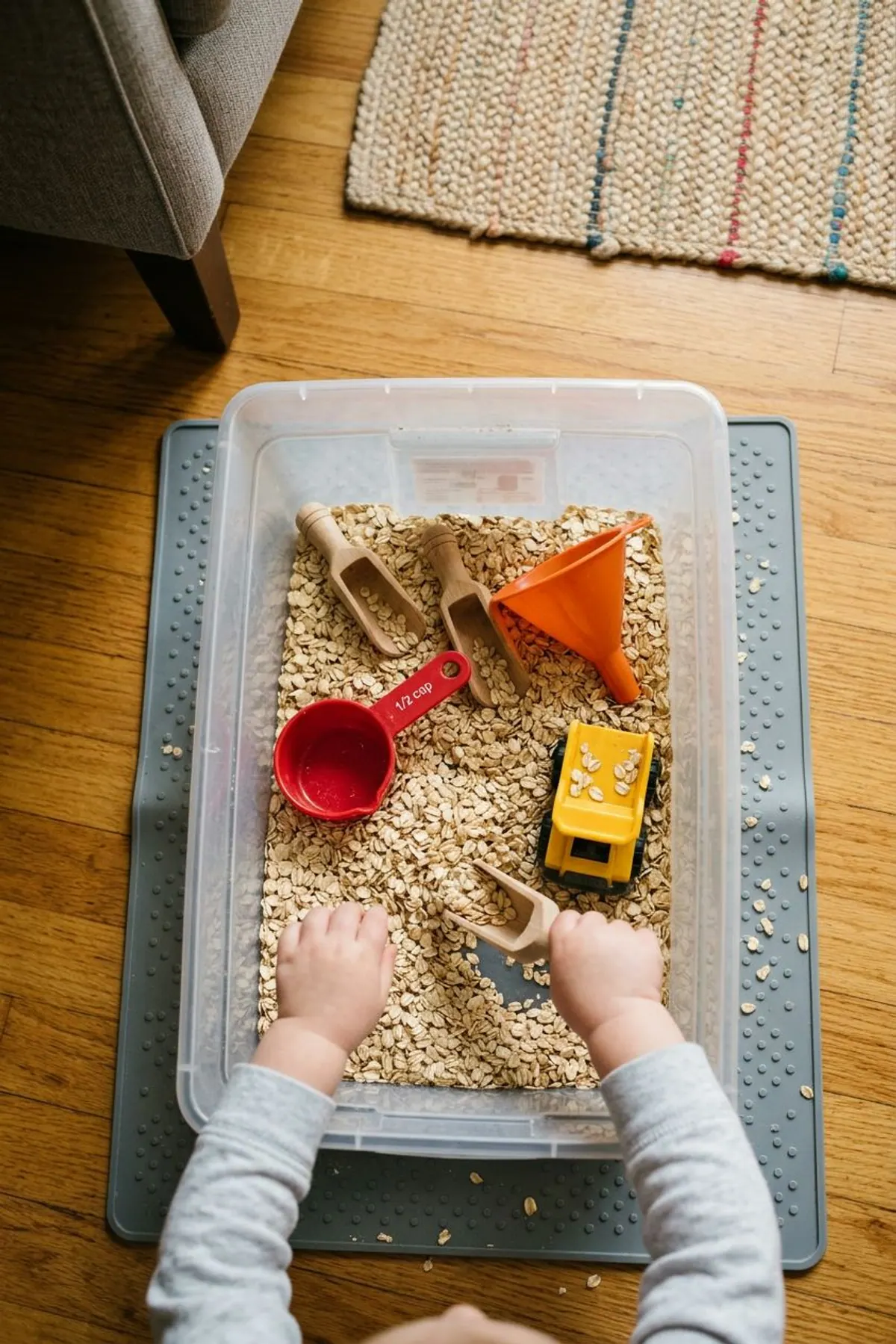
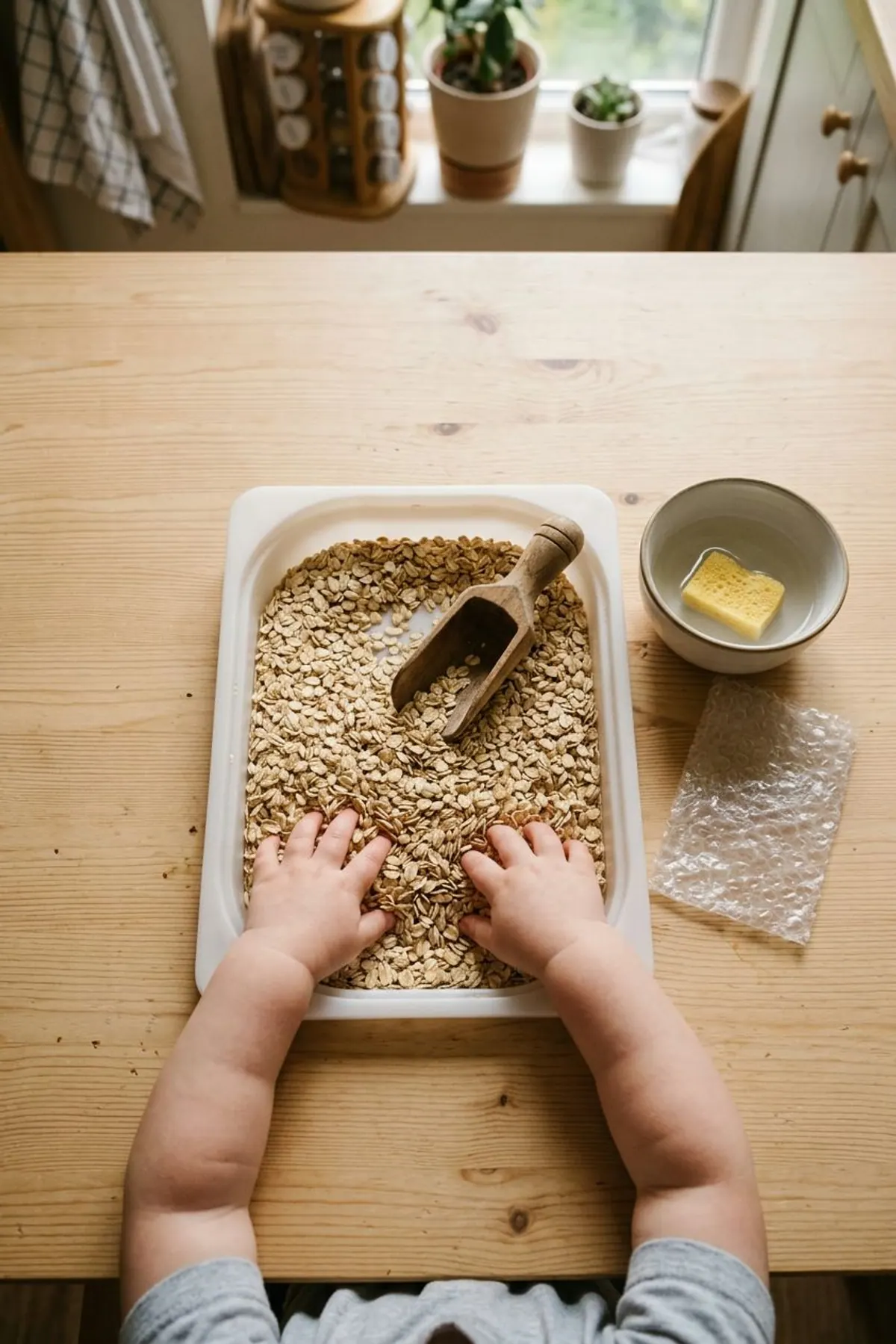
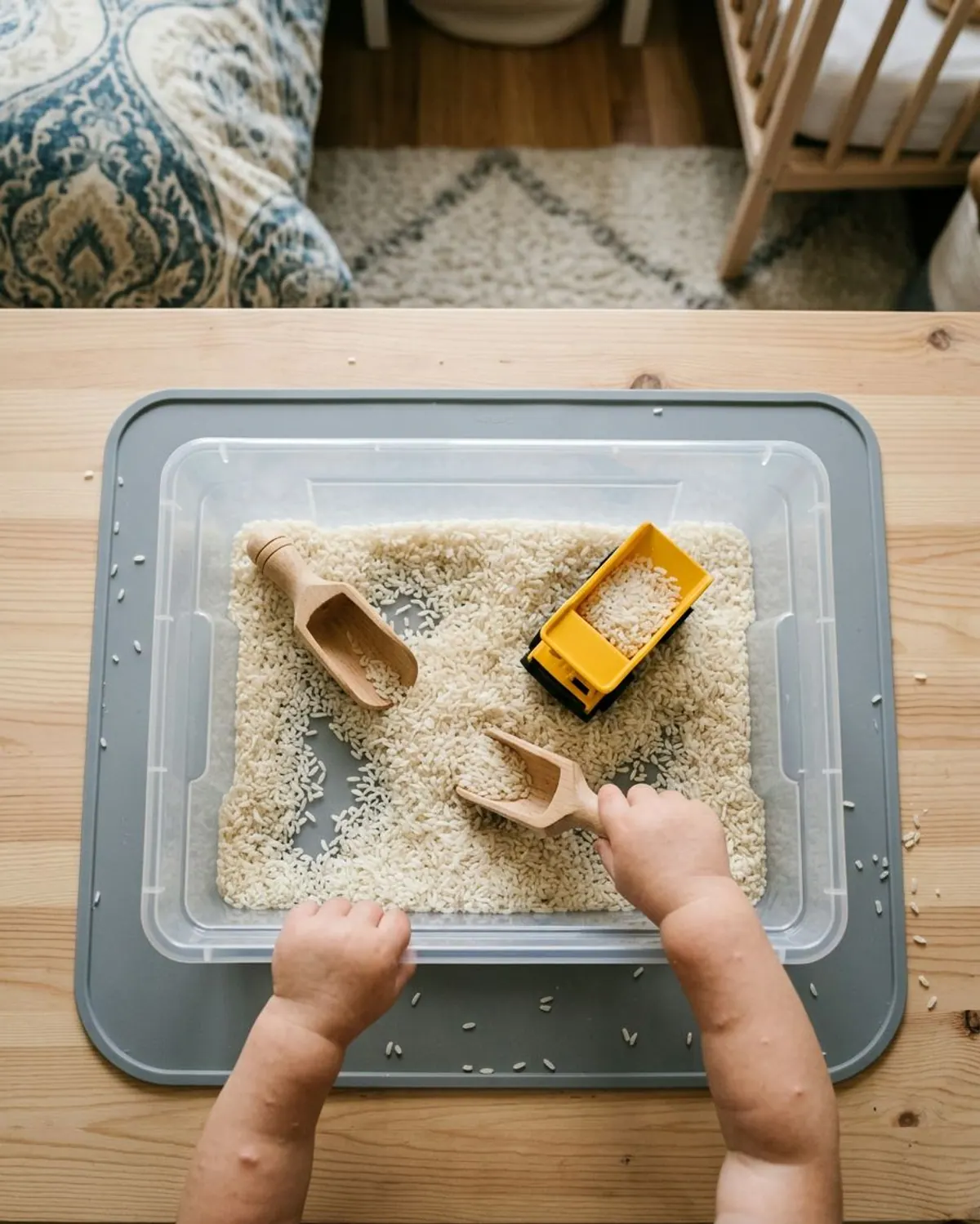
Pour 2 cups of dry rolled oats onto a rimmed tray with a scoop, a cup and a muffin tin. Filling the muffin cups is the game. Oats are soft, cheap and taste-safe if a stray handful goes in.
Ages: 18 months to 3.
Prep: 2 minutes.
Mess: medium (oats travel).
Supplies: rolled oats, a rimmed tray, a scoop, a cup, a muffin tin, a towel underneath.
- Safety: sit close; oats are taste-safe but still a mess to breathe in if thrown.
First tools for oats, rice and water.
5Ice cube rescue
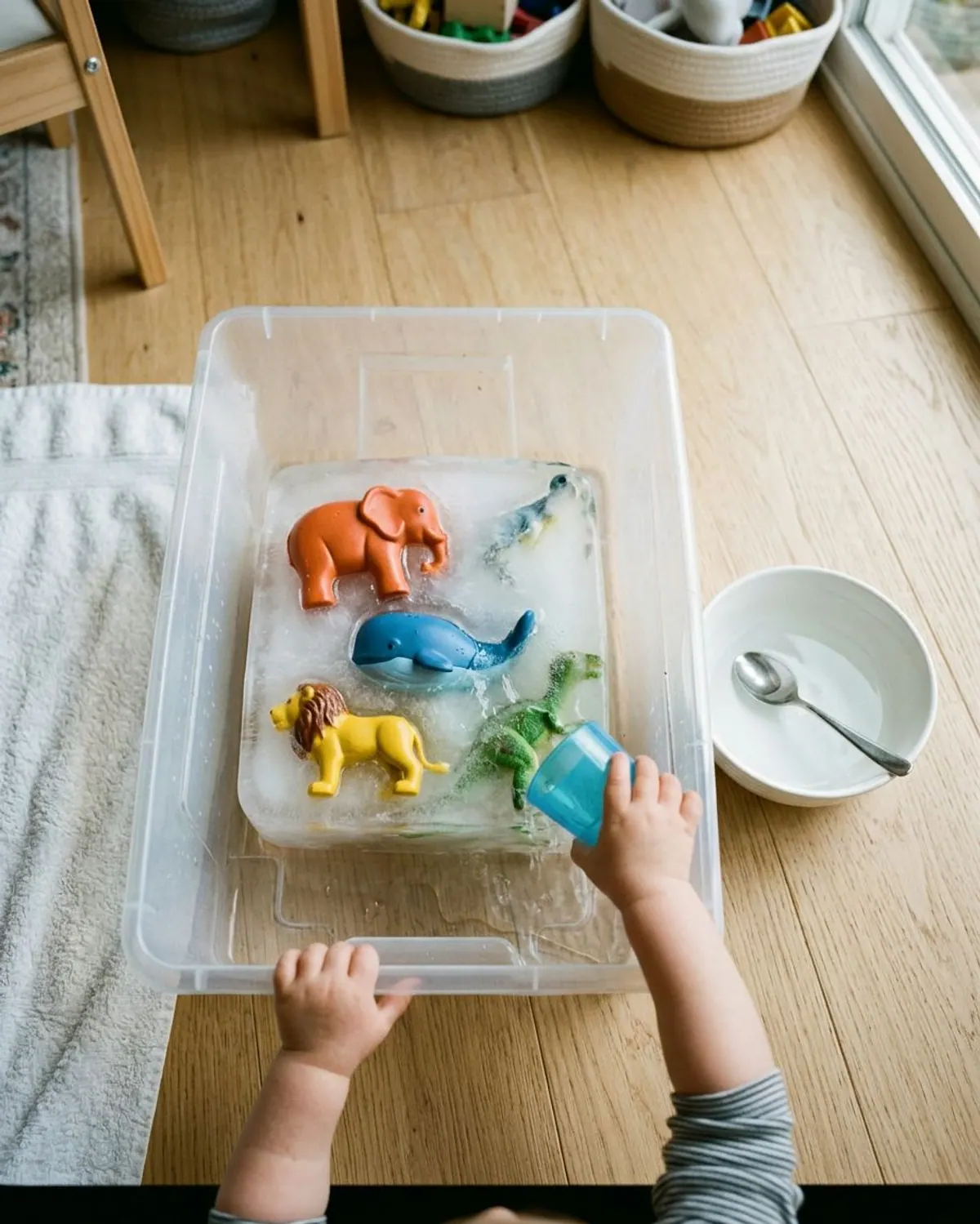
Freeze a few big toy animals or large pom-poms in a tub of water. Give your child a bowl of warm water and a spoon to melt them free. It takes 15 to 20 minutes and they stay busy the whole time.
Ages: 18 months to 4.
Prep: 5 minutes, plus freezing overnight.
Mess: high (wet), low on a towel.
Supplies: a plastic tub, 3 or 4 large toys, a bowl of warm water, a spoon, a towel.
- Safety: frozen items must be bigger than a toilet paper tube; keep the water warm, not hot.
6Pot and spoon band
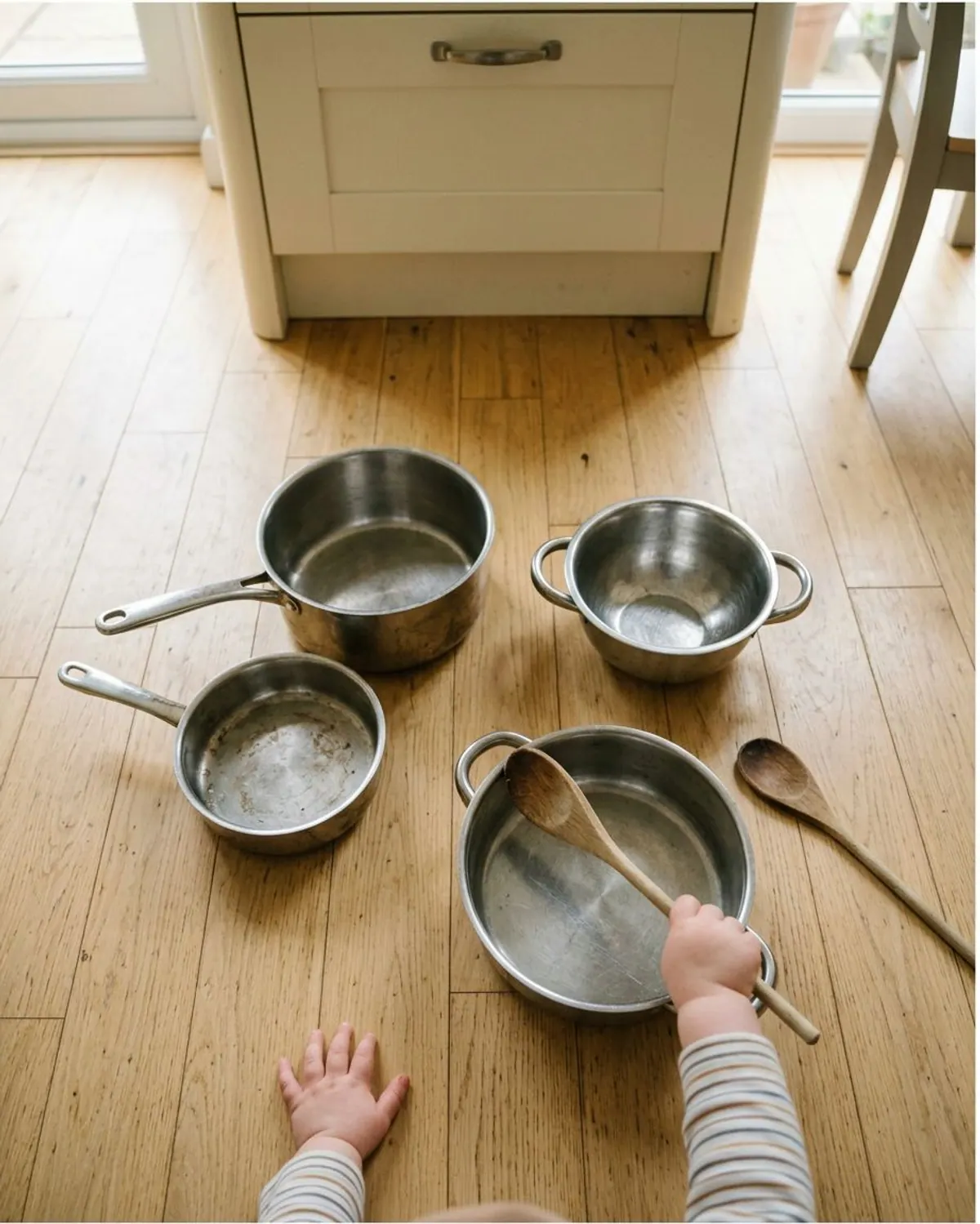
Set out two pots, a metal bowl and two wooden spoons. Bang, tap, scrape. Then try a quiet sound and a loud sound. This is sound play and proprioception (how hard to hit) in one.
Ages: 18 months to 4.
Prep: 1 minute.
Mess: low (loud).
Supplies: 2 pots, a metal bowl, 2 wooden spoons.
- Safety: no glass; keep it to 10 minutes if you have downstairs neighbors.
2 to 3 years: wet, messy and pretend
7Car wash
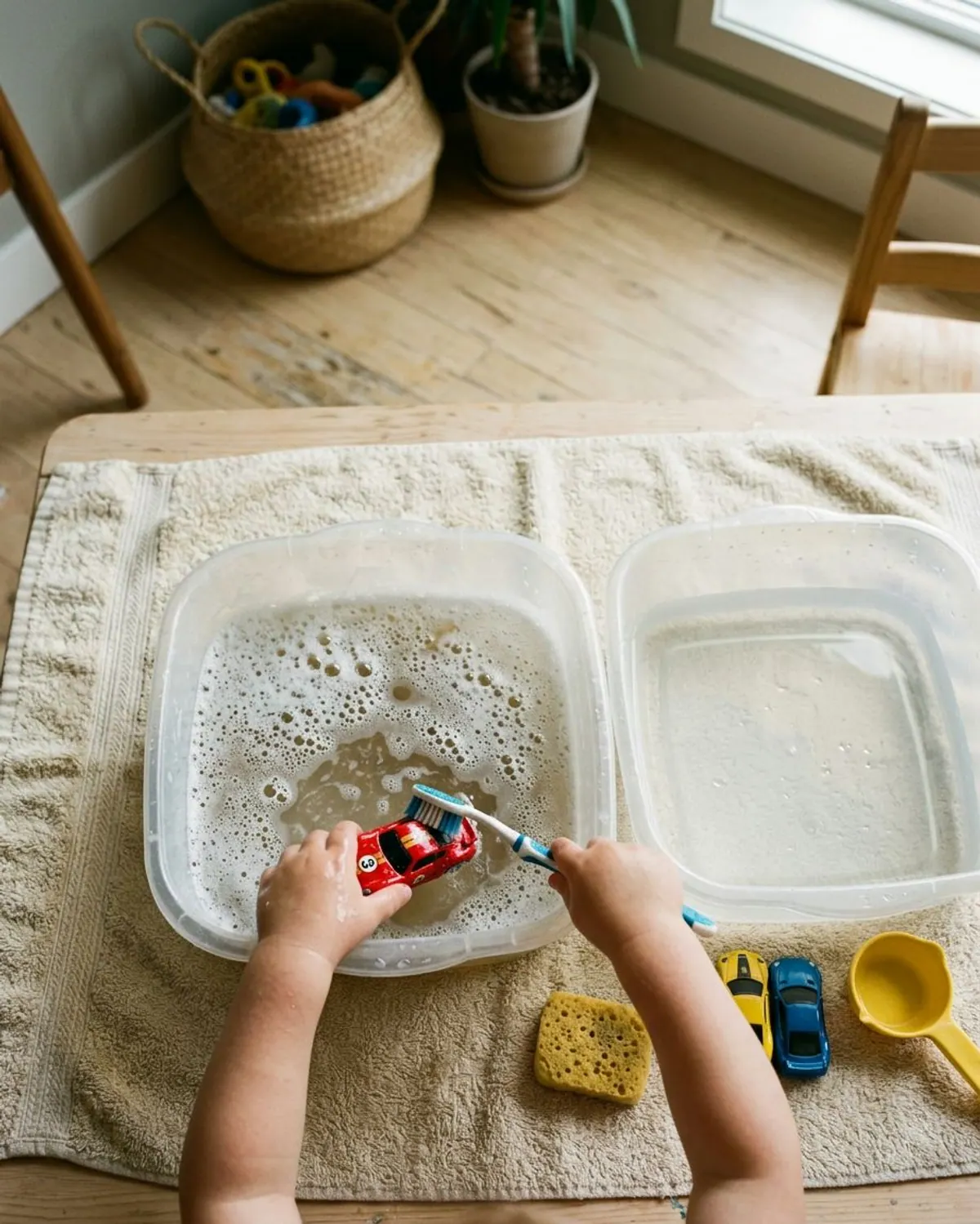
A tub of soapy water, a tub of clean water, toy cars and an old toothbrush. Scrub, rinse, dry on a towel, repeat. Add a sponge and a squirt bottle for a 3 year old.
Ages: 2 to 5.
Prep: 3 minutes.
Mess: high (wet).
Supplies: 2 tubs, dish soap, toy cars, an old toothbrush, a towel.
- Safety: a drop of soap is enough; keep soapy hands away from the face and stay close.
Wide and shallow keeps the water in; two of them make a wash and rinse station.
8Playdough squish
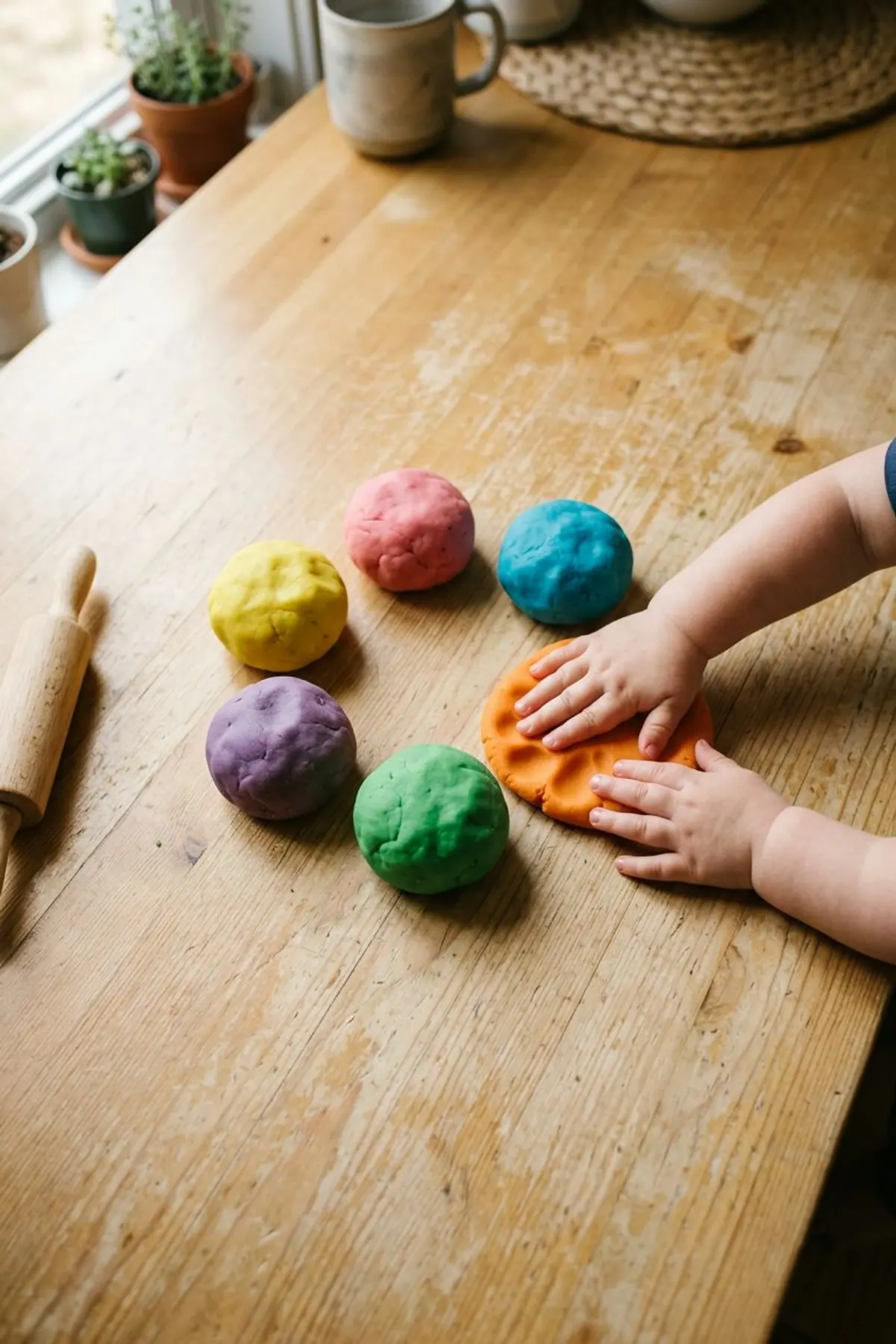
A ball of homemade playdough, a rolling pin and two cookie cutters. Follow our no-cook playdough recipe for a safe batch made with heat-treated flour or cooked on the stove.
Ages: 2 to 5.
Prep: 10 minutes for a fresh batch, 1 minute after.
Mess: low.
Supplies: playdough, a rolling pin, 2 large cookie cutters, a tray.
- Safety: not for eating; store it away from dogs, as the salt is toxic to them.
9Mud kitchen on the step
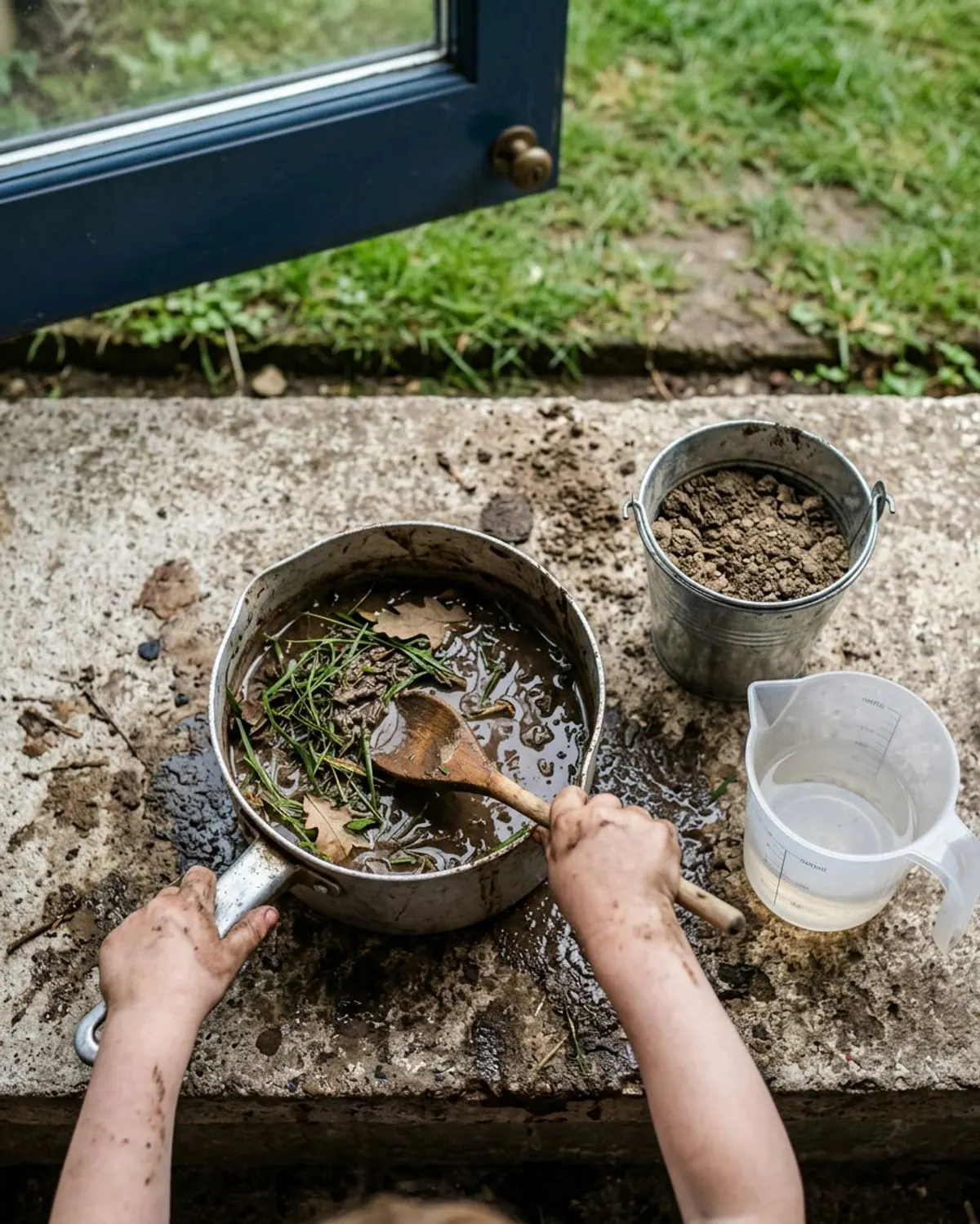
A bucket of dirt, a jug of water, an old pot and a wooden spoon. Mix mud soup, add grass and leaves, serve it to a stuffed animal. Do it right before bath time.
Ages: 2 to 6.
Prep: 5 minutes.
Mess: high (mud).
Supplies: a bucket of dirt, a jug of water, an old pot, a wooden spoon, old clothes.
- Safety: use dirt from your own yard with no fertilizer or pesticide; wash hands and nails after.
10 sensory play activities with no bin at all
You do not need a bin to do sensory play. Half the senses in the chart above are better served by moving, carrying and listening than by scooping. These ten take under 3 minutes to set up.
| Activity | Ages | Prep | Mess | Supplies and safety |
|---|---|---|---|---|
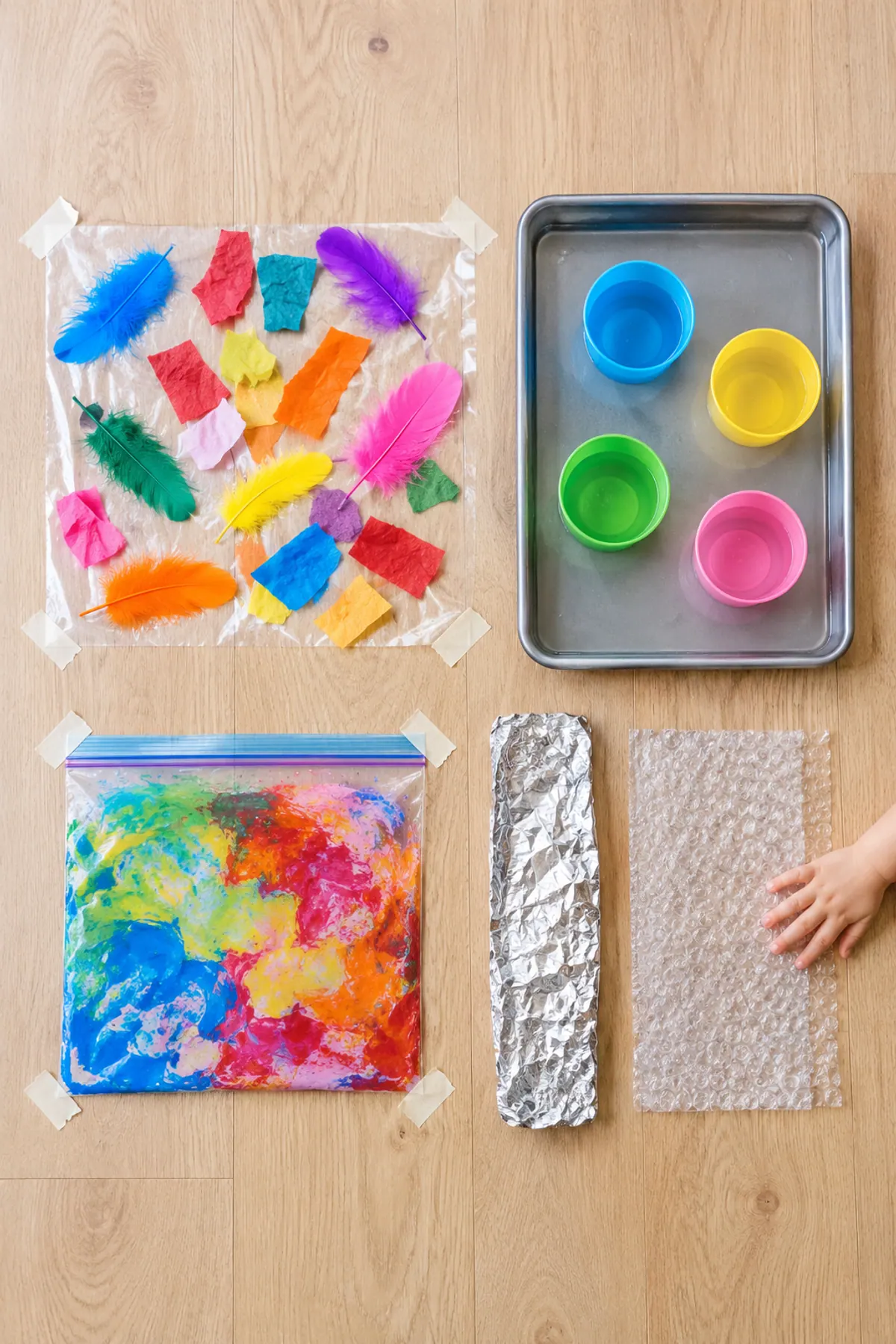
| Bubble wrap stomp (tape a sheet to the floor) | 12 months to 4 | 2 min | low | Bubble wrap, painter's tape. Adult close; no loose pieces for mouthers |
| Laundry basket push (fill it with books) | 12 months to 4 | 1 min | low | A basket, 4 or 5 books. Clear the path; hard floor is best |
| Scarf toss and catch | 12 months to 4 | 1 min | low | 3 light scarves. Keep scarves off the face and out of the crib |
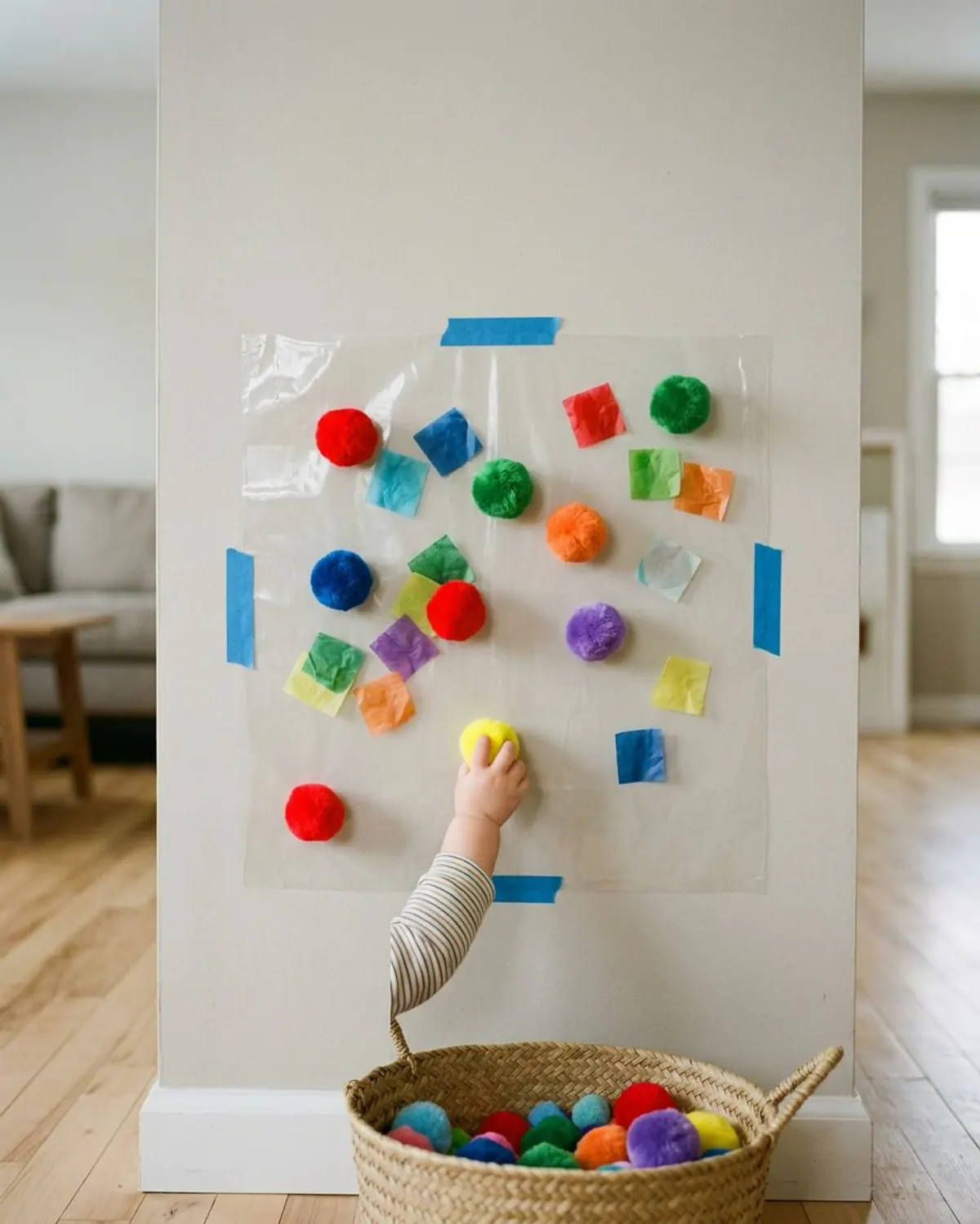
| Sticky wall (contact paper, sticky side out) | 18 months to 4 | 3 min | low | Contact paper, tape, pom-poms, paper. Jumbo pom-poms only under 3 |
| Blanket swing (two adults, low and slow) | 18 months to 4 | 1 min | low | A blanket. Low, slow, over carpet, 4 or 5 swings then stop |
| Shaving cream on a window (bath or shower only) | 2 to 5 | 1 min | high | Shaving cream, a tub. Keep it away from the face; rinse hands |
| Rice shaker bottles | 12 months to 3 | 3 min | low | Empty bottles, rice, hot glue on the cap. Check the cap is sealed every time |
| Smell jars (cinnamon, lemon, mint) | 2 to 5 | 3 min | low | 3 jars with holes in the lids. No essential oils; sniff, do not taste |
| Pillow mountain climb | 12 months to 4 | 2 min | low | Couch cushions on a rug. Spotter beside the pile; nothing hard underneath |
| Cold and warm bowls | 12 months to 3 | 2 min | medium | Two bowls, warm and cold water, a towel. Warm, never hot; stay close |
Your first sensory bin, in short
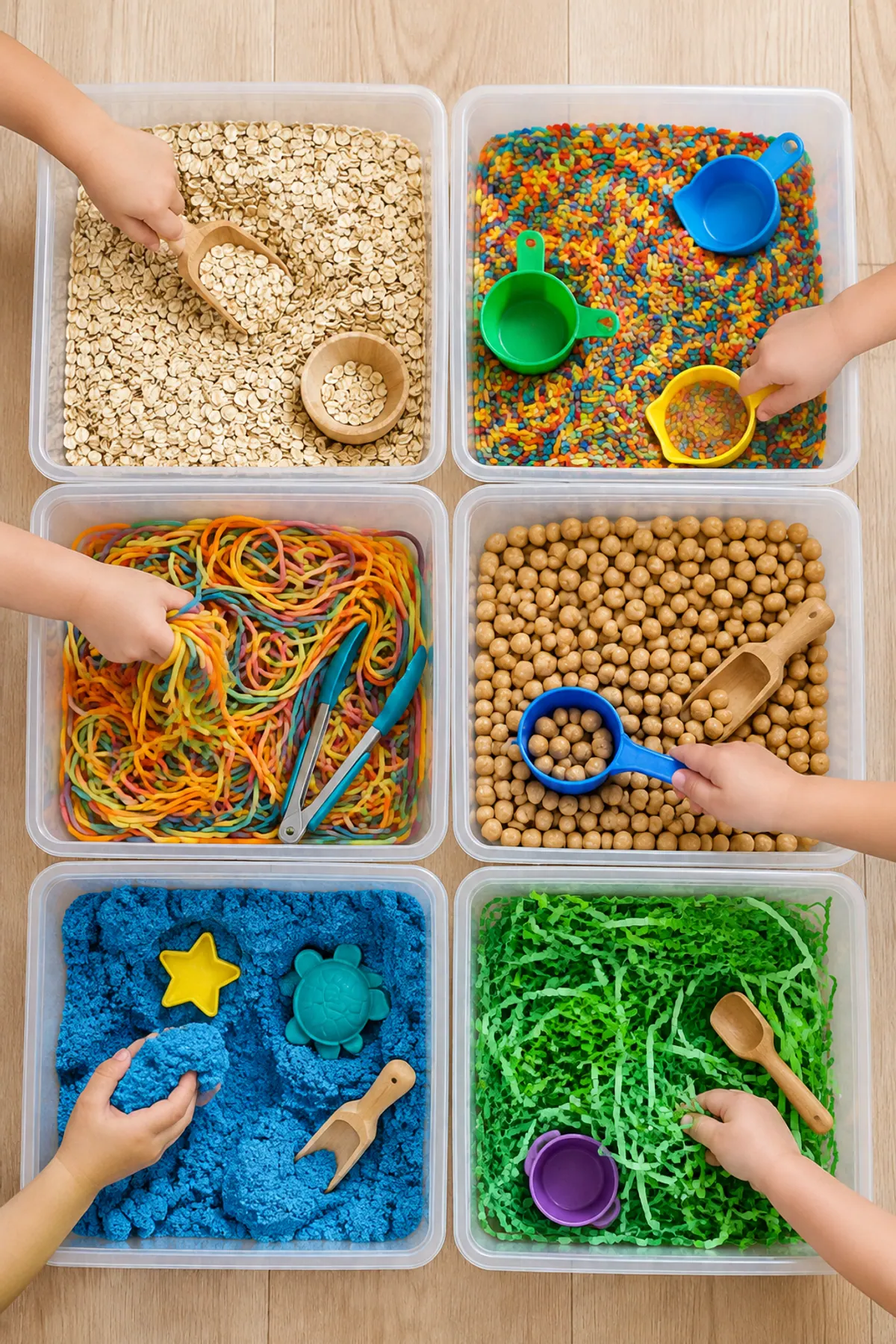
Once your child scoops well and no longer mouths, a bin lets one material stay out for a week. The shape matters more than the filler: wide and shallow, about 6 inches deep, with 2 inches of filler on a splat mat. Start with oats or dry rice, two scoops and one toy.
The full setup, including the toilet paper tube test for every small piece, is in how to make a sensory bin for toddlers. For what goes in the bin at each age, use the best sensory bin fillers by age. For seasonal bins, the Christmas sensory bin ideas list is the next step.
A 7-day sensory play starter plan
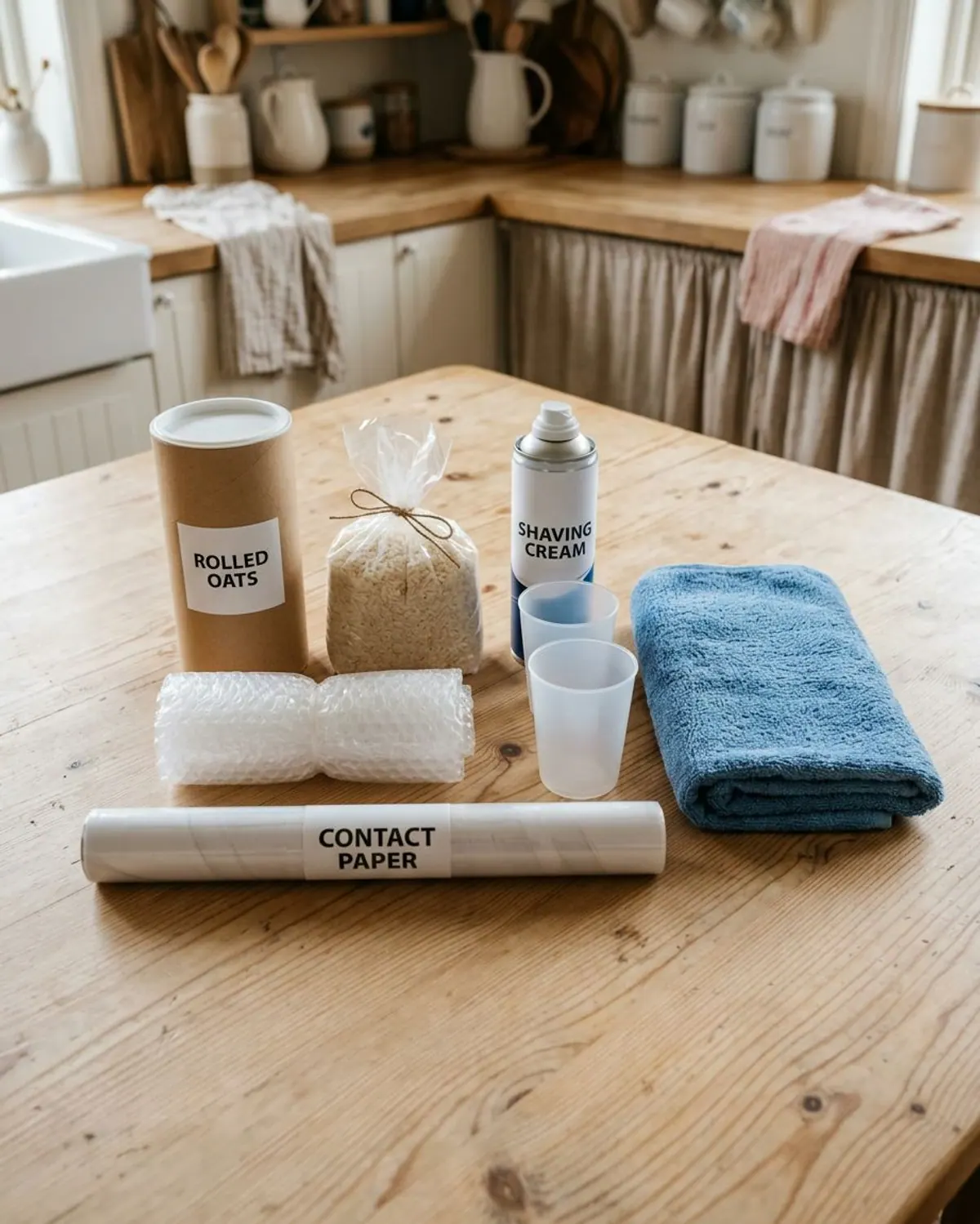
This plan follows the dry-before-wet rule and never repeats a material two days in a row. Every day is one activity from this guide, 10 to 20 minutes, on a towel or tray. Total shopping list: oats, a bag of rice, bubble wrap, contact paper and shaving cream. Everything else is already in your kitchen.
| Day | Activity | Sense focus | Prep | Mess |
|---|---|---|---|---|
| 1 | Texture basket (12 to 18 months) or oats and scoops tray (18 months up) | Touch | 3 min | Low to medium |
| 2 | Bubble wrap stomp plus laundry basket push | Proprioception | 3 min | Low |
| 3 | Pot and spoon band, then smell jars | Sound, smell | 4 min | Low |
| 4 | Water and cups on a towel | Touch, sight | 2 min | High (wet) |
| 5 | Sticky wall | Touch, fine motor | 3 min | Low |
| 6 | Ice cube rescue (freeze the night before) | Touch, temperature | 5 min | High (wet) |
| 7 | Blanket swing and pillow mountain, then rest day | Vestibular | 3 min | Low |
After week one, keep the materials your child went back to and drop the rest. A toddler who ignored the oats but spent 20 minutes at the sticky wall is telling you what to buy next: nothing, just more contact paper.
Sensory play safety for toddlers: mouthing, small parts and allergies
Safety check before every sensory activity
The AAP's choking prevention page is the one to read before you add any loose parts. The tube test comes from the same idea as the CPSC small parts rule for toys sold for kids under 3.
Sensory play mistakes beginners make
Reality
- A bowl of water and a cup is a complete sensory activity
- One material at a time holds attention longer than a themed bin with ten parts
- Ten minutes is a good session for a toddler
- Movement (swinging, pushing, climbing) is sensory play too
- Taste-safe still means an adult sits beside the child
Myth
- You need a bin, a kit and dyed rice to start
- More items in the bin means more learning
- A short session means it did not work
- Sensory play only means touching textures
- Taste-safe means you can leave the room
For days when the weather keeps you in, the indoor activities for toddlers on cold or rainy days list pairs well with this plan. And if you want every indoor idea on a card you can draw from a jar, sorted by how much energy it burns, the kit below does that for ages 3 to 8.
Sensory play supplies for toddlers
Sensory play starter supplies
-
Clear shallow storage bin
Typically $10 to $20
Wide and shallow is the shape that keeps filler in. Buy it after week one, not before.
Check price on Amazon for Clear shallow storage bin -
Splat mat
Typically $12 to $25
Turns a high-mess activity into a medium one. A bath towel works to start.
Check price on Amazon for Splat mat -
Wooden scoops set
Typically $8 to $15
First tools for oats, rice and water.
Check price on Amazon for Wooden scoops set -
Natural loofah sponges
Typically $6 to $12
A rough texture big enough for a 12-month-old's texture basket.
Check price on Amazon for Natural loofah sponges -
Clear contact paper roll
Typically $8 to $14
The sticky wall, over and over.
Check price on Amazon for Clear contact paper roll -
Jumbo pom-poms
Typically $7 to $12
Big enough to pass the tube test; for the sticky wall and freezing.
Check price on Amazon for Jumbo pom-poms -
Toddler training tongs
Typically $8 to $14
The next tool after scoops, around age 2 and a half.
Check price on Amazon for Toddler training tongs
Frequently asked questions
What is sensory play for toddlers?
Play that engages the senses: touch, sight, sound, smell, taste, plus balance and body awareness. Scooping oats, pouring water, stomping bubble wrap and pushing a heavy basket all count.
At what age should you start sensory play?
You can start in the first year with textures at tummy time and water at bath time. Loose fillers like oats and rice wait until your child stops mouthing things, usually between 18 months and 3 years.
How long should a sensory play session be?
There is no set amount. Most toddlers are done in 10 to 20 minutes. Stop when they wander off and bring the same material back another day.
How do I do sensory play without a bin?
Use a towel, a tray or a wall. Bubble wrap on the floor, contact paper sticky side out, a laundry basket full of books, pots and spoons, and two bowls of warm and cold water are all bin-free.
Is sensory play messy?
It can be, but a towel or splat mat and the dry-before-wet rule keep most of it on the mat. Water, shaving cream and mud are the high-mess ones; do those right before bath time.
What sensory materials are not safe for toddlers?
Water beads, dry flour, raw kidney beans, foam packing peanuts, balloons and anything that fits through a toilet paper tube for kids under 3.
Save it for later
Pin this to your Sensory Play board so it's there when you need it.
Save to Pinterest