This post contains affiliate links. As an Amazon Associate we earn from qualifying purchases, at no extra cost to you. Read our disclosure.
Safety first: Always supervise little ones, and skip small parts for kids who still put things in their mouths. Please read our play safety notes before you start.
Key takeaways
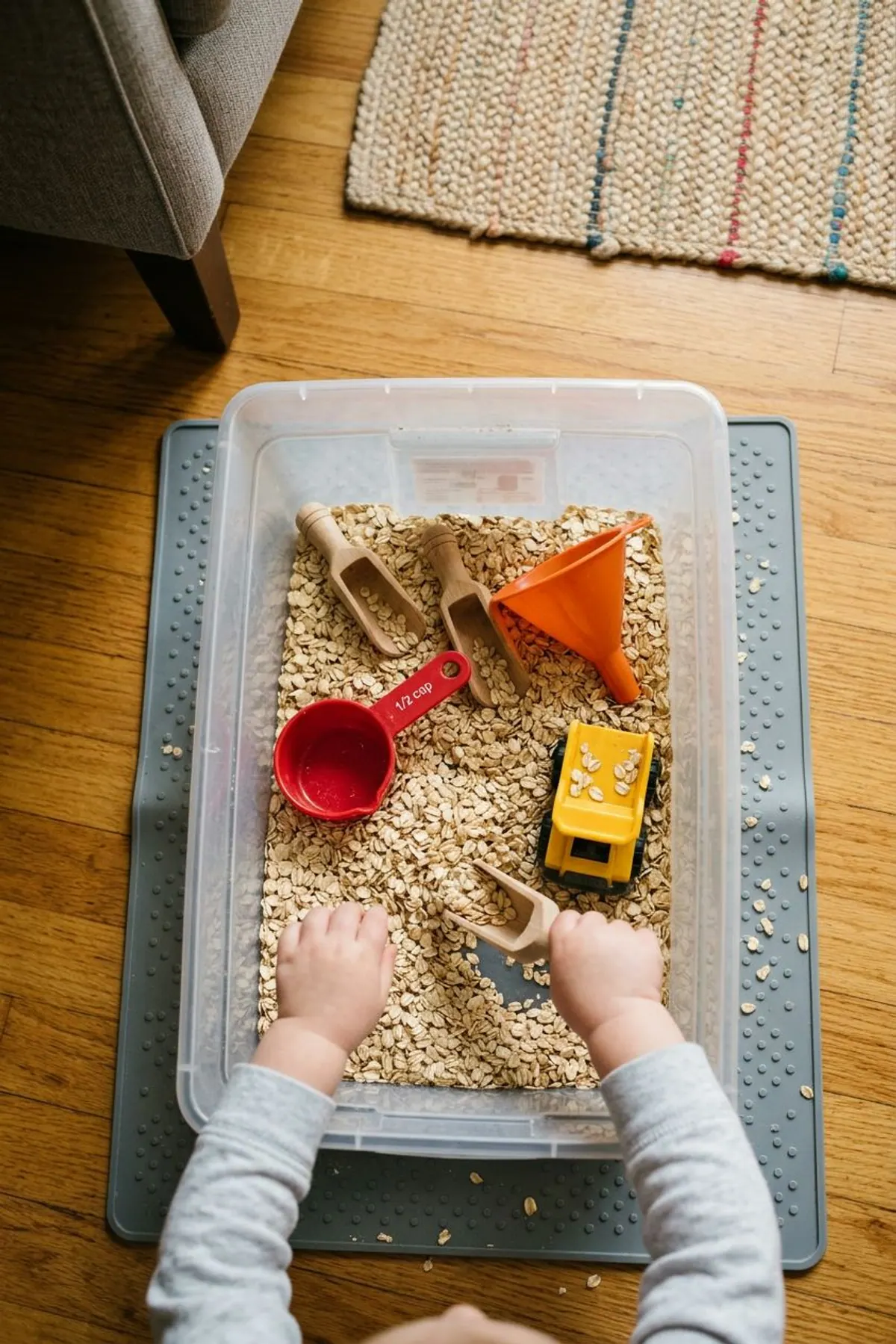
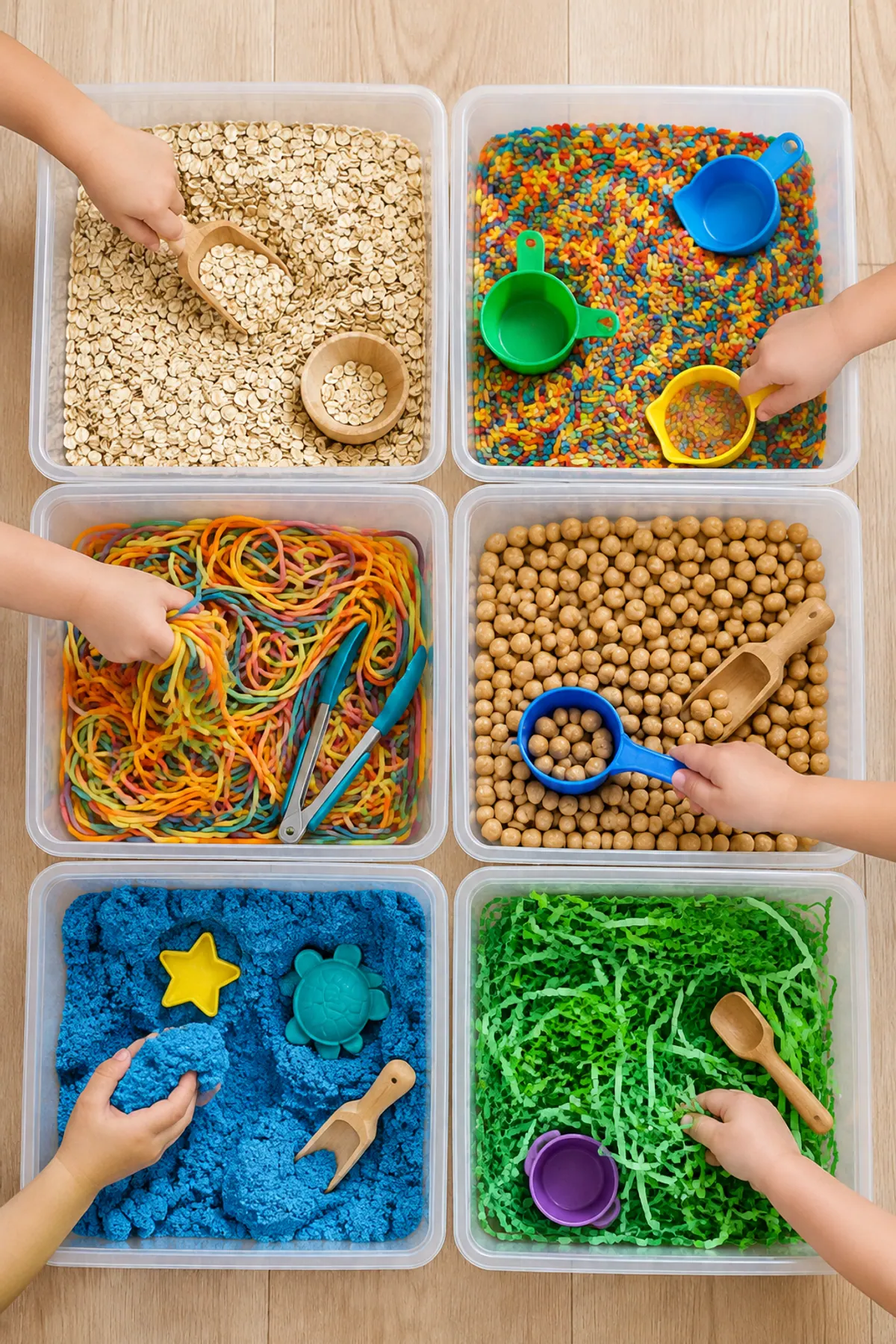
- You do not need a kit: a storage bin or baking tray, one filler and two or three tools is a full sensory bin.
- For under 3, pick taste-safe or big fillers (cooked pasta, water, shredded paper, big rocks) and stay within arm's reach.
- Anything that fits through a toilet paper tube is a choking hazard for children under 3.
- Water bins need an adult beside the child the whole time, and the bin gets emptied right after.
- Rotate one bin all week by changing the tools, not the filler.
In this post29 sections
- Kitchen cupboard sensory bins (under $2)
- 1. Cooked spaghetti and tongs
- 2. Big pasta scoop and pour
- 3. Cornmeal dig
- 4. Jar lid posting bin
- Water sensory bins
- 5. Bubble bin with whisks
- 6. Ice block rescue
- 7. Toy wash station
- 8. Sink or float bin
- 9. Colored water and droppers
- Dollar store sensory bins
- 10. Shredded paper treasure hunt
- 11. Pool noodle chunks
- 12. Plastic egg open and close
- 13. Pipe cleaner colander
- Nature and outdoor sensory bins
- 14. Leaves, pinecones and sticks
- 15. Dirt dig with pots
- 16. Big rock wash
- 17. Play sand and molds
- Sensory bins for learning: colors and counting
- 18. Color sort with cups
- 19. Count and drop
- 20. Shape hunt in shredded paper
- Bonus: how to stretch one sensory bin over a week
- Safety rules for every toddler sensory bin
- Sensory bin supplies
- FAQ
New to sensory bins? The step by step sensory bin guide covers the container, the towel underneath and the rules, and the sensory bin fillers by age chart covers what is safe at 1, 2 and 3. This list is just the ideas: none of them repeat the five starter bins from that guide.
Kitchen cupboard sensory bins (under $2)
1Cooked spaghetti and tongs
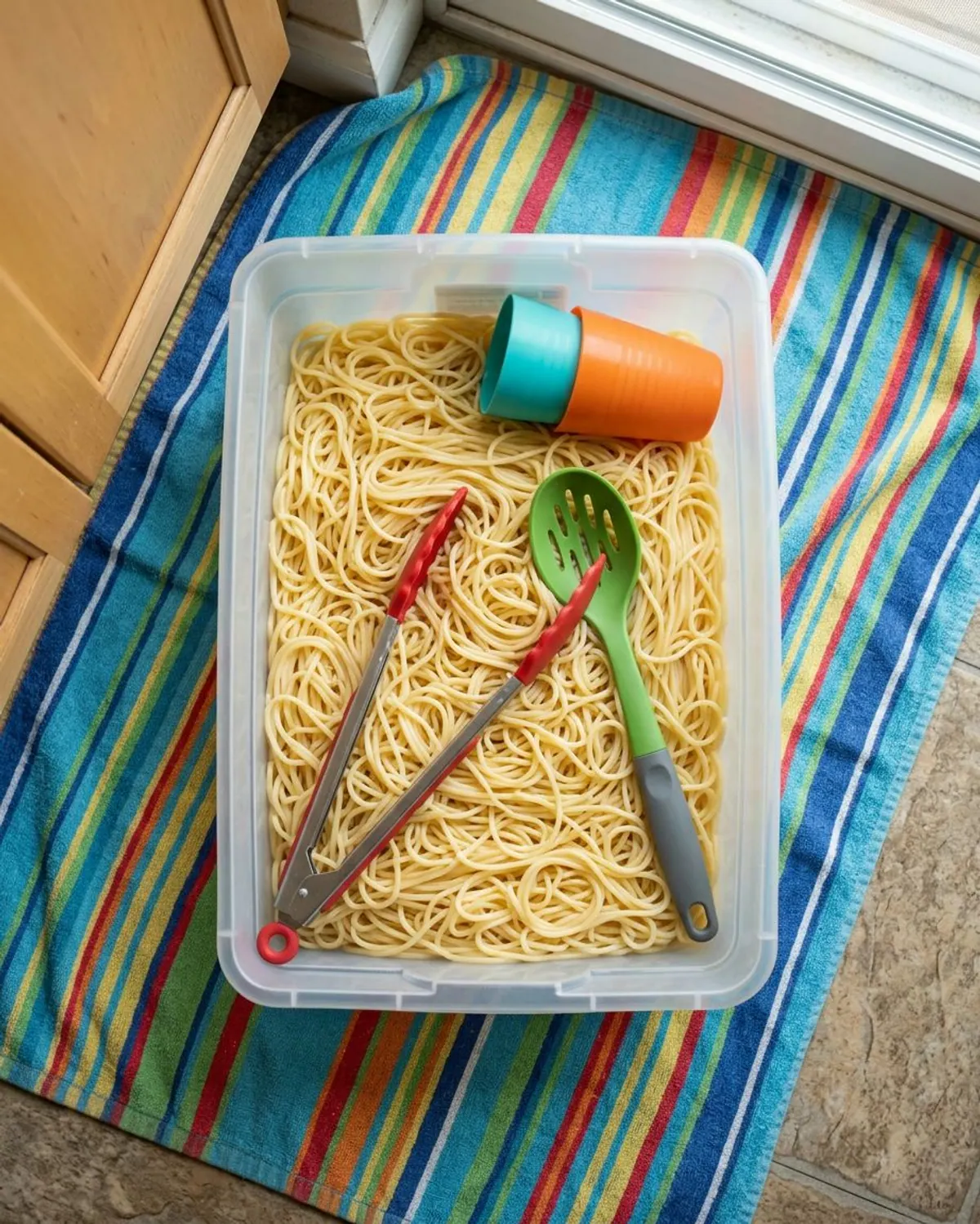
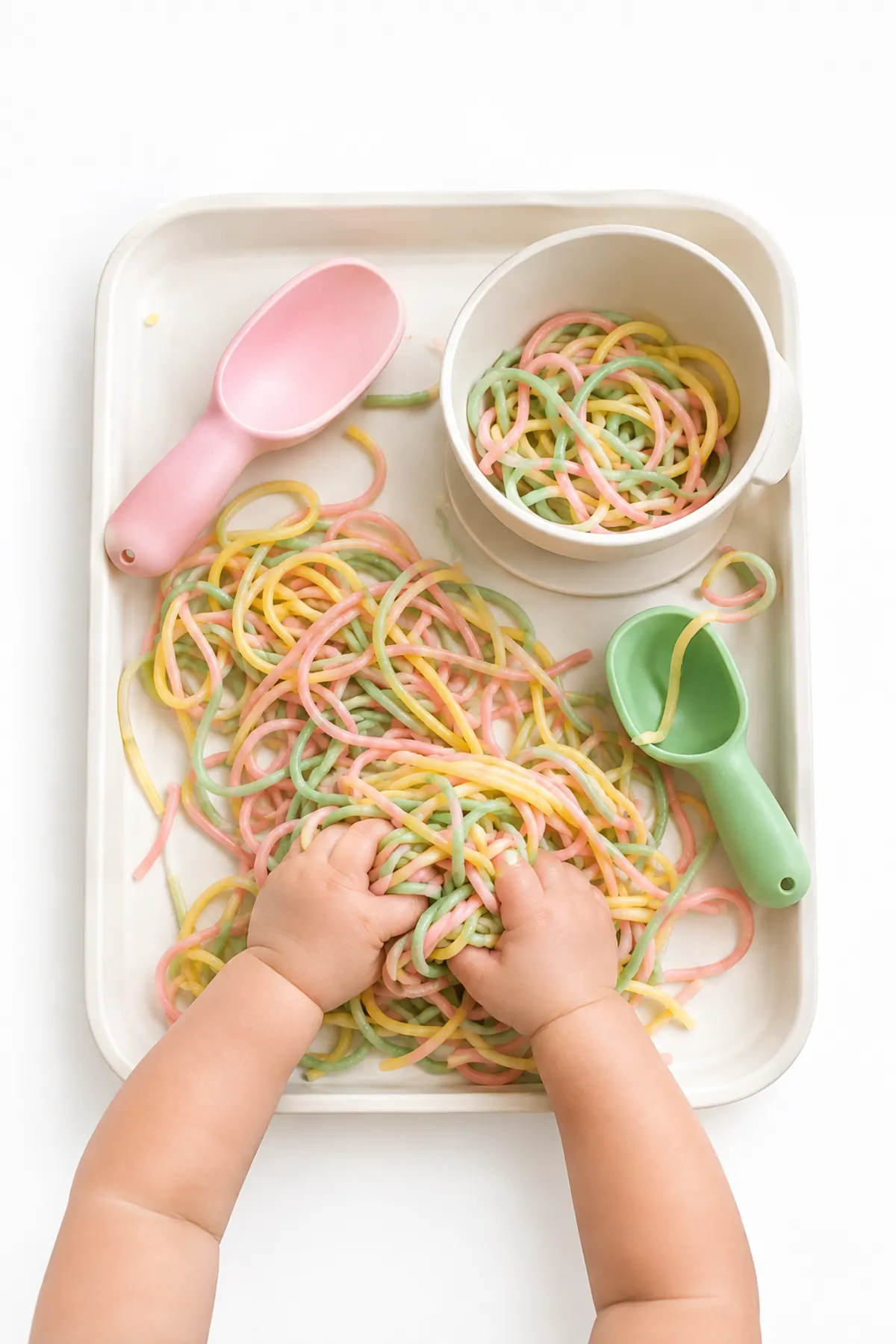
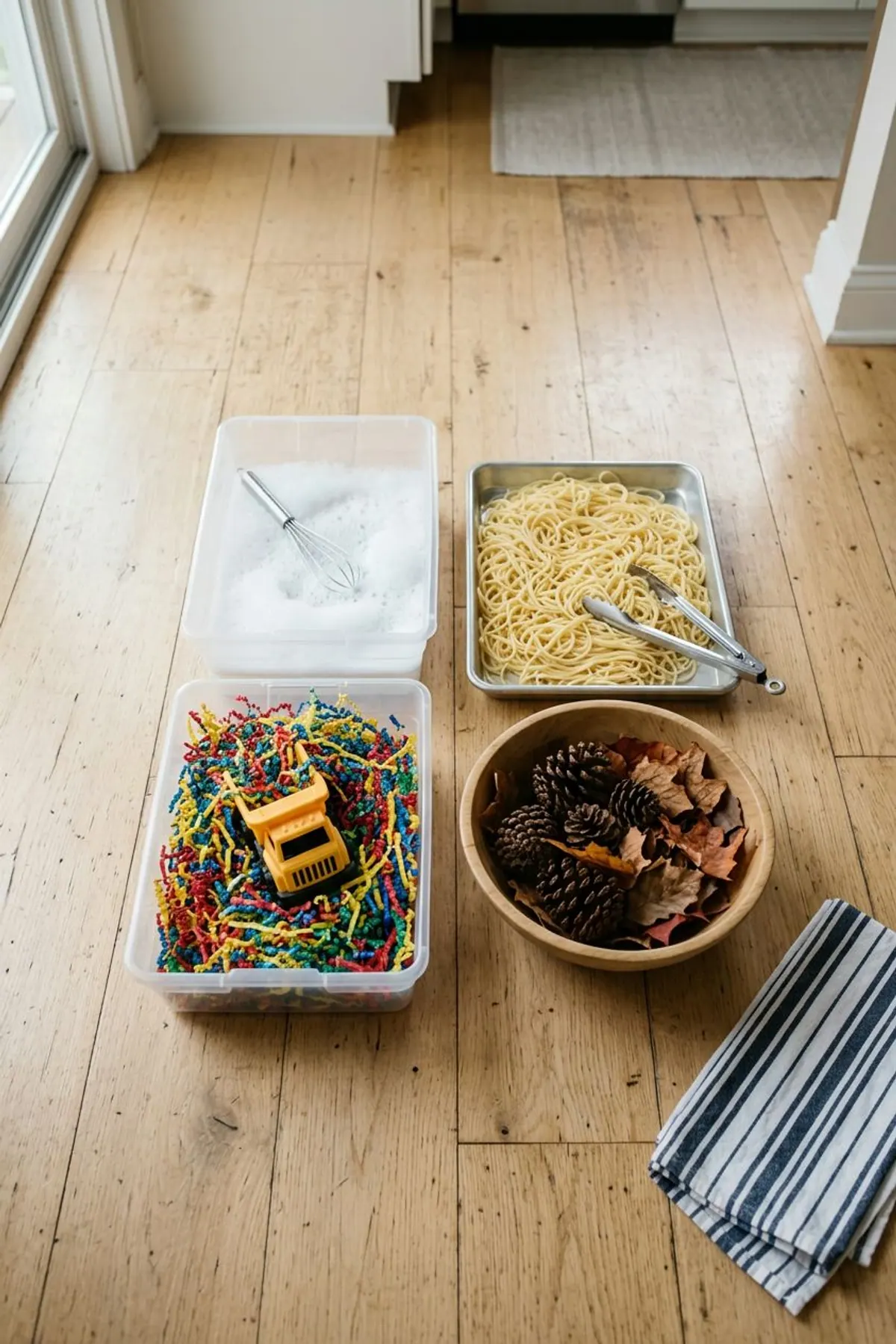
Cook a handful of spaghetti, rinse it cold and drop it in a bin with kitchen tongs, a slotted spoon and a couple of cups. Toddlers pull, drape, squish and fill. Because it is just pasta, it is one of the few bins that is fine if some ends up in a mouth. For more taste-safe ideas see sensory bins for babies.
Cost: under $1.
Ages: 18 months and up.
Prep: 10 minutes (cook and cool).
Mess: medium, sticky on the floor.
Supplies: cooked spaghetti, tongs, slotted spoon, cups.
- Safety: taste-safe, but cut long strands for under 2 and sit with them; toss it after one session.
Sized for small hands and used in half of the bins on this list.
2Big pasta scoop and pour
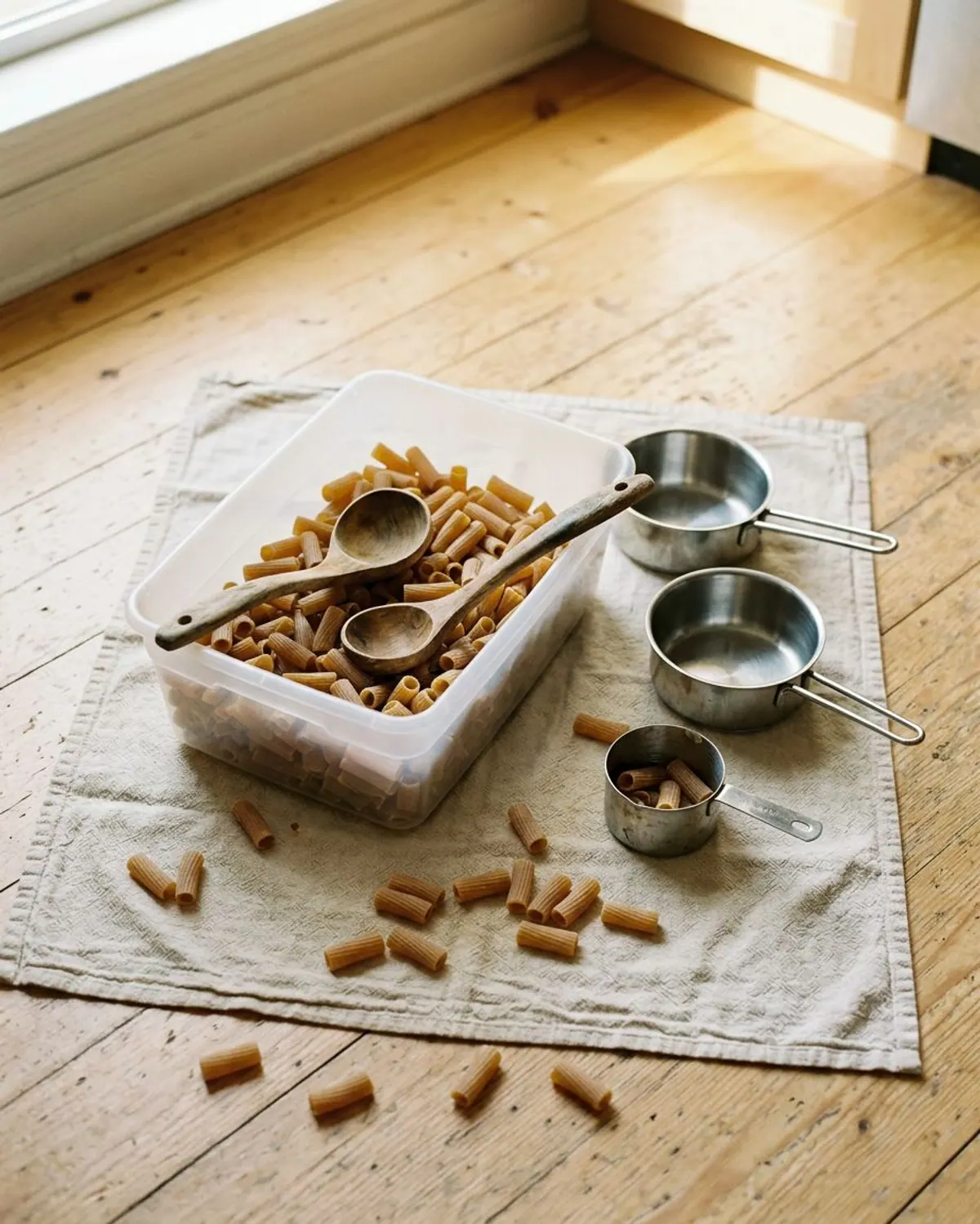
Fill a bin with large dry pasta like rigatoni or shells, then add ladles, a measuring cup and two small pots. The sound of pasta pouring into a metal pot is half the fun. Swap the pots for a muffin tin later in the week.
Cost: about $1 to $2 for a box.
Ages: 2 and up with an adult beside them; 3 and up on their own.
Prep: 2 minutes.
Mess: medium, pasta scatters.
Supplies: a box of large pasta, ladles, measuring cups, small pots.
- Safety: dry pasta pieces and broken bits are a choking risk; stay within arm's reach and sweep up dropped pieces.
3Cornmeal dig
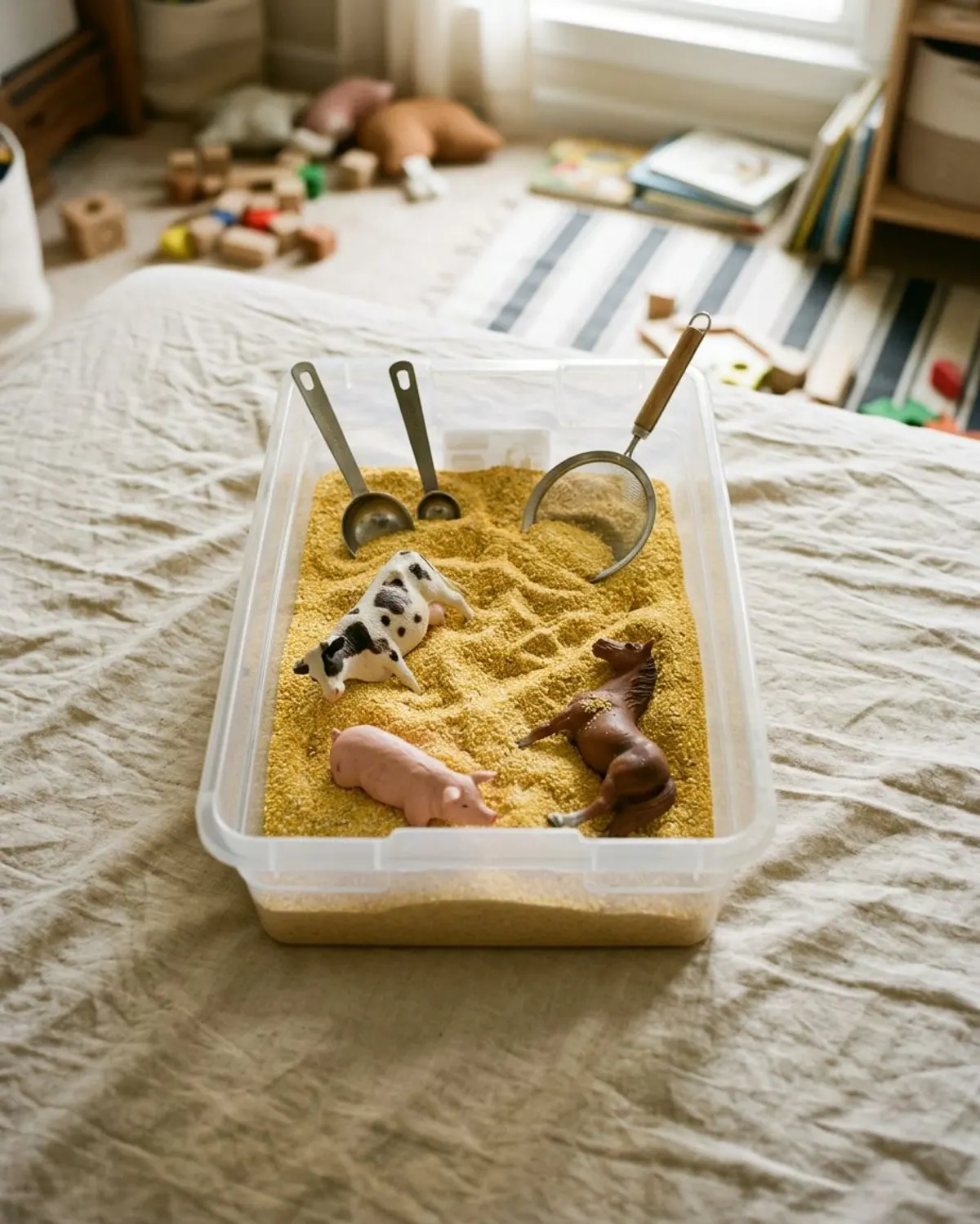
Pour a bag of cornmeal into a bin for a soft, sandy filler that is taste-safe. Add measuring spoons, a sieve and two or three big plastic animals to bury and dig up. It feels a lot like beach sand for a fraction of the price.
Cost: about $2 to $3 for a bag.
Ages: 18 months and up.
Prep: 2 minutes.
Mess: high, it gets everywhere; use a sheet under the bin.
Supplies: cornmeal, measuring spoons, a sieve, large toy animals.
- Safety: cornmeal dust can make kids cough; keep it out of faces and do not use it with a child who has a corn allergy.
Big enough to pass the small parts test, and they come back for a dozen other bins.
4Jar lid posting bin
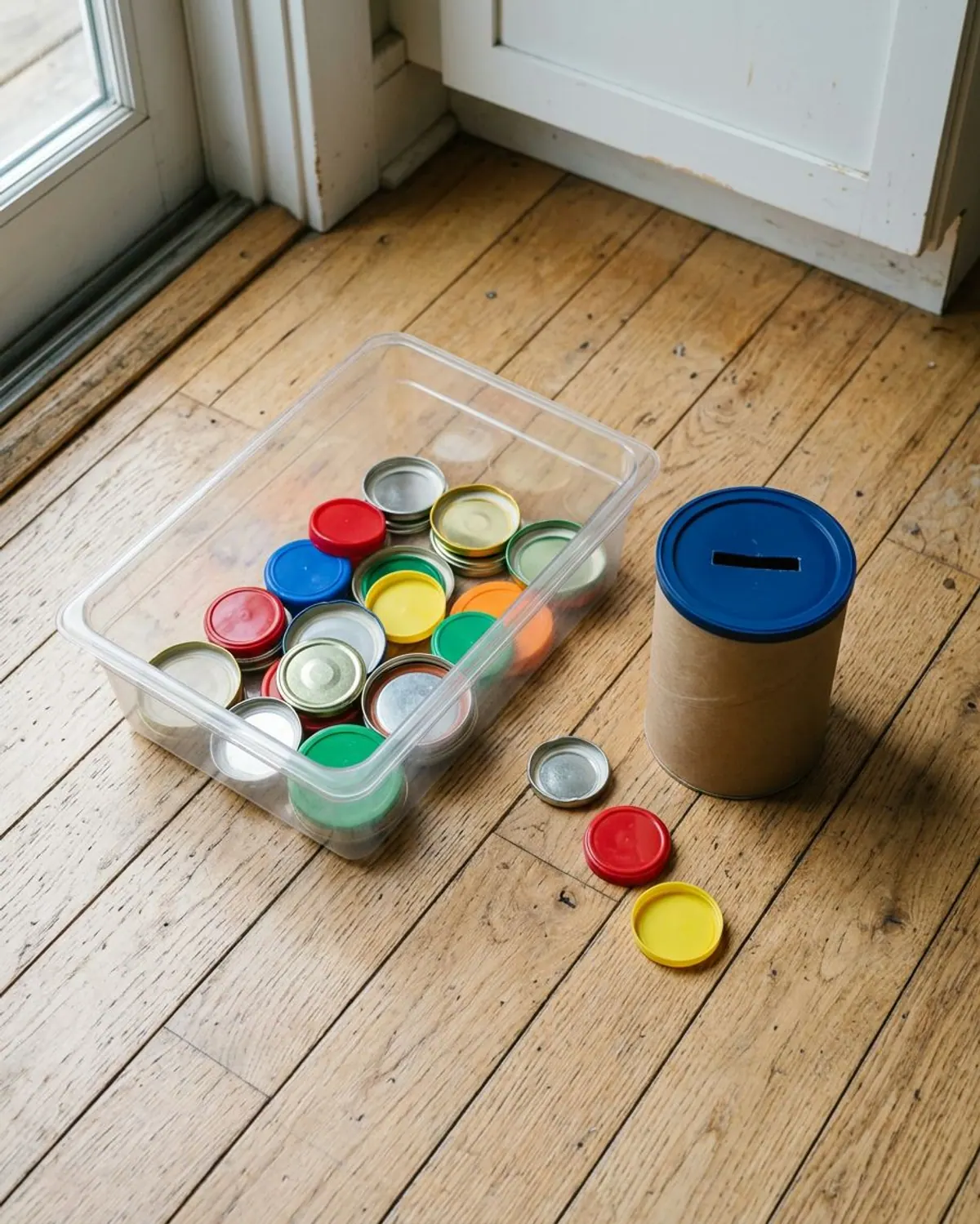
Cut a slot in the lid of an empty oatmeal canister or yogurt tub and fill a bin with metal and plastic jar lids from your recycling. Toddlers fish lids out and post them through the slot again and again.
Cost: free.
Ages: 18 months and up.
Prep: 5 minutes (cut the slot).
Mess: none.
Supplies: a canister with a lid, 10 to 15 jar lids, a bin.
- Safety: check lids for sharp edges, and skip bottle caps, which are small enough to choke on.
A shallow under-bed size gives two toddlers room to dig, and the lid keeps a bin for the week.
Water sensory bins
Water bins are the cheapest of all and the ones that need the closest watching. The AAP water safety guidance notes that young children can drown in as little as an inch or two of water, so stay beside the bin and tip it out the moment play ends.
5Bubble bin with whisks
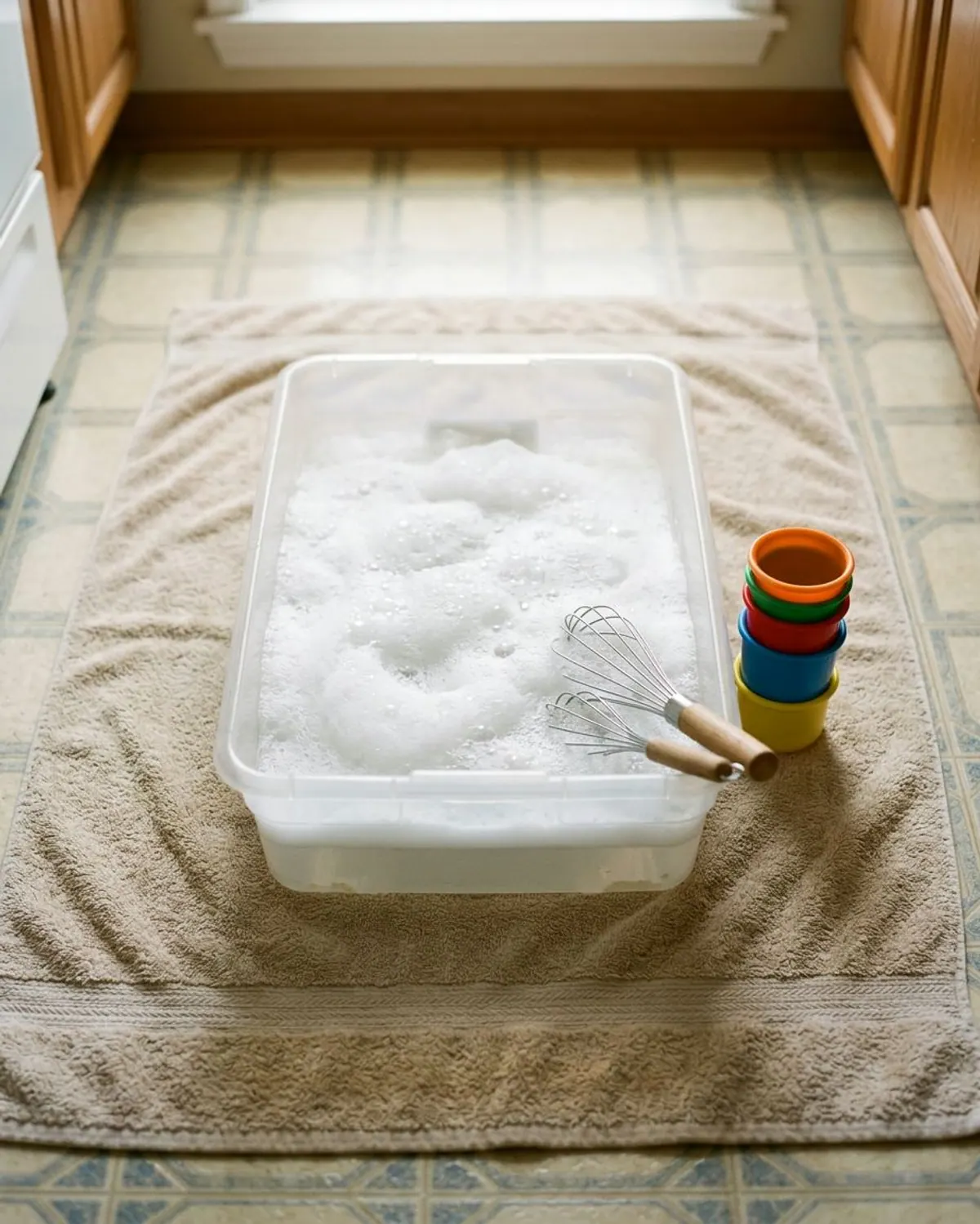
Add a squirt of dish soap or bubble bath to a few inches of warm water and hand over a whisk. The bubbles pile up fast and toddlers love scooping them into cups. Add a few plastic dishes and it turns into a washing-up game.
Cost: under $1.
Ages: 18 months and up.
Prep: 2 minutes.
Mess: medium, splashy.
Supplies: dish soap or bubble bath, a whisk, cups.
- Safety: soap stings eyes, so keep it mild and have a towel close; never leave a water bin, even for a moment.
Small handles fit toddler grips, and the set doubles for the pasta and cornmeal bins.
6Ice block rescue
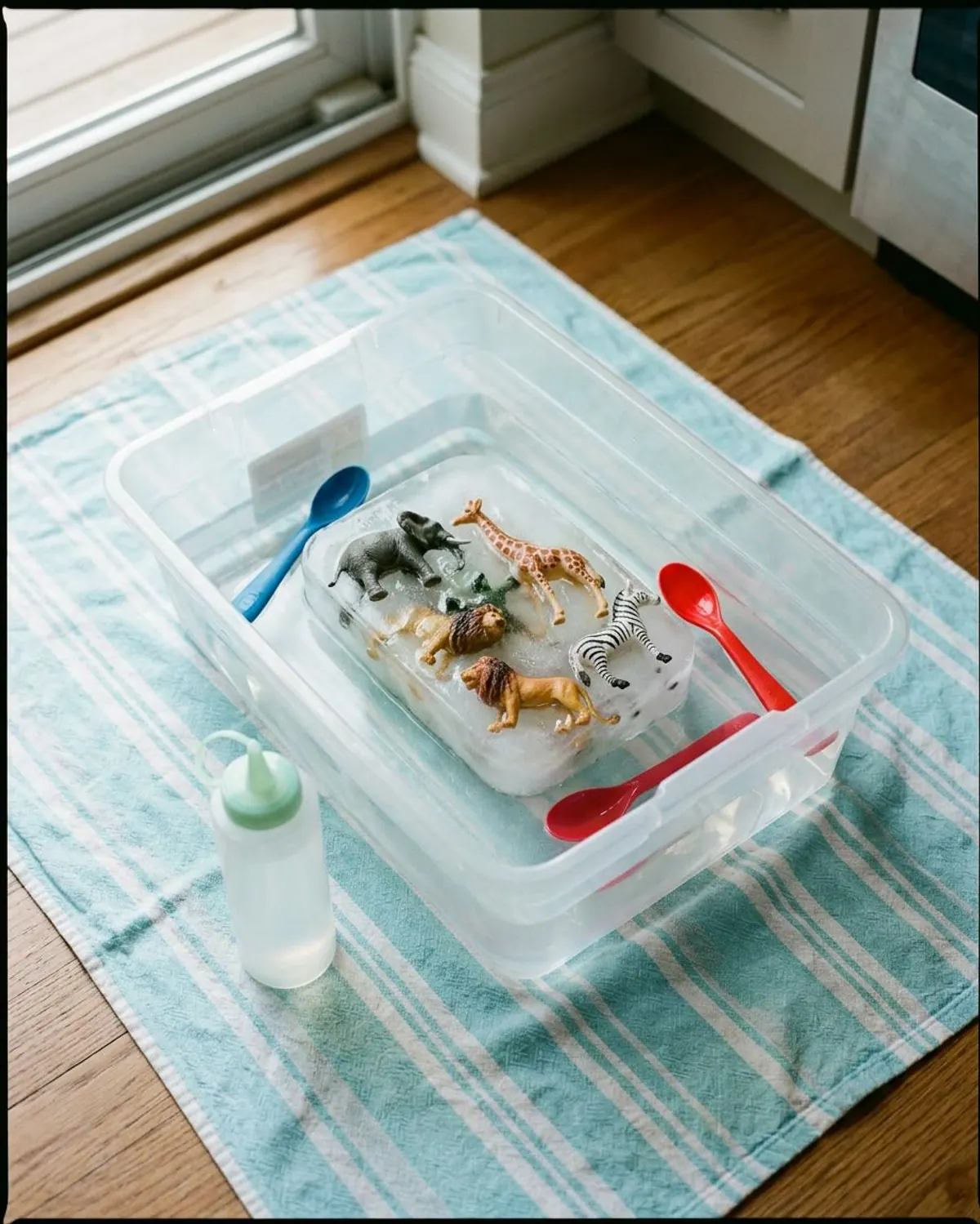
The night before, freeze a few big plastic toys in a loaf pan of water. In the morning, set the block in a bin with warm water, spoons and a squeeze bottle, and let your toddler rescue the toys as the ice melts.
Cost: free.
Ages: 2 and up.
Prep: 2 minutes plus overnight freezing.
Mess: medium, wet.
Supplies: a loaf pan, large toys, warm water, spoons, a squeeze bottle.
- Safety: use one big block, not small cubes, which are a choking risk; toys inside must be too big to swallow.
7Toy wash station
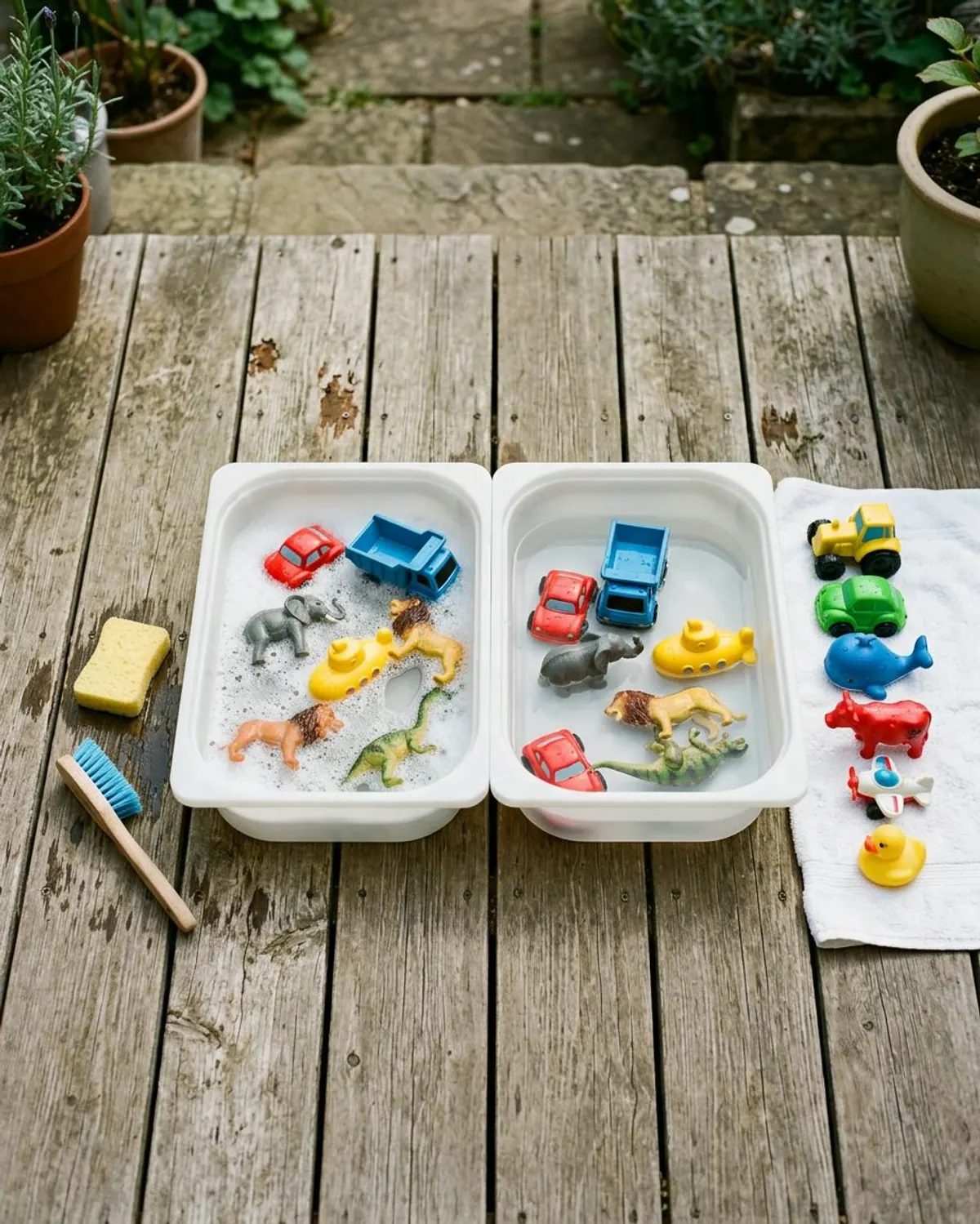
Fill one bin with soapy water and one with clean water, add a sponge, a scrub brush and a towel, and bring out the plastic toys that need a wash anyway. Wash, rinse, dry, line them up.
Cost: under $1.
Ages: 2 and up.
Prep: 3 minutes.
Mess: medium, splashy.
Supplies: 2 bins, dish soap, a sponge, a soft brush, a towel, plastic toys.
- Safety: stay beside both bins and empty them right after; only wash waterproof toys with no batteries.
8Sink or float bin
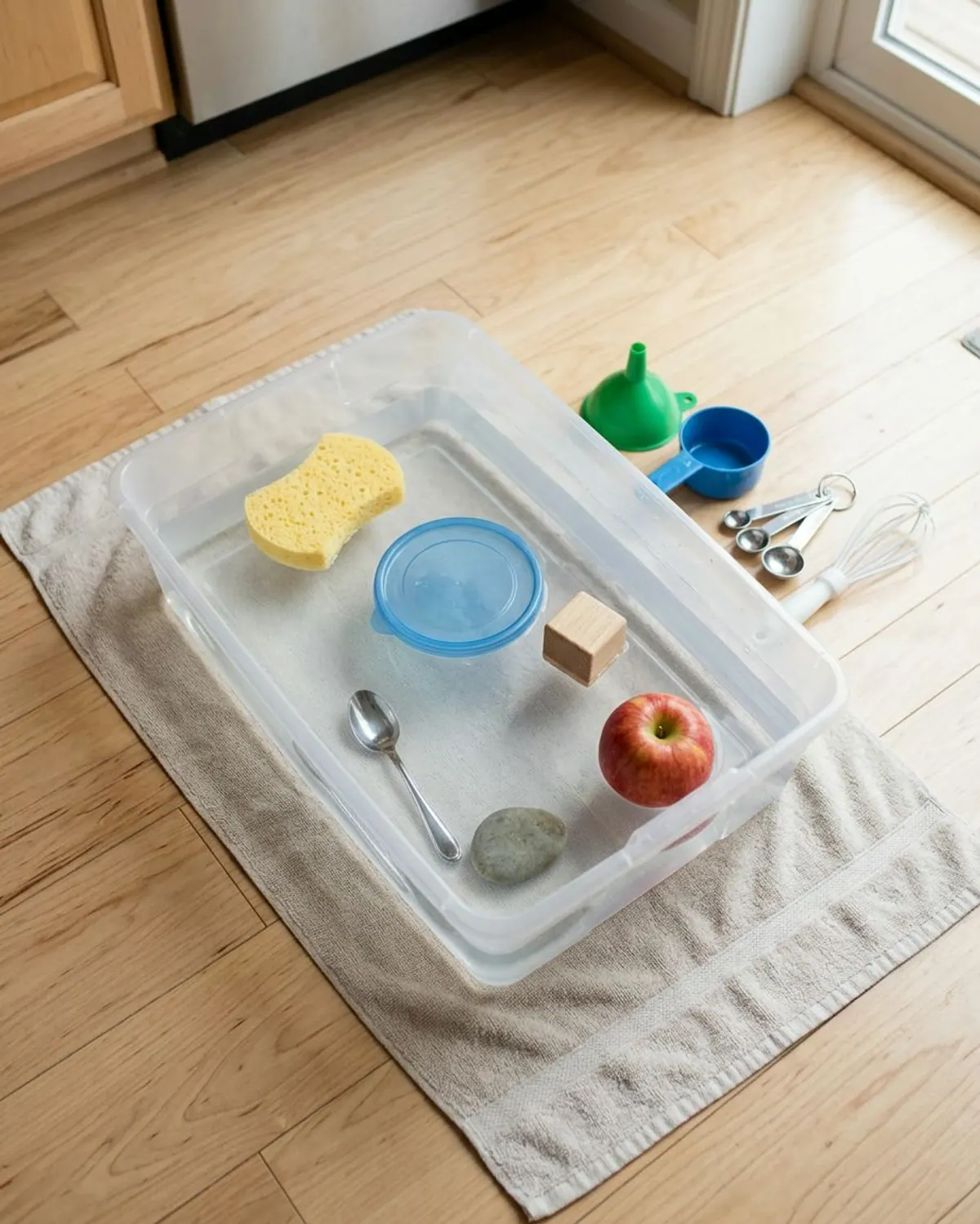
Gather 8 to 10 things from around the house: a cork, a spoon, a sponge, a plastic lid, a big rock, a wooden block. Toddlers drop them in one at a time and you say what happens. Older 2s start guessing first.
Cost: free.
Ages: 2 and up.
Prep: 5 minutes to gather items.
Mess: low to medium.
Supplies: a bin of water, 8 to 10 household objects.
- Safety: every object should be too big to fit through a toilet paper tube, which rules out corks for under 3.
9Colored water and droppers
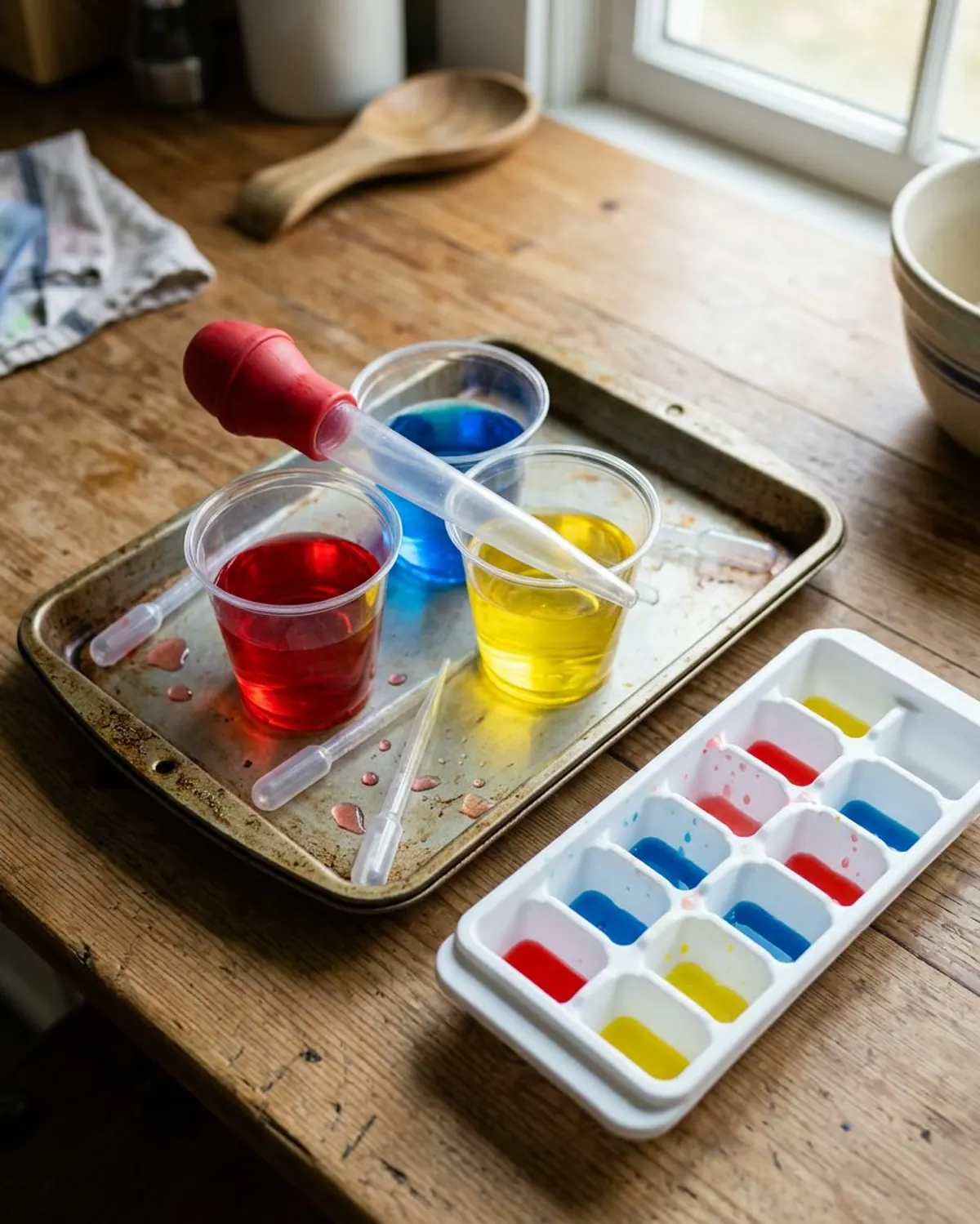
Mix a few drops of food coloring into three cups of water and set them in a tray with a turkey baster, a medicine dropper and an empty ice cube tray. Squeezing and releasing is hard work for small hands, so start with the baster.
Cost: about $3 to $5 for droppers.
Ages: 2 and up with help; 3 and up on their own.
Prep: 5 minutes.
Mess: medium, food coloring can stain.
Supplies: food coloring, cups, a turkey baster, droppers, an ice cube tray.
- Safety: no water left standing after play; use washable clothes, since food coloring can stain.
Large droppers are easier for small hands than medicine droppers.
Dollar store sensory bins
10Shredded paper treasure hunt
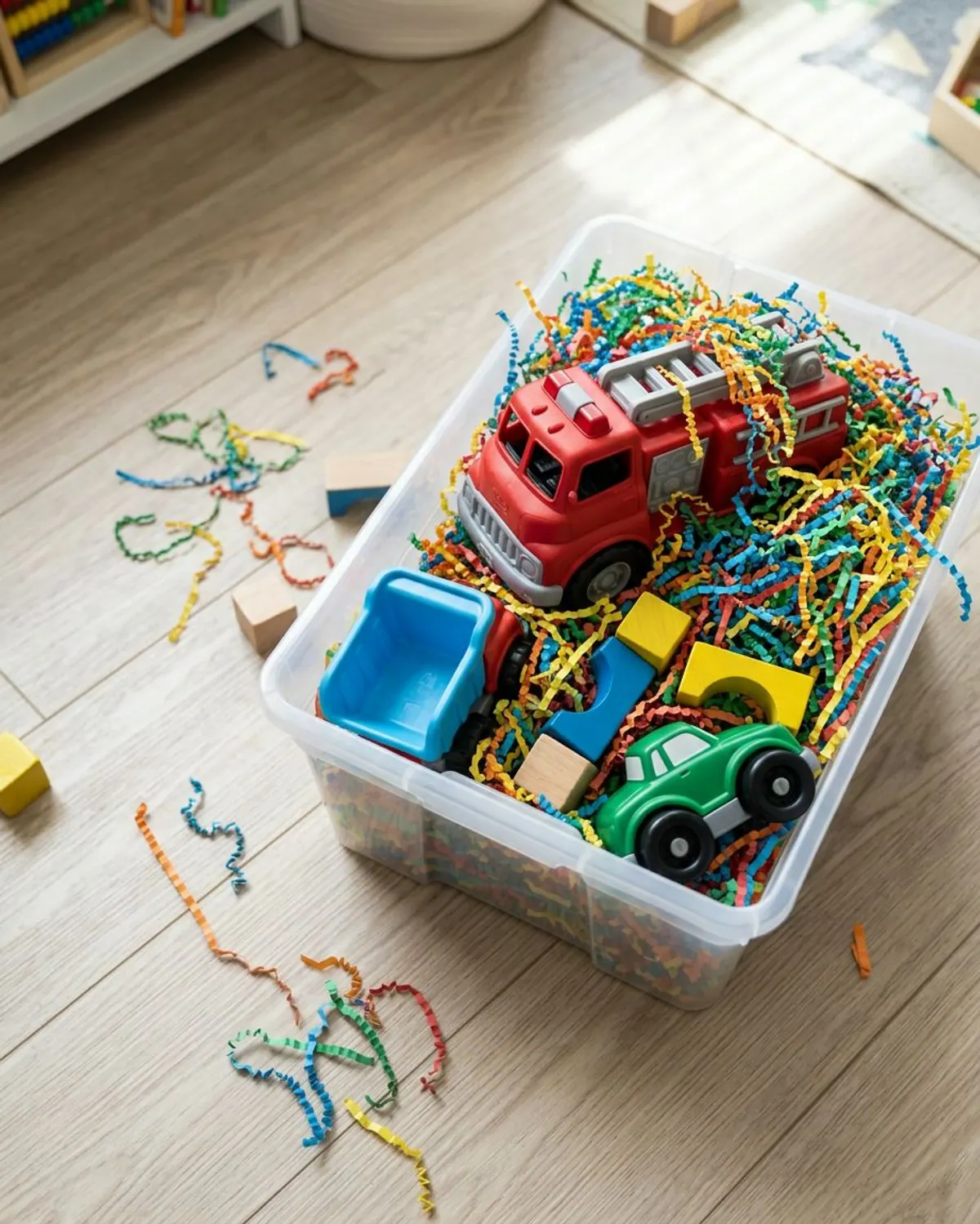
A bag of gift basket shredded paper fills a whole bin. Bury 6 to 8 big toys and let your toddler dig. It is quiet, it is light, and cleanup is a handheld vacuum.
Cost: about $1 to $2.
Ages: 18 months and up.
Prep: 2 minutes.
Mess: medium, paper strands travel.
Supplies: a bag of shredded paper filler, 6 to 8 large toys.
- Safety: paper strands go in mouths; skip the metallic kind and stay close for under 2.
11Pool noodle chunks
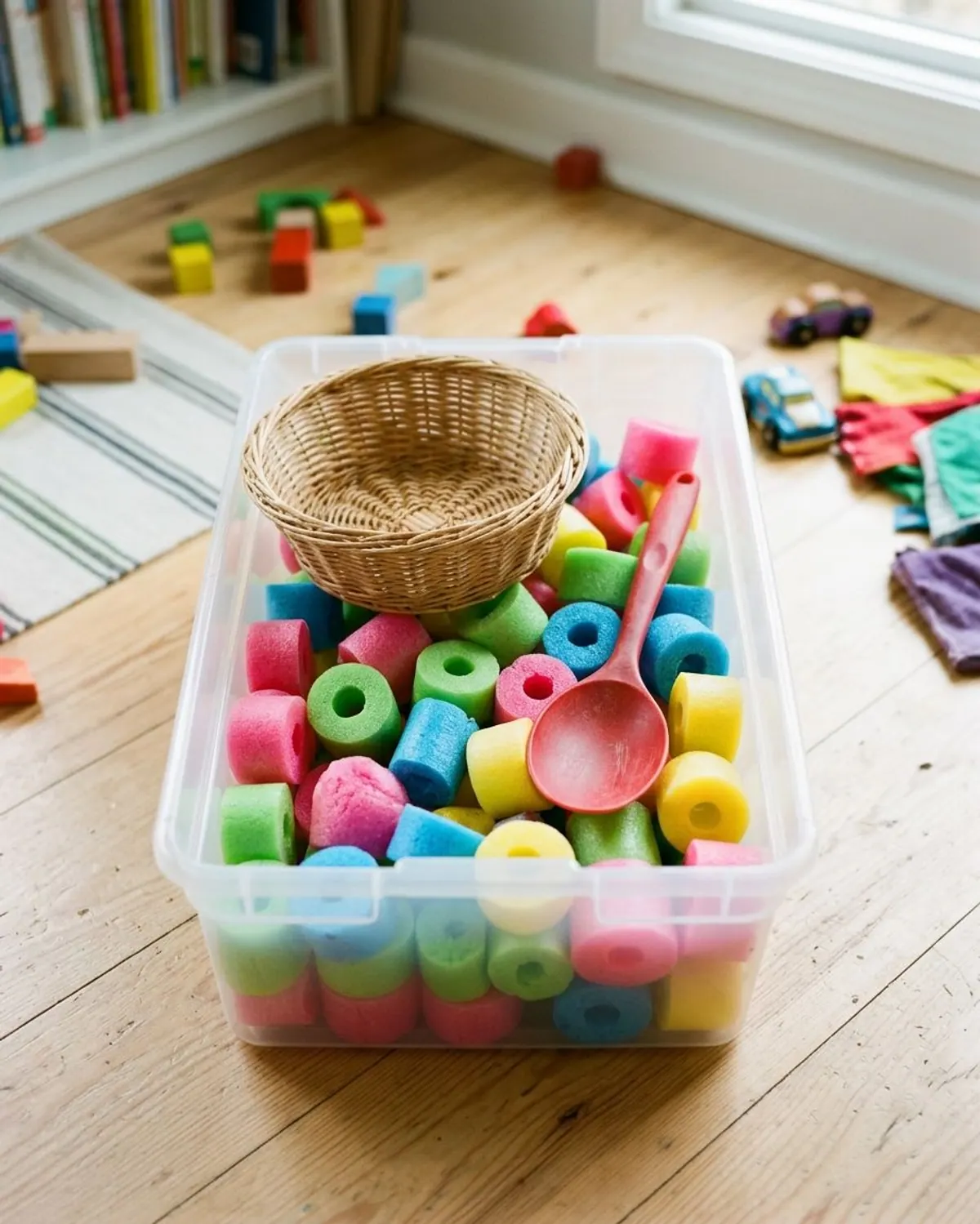
Slice a pool noodle into thick chunks and drop them in a bin with a basket and a big spoon. They bounce, squish and float, so you can add water later in the week.
Cost: about $1 to $2 for a noodle.
Ages: 2 and up.
Prep: 5 minutes to cut.
Mess: none.
Supplies: a pool noodle, a bread knife (adult), a basket, a big spoon.
- Safety: cut chunks thicker than 2 inches; watch for biting, since toddlers can tear off foam bits.
One noodle makes a whole bin of chunks.
12Plastic egg open and close
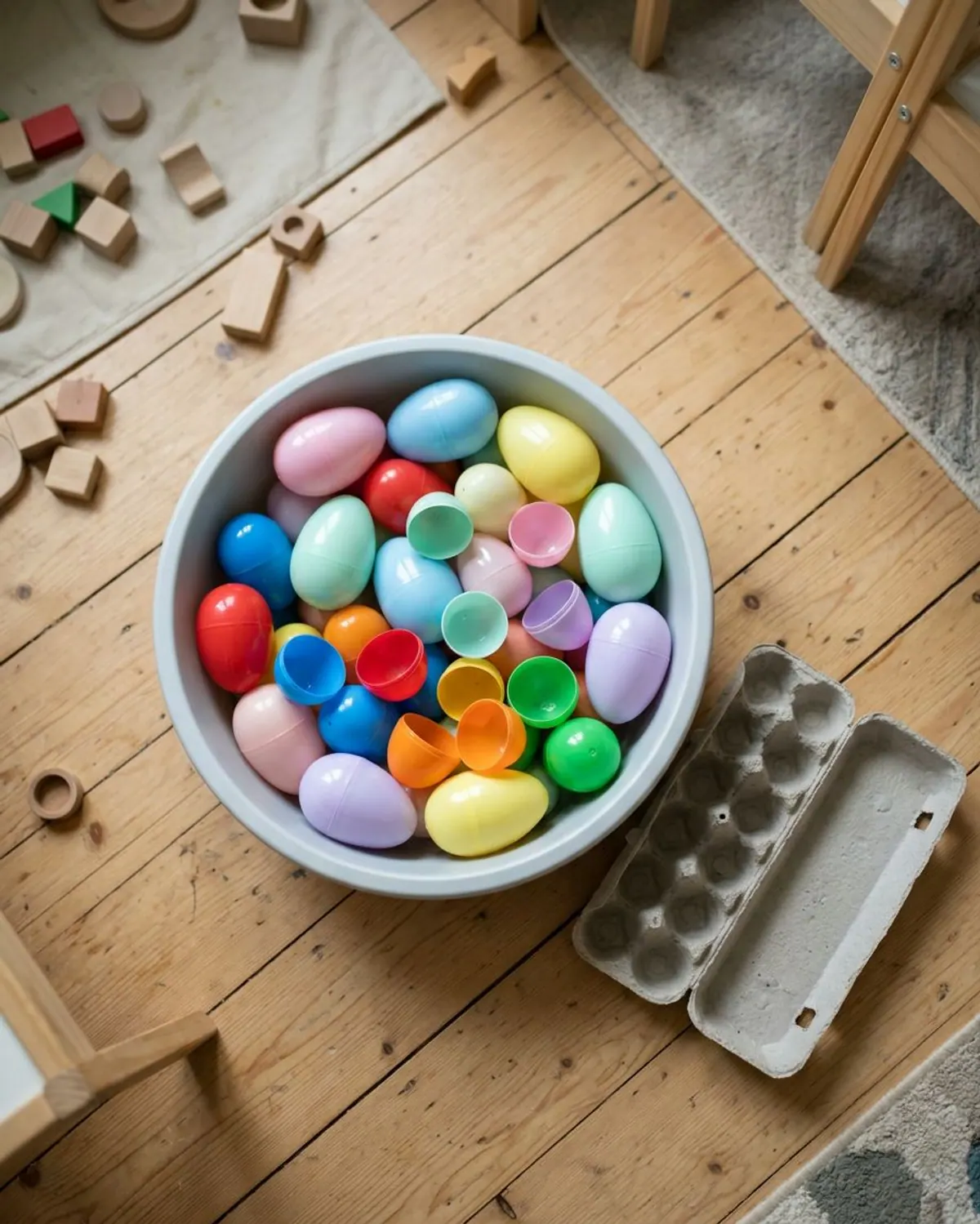
Fill a bin with a dozen large plastic eggs, a few already opened. Twisting them open and matching halves back together is a big fine motor workout for 2 year olds. Later, hide a large pom pom or block inside a few.
Cost: about $1 to $2 for a dozen.
Ages: 2 and up.
Prep: 1 minute.
Mess: none.
Supplies: 12 large plastic eggs, an egg carton.
- Safety: use large eggs only and anything hidden inside must also be too big to swallow.
Big eggs are easier to twist and safer than the small ones.
13Pipe cleaner colander
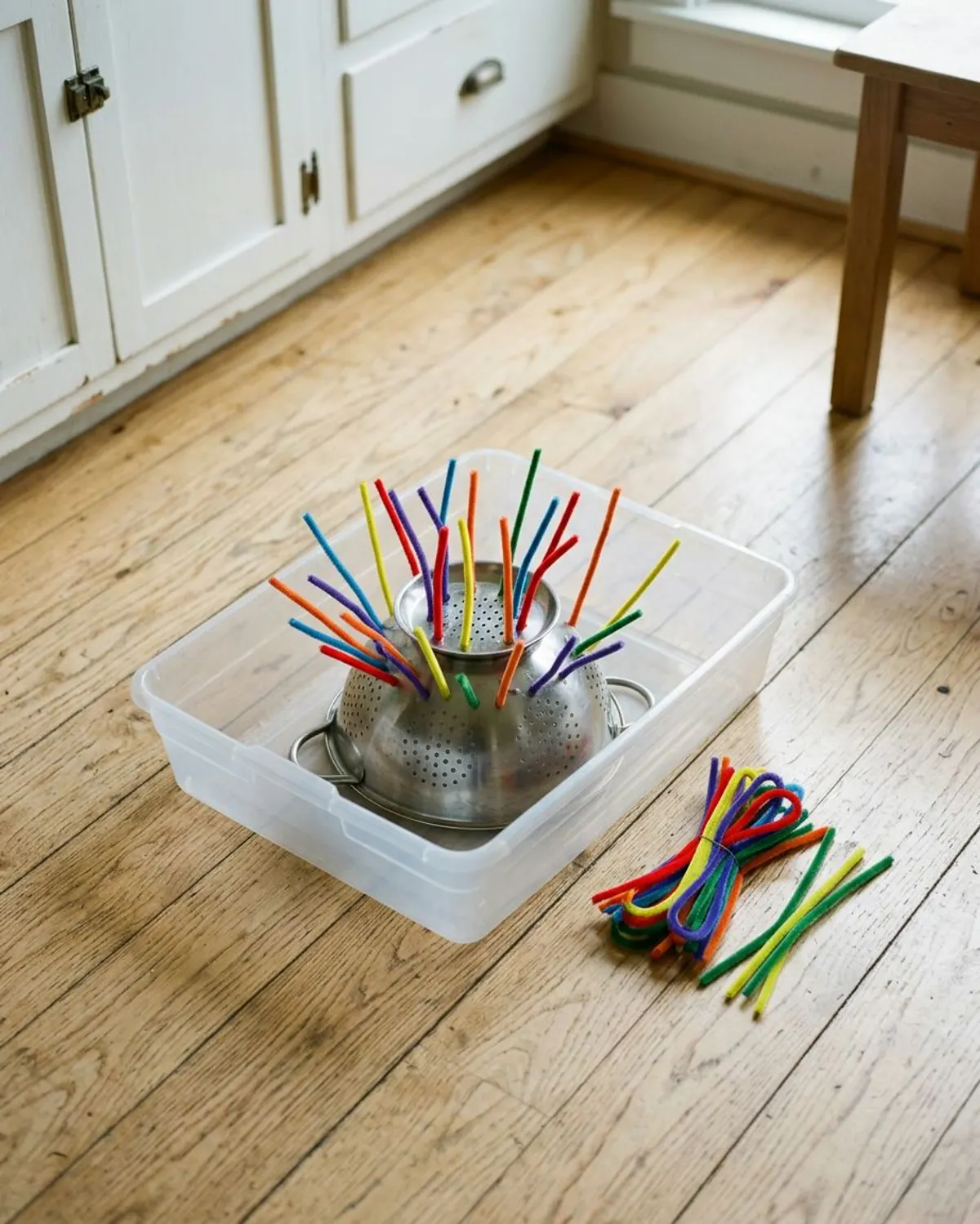
Turn a colander upside down in a bin and add a pile of pipe cleaners cut in half. Toddlers poke them through the holes and pull them out the other side. It holds attention longer than you would think.
Cost: about $1 to $2.
Ages: 2 and up.
Prep: 2 minutes.
Mess: none.
Supplies: a colander, pipe cleaners, a bin.
- Safety: fold the cut ends over so the wire tips cannot poke, and count pipe cleaners in and out.
Nature and outdoor sensory bins
14Leaves, pinecones and sticks
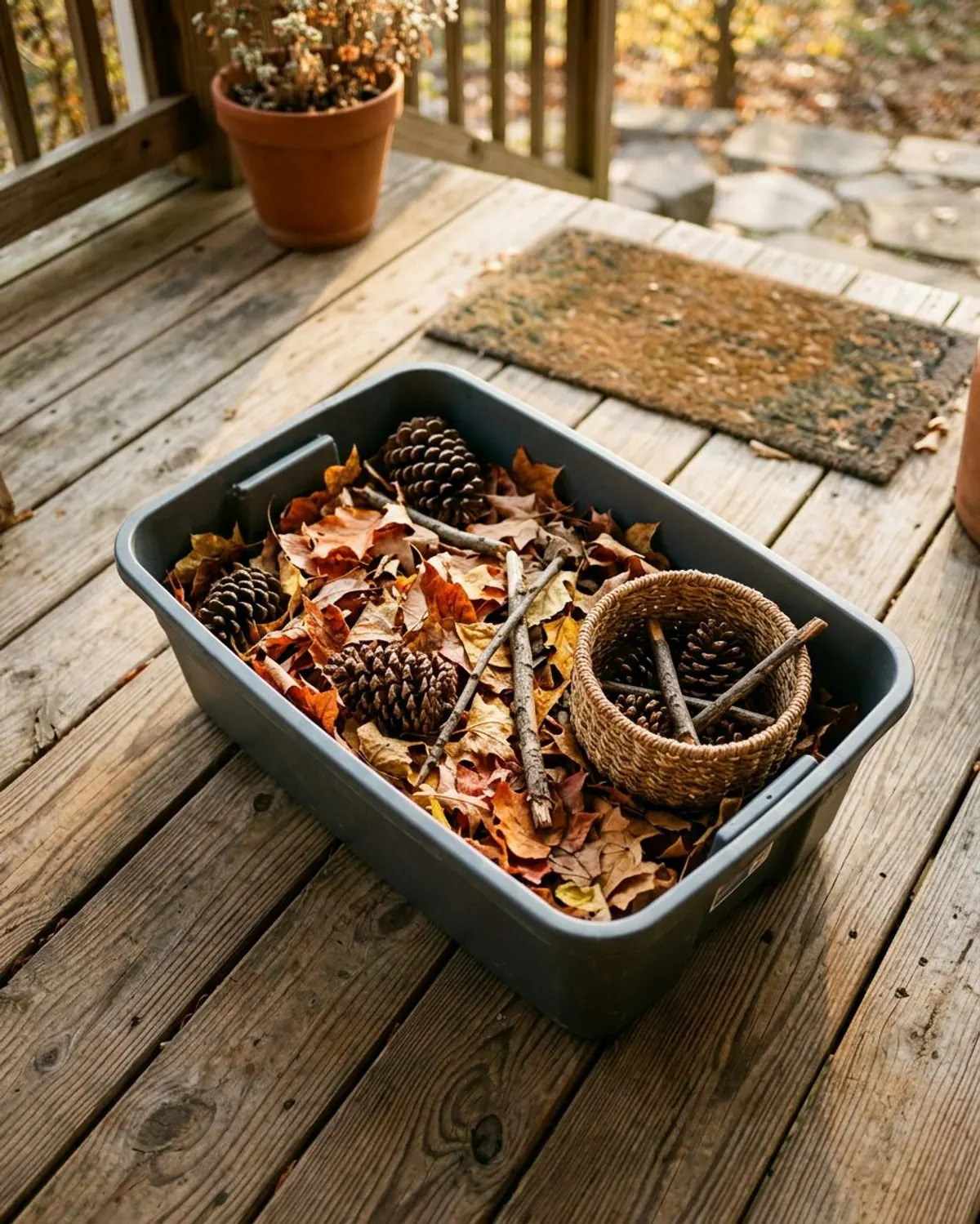
Collect a bag of dry leaves, a few pinecones and short sticks on a walk and tip them into a bin with a basket and toy tongs. Crunching dry leaves is the whole activity for younger toddlers.
Cost: free.
Ages: 18 months and up.
Prep: 10 minutes on a walk.
Mess: medium, leaf crumbs.
Supplies: leaves, pinecones, short sticks, a basket.
- Safety: skip acorns, berries and small seed pods, which are choking or poisoning risks; check pinecones for sap.
15Dirt dig with pots
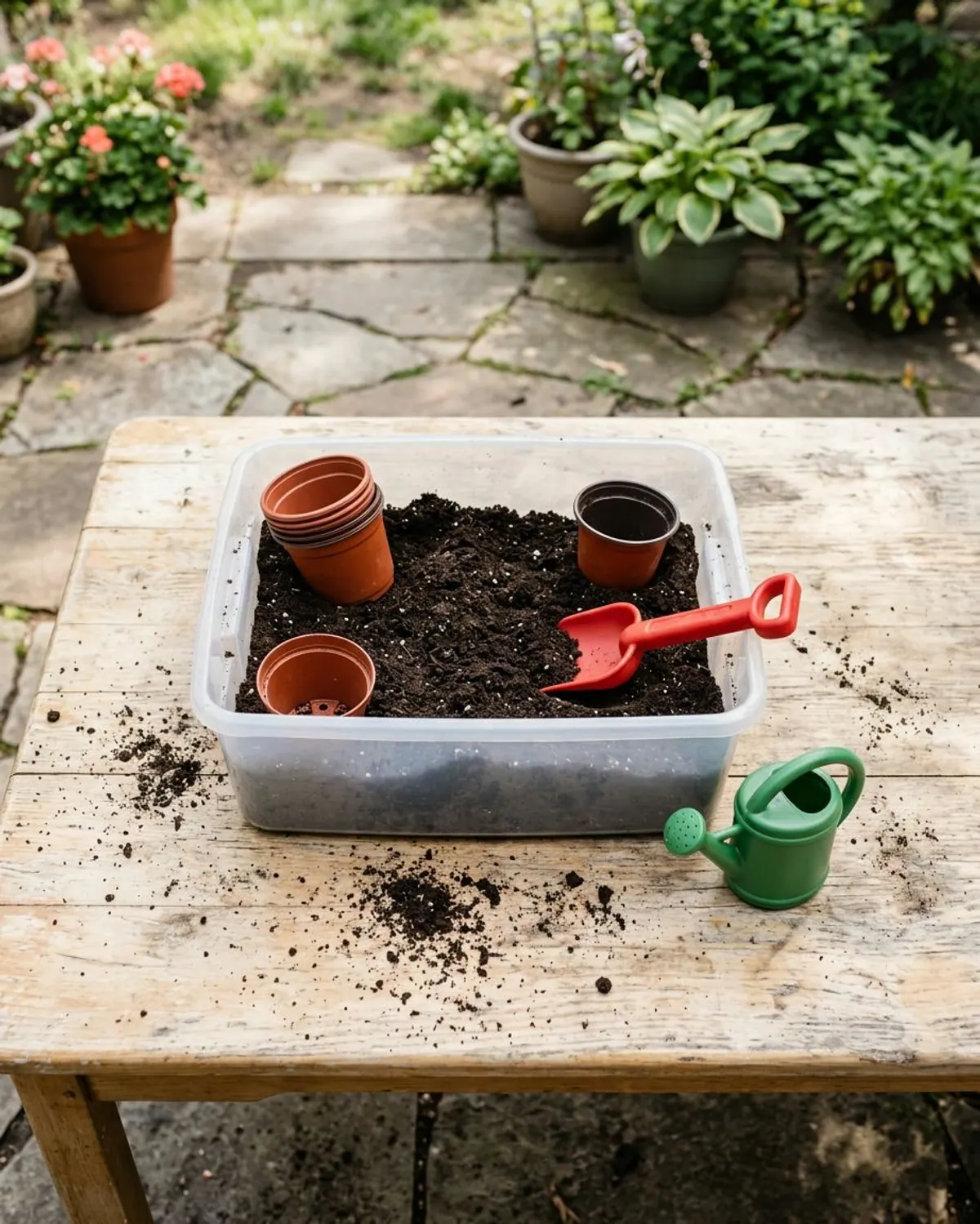
Fill a bin with garden soil or potting mix, add small plastic pots, a toy shovel and a watering can with a little water. Toddlers fill pots, pat them down and dump them out. Best outside.
Cost: free to $3.
Ages: 2 and up.
Prep: 5 minutes.
Mess: high, so take it outside.
Supplies: soil or potting mix, small pots, a shovel, a small watering can.
- Safety: use plain soil, not potting mix with fertilizer pellets; wash hands after.
16Big rock wash
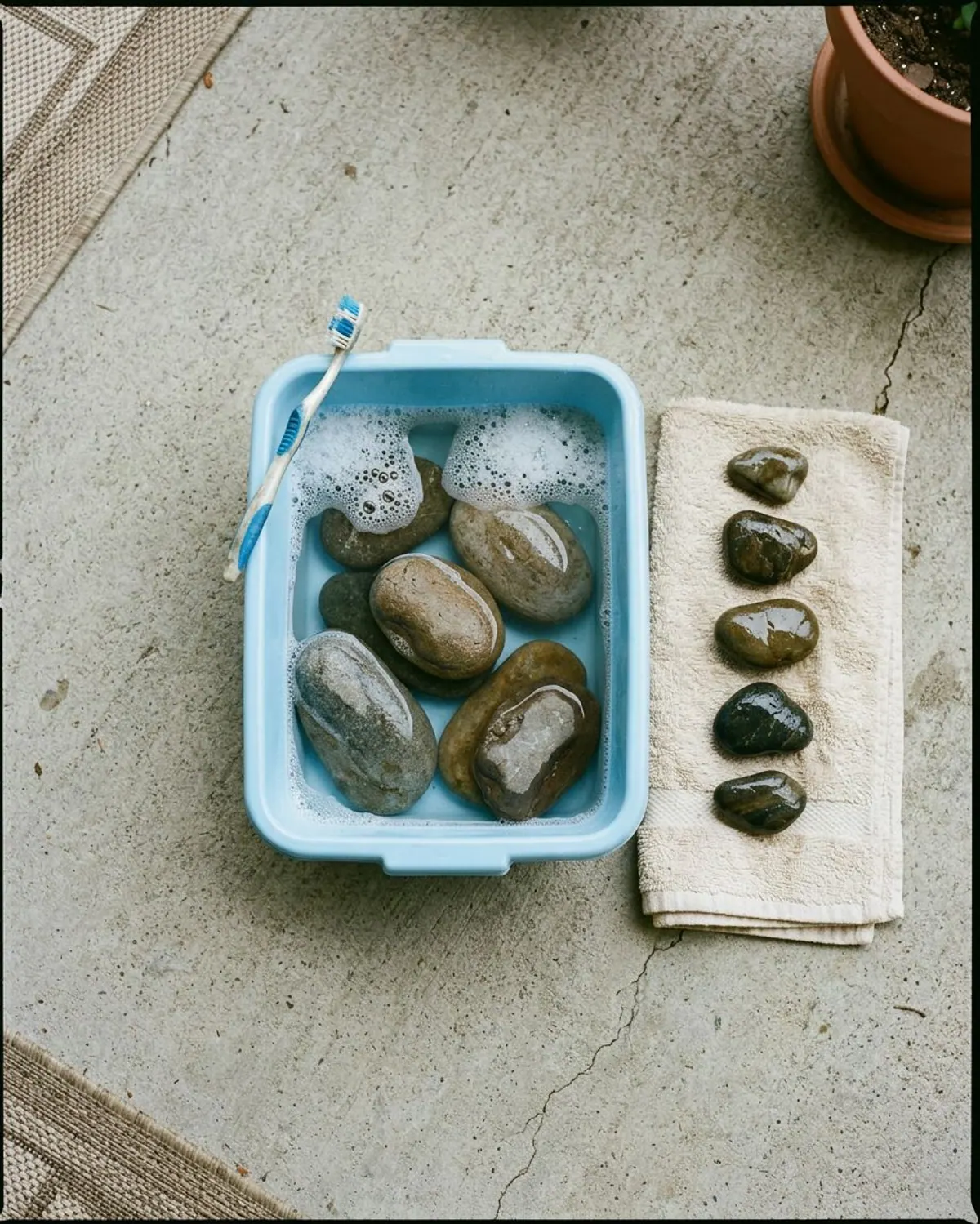
Collect 6 to 10 rocks bigger than your toddler's fist and give them a bin of soapy water and a toothbrush. Wet rocks change color, which is the surprise. Line them up on a towel to dry.
Cost: free.
Ages: 2 and up.
Prep: 5 minutes to collect.
Mess: medium, wet.
Supplies: large rocks, a bin of water, an old toothbrush, a towel.
- Safety: rocks must be bigger than a fist, too big for a toilet paper tube; stay beside the water.
17Play sand and molds
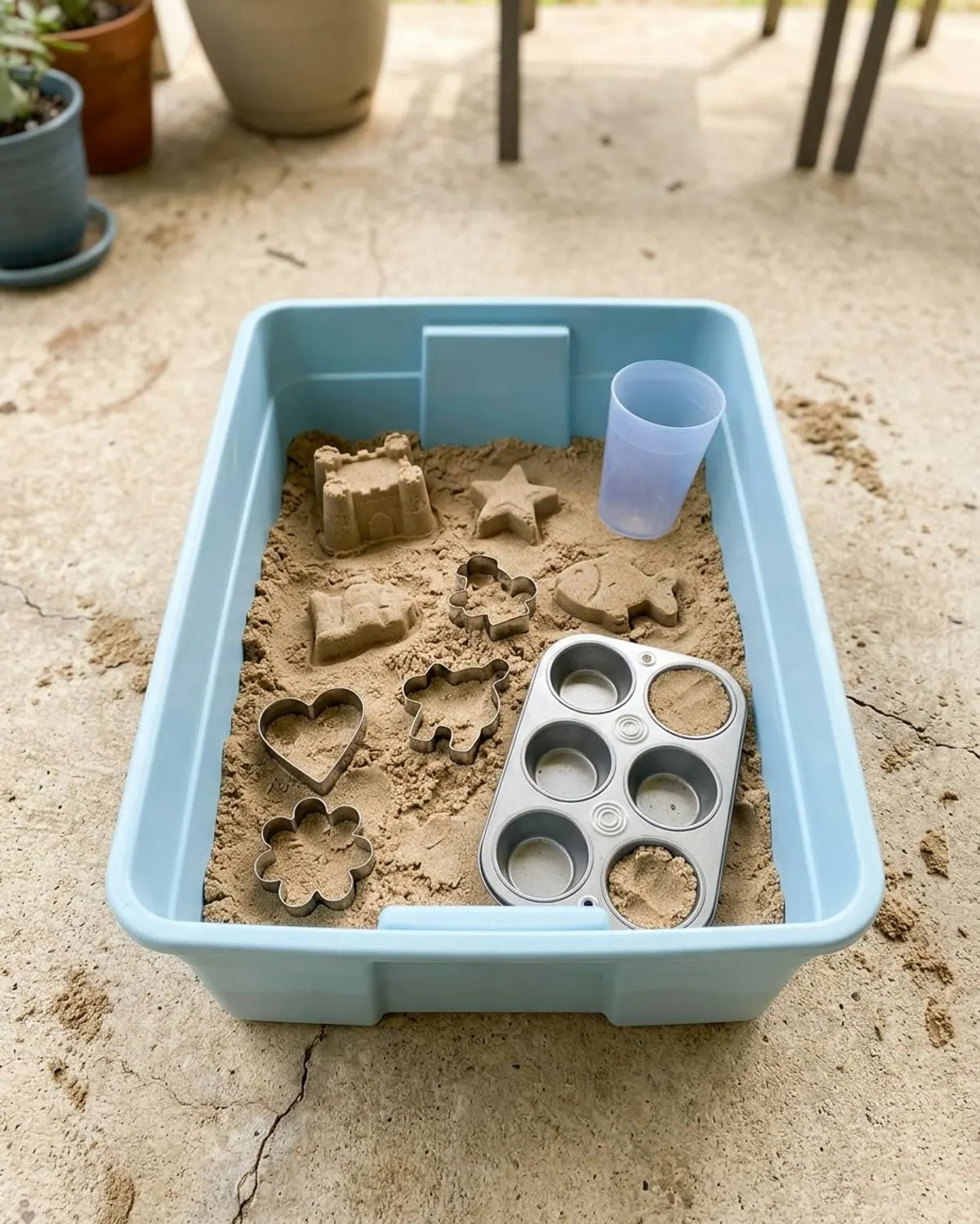
A bag of play sand fills two or three bins, so the cost per bin stays low. Add a cup, a muffin tin and a few cookie cutters. Damp sand holds shapes; dry sand pours.
Cost: about $2 to $4 per bin from one bag.
Ages: 2 and up.
Prep: 2 minutes.
Mess: medium, keep it on a sheet or outside.
Supplies: play sand, a cup, cookie cutters, a muffin tin.
- Safety: sand in eyes is the main risk; no throwing rule, and brush off hands before rubbing eyes.
Washed play sand is finer and cleaner than builder's sand, and one bag fills several bins.
Sensory bins for learning: colors and counting
18Color sort with cups
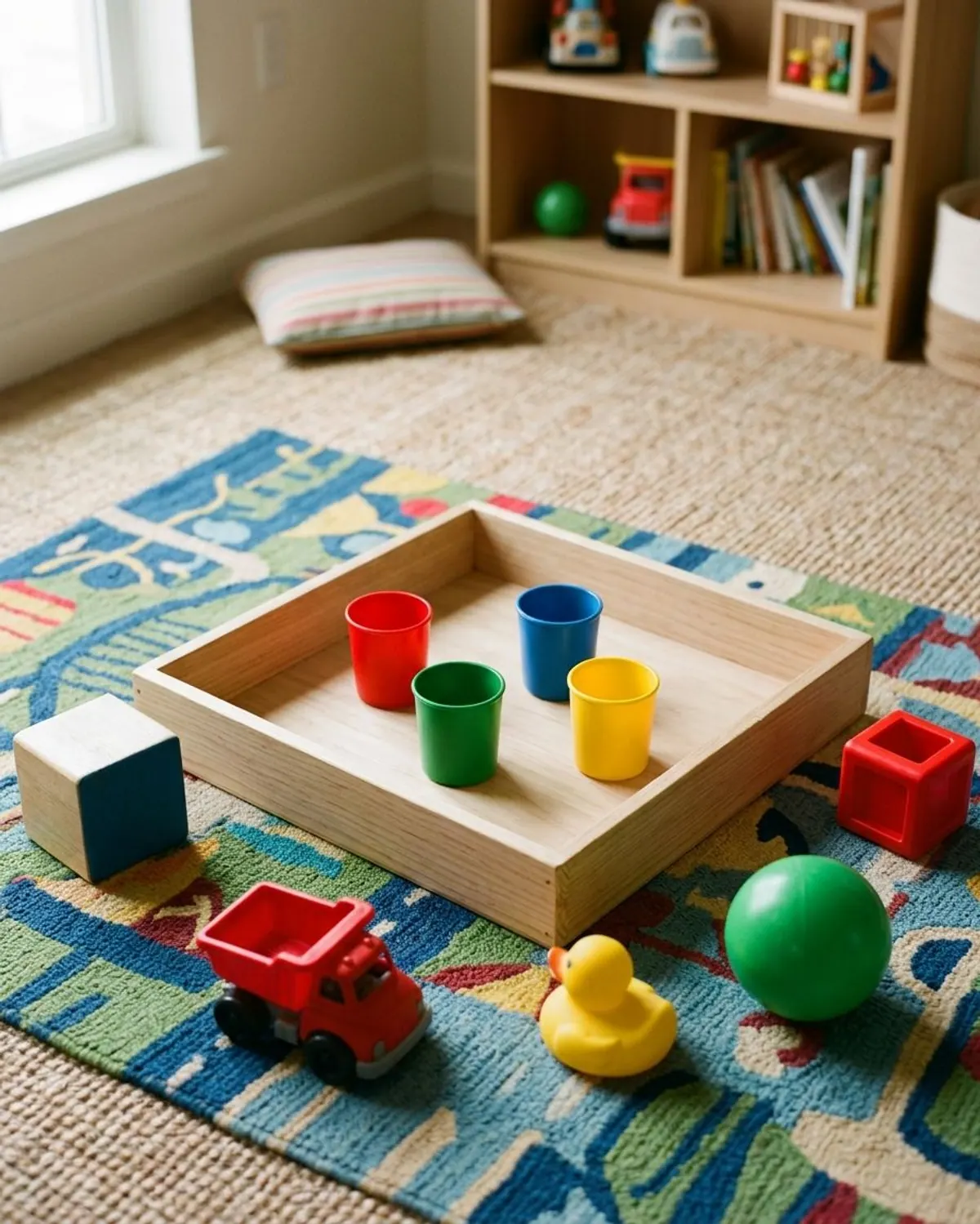
Put 4 colored plastic cups in a bin with a mix of toys in those colors from around the house. Start by naming colors as your toddler picks up each toy; sorting comes later. No new supplies needed.
Cost: free.
Ages: 2 and up.
Prep: 5 minutes to gather toys.
Mess: none.
Supplies: 4 colored cups, toys in matching colors.
- Safety: every toy should pass the toilet paper tube test for children under 3.
19Count and drop
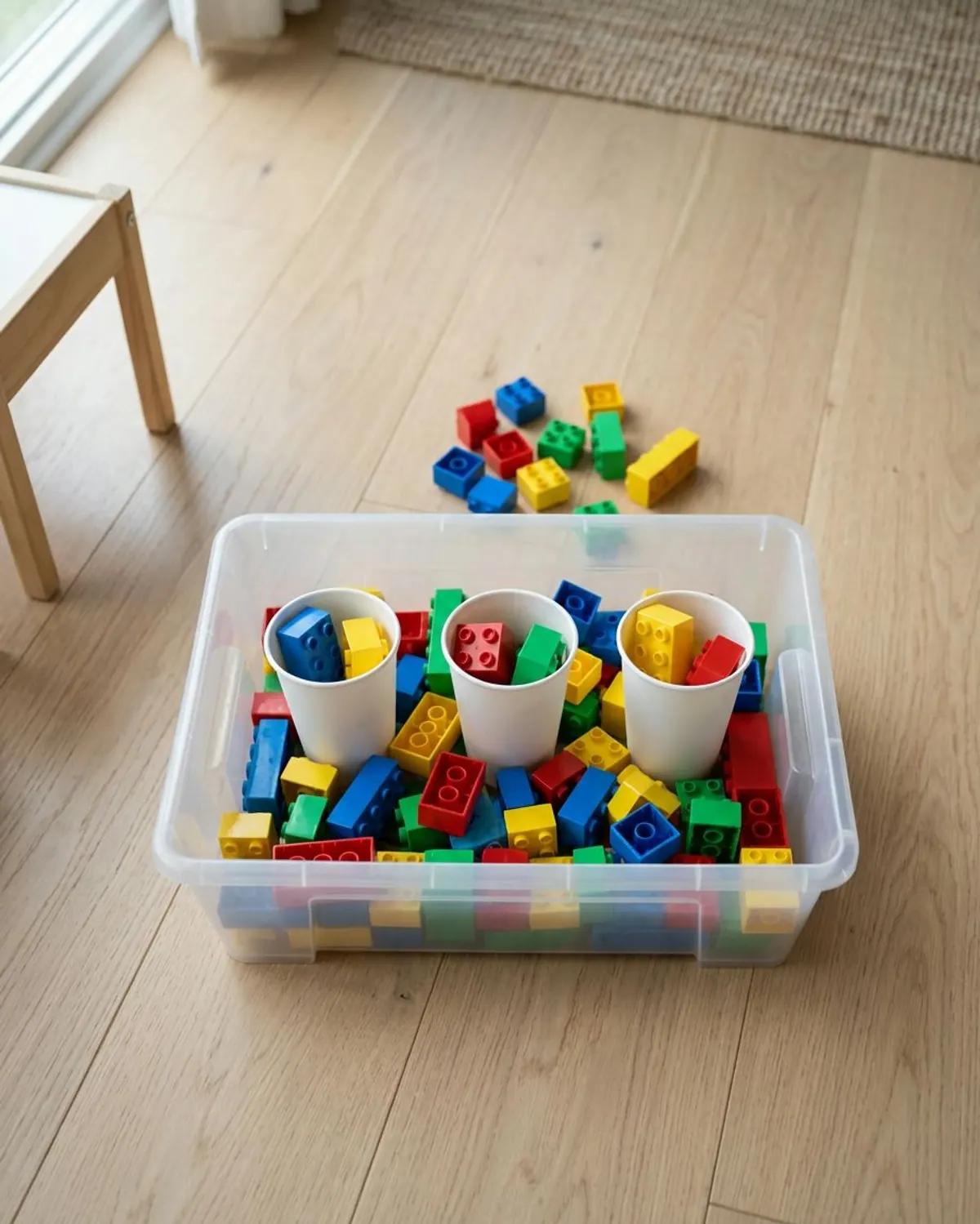
Write 1, 2 and 3 on three paper cups and set them in a bin of large blocks. Your toddler drops that many blocks in each cup while you count together. For 3 year olds, go up to 5.
Cost: free.
Ages: 2 and a half and up.
Prep: 5 minutes.
Mess: none.
Supplies: 3 to 5 paper cups, a marker, large building blocks.
- Safety: use chunky toddler blocks, not small bricks, for under 3.
Big bricks are safe for under 3 and work for counting, sorting and stacking.
20Shape hunt in shredded paper
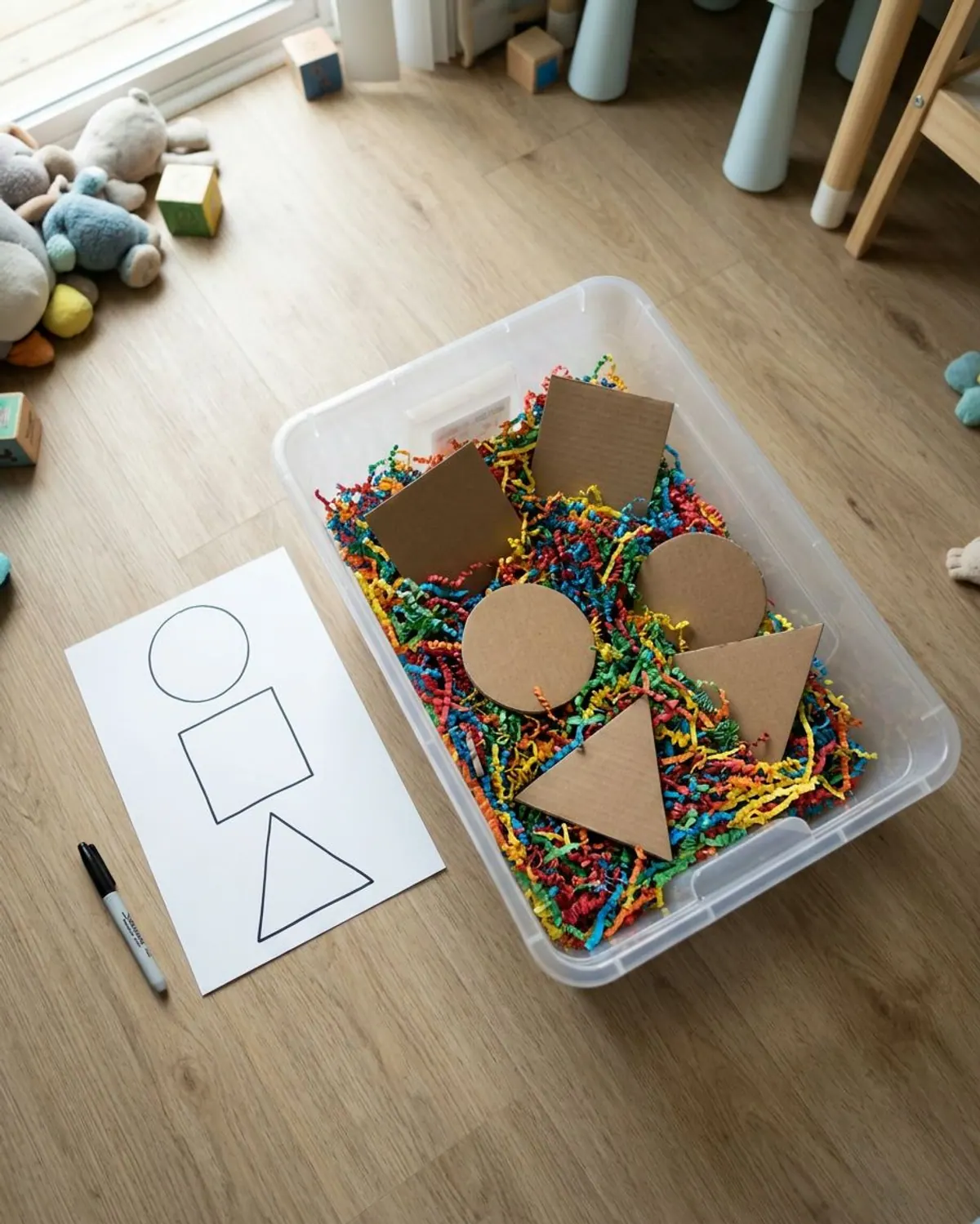
Cut big circles, squares and triangles from cereal box cardboard and hide them in last week's shredded paper bin. Your toddler digs them out and you name each shape, or match it to a shape drawn on paper.
Cost: free.
Ages: 2 and a half and up.
Prep: 10 minutes to cut shapes.
Mess: medium, paper strands.
Supplies: cereal box cardboard, scissors (adult), the shredded paper bin.
- Safety: make shapes at least palm sized and recheck for soggy, chewed corners.
Bonus: how to stretch one sensory bin over a week
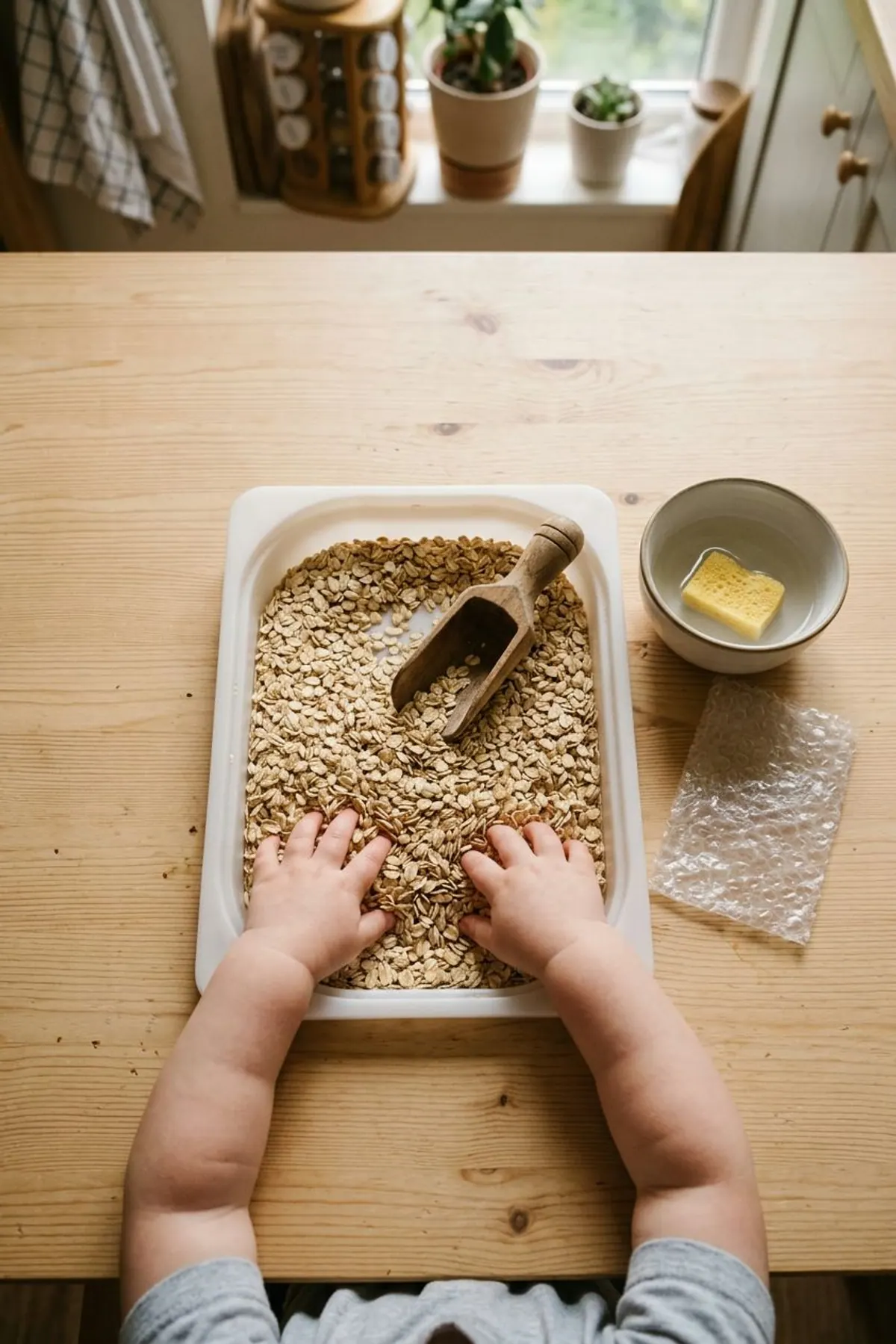
Toddlers lose interest in a bin, not a filler. Keep the same filler all week and change one thing a day, and a $2 bin turns into five sessions.
| Day | Change | Why it works |
|---|---|---|
| Monday | Bin plus hidden toys | The first dig |
| Tuesday | Add tongs and a muffin tin | New tool, new job |
| Wednesday | Swap in cardboard shapes | Shape hunt |
| Thursday | Add a basket and toy animals | Pretend play |
| Friday | Move it outside or under a table | New place, same bin |
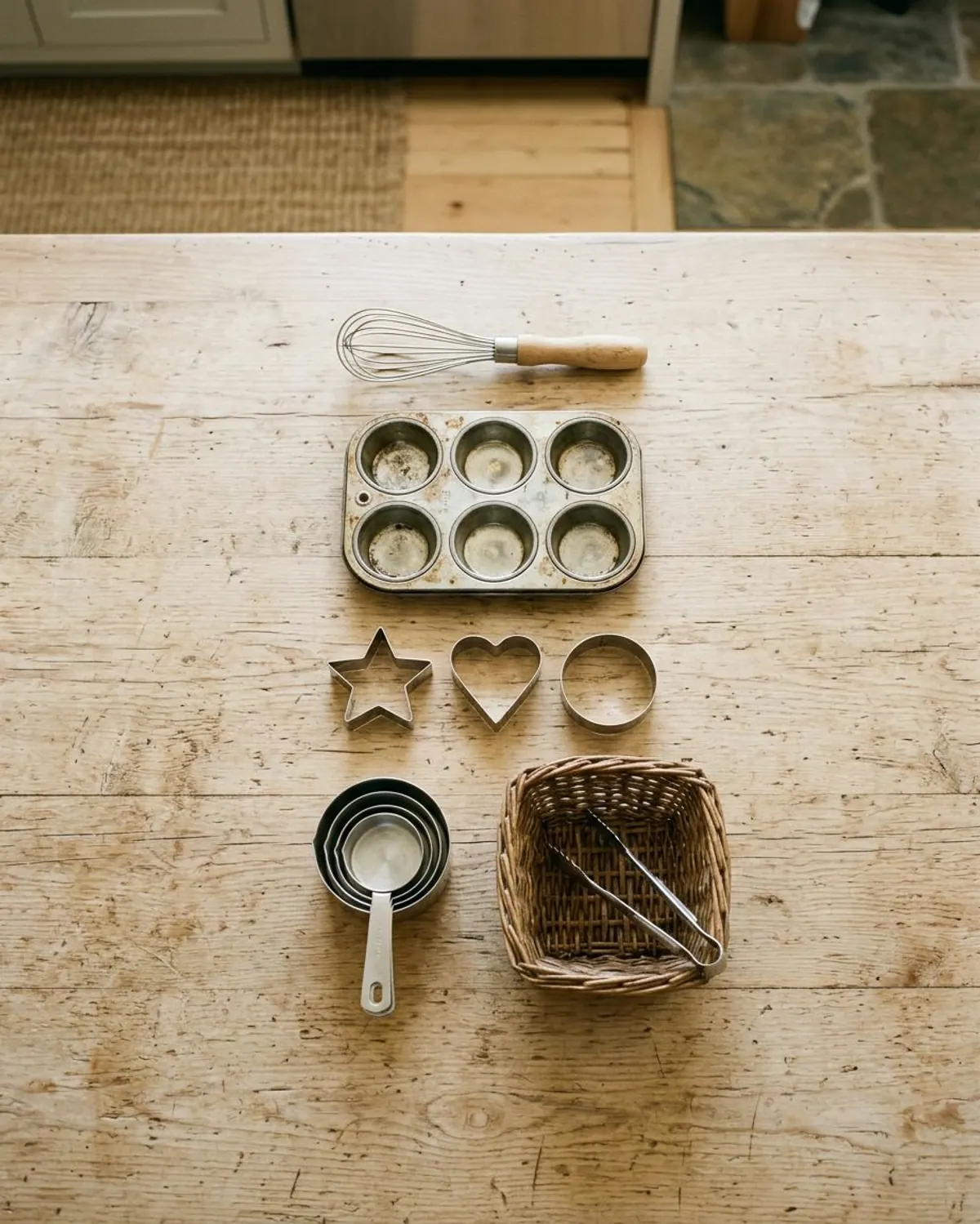
Safety rules for every toddler sensory bin
Sensory bin safety checklist
The toilet paper tube test is a stricter at-home stand-in for the CPSC small parts rule, which treats anything that fits inside a 1.25 inch cylinder as a choking hazard for children under 3. We leave water beads out at every age: in 2025 the CPSC approved a federal safety standard for water beads after injuries and deaths in young children. For seasonal bins, see the winter sensory bin ideas.
Sensory bin supplies
Sensory bin supplies worth owning
-
Clear storage bin with lid
Typically $10 to $20
A shallow under-bed size gives two toddlers room to dig, and the lid keeps a bin for the week.
Check price on Amazon for Clear storage bin with lid -
Toddler tongs and scoops set
Typically $8 to $15
Sized for small hands and used in half of the bins on this list.
Check price on Amazon for Toddler tongs and scoops set -
Splash mat for messy play
Typically $12 to $25
Goes under cornmeal, sand and water bins and wipes or washes clean.
Check price on Amazon for Splash mat for messy play -
Large plastic eggs
Typically $5 to $12
Fine motor practice now, and they come back for egg hunts in spring.
Check price on Amazon for Large plastic eggs -
Play sand
Typically $8 to $15 per bag
One bag fills several bins.
Check price on Amazon for Play sand
Need ideas for the days a bin is not enough? The Indoor Day Rescue Kit below has 100 screen-free activity cards for rainy and sick days. It has no sensory bin cards, so it pairs with this list rather than repeating it.
Frequently asked questions
What can I put in a sensory bin for a toddler?
For under 3, use big or taste-safe fillers: cooked pasta, water with bubbles, shredded paper, big rocks, leaves, ice blocks or cornmeal, plus scoops, cups and tongs from the kitchen. Save dry rice, beans and small pasta for age 3 and up.
How do you make a cheap sensory bin?
Use a baking tray or a storage bin you already own, one filler from the pantry, sink or yard, and two or three kitchen tools. Most of the 20 bins on this list cost under $2.
What age is a sensory bin for?
Taste-safe bins work from about 18 months with an adult right beside the child. Bins with dry pasta, cornmeal or small toys are better from age 2 to 3 and up, depending on whether your child still mouths things.
How long does a toddler play with a sensory bin?
It varies a lot by child and day. Changing one tool or adding water to an old bin usually brings a toddler back for another round.
Are dollar store sensory bins safe?
The bins and big items are fine. Skip water beads, small pom poms, beads and anything that fits through a toilet paper tube for children under 3, and check for loose parts.
Save it for later
Pin this to your Sensory Play board so it's there when you need it.
Save to Pinterest